Plot Explained Spoilers guaranteed!
Plot Explained

Browse by genre

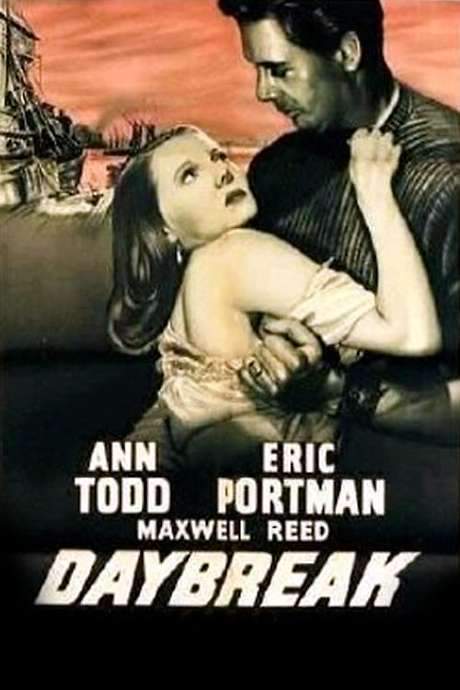
Daybreak (1948) movie poster

Plot Summary

Daybreak (1948) Plot Summary Explained

Release, runtime and language
1948 · 75 mins · English
Loading streaming availability…
Directed by
Compton Bennett
Starring
Bill Owen, Andrew Crawford, Ann Todd, Maurice Denham, Eric Portman, Edward Rigby

A mysterious barber hides a secret identity that eventually leads to tragedy.

On this page (6)
  1. 1 Where to watch
  2. 2 What happens: full plot
  3. 3 Plot questions answered
  4. 4 Movie threads
  5. 5 Movies like Daybreak
  6. 6 Every angle
Loading streaming availability…

Full plot summary · contains spoilers

What Happens in Daybreak: Full Plot Summary

The whole story of Daybreak (1948) explained, from the opening scene to the final frame: every key event, every twist and what it all adds up to. Read it as a quick recap before the sequel, to check a scene you missed, or to finally understand what really happened.

The film opens with a hangman breaking down at the moment of his last scheduled execution, a man about to retire from the grim routine that defines his life. He begins to tell his story to the governor, and most of what follows unfolds as an extended flashback — a tale told from a place of weariness, with many scenes set when the supposed narrator is absent from view. This framing device sets a tense mood, as the past gradually reveals itself in layers.

Eddie Tribe [Eric Portman], who runs a quiet barber shop in Gravesend, leads a double life that few would suspect. By day he tends to clippers and customers; by necessity or choice he also serves as England’s official public hangman, called to prisons around the country to carry out executions when required. This hidden vocation casts a long shadow over his public facade as a family man.

A legal gambit propels the plot into swift, improbable motion. Eddie asserts a claim against the estate of Mr Tribe, a Thames barge owner, insisting he is the dead man’s son despite lacking papers to prove it. One of his father’s friends—a bargeman—eagerly confirms the connection for a few drinks, and a solicitor accepts the story, allowing Eddie to inherit about fifteen barges and a substantial sum of money. The whole arrangement rests on a fragile thread of chance, a recognition that could keep Eddie afloat or drag him down.

One evening, Eddie’s life takes another turn when he meets a bedraggled woman who prefers to be called Frankie [Ann Todd]. She waits out a rainstorm in a local pub, hoping for a ride to a new job at a nightclub. Frankie’s past remains shrouded, hinting at something darker beneath her outward worn glamour. The two fall into a rapid, intense bond, and when Frankie learns Eddie’s surname is Tribe, they marry. Eddie hands over the barber shop to his friend and confidant, Ron [Bill Owen], and the couple sets up home aboard one of the barges, driven by Frankie’s desire for a life away from Eddie’s day-to-day humdrum.

To strengthen the enterprise, Eddie hires a Danish seaman, Olaf [Maxwell Reed], who brings swagger and trouble in equal measure. Olaf openly flirts with Frankie, who finds herself drawn to the dangerous charm but tries to remain faithful to her husband. Eddie, meanwhile, must travel for his public duties, often leaving Frankie alone for days. He tells her it’s essential business, a cover he insists upon to keep his other life private, and Frankie’s sense of isolation grows.

When Eddie returns from one of his trips, Frankie begs him to stay or to take her with him, and even this simple plea is denied. Eddie’s insistence on keeping his secret life intact places Frankie in a precarious position, with Olaf’s advances growing bolder in the confined space of the barge. Bill Shackle [Edward Rigby], an older bargeman, tries to be there for Frankie but is tied up with his own duties and commitments, leaving her increasingly vulnerable to Olaf’s attentions.

Tension explodes one night when Eddie comes back to find Frankie and Olaf in a moment of indiscretion. A fight ensues, and Eddie is knocked overboard, his body carried away by the tide. Olaf is arrested for murder, leaving Frankie to despair and, in a moment of irrevocable sorrow, to shoot herself. The next dawn brings a twist of fate: Eddie somehow crawls ashore and makes his way back to the barber shop, where he begins the long, uneasy process of rebuilding his life. The street papers already carry the story of Eddie’s murder and Frankie’s suicide, creating a web of rumor around the couple that Ron cannot easily untangle.

As Olaf stands convicted and sentenced to hang, Eddie is summoned to participate in the execution, a grim enticement that could offer him a path to vengeance for Frankie’s death. At the moment of truth, however, Eddie cannot bring himself to perform the act. He reveals his true identity to the prison staff and abandons the plan, returning to the sanctuary of his barber’s chair. The fallout is brutal: Ron discovers Eddie’s lifeless body the next morning, a figure of resignation and despair, and dials for help as the curtain falls on this chilling culmination.

In the end, the film presents a stark meditation on double lives, deceit, and the costs of keeping secrets. It blends a moral quandary with a claustrophobic, character-driven drama, using the barge-filled setting and the foreboding presence of the hangman’s legacy to knit together a story of love, trust betrayed, and the damning weight of truth. The narrative’s core remains the fragile line between doing one’s duty and choosing one’s humanity, a line Eddie dares not cross until it is almost too late.
Last updated: October 09, 2025 at 09:25

Was this helpful?

Plot questions answered

Daybreak Plot Explained: Your Questions Answered

The questions people ask most about Daybreak (1948): what happens in the confusing scenes, why the characters do what they do, the twists, hidden details and what the ending means. Each answer contains spoilers.

Q1

Why does Eddie keep his career as a hangman secret from Frankie?

Eddie hides his work as a hangman because he fears Frankie would leave him if she knew the truth about his profession. He tells her his frequent absences are due to essential business, but the grim nature of his real job and the moral weight it carries forces him to maintain the deception. This secret isolation ultimately drives a wedge between them, leaving Frankie vulnerable to Olaf's advances.

Foreshadowing: The film opens with the hangman's breakdown at his final execution, establishing early that his double life carries a heavy psychological toll.

  • hangman secret job
  • eddie tribe's profession
  • double life
  • marriage secrets
Q2

Why does Eddie fake being Mr Tribe's son to claim the inheritance?

Eddie asserts a claim against the Tribe estate because he desperately needs financial security. With no papers to prove his lineage, he relies on a bargeman friend who confirms the connection for drinks. The solicitor accepts the story, allowing Eddie to inherit fifteen barges and substantial money. This risky gambit is driven by his desire to escape his modest barber life and provide a better life for Frankie.

Foreshadowing: The timeline shows this claim occurs early, setting up the false identity that later enables Eddie's barge business.

  • tribe inheritance
  • false claim
  • eddie mendover
  • barge business
  • fraud
Q3

How does Eddie survive after being knocked overboard during the fight?

Eddie is knocked overboard during the confrontation with Olaf but somehow crawls ashore by morning. The film does not explain exactly how he survived the cold Thames waters, but he returns secretly to his barber shop while the world believes he drowned. He keeps his survival hidden, allowing the narrative of his murder to persist.

Foreshadowing: The film's structure keeps Eddie absent from many scenes, and his mysterious survival aligns with this pattern of ellipsis and hidden truth.

  • eddie survives
  • overboard
  • thames river
  • eddie's return
  • presumed dead
Q4

Why does Eddie refuse to carry out Olaf's execution at the end?

When summoned to execute Olaf, Eddie sees it as a chance for vengeance against the man he believes killed Frankie. However, at the critical moment, he cannot go through with it and reveals his true identity to the prison staff. Eddie chooses not to become an executioner, unable to cross that moral line even for someone who destroyed his marriage. He returns to his barber shop instead.

Foreshadowing: The opening scene establishes the hangman's psychological fragility and weariness with his job, foreshadowing his eventual refusal.

  • eddie won't execute olaf
  • execution scene
  • revenge
  • moral choice
  • hangman dilemma
Q5

Why does Frankie shoot herself after Eddie's disappearance?

Frankie shoots herself in despair after believing Eddie has drowned. The combination of Eddie's apparent death, Olaf's arrest for murder, and her own guilt over the indiscretion that sparked the confrontation becomes unbearable. Her suicide compounds the tragedy and leaves Ron to face the fallout alone.

Foreshadowing: Earlier scenes show Frankie's isolation growing as Eddie keeps his secrets and she feels increasingly vulnerable aboard the barge.

  • frankie kills herself
  • suicide
  • desperation
  • eddie's death
  • guilt
Q6

What triggers the fight between Eddie and Olaf on the barge?

The fight erupts when Eddie returns unexpectedly and finds Frankie and Olaf in a compromising situation. The tension that has built during Eddie's prolonged absences finally explodes. During the struggle, Eddie is knocked overboard, and his failure to resurface leads to his apparent death.

Foreshadowing: Earlier scenes show Olaf making advances while Eddie is away, building toward this inevitable confrontation.

  • barge fight
  • eddie vs olaf
  • confrontation
  • love triangle
  • thames
Q7

Why does Eddie hide his survival from everyone after coming ashore?

After surviving and returning to Gravesend, Eddie keeps his survival secret while the town believes he is dead. This allows him to observe how others react to his presumed death and keeps his double life hidden from Ron, who still does not know Eddie was the hangman. The secrecy ultimately isolates him further and contributes to his later despair.

Foreshadowing: The narrative repeatedly emphasizes Eddie's hidden identity and the tension between his public and private selves.

  • eddie returns secretly
  • hidden identity
  • eddie alive
  • ron doesn't know
  • barber shop return
Q8

How does Eddie's secret work lead to the breakdown of his marriage?

Eddie cannot tell Frankie the truth about his hangman job, so he claims he must travel for essential business. These constant absences leave Frankie alone on the barge with only Olaf for company. Her isolation makes her vulnerable to Olaf's persistent charm. Eddie's deception, meant to protect her, actually pushes her toward betrayal and eventual tragedy.

Foreshadowing: Frankie pleads with Eddie to stay or take her with him, but his refusals establish the growing distance between them.

  • marriage breakdown
  • eddie's absences
  • trust betrayed
  • secret job
  • isolation on barge
Q9

Why does Olaf pursue Frankie while Eddie is away?

Olaf openly flirts with Frankie from the moment he is hired, drawn to her beauty and the opportunity created by Eddie's frequent absences. With Eddie gone for days at a time for his secret executions, Olaf uses the confined space of the barge to make advances. Though Frankie resists initially, the loneliness and her desire for excitement make her susceptible to his dangerous charm.

Foreshadowing: The timeline notes Olaf brings "trouble in equal measure" when he is introduced, setting up his predatory behavior.

  • olaf pursues frankie
  • affair
  • loneliness
  • barge isolation
  • danish seaman
Q10

Why does Eddie reveal his identity at the prison instead of executing Olaf?

At the moment of execution, Eddie cannot bring himself to kill the man responsible for his ruined life. He confesses his identity to the prison staff, abandoning both the execution and his long-hidden secret. This act represents his final rejection of the hangman's role and his attempt to reclaim some humanity, though it comes too late to save himself.

Foreshadowing: The entire film builds toward this moral test, as Eddie has always struggled with the weight of his secret vocation.

  • eddie confesses
  • reveal identity
  • prison
  • executioner
  • moral dilemma

Movie threads

More Movies Like Daybreak, by Mood & Story

Curated lists built around what makes Daybreak tick: the same mood, the same kind of story or the same emotional payoff. Each list explains why these movies belong together.

Claustrophobic moral thrillers with bleak endings like Daybreak

Stories where secrets and moral compromises lead to inescapable doom. If you liked the suffocating tension and ethical decay in Daybreak, explore more movies like it. This thread collects gripping drama and crime thrillers where characters are consumed by their double lives, leading to similarly tragic and morally complex conclusions.

  • claustrophobic
  • morally conflicted
  • anxious
  • tragic
  • grim
  • fatalistic
  • Tone: dark, grim, tragic
  • Pacing: steady, escalating
Why these movies?

The story pattern: Narratives in this thread typically follow a single protagonist whose secret identity or crime creates a domino effect of betrayal and desperation. The plot steadily escalates the stakes, forcing the character into increasingly dire moral tests until they are psychologically broken, culminating in a finale with little to no redemption.

Why they belong together: These films are grouped together for their shared oppressive mood, focus on internal moral conflict, and a narrative structure that builds steady, inevitable dread towards a devastating conclusion. They explore the psychological cost of living a lie.

Fatalistic crime dramas with tragic love triangles like Daybreak

Gritty stories where crime and passion spiral towards a preordained downfall. For viewers who appreciated the fatalistic love triangle and grim consequences in Daybreak, this section features similar movies. Discover other dramatic crime thrillers and noir films where romance and betrayal lead characters down an inescapable path to tragedy.

  • fatalistic
  • somber
  • tragic
  • grim
  • weary
  • betrayal
  • Tone: dark, somber, tragic
  • Pacing: steady, deliberate
Why these movies?

The story pattern: The narrative pattern involves a disruptive element, often a new love interest or a sudden windfall, that shatters a fragile equilibrium. This sets off a chain reaction of poor decisions, jealousy, and violence. The story structure often feels like a downward spiral, with characters powerless to stop the momentum towards their tragic end.

Why they belong together: They share a core theme of inescapable fate, often driven by destructive relationships within a criminal context. The combination of a steady, deliberate pace, a dark tone, and a heavy emotional focus on loss and punishment creates a cohesive, somber viewing experience.

If you liked this

Movies Like Daybreak

Similar movies to Daybreak: the same genre, themes or kind of story. Each one comes with its own plot summary, timeline and ending explained.

Browse all movie summaries

Every angle

Daybreak (1948) Explained: Plot, Timeline & Characters

Everything about Daybreak in one place: what happens in the plot summary, the timeline in chronological order, the characters and meaning and a spoiler-free summary. What's After the Movie adds the cast, box office and post-credit scenes.

Coming soon on iOS and Android

The Plot Explained Movie Summary App

Plot summaries, endings explained and timelines on your phone. Catch up on any movie in minutes, save your favorites and never miss a twist again.

Be the first to know when we launch. Your email stays private, always.

Learn more about the app