Plot Explained Spoilers guaranteed!
Plot Explained

Browse by genre

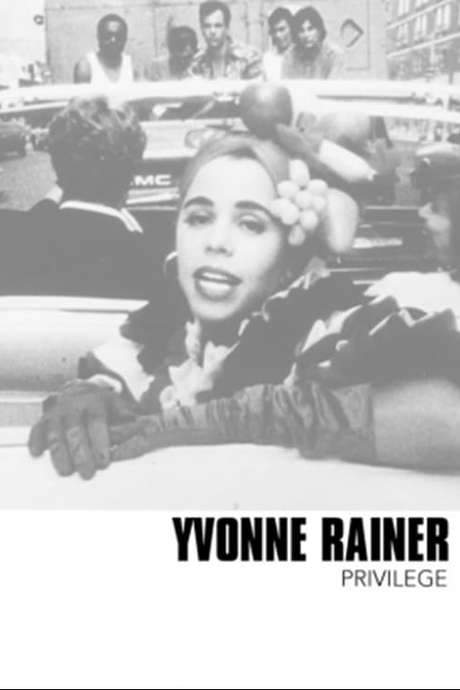
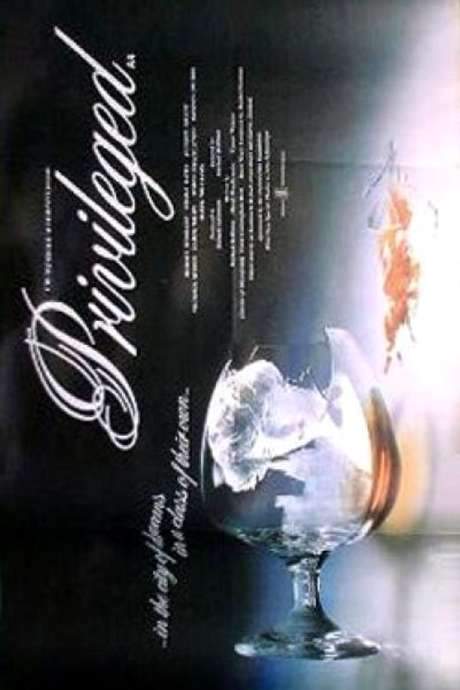
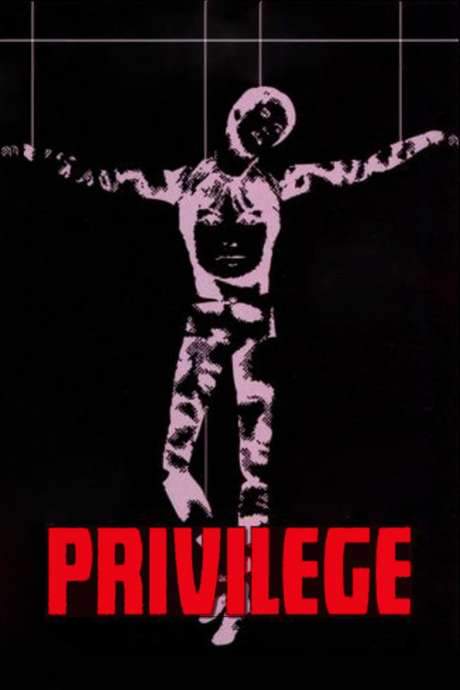
Privilege (1967) movie poster

Timeline

Privilege (1967) Timeline Explained – Every Event in Order

Release, runtime and language
1967 · 103 mins · English
Loading streaming availability…
Directed by
Peter Watkins
Starring
Alba, Doreen Mantle, Michael Graham, James Cossins, Malcolm Rogers, Paul Jones

Britain’s megastar pop singer Steven Shorter enjoys near‑universal adulation, yet he is nothing more than a government puppet, used to push state agendas. When acclaimed artist Vanessa Ritchie is hired to paint his portrait, her presence forces Shorter to confront the manipulation of his handlers and reconsider his blind obedience.

On this page (6)
  1. 1 Where to watch
  2. 2 Events in order (14)
  3. 3 Timeline questions answered
  4. 4 Movie threads
  5. 5 Movies like Privilege
  6. 6 Every angle
Loading streaming availability…

14 events in order · contains spoilers

Privilege Timeline: Events in Chronological Order

Every key event of Privilege (1967) in order, scene by scene, with when and where it takes place. Use it to untangle flashbacks, time jumps and parallel storylines, to refresh your memory before the sequel or to find the exact scene you are thinking of.

  1. Public jail‑cell stage act

    Steven Shorter's stage show features him appearing in a jail cell, handcuffed, while police beat him to the shock and sympathy of the audience. The scene is presented as a manufactured spectacle that cements his image as a tormented, vulnerable icon. The act establishes the public’s fascination with his suffering as entertainment.

    When
    Early in the near-future 1970s England
    Where
    Live stage (England)
  2. Coalition uses Shorter to placate masses

    Two main political parties form a coalition to placate the public and divert political life from active engagement. Shorter's enormous popularity is exploited by the state and corporate interests, while his image is carefully managed to maintain mass support. He becomes a tool of national cohesion rather than a free artist.

    When
    Early phase
    Where
    England
  3. Handlers assemble a control team

    Shorter's career is tightly managed by a team of handlers: manager Martin Crossley, PR rep Alvin Kirsch, record executive Julie Jordan, and financial backer Andrew Butler. They schedule appearances, shape his image, and shield him from anything that might threaten the facade. The arrangement ensures he remains the country’s most adored celebrity.

    When
    Early – ongoing
    Where
    Record company offices / private meetings
  4. Brand empire and consumer reach

    Shorter's name and image saturate businesses from nightclubs to product brands and media outlets. His presence becomes a marketing engine that underwrites consumer culture and the political project to keep people content. The public’s attachment to his persona extends beyond music into everyday life.

    When
    Ongoing
    Where
    Nationwide, England
  5. Vanessa Ritchie paints his portrait

    An artist, Vanessa Ritchie, is hired to paint Shorter's portrait, and he finds himself drawn to her amid loneliness and isolation. The portrait becomes a private counterpoint to the public persona. He seeks quiet connection away from manufactured adoration.

    When
    Mid-phase
    Where
    Studio
  6. Apple growers commercial

    Shorter films a persuasive commercial urging citizens to eat a surprisingly large amount of apples to reduce a surplus. The campaign exemplifies how his image is weaponized for any national need. The advert contributes to his image as a wholesome, unthreatening national symbol.

    When
    Mid-phase
    Where
    TV studio
  7. Churches strike a messianic alliance

    England's churches strike a deal with the government and the Shorter empire to position him as a messianic figure who will boost church attendance. His influence is cast as a spiritual unifier rather than a pop star. The move deepens the manipulation of faith and culture for political ends.

    When
    Mid-phase
    Where
    National churches
  8. Stadium image change and repentance plan

    An image change is announced before a huge stadium concert: Shorter will publicly repent, abandon handcuffs, and embrace religious themes in his music. The shift signals a more overt manipulation of his art for national unity. The crowd is primed for a symbolically redemptive performance.

    When
    Pre-concert
    Where
    Stadium
  9. Picnic moment reveals control

    At a picnic featuring lobster, Shorter absurdly orders hot chocolate, and others imitate him to demonstrate his control over the public. The moment underscores how his image governs everyday behavior. It foreshadows the fragility of his autonomy within the system.

    When
    Pre-concert
    Where
    Picnic setting
  10. Stadium rally with militarised nationalism

    The stadium rally draws record attendance and features militarised nationalist groups performing on stage. Reverend Jeremy Tate leads the crowd in conformity slogans, and attendees echo the words as instructed. Shorter's band wears costumes evoking Nazi imagery, while disabled citizens are given preferential seating.

    When
    During stadium rally
    Where
    Stadium
  11. Shorter watches footage and rebels

    Watching footage of the rally on television, Shorter is disgusted by the display. He destroys furniture in a burst of anger and reveals that his old show was not merely an act, but a real experience of beating and coercion. The moment marks a critical turning point from complicity to crisis.

    When
    Post-rally
    Where
    Home TV room / private space
  12. Achievement award and collapse

    The record company holds an achievement awards event praising Shorter and his public love. He breaks down, expressing disgust at a public that can't see him as an individual. The aftermath shows stunned silence followed by public anger and a sharp drop in his popularity.

    When
    Immediately after rally
    Where
    Award ceremony
  13. Butler resigns and economic purge begins

    Andrew Butler announces his resignation from the Shorter organization as investors withdraw their support. The ruling powers decide to limit the star's influence to placate the masses and preserve the surviving enterprises. Shorter’s music is banned from airplay and he is forbidden to speak or perform publicly.

    When
    Immediately after the awards
    Where
    Offices / press announcement
  14. Postscript: shards of a career and a hopeful future

    The narrator muses that little remains of Shorter's career, using archival footage to suggest a future England will find happiness without him. The closing vision contrasts his broken stardom with a declared national optimism. It leaves a melancholic but ironically hopeful note about the country’s direction.

    When
    Postcrisis future
    Where
    England

Last updated: October 09, 2025 at 14:09

Was this helpful?

Timeline questions answered

Privilege Timeline Explained: Your Questions Answered

When does it happen, and why in that order? The questions people ask about the chronology of Privilege (1967): time jumps, flashbacks, cause and effect between scenes and the correct order of events, each answered with spoilers.

Q1

Why is Steven Shorter controlled by the government?

Shorter is manipulated by a coalition government and corporate handlers to serve as a tool for social control. His enormous popularity with the public makes him an effective vehicle for redirecting political energy away from real civic engagement and toward passive consumption. The government exploits his image to placate masses, promote state agendas, and ultimately consolidate power through manufactured celebrity worship.

Foreshadowing: The film establishes early on that Shorter's provocative stage act, featuring him in a jail cell being beaten, is a calculated spectacle designed to generate sympathy and dependency among fans.

  • steven shorter
  • government control
  • political manipulation
  • celebrity puppet
  • coalition government
Q2

What does the jail cell stage performance mean?

The jail cell act is a manufactured spectacle where Shorter appears handcuffed while police beat him on stage. It transforms his suffering into profitable entertainment, making the audience complicit in consuming his trauma. The performance establishes how his entire identity is commodified, even his pain is branded and sold back to the public who crave his vulnerability.

  • jail cell performance
  • stage act
  • celebrity suffering
  • manufactured spectacle
  • shorter performance
Q3

Why does Shorter order hot chocolate at the picnic?

At a seaside picnic, Shorter bizarrely orders hot chocolate, and everyone else immediately follows suit. This moment reveals the extent of his control over public behavior, his choices become commands. It demonstrates how his image has become so pervasive that ordinary people mindlessly imitate him, foreshadowing his transformation into a quasi-messianic figure whose mere presence dictates mass conduct.

Foreshadowing: Earlier scenes already show Shorter's name saturating every facet of culture, from nightclubs to product brands, establishing his gravitational pull on consumer behavior.

  • hot chocolate
  • picnic scene
  • public conformity
  • mass influence
  • shorter control
Q4

What happens to Steven Shorter at the end of Privilege?

After Shorter publicly breaks down at an awards ceremony, expressing disgust that the public never saw him as a person, his career is destroyed. His music is banned from airplay, he is forbidden from speaking or performing publicly, and financial backers withdraw support. The postscript shows his career reduced to archival footage with the soundtrack removed, effectively a pre-funeral for his artistic identity.

Foreshadowing: The stadium rally, where Shorter witnesses the militaristic nationalism and Nazi-esque imagery his brand has enabled, triggers his visceral rejection of the entire system.

  • shorter career destroyed
  • music banned
  • final scene
  • downfall
  • erased career
Q5

Why does Shorter break down at the award ceremony?

At a formal event honoring his achievements, Shorter suddenly voices raw disgust at a public that has never seen him as anything beyond a brand. He reveals his revulsion at being consumed as a product rather than recognized as a human being. This breakdown marks his final rejection of the system that exploited him, leading to his immediate downfall as investors abandon him and his voice is silenced.

Foreshadowing: Earlier, Shorter confides to Vanessa Ritchie that his staged stage show was not acting, the bruises and scars were real, showing the physical toll of his manufactured persona.

  • breakdown
  • award ceremony
  • public rejection
  • human identity
  • exploitation
Q6

What is the significance of the stadium rally scene?

The massive stadium concert transforms into a militaristic nationalist rally where Shorter is positioned as a quasi-messianic figure. Reverend Jeremy Tate leads the crowd in conformity slogans, disabled citizens are brought close hoping to be 'healed,' and Shorter's band wears costumes evoking Nazi imagery. The event represents the ultimate weaponization of celebrity for fascist mobilization, showing how pop culture can be commandeered for extreme political indoctrination.

Foreshadowing: Earlier, the churches strike a deal with the government to cast Shorter as a spiritual unifier, priming audiences for religious and nationalist manipulation.

  • stadium rally
  • nationalism
  • nazi imagery
  • reverend tate
  • messianic figure
  • mass manipulation
Q7

Why do the churches want to make Shorter a messiah?

England's churches form an alliance with the government and Shorter's management to transform him into a messianic figure. Their goal is to boost declining church attendance and promote national unity by casting Shorter's influence as spiritual rather than commercial. This deal represents the convergence of religious and state power, using celebrity worship as a vehicle for spiritual and political conformity.

  • churches
  • messiah
  • religious manipulation
  • spiritual unifier
  • church state deal
Q8

What is the relationship between Shorter and Vanessa Ritchie?

Vanessa Ritchie is an artist commissioned to paint Shorter's portrait. She represents the only genuine human connection he finds amid his manufactured existence. Drawn to her authenticity, Shorter uses the portrait sessions to escape the isolation of his fame and seek some semblance of real relationship. Through her, he glimpses what his life might look like outside the control of his handlers.

Foreshadowing: The portrait is described as a private counterpoint to his public persona, a space where he can exist as something other than a branded product.

  • vanessa ritchie
  • portrait
  • human connection
  • artist
  • genuine relationship
Q9

Why is Shorter's music banned at the end of the film?

After Shorter's public breakdown and rejection of the system that created him, the ruling powers decide to silence him entirely. His music is banned from airplay and he is forbidden to speak or perform publicly. This erasure serves a dual purpose: appeasing the angry public who feel betrayed, and protecting the business interests that profited from him by eliminating any voice that might expose the manipulation.

Foreshadowing: Andrew Butler's resignation immediately after Shorter's speech signals that the financial interests behind Shorter will abandon him the moment he stops generating profit.

  • music banned
  • silencing
  • career erased
  • political retaliation
  • corporate control
Q10

Does Shorter actually get beaten in his stage show?

Yes. Shorter confides to Vanessa Ritchie that his jail cell performance was not merely staged, the bruises and scars on his body were real. This revelation exposes the brutal reality behind the manufactured spectacle: the system that profits from his image actually subjects him to genuine physical trauma to make the performance authentic and more emotionally compelling for the audience.

  • real beatings
  • stage trauma
  • physical abuse
  • authentic suffering
  • shorter injuries
Q11

What is the apple growers commercial about in Privilege?

The government commissions Shorter to film a commercial persuading citizens to eat unprecedented quantities of apples to解决 a surplus. This moment exemplifies how his image can be weaponized for any national cause, whether political, economic, or social. The commercial further cements his image as a wholesome, unthreatening national symbol that can be deployed across any sector.

  • apple commercial
  • economic manipulation
  • national symbol
  • consumer influence
Q12

What is the message of Privilege about celebrity and politics?

Privilege serves as a stark allegory about how celebrity can be commandeered by state and corporate interests to manipulate public consciousness. The film shows how a manufactured star becomes a vessel for political control, religious manipulation, and fascist mobilization. Ultimately, it argues that a vindictive, consumer-driven society will destroy any individual who dares to reveal their authentic self, preferring the comfortable fiction of the brand over messy human reality.

  • allegory
  • political satire
  • celebrity culture
  • manipulation
  • individual vs system
  • social commentary

Movie threads

More Movies Like Privilege, by Mood & Story

Curated lists built around what makes Privilege tick: the same mood, the same kind of story or the same emotional payoff. Each list explains why these movies belong together.

Dystopian State Control Movies like Privilege

Stories where individuals are crushed by the machinery of state propaganda. If you enjoyed the satirical and oppressive world of 'Privilege', explore more movies about propaganda and state control. This list features films where individuals, often artists or public figures, are manipulated by powerful systems, leading to stories of disillusionment and the loss of identity.

  • dystopian
  • oppressive
  • satirical
  • anxious
  • disillusioned
  • political
  • Tone: dark, satirical, bleak
  • Pacing: steady, methodical
Why these movies?

The story pattern: These narratives typically follow a character who initially benefits from or is complicit in a manipulative system. A catalyst—often an outsider or a personal revelation—forces them to see the truth, leading to a crisis of conscience and a futile or tragic attempt to resist the overwhelming power of the state.

Why they belong together: These films are grouped together because they share a dark, satirical tone and a high-intensity focus on psychological manipulation. They create an anxious, oppressive mood by exploring the theme of the individual versus the propaganda machine, usually culminating in a bleak or ambiguous ending for the protagonist.

Movies about Exploited Fame like Privilege

Character studies of stars whose public image is a cage built by handlers. For viewers who liked 'Privilege's take on a manipulated pop star, this list features similar stories about the exploitation of celebrities. These dramas explore the heavy emotional weight of being a public puppet and the isolating journey of losing one's authentic self to a manufactured image.

  • melancholic
  • alienating
  • disillusioned
  • anxious
  • psychological
  • satirical
  • Tone: melancholic, dark, disillusioned
  • Pacing: steady, character-driven
Why these movies?

The story pattern: The narrative arc centers on a famous person who realizes their success is a carefully constructed prison. As they become aware of the strings being pulled, their internal conflict grows, often leading to a public or private breakdown. The story is a slow unraveling of a persona, emphasizing melancholy and disillusionment.

Why they belong together: These movies share a heavy emotional weight and a steady, character-driven pacing that builds towards a climax of personal collapse. The dominant mood is melancholic and alienating, united by the core theme of a loss of identity under the pressures of fame and external control.

If you liked this

Movies Like Privilege

Similar movies to Privilege: the same genre, themes or kind of story. Each one comes with its own plot summary, timeline and ending explained.

Browse all movie summaries

Every angle

Privilege (1967) Explained: Plot, Timeline & Characters

Everything about Privilege in one place: what happens in the plot summary, the timeline in chronological order, the characters and meaning and a spoiler-free summary. What's After the Movie adds the cast, box office and post-credit scenes.

Coming soon on iOS and Android

The Plot Explained Movie Summary App

Plot summaries, endings explained and timelines on your phone. Catch up on any movie in minutes, save your favorites and never miss a twist again.

Be the first to know when we launch. Your email stays private, always.

Learn more about the app