Plot Explained Spoilers guaranteed!
Plot Explained

Browse by genre

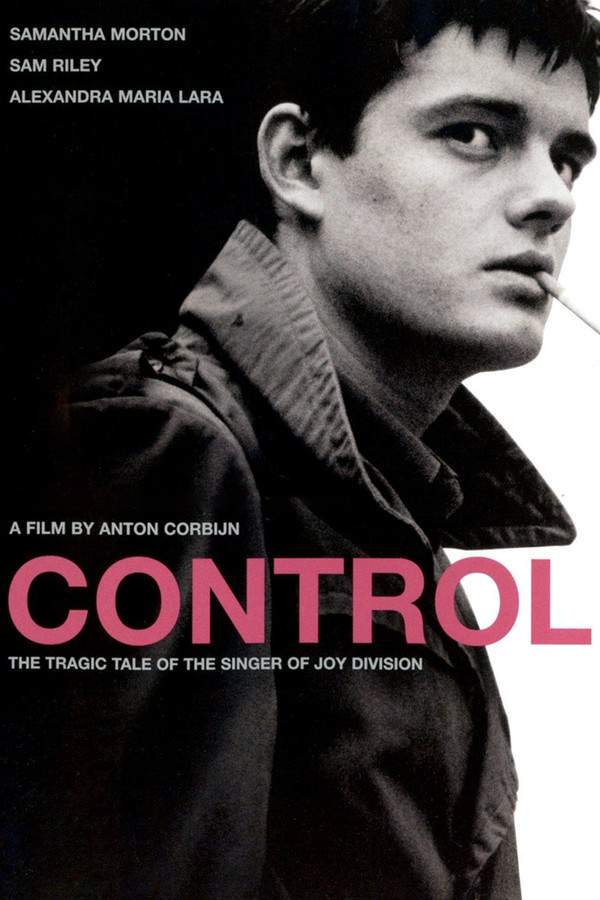
Control (2007) movie poster

Plot Summary

Control (2007) Plot Summary Explained

Release, runtime and language
2007 · 122 min · English
JustWatch #27,188 3
Directed by
Anton Corbijn
Starring
Sam Riley, Samantha Morton, Craig Parkinson

During the 1970s in England, Ian Curtis found his artistic voice as the frontman for Joy Division, drawing inspiration from musicians like David Bowie and Iggy Pop. As the band’s success grew, so did personal struggles, including a failing marriage, a new relationship, and the intense pressure of rising fame. Battling epilepsy and depression, Ian’s inner turmoil and the overwhelming demands of his career eventually took a tragic toll.

On this page (7)
  1. 1 Where to watch
  2. 2 What happens: full plot
  3. 3 Plot questions answered
  4. 4 The book behind the movie
  5. 5 Movie threads
  6. 6 Movies like Control
  7. 7 Every angle

Where to watch

Where to Watch Control (2007)

Where can you watch Control? Stream, rent or buy it in the US, including on Kanopy, Plex and Tubi TV: current JustWatch availability with up-to-date prices.

Streaming availability powered by JustWatch

Full plot summary · contains spoilers

What Happens in Control: Full Plot Summary

The whole story of Control (2007) explained, from the opening scene to the final frame: every key event, every twist and what it all adds up to. Read it as a quick recap before the sequel, to check a scene you missed, or to finally understand what really happened.

Ian Curtis and Debbie Woodruff marry in 1975 in their Macclesfield hometown, stepping into married life at 19 and 18, with Ian retreating into poetry and the quiet of home while Debbie grounds their world with care and everyday responsibilities. The two are drawn together by a shared hunger for meaning, and their bond anchors the turbulent path that lies ahead as the music scene around them begins to crackle with ambition and resistance.

A pivotal night in 1976 changes everything: they attend a Sex Pistols show that electrifies them, and the people around them — including Bernard Sumner, Peter Hook, and Terry Mason — start a band of their own. Ian is moved to volunteer as the singer, the project grows from a name change from Warsaw to Joy Division, and Terry shifts into a managerial role alongside drummer Stephen Morris. By the end of that year, the couple helps fund their first EP, An Ideal for Living, laying down a foundation that will weather sudden fame and mounting pressure.

As Ian works as an employment agent, he witnesses a client’s epileptic seizure, an episode that lends urgency to his own ambitions. He pushes to secure Joy Division a television spot on a program hosted by Tony Wilson, advocating for greater visibility. The band’s breakthrough moment comes when they perform “Transmission” on air and sign with Factory Records, a deal sealed almost theatrically when Wilson signs the contract with his own blood. The early triumphs are intoxicating, but they come with a price, fusing professional momentum with the strain of intimate life in a way that will soon test every boundary.

In December 1978, a seizure during a return trip from their first London gig exposes Ian to a harsh diagnosis: epilepsy. The medications he must take leave him drowsy and moody, and he learns of Corinne Lewis’s death from a seizure, an event that fuels his own songwriting — notably the early track “She’s Lost Control.” Meanwhile, Debbie’s world expands with the arrival of their daughter Natalie in April 1979, and Ian makes the difficult choice to quit his job to tour, leaving Debbie to work and care for the baby while he chases the band’s growing demands.

The pressure continues to mount as Ian opens up to Belgian journalist Annik Honoré about his unhappiness and a sense that his marriage may be a mistake. What begins as a budding connection becomes an affair during Joy Division’s January 1980 European tour. When Ian returns home, he confesses to Debbie that he is unsure if he still loves her, while the band begins planning a US tour and Rob informs them of departure on 19 May. Debbie uncovers evidence of the affair and confronts him; he promises the affair is over, but the bond with Annik persists during the recording of Closer in Islington.

A seizure interrupts a mid-song performance, and Annik admits she is falling in love with him, an emotional storm that pushes Ian toward desperation. He tries to cope with the mounting strain by self-destructive means, attempting an overdose, but doctors save him. He continues to perform, though exhaustion and audience expectations weigh heavily on him. At a show in Bury, the stress becomes unbearable, and the crowd riots when Crispy Ambulance’s Alan Hempsall steps in to cover for Ian, ending the gig in disarray. Ian confides to Tony that he feels everyone hates him and that the fault lies with him alone, a confession that further fractures the fragile morale of the band.

Debbie’s discovery that Ian has continued to see Annik triggers a painful confrontation that ends in a demand for divorce. Bernard tries hypnotherapy to help him, but it barely soothes the storm inside Ian, who retreats to stay with his parents. He writes to Annik, admitting his fear that epilepsy will eventually end his life and confessing that he loves her, a confession that hangs in the background as the couple’s life edges toward a breaking point.

On 17 May 1980, two nights before Joy Division is due to depart for America, Ian returns home and begs Debbie not to divorce him. When she refuses, he asks her to leave, and after drinking alone, he writes another letter to her. A final seizure leaves him unconscious, and the next morning he hangs himself from the Sheila Maid in the kitchen. Debbie discovers his body and rushes into the street, crying for help as the news of Ian’s death reverberates through the band. The remaining Joy Division members are stunned, while Tony Wilson consoles Annik. As Ian’s body is cremated, the band gathers in a café with Gillian Gilbert, a moment that foreshadows the future of the group and the enduring impact of his extraordinary, troubled life.
Last updated: October 09, 2025 at 15:45

Was this helpful?

Plot questions answered

Control Plot Explained: Your Questions Answered

The questions people ask most about Control (2007): what happens in the confusing scenes, why the characters do what they do, the twists, hidden details and what the ending means. Each answer contains spoilers.

Q1

Why did Ian Curtis start an affair with Annik Honoré?

Ian began the affair during Joy Division's January 1980 European tour after confiding to Belgian journalist Annik Honoré that he was miserable at home and felt his marriage might be a mistake. His unhappiness stemmed from the growing disconnect between his domestic life and his artistic identity, combined with the emotional toll of his epilepsy diagnosis and the pressures of rising fame.

Foreshadowing: Earlier, Ian had retreated into poetry and isolation after marrying Debbie, showing his struggle to balance domestic life with artistic pursuits.

  • affair
  • annik honoré
  • marriage
  • joy division
Q2

How did Ian Curtis develop epilepsy?

Ian was diagnosed with epilepsy in December 1978 after suffering a seizure during a return trip from Joy Division's first London gig. The diagnosis came after he had witnessed a client's epileptic seizure at his job as an employment agent, which lent urgency to his own ambitions and likely heightened his awareness of the condition.

Foreshadowing: Ian had witnessed a client's seizure at work before his own diagnosis, a moment that would later inspire "She's Lost Control."

  • epilepsy
  • seizure
  • diagnosis
  • london gig
Q3

Why did Debbie Curtis demand a divorce?

Debbie discovered that Ian had continued seeing Annik Honoré despite promising her the affair was over. After confronting Ian about the ongoing relationship, she demanded a divorce, ending their marriage. This betrayal came on top of years of Ian withdrawing from family life, quitting his job to tour, and the emotional strain of his illness.

Foreshadowing: Ian had confessed to Debbie that he was unsure if he still loved her, then promised to end the affair but maintained contact with Annik.

  • divorce
  • debbie
  • affair
  • confrontation
Q4

Why did Ian Curtis quit his job?

Ian quit his job as an employment agent in April 1979 to tour full-time with Joy Division, who were experiencing growing success and demands for their presence on the road. This decision left Debbie to work and care for their infant daughter Natalie while Ian pursued the band's mounting career obligations.

Foreshadowing: Before this, Ian had pushed for Joy Division to appear on Tony Wilson's television show, showing his drive for visibility and success.

  • job
  • quit
  • tour
  • employment agent
Q5

What triggered Ian's suicide attempt?

Ian's suicide attempt was triggered by a combination of factors: a seizure during a live performance that left him emotionally vulnerable, Annik admitting she was falling in love with him creating additional emotional pressure, and the overwhelming strain of touring, his failing marriage, and his battle with epilepsy. He attempted to overdose on phenobarbital but doctors saved his life.

Foreshadowing: Earlier, Ian had learned about Corinne Lewis's death from a seizure, which had already influenced his songwriting about mortality.

  • suicide attempt
  • overdose
  • phenobarbital
  • seizure
Q6

Why was "She's Lost Control" written?

"She's Lost Control" was inspired by the story of Corinne Lewis, a young woman who died from an epileptic seizure. After Ian witnessed his client's seizure at work and later experienced his own epilepsy diagnosis, the band wrote the track drawing from these traumatic experiences. The song became a central piece in Joy Division's repertoire.

Foreshadowing: Ian had witnessed a client's seizure at his job before his own diagnosis, directly inspiring the track.

  • shes lost control
  • corinne lewis
  • epilepsy
  • songwriting
Q7

Why did Joy Division break up after Ian Curtis's death?

Joy Division could not continue after Ian's death because he was the band's primary lyricist and emotional center. The remaining members, Bernard Sumner, Peter Hook, and Stephen Morris, were devastated by his suicide and eventually formed New Order with Gillian Gilbert, who had been in the café with them when they learned of Ian's death.

Foreshadowing: The film shows the band gathering in a café with Gillian Gilbert after Ian's cremation, foreshadowing their future formation.

  • joy division
  • break up
  • new order
  • band members
Q8

Why did Ian think everyone hated him?

Ian confided to Tony Wilson that he felt everyone hated him and that the fault lay with him alone. This belief stemmed from his deep depression, the strain his illness and personal struggles placed on the band, and his guilt over his failing marriage and ongoing affair. The psychological toll of epilepsy, the pressures of fame, and his sense of burdening others contributed to his isolation.

Foreshadowing: Earlier tensions had risen during a gig in Bury where the crowd rioted after Ian couldn't perform, adding to his sense of failure.

  • depression
  • tony wilson
  • guilt
  • band pressure
Q9

How did Ian and Debbie Curtis meet and marry?

Ian Curtis and Debbie Woodruff married in 1975 in their Macclesfield hometown when Ian was 19 and Debbie was 18. They were drawn together by a shared hunger for meaning, though Ian soon began retreating into poetry and solitude while Debbie grounded their world with everyday responsibilities.

Foreshadowing: The film establishes early that Ian preferred isolation while Debbie provided stability, setting up their eventual divide.

  • marriage
  • debbie woodruff
  • macclesfield
  • early relationship
Q10

What happened at the Bury gig that went wrong?

At a show in Bury at Derby Hall, the stress and pressure became unbearable for Ian. He was unable to complete the performance, and when Crispy Ambulance's Alan Hempsall stepped in to cover for him, the crowd riots ended the gig in disarray. This incident intensified Ian's feelings of failure and inadequacy.

Foreshadowing: This was one of several moments where Ian's epilepsy affected his ability to perform, building toward his final decline.

  • bury
  • derby hall
  • gig
  • riot
  • alan hempsall
Q11

What did Ian write in his final letter to Debbie?

After Ian returned home on May 17, 1980, and Debbie refused to reconcile, he wrote her another letter before his death. The exact contents aren't detailed in the film, but it followed his earlier letter to Annik where he admitted his fear that epilepsy would eventually end his life and declared his love for her. He had also previously written to Annik confessing his love.

Foreshadowing: Ian had written to Annik admitting his fear of death from epilepsy, showing his awareness of his own mortality.

  • letter
  • debbie
  • final note
  • suicide
Q12

Why did Tony Wilson sign the Factory Records contract with blood?

Tony Wilson signed Joy Division's contract with Factory Records almost theatrically using his own blood, a dramatic gesture that symbolized the intense commitment and personal stake both parties had in the deal. This unusual signing method reflected the rebellious, boundary-pushing ethos of the label and the era.

Foreshadowing: This theatrical moment highlighted the high stakes and personal relationships involved in the band's rise.

  • tony wilson
  • factory records
  • contract
  • blood
Q13

How did the Sex Pistols show inspire Joy Division's formation?

On June 4, 1976, Ian Curtis attended a Sex Pistols concert with school friends who would become his bandmates, Bernard Sumner, Peter Hook, and Terry Mason. Mesmerized by the performance, Ian volunteered to be their singer, and they began rehearsing under the name Warsaw before eventually changing it to Joy Division.

Foreshadowing: This pivotal night directly led to the band's formation and set the trajectory for Ian's artistic path.

  • sex pistols
  • joy division
  • warsaw
  • band formation
Q14

Why was Ian Curtis unhappy despite the band's success?

Ian was unhappy because the band's rapid success intensified his personal struggles rather than alleviating them. The fame brought mounting pressure, touring demands, and a growing disconnect from his domestic life. His epilepsy diagnosis, depression, and the strain of balancing artistic ambition with family responsibilities created an unbearable inner conflict that success couldn't resolve.

Foreshadowing: Even as they signed with Factory Records and gained recognition, Ian was already withdrawing from Debbie and struggling internally.

  • success
  • fame
  • depression
  • unhappiness
  • pressure

Movie threads

More Movies Like Control, by Mood & Story

Curated lists built around what makes Control tick: the same mood, the same kind of story or the same emotional payoff. Each list explains why these movies belong together.

Tragic Music Biopics like Control

Movies exploring the devastating toll of fame and talent on fragile genius. If you were moved by the story of Ian Curtis in Control, explore other movies like it. This collection features similar musician biography films that tackle themes of depression, the pressures of fame, and tragic endings. Discover stories of artists whose inner turmoil eclipsed their public success.

  • tragic
  • melancholic
  • somber
  • raw
  • introspective
  • desperate
  • Tone: dark, melancholic, tragic
  • Pacing: steady, methodical
Why these movies?

The story pattern: Stories in this thread typically follow a linear, chronological rise-to-fame arc that runs parallel to a protagonist's personal decline. The central conflict is the tension between creative expression and the crushing weight of expectation, illness, or personal weakness, often culminating in a bleak or tragic conclusion.

Why they belong together: These films are grouped together because they share a specific, somber mood focused on the price of genius. They combine the realism of a biography with the emotional weight of a tragedy, featuring steady pacing, high emotional intensity, and a dark tone that respects the gravity of their subject's real-life struggles.

Movies about Mental Health Decline like Control

Character studies where internal struggles steadily overwhelm a life. For viewers seeking films similar to Control's portrayal of internal struggle. This list features intense dramas about characters grappling with depression, epilepsy, and other conditions that lead to a slow, somber decline. Find other movies that explore the heavy weight of mental health and personal crisis with a steady, realistic pace.
  • oppressive
  • intense
  • somber
  • desperate
  • heavy
  • psychological
  • Tone: somber, oppressive, intense
  • Pacing: steady, building dread
Why these movies?

The story pattern: The narrative pattern involves a steady, almost inevitable progression towards a crisis point. Multiple threads of conflict—such as a failing marriage, a secret affair, and a debilitating health condition—interweave to create a sense of mounting, inescapable pressure on the protagonist, with the pacing emphasizing the grim inevitability of the outcome.

Why they belong together: These movies are connected by their oppressive atmosphere and their focus on internal, psychological conflict. They share a steady pacing that builds dread, a high intensity driven by serious themes, and a overwhelmingly somber mood. The emotional journey is consistently heavy, offering little relief as the character's world closes in.

If you liked this

Movies Like Control

Similar movies to Control: the same genre, themes or kind of story. Each one comes with its own plot summary, timeline and ending explained.

Browse all movie summaries

Every angle

Control (2007) Explained: Plot, Timeline & Characters

Everything about Control in one place: what happens in the plot summary, the timeline in chronological order, the characters and meaning and a spoiler-free summary. What's After the Movie adds the cast, box office and post-credit scenes.

Coming soon on iOS and Android

The Plot Explained Movie Summary App

Plot summaries, endings explained and timelines on your phone. Catch up on any movie in minutes, save your favorites and never miss a twist again.

Be the first to know when we launch. Your email stays private, always.

Learn more about the app