





Plot Explained Spoilers guaranteed!
Plot Explained

Browse by genre

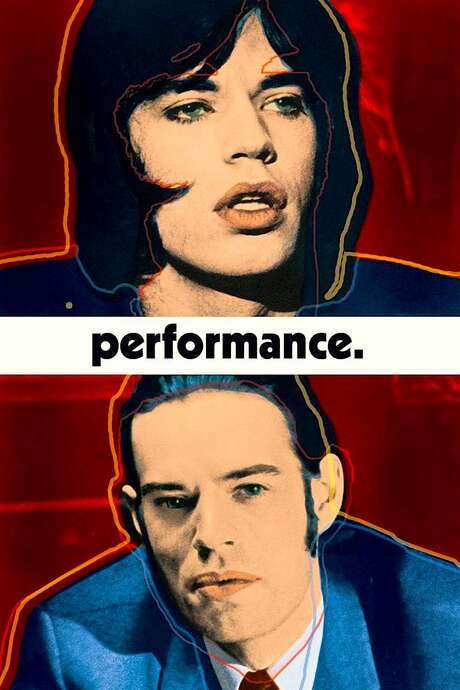
Performance (1970) movie poster

Plot Summary

Performance (1970) Plot Summary Explained

Release, runtime and language
1970 · 106 mins · English
Directed by
Nicolas Roeg, Donald Cammell
Starring
Ian McShane, Mick Jagger, Kenneth Colley, Allan Cuthbertson, Jane Lapotaire, James Fox

The film weaves fantasy and reality, vice and its reverse, through the intersecting lives of two unlikely figures. Chas Devlin, a hardened underworld “performer” skilled in violence and intimidation, crosses paths with Turner, a reclusive rock star. Their meeting ignites an exotic, explosive collision of crime and music.

On this page (6)
  1. 1 Where to watch
  2. 2 What happens: full plot
  3. 3 Plot questions answered
  4. 4 Movie threads
  5. 5 Movies like Performance
  6. 6 Every angle

Where to watch

Where to Watch Performance (1970)

Where can you watch Performance? Stream, rent or buy it in the US, including on Amazon Video, Apple TV Store and Fandango At Home: current JustWatch availability with up-to-date prices.

Streaming availability powered by JustWatch

Full plot summary · contains spoilers

What Happens in Performance: Full Plot Summary

The whole story of Performance (1970) explained, from the opening scene to the final frame: every key event, every twist and what it all adds up to. Read it as a quick recap before the sequel, to check a scene you missed, or to finally understand what really happened.

Chas Devlin is part of an East London gang led by the ruthless Harry Flowers. Chas is known for his brutal efficiency and a taste for violence, and his casual, rough liaisons reflect a world where loyalty is thin and danger is constant. When Flowers intends to seize a betting shop owned by Joey Maddocks, he forbids Chas from getting involved, wary that Chas’s tangled history with Maddocks could ignite trouble. Chas resents the order and later humiliates Maddocks, who retaliates by wrecking Chas’s apartment and attacking him; in the ensuing confrontation, Chas shoots Maddocks and packs a suitcase to vanish.

With Flowers making it clear he won’t offer protection, Chas decides to slip away to the countryside, hoping to disappear. But luck or fate nudges him toward Notting Hill Gate, where he overhears a musician talking about going on tour and leaving his rented room. He arrives, adopts a new persona, and claims to be a fellow performer, though the alias he uses—Johnny Dean—is a deception designed to gain entry.

There he meets Pherber, a woman living with Turner, a reclusive former rock star who has “lost his demon,” and Lucy, with whom Turner shares a non-possessive and bisexual ménage à trois. A child named Lorraine floats in and out of the house, adding a fragile brightness to the tense atmosphere. At first, Chas eye-rolls at Turner, but the two men begin to influence each other in unexpected ways. Pherber and Turner press him to reveal what makes him function so effectively within his world.

To accelerate the process, Pherber tricks him with a psychedelic mushroom, and Chas accuses them of poisoning him. In a hallucinogenic haze, he experiments with clothing and identity, even slipping into feminine clothes. The experience broadens his empathy, and he forms a surprising, caring bond with Lucy.

Before any of this unfolds, he had phoned Tony, a trusted friend who calls him “Uncle,” to help him slip out of the country. Flowers and his henchmen use Tony to trace Chas to Turner's flat, and they allow him to go upstairs to gather his things. When Chas tells Turner and Pherber that he is leaving, the tension snaps: he shoots and kills Turner and is then escorted into Flowers’s car. As the vehicle pulls away, Chas still wears the feminine clothes and wig, but his face is identical to Turner’s, a brutal final turn of identity and fate.

Last updated: October 09, 2025 at 11:25

Was this helpful?

Plot questions answered

Performance Plot Explained: Your Questions Answered

The questions people ask most about Performance (1970): what happens in the confusing scenes, why the characters do what they do, the twists, hidden details and what the ending means. Each answer contains spoilers.

Q1

Why does Chas shoot Joey Maddocks?

Chas shoots Maddocks after Maddocks retaliates by wrecking Chas's apartment and attacking him directly. The confrontation escalates from their existing feud, and Chas kills Maddocks in the fight. This act forces Chas to go on the run, as he knows Flowers will turn on him for creating this problem.

Foreshadowing: Flowers had explicitly forbidden Chas from getting involved with Maddocks, warning that Chas's complicated history with him would cause trouble.

  • Chas Devlin
  • Joes Maddocks
  • shooting
  • killing
  • gangster
Q2

Why does Chas adopt the alias Johnny Dean at Turner's flat?

Chas overhears a musician mentioning he's going on tour and leaving a rented room in Notting Hill Gate. Seeing an opportunity to disappear, Chas travels there and pretends the musician recommended him, presenting himself as fellow performer Johnny Dean to gain entry into the household.

  • Johnny Dean alias
  • Chas
  • Turner
  • pretending
  • identity
Q3

What does it mean that Turner has lost his demon?

Turner is described as a reclusive former rock star who has lost his demon, meaning he has lost his creative drive, passion, and the fiery ambition that made him a successful musician. This loss of artistic identity is why he lives in seclusion, surrounded by Pherber and Lucy in his Notting Hill flat.

  • Turner
  • lost demon
  • rock star
  • creative drive
  • recluse
Q4

Why does Pherber drug Chas with psychedelic mushrooms?

Pherber and Turner are trying to understand what makes Chas function so effectively in his violent criminal world. They use the psychedelic mushroom to accelerate his psychological breakdown, hoping to break down his defenses and reveal his true self. The drug is intended to force him toward vulnerability and self-examination.

Foreshadowing: Turner and Pherber had already begun probing Chas's motivations and past, trying to decode his behavior.

  • Pherber
  • mushrooms
  • drugs
  • psychedelic
  • transformation
  • Chas
Q5

Why does Chas start wearing feminine clothes?

During his hallucinogenic trip induced by the mushroom, Chas experiments with clothing and identity, including wearing feminine clothes. This experimental phase expands his self-image and reveals a more vulnerable side, marking a significant shift away from his hardened gangster persona.

Foreshadowing: Pherber and Turner had been pushing him to explore different aspects of himself.

  • Chas
  • feminine clothes
  • identity
  • hallucination
  • transformation
Q6

How does Harry Flowers find Chas at Turner's flat?

Flowers tracks Chas by using Tony, a trusted friend who calls Chas "Uncle." Chas had phoned Tony to help him escape the country, and Flowers and his henchmen exploit this connection to locate Chas at Turner's flat. They allow Tony to go upstairs first to gather Chas's things.

Foreshadowing: Chas phones Tony specifically to arrange an escape plan out of the country.

  • Harry Flowers
  • Tony
  • tracking
  • Turner's flat
  • Chas
Q7

Why does Chas kill Turner at the end?

When Chas tells Turner and Pherber he is leaving for good, the tension in the household reaches a breaking point. Chas shoots and kills Turner, removing both a key figure in his transformation and a potential obstacle. The killing represents Chas reverting to his violent nature despite the psychological changes he'd undergone, and it signals his complete surrender to Flowers' world.

Foreshadowing: The entire household dynamic had been building toward this confrontation, with Chas caught between two worlds.

  • Turner
  • killing
  • shooting
  • Chas
  • death
Q8

What happens to Chas at the end of the film?

After killing Turner, Chas is escorted into Flowers' car and driven away from the flat. Notably, he still wears the feminine clothes and wig from his transformative experience, but his face has become identical to Turner's. This marks the final twist: Chas's identity has been completely subsumed by his encounter with Turner, and he is now effectively captured by the gangster world he tried to escape.

Foreshadowing: The entire narrative has been building toward Chas losing his original identity through his immersion in Turner's world.

  • Chas
  • Turner
  • identity
  • final scene
  • transformation
  • Flowers car
Q9

Why does Chas form a caring bond with Lucy?

As the psychedelic experience loosens his defenses and he begins experimenting with identity, Chas opens up emotionally and forms a caring relationship with Lucy. This connection challenges his violent past and offers him tenderness and human connection he had never experienced in the gangster world.

Foreshadowing: The drug experience had already begun breaking down his emotional barriers.

  • Chas
  • Lucy
  • relationship
  • tenderness
  • emotional connection
Q10

Why does Harry Flowers want Chas eliminated?

Flowers makes it clear he has no intention of protecting Chas and instead wants him eliminated. This is because Flowers had forbidden Chas from getting involved in the Maddocks betting shop takeover due to their complicated history, but Chas defied the order and killed Maddocks anyway. This act of defiance made Chas a liability rather than an asset.

Foreshadowing: Flowers had explicitly warned Chas that his history with Maddocks would cause trouble and that he would not protect him.

  • Harry Flowers
  • Chas
  • elimination
  • betrayal
  • gangster loyalty
Q11

Who is the child Lorraine in Turner's house?

Lorraine is a child who floats in and out of Turner's Notting Hill flat, adding a fragile brightness to the tense atmosphere of the household. She represents innocence and unpredictability within the otherwise dark and psychologically charged environment of the house.

  • Lorraine
  • child
  • Turner household
  • mystery

Movie threads

More Movies Like Performance, by Mood & Story

Curated lists built around what makes Performance tick: the same mood, the same kind of story or the same emotional payoff. Each list explains why these movies belong together.

Identity crisis thrillers like in Performance

Stories where a character's identity unravels in a confined, psychologically oppressive space. Find more movies like Performance, where characters undergo profound identity crises. These films often feature confined settings, psychological manipulation, and a blurring of reality, perfect for viewers who enjoy intense, character-driven stories of personal transformation under duress.

  • claustrophobic
  • identity crisis
  • psychological
  • anxious
  • oppressive
  • hallucinatory
  • Tone: dark, psychologically intense, bleak
  • Pacing: steady, methodical, building pressure
Why these movies?

The story pattern: These narratives typically follow a character who enters a new, insular world—a secluded house, a cult, or a criminal underworld—that challenges their core identity. Through psychological games, drugs, or forced conformity, their old self dissolves, leading to a new, ambiguous, or tragic persona by the story's end.

Why they belong together: Movies are grouped here for their shared focus on the psychological process of identity loss. They create a claustrophobic, anxious mood through steady pacing, high intensity, and themes of transformation, making the viewer experience the character's disorientation firsthand.
Movies where crime clashes with art like Performance

Violent criminal and reclusive artist worlds explosively intersect, changing both forever. If you liked the collision of gangster violence and psychedelic artistry in Performance, explore these similar films. They depict the explosive meeting of disciplined criminal lives and chaotic creative worlds, often with dark, complex narratives and heavy emotional impact.

  • brutal
  • psychedelic
  • confrontational
  • anxious
  • hallucinatory
  • violent
  • Tone: dark, confrontational, psychedelic
  • Pacing: steady, building towards explosion
Why these movies?

The story pattern: The plot follows a figure from a world of order and violence (a gangster, soldier, or enforcer) who is forced into the sphere of a chaotic artist or intellectual. Their clash creates a catalyst for destruction, revelation, or bizarre fusion, leading to an ending where neither world remains unchanged.

Why they belong together: These films share a specific vibe defined by the high-tension contrast between two opposing subcultures. The tone is dark, the pacing is steady as it builds to a climax, and the emotional weight is heavy, driven by themes of violence, masculinity, and existential crisis.

If you liked this

Movies Like Performance

Similar movies to Performance: the same genre, themes or kind of story. Each one comes with its own plot summary, timeline and ending explained.

Browse all movie summaries

Every angle

Performance (1970) Explained: Plot, Timeline & Characters

Everything about Performance in one place: what happens in the plot summary, the timeline in chronological order, the characters and meaning and a spoiler-free summary. What's After the Movie adds the cast, box office and post-credit scenes.

Coming soon on iOS and Android

The Plot Explained Movie Summary App

Plot summaries, endings explained and timelines on your phone. Catch up on any movie in minutes, save your favorites and never miss a twist again.

Be the first to know when we launch. Your email stays private, always.

Learn more about the app