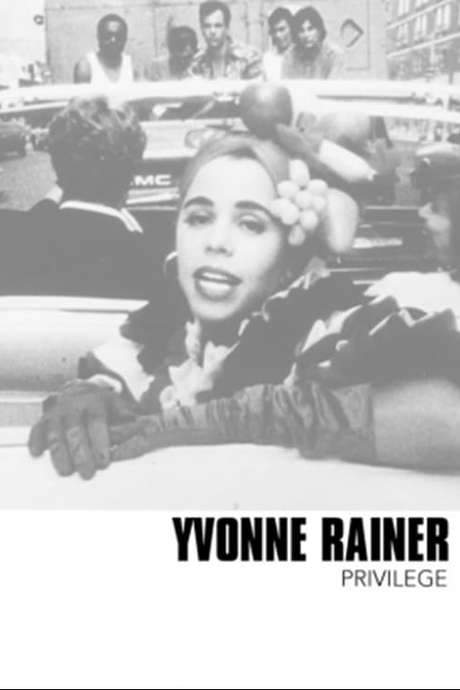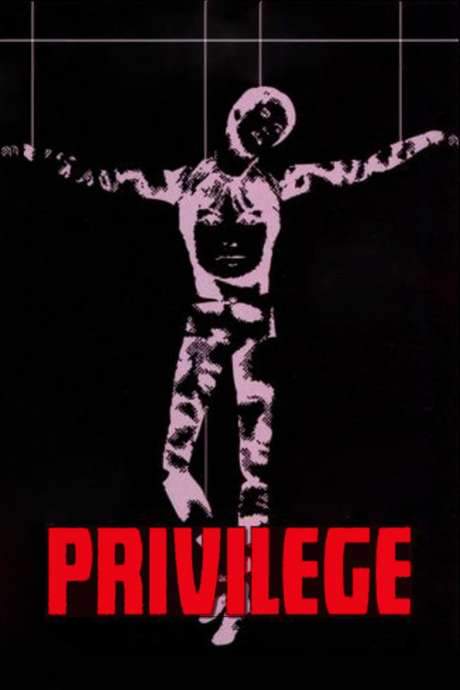
Privilege

Privilege

Year: 1967

Runtime: 103 mins

Language: English

Director: Peter Watkins

Drama

Britain’s megastar pop singer Steven Shorter enjoys near‑universal adulation, yet he is nothing more than a government puppet, used to push state agendas. When acclaimed artist Vanessa Ritchie is hired to paint his portrait, her presence forces Shorter to confront the manipulation of his handlers and reconsider his blind obedience.

Warning: spoilers below!

Haven’t seen Privilege yet? This summary contains major spoilers. Bookmark the page, watch the movie, and come back for the full breakdown. If you're ready, scroll on and relive the story!

Timeline & Setting – Privilege (1967)

Explore the full timeline and setting of Privilege (1967). Follow every major event in chronological order and see how the environment shapes the story, characters, and dramatic tension.

Time period

Near-future 1970s England

Set in a version of 1970s England where mass media is a dominant force in shaping public life. A coalition government uses celebrity power to pacify the populace and suppress political activity. The period blends spectacle with social control, showing how entertainment becomes a tool of statecraft.

Location

England

England serves as the setting for a nation saturated by media and political theater. The action unfolds across stadiums, television studios, churches, and commercial venues that collectively propel Steven Shorter’s manufactured persona. The near-future 1970s context highlights the collision between pop culture, politics, and consumer capitalism.

🏛️ Political system 🗞️ Media culture 🎭 Celebrity worship

Last Updated: October 04, 2025 at 14:21

Main Characters – Privilege (1967)

Meet the key characters of Privilege (1967), with detailed profiles, motivations, and roles in the plot. Understand their emotional journeys and what they reveal about the film’s deeper themes.

Steven Shorter (Paul Jones)

A disillusioned pop star who is the country’s adored celebrity and public morale tool. He is relentlessly guided by handlers and pressured to perform, while privately haunted by real scars from the act. His longing for genuine individuality clashes with a system that treats him as a consumable symbol.

🎭 Fame 🧠 Manipulation 💔 Vulnerability

Martin Crossley

Shorter’s manager and primary architect of his public persona. He orchestrates appearances, narratives, and image shifts to keep the star in the spotlight. He shows little concern for the personal cost to Shorter, embodying calculated control.

💼 Management 🗺️ Control 🗣️ Manipulation

Alvin Kirsch

Public relations intermediary who shapes public perception and peddles the star's image. He operates as part of a larger machine, prioritizing audience reaction and marketability over authenticity. His work exemplifies the financial and reputational pressures behind fame.

💬 Imagecraft 🧪 Experimentation 🧾 Corporate influence

Julie Jordan (Max Bacon)

Record company executive driving the commercial viability of Shorter’s career. She choreographs publicity campaigns and partnerships, balancing profit with the star’s public face. Her decisions reveal how profit motives steer celebrity narratives.

💼 Profit-driven 📣 Public image 🧭 Strategic planning

Andrew Butler (William Job)

Financial backer steering the Shorter empire. He measures success in returns and is willing to pull the plug if the numbers don’t add up. His stance anchors the economic engine behind the celebrity's rise and fall.

💰 Finance 🏦 Investor influence 🧭 Risk management

Vanessa Ritchie (Jean Shrimpton)

Artist hired to paint Shorter’s portrait, offering a rare emotional counterpoint to the machine. She becomes a confidante who glimpses the man behind the image, sharing moments of loneliness and vulnerability. Her presence introduces a humanizing thread amid the spectacle.

🎨 Artist 🤝 Connection 🕊️ Empathy

Reverend Jeremy Tate (Malcolm Rogers)

A firebrand preacher who channels nationalist sentiment into public worship of Shorter. He helps mold the singer into a messianic figure and frames conformity as virtue. His rhetoric anchors the religious dimension of the political project.

⛪ Religion 🔊 Propaganda 🗳️ Mass mobilization

Last Updated: October 04, 2025 at 14:21

Major Themes – Privilege (1967)

Explore the central themes of Privilege (1967), from psychological, social, and emotional dimensions to philosophical messages. Understand what the film is really saying beneath the surface.

🎭 Fame and Control

The narrative reveals how Shorter’s image is manufactured by a web of handlers and institutions. Fame becomes a instrument of political and commercial power rather than true personal expression. The tension between authentic self and managed persona drives the drama.

⛪ Religion and State

Churches are co-opted to bolster Shorter’s image and national unity, turning faith into a social tool. The marriage of church authority and political interests demonstrates how belief systems can be leveraged to control behavior. The messianic veneer hides manipulation and fear.

💼 Commercialization

A sprawling network of brands, venues, and media outlets monetizes Shorter’s every move. His career becomes a marketed product designed to yield profits and maintain public order. When his authenticity bleeds through, the system retaliates to safeguard its financial interests.

Last Updated: October 04, 2025 at 14:21

Mobile App Preview

Coming soon on iOS and Android

The Plot Explained Mobile App

From blockbusters to hidden gems — dive into movie stories anytime, anywhere. Save your favorites, discover plots faster, and never miss a twist again.

Sign up to be the first to know when we launch. Your email stays private — always.

Explore Movie Threads

Discover curated groups of movies connected by mood, themes, and story style. Browse collections built around emotion, atmosphere, and narrative focus to easily find films that match what you feel like watching right now.

Dystopian State Control Movies like Privilege

Stories where individuals are crushed by the machinery of state propaganda.If you enjoyed the satirical and oppressive world of 'Privilege', explore more movies about propaganda and state control. This list features films where individuals, often artists or public figures, are manipulated by powerful systems, leading to stories of disillusionment and the loss of identity.

dystopianoppressivesatiricalanxiousdisillusionedpoliticalclaustrophobic

Narrative Summary

These narratives typically follow a character who initially benefits from or is complicit in a manipulative system. A catalyst—often an outsider or a personal revelation—forces them to see the truth, leading to a crisis of conscience and a futile or tragic attempt to resist the overwhelming power of the state.

Why These Movies?

These films are grouped together because they share a dark, satirical tone and a high-intensity focus on psychological manipulation. They create an anxious, oppressive mood by exploring the theme of the individual versus the propaganda machine, usually culminating in a bleak or ambiguous ending for the protagonist.


Movies about Exploited Fame like Privilege

Character studies of stars whose public image is a cage built by handlers.For viewers who liked 'Privilege's take on a manipulated pop star, this list features similar stories about the exploitation of celebrities. These dramas explore the heavy emotional weight of being a public puppet and the isolating journey of losing one's authentic self to a manufactured image.

melancholicalienatingdisillusionedanxiouspsychologicalsatiricaloppressive

Narrative Summary

The narrative arc centers on a famous person who realizes their success is a carefully constructed prison. As they become aware of the strings being pulled, their internal conflict grows, often leading to a public or private breakdown. The story is a slow unraveling of a persona, emphasizing melancholy and disillusionment.

Why These Movies?

These movies share a heavy emotional weight and a steady, character-driven pacing that builds towards a climax of personal collapse. The dominant mood is melancholic and alienating, united by the core theme of a loss of identity under the pressures of fame and external control.

Unlock the Full Story of Privilege

Don't stop at just watching — explore Privilege in full detail. From the complete plot summary and scene-by-scene timeline to character breakdowns, thematic analysis, and a deep dive into the ending — every page helps you truly understand what Privilege is all about. Plus, discover what's next after the movie.

Privilege Summary

Read a complete plot summary of Privilege, including all key story points, character arcs, and turning points. This in-depth recap is ideal for understanding the narrative structure or reviewing what happened in the movie.

Privilege Summary

Privilege Timeline

Track the full timeline of Privilege with every major event arranged chronologically. Perfect for decoding non-linear storytelling, flashbacks, or parallel narratives with a clear scene-by-scene breakdown.

Privilege Timeline

Privilege Spoiler-Free Summary

Get a quick, spoiler-free overview of Privilege that covers the main plot points and key details without revealing any major twists or spoilers. Perfect for those who want to know what to expect before diving in.

Privilege Spoiler-Free Summary

More About Privilege

Visit What's After the Movie to explore more about Privilege: box office results, cast and crew info, production details, post-credit scenes, and external links — all in one place for movie fans and researchers.

More About Privilege

Similar Movies to Privilege

Discover movies like Privilege that share similar genres, themes, and storytelling elements. Whether you’re drawn to the atmosphere, character arcs, or plot structure, these curated recommendations will help you explore more films you’ll love.