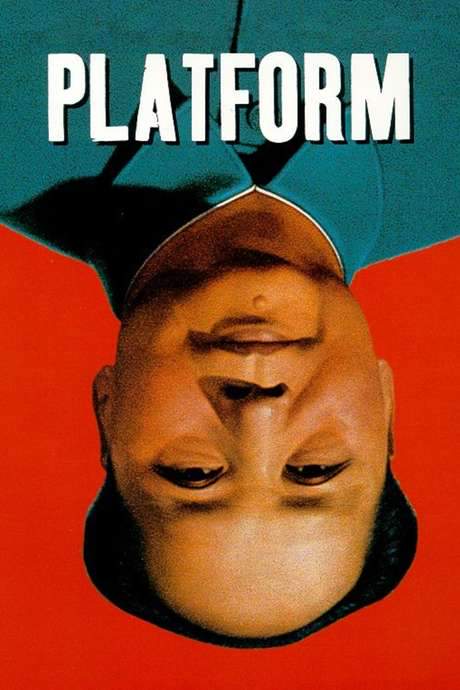
Platform

Platform

Year: 2000

Runtime: 155 mins

Language: Chinese

Director: Jia Zhangke

DramaHistory

China’s rapid changes from the late 1970s to the early 1990s, as seen through the lives of four performers in a theater troupe.

Warning: spoilers below!

Haven’t seen Platform yet? This summary contains major spoilers. Bookmark the page, watch the movie, and come back for the full breakdown. If you're ready, scroll on and relive the story!

Platform (2000) – Full Plot Summary & Ending Explained

Read the complete plot breakdown of Platform (2000), including all key story events, major twists, and the ending explained in detail. Discover what really happened—and what it all means.

Set in 1979, just after the Cultural Revolution, a young performance troupe in Fenyang performs state-approved material as China begins to loosen its hold on everyday life. The group introduces four members in the opening arc: Cui Minliang, Wang Hongwei as Cui; Yin Ruijuan, Zhao Tao as Yin; Chang Jun, Liang Jingdong as Chang Jun; and Zhong Pin, Yang Lina as Zhong Pin. The mood is a mix of duty and curiosity, with Cui’s restless streak clashing with family expectations and elders, while he covets the worldliness he associates with Chang Jun’s trips to Guangzhou, where consumer goods become more accessible in a rapidly liberalizing economy. Cui’s pursuit of Yin Ruijuan is complicated by her father’s rigid military discipline, and Zhong Pin’s more liberal influence on her companion only fuels their tensions. In a pivotal turn, Chang Jun’s accidental pregnancy of Zhong Pin and the pressure to terminate tests the loyalties within the troupe and lays bare the fractures beneath the troupe’s glossy surface.

As the troupe begins to bend to Western influences and, ultimately, to privatization, Cui remains a creature of longing and disquiet, his heart fixed on Yin Ruijuan even as life pulls them in different directions. The others—Chang Jun and Zhong Pin—also navigate shifting loyalties and changing ambitions, while Yin quietly watches as the social landscape around them shifts with electricity spreading to rural villages and new forms of entertainment entering the mainstream. The journey brings them to Sanming, Cui’s uneducated peasant cousin, whose sister Wenying stays with Cui’s family, illustrating the widening gap between urban opportunities and rural realities. Sanming’s desperation leads him to take a low-paying job in an unregulated coal mine to help fund Wenying’s university dreams, a decision that underscores the stark costs of ambition in this era. Before the troupe departs, Sanming gives Cui five yuan to pass to Wenying, with a stern warning to tell her never to return, a moment that casts a long shadow over the family’s prospects and foreshadows the tragic ironies of progress. On the road, a muddy truck and the sight of a train roaring past for the first time become potent symbols of a country moving forward faster than its people can adapt.

Back on the road, Chang Jun and Zhong Pin’s relationship endures, while Cui continues to yearn for Yin Ruijuan, who remains emotionally cautious and often noncommittal. The troupe’s illicit, out-of-wedlock entanglements come under scrutiny, and after investigations, they return to Fenyang. Cui’s generosity toward Wenying—ten yuan this time—uncovers the limits of opportunity for a family in a period of transition; Wenying, disappointed by her brother’s prospects, questions the path laid out for her. Zhong Pin, meanwhile, severs contact with Zhang and the rest of the troupe, signaling a broader retreat from old ties as the group rebrands itself as a Shenzhen-based rock ensemble and resumes touring, albeit under precarious new management and with limited permissions. The road now takes them to the highway edges and even as far as Inner Mongolia, where performances are squeezed into roadside spaces and the troupe must improvise to stay afloat.

As the cycle of travel, reform, and hardship continues, Cui, Zhang Jun—whose role grows more complicated with the shifting politics of the era—and Yao Eryong, another troupe member, leave the old troupe and venture into a business dealing in construction materials. A chance encounter brings them face to face with Yin Ruijuan again, now working as a tax collector, her memories of the troupe’s glory days still vivid and poignant. The reunion is both a balm and a reminder of the fractures that time hasn’t fully healed. Cui, still bearing the weight of past rejections, makes a quiet, renewed effort to reconnect with Yin Ruijuan, a gesture that rekindles a fragile bond. The film culminates in a quietly hopeful turn: Cui and Yin Ruijuan are married, their son in tow, and as a train whistle signals closure over the credits, the pair looks toward a future built from the ruins and triumphs of the era they endured together.

In this sweeping, humane portrait, the story travels from post-Revolutionary investments in state art to the messy, intimate economics of family, desire, and belonging. It is a meditation on how a country’s rapid modernization intersects with personal dreams, how friendships bend under pressure, and how love can persist—sometimes quietly, sometimes stubbornly—amid the constant push-pull of a society in flux.
Last Updated: October 09, 2025 at 15:25

Mobile App Preview

Coming soon on iOS and Android

The Plot Explained Mobile App

From blockbusters to hidden gems — dive into movie stories anytime, anywhere. Save your favorites, discover plots faster, and never miss a twist again.

Sign up to be the first to know when we launch. Your email stays private — always.

Explore Movie Threads

Discover curated groups of movies connected by mood, themes, and story style. Browse collections built around emotion, atmosphere, and narrative focus to easily find films that match what you feel like watching right now.

Decades-spanning epics of social change like Platform

Epic stories following ordinary lives through decades of rapid social transformation.Find movies like Platform that track characters over many years, capturing the personal impact of societal evolution. These films share a slow, contemplative pace and a bittersweet tone, ideal for viewers who enjoy historical depth and complex character development.

epicnostalgiccontemplativehistoricalmelancholiclongingautumnal

Narrative Summary

Stories in this thread typically unfold over a long period, often decades, using the passage of time as a central narrative force. Character arcs are defined by their adaptation to or resistance against sweeping social, economic, or political changes, with personal dreams often clashing with historical forces.

Why These Movies?

These films are grouped by their sprawling chronological structure, melancholic reflection on the past, and thematic focus on the intersection of personal lives and history. They share a similar pacing and emotional weight, creating a deeply immersive and reflective viewing experience.

Melancholic stories of artists like in Platform

Quiet dramas about creators navigating compromise, nostalgia, and changing times.If you liked Platform's focus on performers and artistic life, explore these movies about musicians, writers, and artists. They share a similar melancholic mood, slow pacing, and heavy emotional weight, centering on the tension between creative dreams and societal realities.

melancholicnostalgiccontemplativeartisticlonginghopefulautumnal

Narrative Summary

The narrative follows artists or creatives through a significant portion of their lives, examining how their relationship with their art evolves. Conflicts are often internal (doubt, fading passion) or societal (commercial pressures, political change), leading to journeys of self-discovery, compromise, or quiet resilience.

Why These Movies?

This thread groups movies by their shared focus on artistic protagonists, a contemplative and often melancholic mood, and themes of nostalgia and integrity. The similarity lies in the specific character type and the emotional tone used to explore their struggles and relationships.

Unlock the Full Story of Platform

Don't stop at just watching — explore Platform in full detail. From the complete plot summary and scene-by-scene timeline to character breakdowns, thematic analysis, and a deep dive into the ending — every page helps you truly understand what Platform is all about. Plus, discover what's next after the movie.

Platform Timeline

Track the full timeline of Platform with every major event arranged chronologically. Perfect for decoding non-linear storytelling, flashbacks, or parallel narratives with a clear scene-by-scene breakdown.

Platform Timeline

Characters, Settings & Themes in Platform

Discover the characters, locations, and core themes that shape Platform. Get insights into symbolic elements, setting significance, and deeper narrative meaning — ideal for thematic analysis and movie breakdowns.

Characters, Settings & Themes in Platform

Platform Spoiler-Free Summary

Get a quick, spoiler-free overview of Platform that covers the main plot points and key details without revealing any major twists or spoilers. Perfect for those who want to know what to expect before diving in.

Platform Spoiler-Free Summary

More About Platform

Visit What's After the Movie to explore more about Platform: box office results, cast and crew info, production details, post-credit scenes, and external links — all in one place for movie fans and researchers.

More About Platform

Similar Movies to Platform

Discover movies like Platform that share similar genres, themes, and storytelling elements. Whether you’re drawn to the atmosphere, character arcs, or plot structure, these curated recommendations will help you explore more films you’ll love.