Plot Explained Spoilers guaranteed!
Plot Explained

Browse by genre

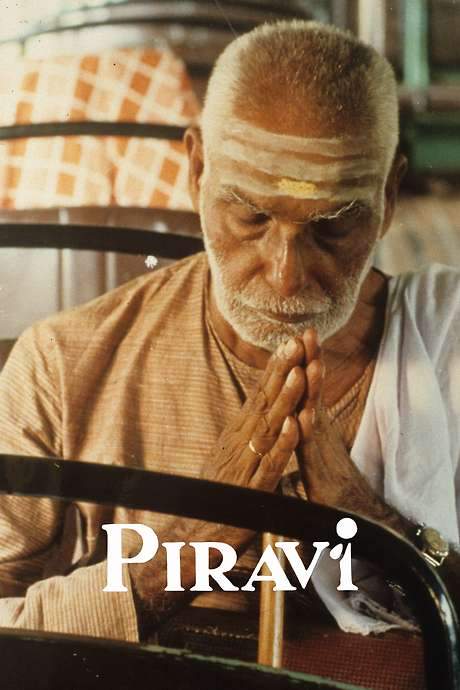
Piravi (1989) movie poster

Plot Summary

Piravi (1989) Plot Summary Explained

Release, runtime and language
1989 · 110 mins · Malayalam
Directed by
Shaji N. Karun
Starring
V K Sreeraman, Archana, Lakshmi Krishnamurthy, Premji

During India’s Emergency, devoted father Raghava Chakyar anxiously waits each day at the bus stop for his only son Raghu, who never returns in time for his sister’s engagement. He learns Raghu has been detained by the police for political reasons and embarks on a determined search to uncover the truth behind his arrest.

On this page (5)
  1. 1 What happens: full plot
  2. 2 Plot questions answered
  3. 3 Movie threads
  4. 4 Movies like Piravi
  5. 5 Every angle

Full plot summary · contains spoilers

What Happens in Piravi: Full Plot Summary

The whole story of Piravi (1989) explained, from the opening scene to the final frame: every key event, every twist and what it all adds up to. Read it as a quick recap before the sequel, to check a scene you missed, or to finally understand what really happened.

Raghu is one of two children born to Raghava Chakyar and his wife Lakshmi Krishnamurthy. Born many years after his parents’ marriage, Raghu is brought up with immense devotion and love, a warmth that shapes him into adulthood with a steady sense of belonging.

Now studying in an engineering college far from home, Raghu must return home for the engagement ceremony of his sister Archana, but he fails to show up. His father waits endlessly for his son to return, his days folded into the quiet ritual of heading to the local bus stop and watching the road for a glimmer of Raghu’s return. The family is jolted when newspapers report that Raghu has been taken into custody by the police for political reasons, a development that feels unreal yet entirely real in its implications.

Raghava Chakyar sets out to find his son, and his search leads him to the police headquarters. There, officials pretend not to know Raghu or his whereabouts and deny that Raghu was ever in custody, as if erasing him from memory could erase the truth. Raghu’s sister comes to a painful realization—that her brother may have died as a result of police torture—but she cannot summon the courage to tell their father what she suspects.

As the days stretch on, Raghava slowly begins to lose his grip on reality, his thoughts orbiting a fragile dream of reunion and a future where the family might be whole again. The film threads a quiet, unflinching look at grief, endurance, and the thin line between hope and despair, inviting viewers to witness a father’s relentless pursuit of a son and the toll it takes on a family left to face an unanswered truth.

Last updated: March 05, 2026 at 18:39

Was this helpful?

Plot questions answered

Piravi Plot Explained: Your Questions Answered

The questions people ask most about Piravi (1989): what happens in the confusing scenes, why the characters do what they do, the twists, hidden details and what the ending means. Each answer contains spoilers.

Q1

Why was Raghu detained by the police?

Raghu was taken into police custody for political reasons during India's Emergency period. The exact nature of his alleged political activities is not specified in the film, but the detention reflects the widespread practice of political arrests and disappearances during that era in India. The newspapers reported his detention, confirming he was held for reasons related to political activism.

  • raghu detention
  • police custody
  • political arrest
  • india emergency
Q2

Why does Raghava wait at the bus stop every day?

Raghava waits at the bus stop because his son Raghu was expected to return home for his sister Archana's engagement ceremony but never arrived. The bus stop becomes a powerful symbol of his hope and desperation, each day he watches the road, praying for a sign of his son's return. This ritual represents his inability to accept the uncertainty of Raghu's fate and his refusal to give up on seeing his son again.

  • raghava
  • bus stop
  • waiting
  • father
  • hopeful
Q3

What happened to Raghu after being taken into custody?

While the film does not show Raghu's fate explicitly, it strongly implies he died as a result of police torture. His sister Archana comes to this painful realization after seeing the pattern of other political detainees who never returned. The police's refusal to acknowledge Raghu's existence or disclose his whereabouts further suggests he was killed in custody and his fate concealed by the authorities.

  • raghu death
  • police torture
  • custody
  • missing person
Q4

Why do the police deny that Raghu was ever in custody?

The police deny Raghu's custody to cover up his torture and death. By pretending they have no knowledge of his arrest or whereabouts, they erase any evidence of his disappearance. This denial reflects the systemic practice of state-sponsored concealment during the Emergency period, where political detainees were often heldsecretly and their fates hidden from families and the public.

  • police denial
  • cover up
  • state secrecy
  • emergency
Q5

Why doesn't Raghu's sister tell her father the truth about Raghu?

Archana cannot bring herself to tell Raghava that she believes Raghu died from police torture because she knows it would destroy him. She has already witnessed his fragile mental state deteriorating with each passing day of uncertainty. Her silence is an act of protection, she chooses to let her father hold onto hope rather than face the confirmed truth of his son's death.

  • archana
  • sister
  • truth
  • family
  • grief
Q6

Why does Raghava gradually lose his grip on reality?

Raghava's mental unraveling is caused by the unbearable uncertainty and grief of not knowing what happened to his son. The constant waiting, combined with the police's denials and the lack of any concrete news, slowly breaks his mind. He begins to fantasize about a reunited family, retreating into a dream-like state where he imagines Raghu has returned. This psychological break is his only defense against the devastating truth he cannot face.

  • raghava mental state
  • delusion
  • grief
  • psychological breakdown
Q7

What does the ending imply about Raghu's fate?

The film ends with Raghava dreaming of a reunited family, suggesting he has completely retreated into fantasy. This symbolizes that Raghu is almost certainly dead, the father can only imagine reunion in his imagination, not in reality. The ambiguity is intentional: the film confirms neither death nor return, leaving Raghu's fate as a painful mystery that reflects the real-life struggles of families seeking answers about disappeared loved ones.

Foreshadowing: Earlier scenes of Raghava's daily vigil at the bus stop foreshadow his retreat into fantasy as his hope becomes increasingly detached from reality.

  • ending
  • reunion dream
  • ambiguity
  • fate
Q8

What does the title Piravi mean?

Piravi is a Malayalam word meaning 'the dawn' or 'beginning.' The title carries tragic irony, a new beginning never arrives for the family. Instead of representing hope and renewal, the dawn becomes an unending cycle of waiting and grief. The title reflects the film's themes of hope versus despair, suggesting a new day that never comes for Raghava and his family.

  • title meaning
  • malayalam
  • dawn
  • symbolism
Q9

Why does Raghu miss his sister's engagement ceremony?

Raghu misses his sister Archana's engagement because he has already been taken into police custody by that time. The engagement was supposed to be a joyful family occasion, but Raghu's failure to arrive was the first sign that something was wrong. His absence marks the beginning of the family's tragic ordeal, setting in motion the events that unfold throughout the film.

  • archana engagement
  • absence
  • arrest timing
Q10

Why doesn't the film reveal what actually happened to Raghu?

The film deliberately leaves Raghu's fate unresolved to reflect the real-life reality of families during India's Emergency period. Many political detainees disappeared without trace, their fates never confirmed or concealed by authorities. By refusing to provide closure, the film honors the suffering of those families who never learned the truth about their loved ones. The unresolved ending is the most powerful statement about the injustice of state violence.

  • no resolution
  • missing
  • emergency india
  • family suffering

Movie threads

More Movies Like Piravi, by Mood & Story

Curated lists built around what makes Piravi tick: the same mood, the same kind of story or the same emotional payoff. Each list explains why these movies belong together.

Movies about a devastating search for the disappeared like Piravi

Stories where a relentless personal quest exposes systemic brutality. If you were moved by the father's heartbreaking quest in Piravi, this collection features other films about relentless searches for missing loved ones, often exposing political corruption and delving into profound grief, loss, and the emotional devastation of never knowing.

  • devastating
  • grieving
  • desperate
  • political
  • somber
  • tragic
  • Tone: melancholic, bleak, devastating
  • Pacing: slow, deliberate, agonizing
Why these movies?

The story pattern: The narrative follows a linear, straightforward path from hope to despair. A central character, driven by love or duty, embarks on a search that gradually reveals the brutal reality of a corrupt system. The journey is marked by small hopes systematically crushed, leading to a tragic realization.

Why they belong together: These films share a heavy emotional weight, a melancholic tone, and a slow, deliberate pacing that mirrors the agonizing wait for answers. They are united by themes of political injustice, personal loss, and the devastating impact of a search that ends in tragedy.

Slow-burn political tragedy dramas like Piravi

Quiet, character-driven dramas where political systems crush individual lives. For viewers seeking the quiet, powerful dread of Piravi, this list compiles slow-paced dramas where political turmoil leads to personal tragedy. These films share a melancholic tone, heavy emotional weight, and a straightforward narrative focused on the crushing impact of injustice on ordinary people.

  • political
  • tragic
  • somber
  • slow burn
  • devastating
  • grief
  • Tone: melancholic, somber, tragic
  • Pacing: slow burn, measured, deliberate
Why these movies?

The story pattern: The narrative pattern involves an ordinary individual or family whose life is irrevocably shattered by an unseen political mechanism. The story unfolds slowly, emphasizing the mundane details of life before and after the inciting event, leading to an inevitable and tragic conclusion that highlights powerlessness.

Why they belong together: These movies are grouped by their shared slow pacing, high emotional intensity, melancholic tone, and straightforward narrative structure that prioritizes emotional realism over complex plotting. They create a similar viewing experience of immersive sorrow and political outrage.

If you liked this

Movies Like Piravi

Similar movies to Piravi: the same genre, themes or kind of story. Each one comes with its own plot summary, timeline and ending explained.

Browse all movie summaries

Every angle

Piravi (1989) Explained: Plot, Timeline & Characters

Everything about Piravi in one place: what happens in the plot summary, the timeline in chronological order, the characters and meaning and a spoiler-free summary. What's After the Movie adds the cast, box office and post-credit scenes.

Coming soon on iOS and Android

The Plot Explained Movie Summary App

Plot summaries, endings explained and timelines on your phone. Catch up on any movie in minutes, save your favorites and never miss a twist again.

Be the first to know when we launch. Your email stays private, always.

Learn more about the app