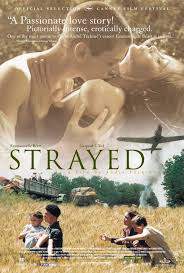
Odile, a resourceful and fiercely independent widow in her late thirties, joins the exodus from Paris with her two children: 13-year-old Philippe and 7-year-old Cathy. Like many others, they head south in a long, uncertain line of refugees seeking safety from the rapidly advancing German forces. After about fifty kilometers, German planes rattle the choked road with bombs, destroying Odile’s car in the chaos. Fleeing the roadside, she dives into the nearby woods in search of shelter. They’re soon helped by a shaven-headed, wiry teenager named Yvan, who urges them to move off the road and hide in the forest.
Resourceful and fiercely independent, Yvan—seventeen and skilled at hunting and navigating the woods—quickly becomes a vital ally to Odile and her children. Odile’s initial suspicion of this enigmatic boy softens as he charms Cathy and earns Philippe’s admiration with his roguish, self-sufficient attitude. To keep him close, Philippe offers his late father’s watch as a bribe, hoping to persuade Yvan to stay. After a night spent under the open sky, the quartet stumbles upon a large, apparently abandoned house. Yvan breaks in without hesitation, while Odile only wants to make a phone call. Yet Yvan convinces them that the house is a safe, temporary refuge from the war, at least for the moment. Once inside, Yvan cuts the phone lines and hides an existing radio, then swings the door shut to seal the family off from the outside world.
What follows is an almost idyllic period of peace away from the fighting. The house becomes a comfortable, quiet sanctuary, and Odile—a former schoolteacher whose husband died fighting the Germans—takes on the household duties, trying to craft a sense of normalcy for her children. The war’s upheavals that followed her life as a teacher leave her feeling ill-equipped to cope, but she remains determined. As days pass, Odile’s suspicions about Yvan gradually fade; he proves indispensable, bringing food, hunting rabbits, and catching fish from a nearby river. At night, he slips out to scavenge for objects from fallen soldiers and abandoned homes. Cathy grows fond of him, and Philippe idolizes this older, capable figure who seems to have all the answers. Yet danger lingers: when Yvan finds a gun and a grenade, Odile hides them from him. Philippe refuses to reveal their location, and a quarrel ensues. It becomes clear that Yvan is illiterate, and Odile begins to teach him to read and write. She starts to open up about her own life, though Yvan remains reticent about his past, hinting only that he was an orphan and that he spent time in a reformatory. As his brash edge softens, he confesses that he loves Odile and wishes to become her husband, a revelation that both flusters and flattens her.
A quiet stretch is interrupted by the arrival of two French soldiers, Georges and Robert, who return as the war shifts into an armistice phase. Odile provides them with food and shelter, but Yvan—uncomfortable with newcomers—stays hidden, distrustful and tense. Odile and Georges eventually share a night of intimacy, a response to loneliness and an aching need for human connection in the midst of upheaval; the moment is passionate, though their situation remains precarious. Yvan, hungry and restless, leaves to find more food and pledges to return the next day after the soldiers depart.
The next morning, police arrive at the house, having caught Yvan stealing. The clothing he was wearing leads the police to the abandoned refuge. Odile and the others stay silent, but Philippe steps forward to acknowledge him, and Odile explains how Yvan has helped them survive. Sometime later, Odile and her children are shown among many others in a refugee camp. In a private conversation, a policeman reveals that Yvan has a hidden past: his real name was Jean Delmas, a fugitive from a reformatory in Mettray, and he had died by suicide the night before. When Philippe asks about Yvan, Odile lies, saying he escaped rather than admitting the truth. The story closes on the stark reality of war—the fragile bonds formed in hiding, the shadows of identity, and the heavy cost borne by those who shelter others in desperate times.