Plot Explained Spoilers guaranteed!
Plot Explained

Browse by genre

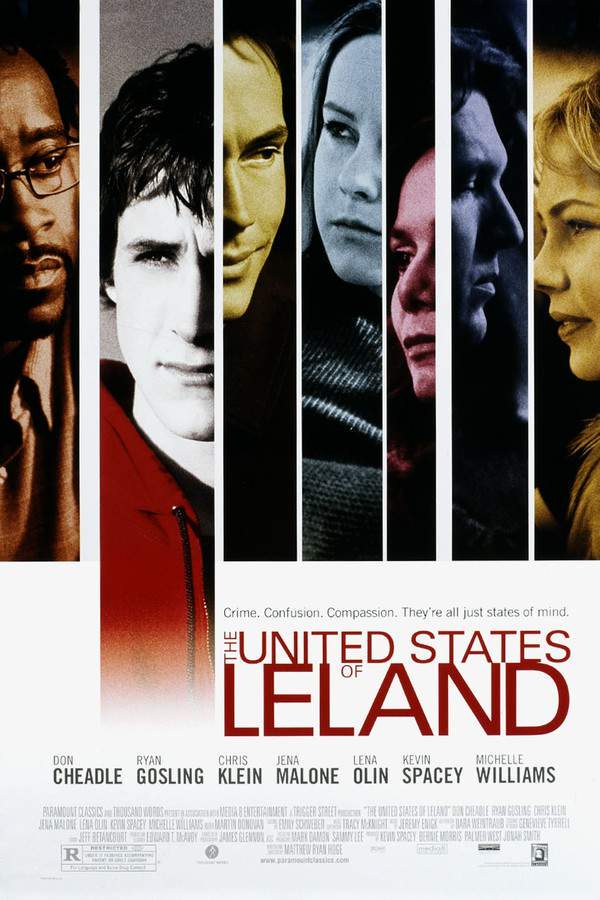
The United States of Leland (2004) movie poster

Plot Summary

The United States of Leland (2004) Plot Summary Explained

Release, runtime and language
2004 · 108 min · English
Directed by
Matthew Ryan Hoge
Starring
Kevin Spacey, Don Cheadle, Ryan Gosling

A disturbing act rocks a small town, sending shockwaves through the community. Leland Fitzgerald is incarcerated for the death of his girlfriend's brother, who had a developmental disability. Educator Pearl Madison investigates the circumstances surrounding the tragedy, seeking to understand the events that led to it. As she delves deeper, the lives of those connected to Leland are profoundly affected, forcing them to examine their own flaws and face the painful repercussions of his actions.

On this page (5)
  1. 1 Where to watch
  2. 2 What happens: full plot
  3. 3 Plot questions answered
  4. 4 Movie threads
  5. 5 Every angle

Where to watch

Where to Watch The United States of Leland (2004)

Where can you watch The United States of Leland? Stream, rent or buy it in the US, including on Hoopla, YouTube Free and Amazon Video: current JustWatch availability with up-to-date prices.

Streaming availability powered by JustWatch

Full plot summary · contains spoilers

What Happens in The United States of Leland: Full Plot Summary

The whole story of The United States of Leland (2004) explained, from the opening scene to the final frame: every key event, every twist and what it all adds up to. Read it as a quick recap before the sequel, to check a scene you missed, or to finally understand what really happened.

The cinematic journey commences with a haunting flashback delivered by Leland P. Fitzgerald, whose blurred memories of that tragic day unravel like a complex puzzle. These recollections gradually unveil the heartbreaking circumstances surrounding the senseless murder of Ryan Pollard, a young boy with an intellectual disability. As the weight of his actions bears down on him, Leland finds himself in custody, leaving behind immense grief for Ryan's family – his parents, Harry and Karen, his sisters Becky and Julie, and Julie's partner, Allen.

Simultaneously, Leland's mother, Marybeth, becomes engulfed in desperation as she longs to reconnect with her son. At the same time, his father, the well-known author Albert Fitzgerald, discovers Leland's plight via a newspaper article and hastily returns home for the looming trial. The atmosphere thickens as family tensions start to unravel.

Inside the walls of juvenile hall, Leland forges an unexpected bond with Pearl Madison, an aspiring writer who shares a deep-rooted passion for storytelling. While nurturing their budding friendship, Pearl begins to detect the hidden struggles Leland faces, prompting him to help circumvent the prison regulations so that Leland can keep a personal journal. This mentorship turns paramount for both, with Pearl also grappling with his own life choices, including an extramarital affair with a coworker, all while secretly planning a book inspired by Leland's dramatic narrative.

As their conversations flow effortlessly, Leland gradually reveals memories that color his tumultuous upbringing, sharing poignant tales, including the funeral of his grandmother and the long journeys to visit his father. The union of their dialogue offers a deeper insight into Leland’s character, especially when he recounts his encounters with the kindhearted Calderon family, who welcomed him during difficult times. His emotional tie to Mrs. Calderon resonates strongly, shaping his narrative.

Leland also shares remnants of his complicated bond with Becky, Ryan's sister. Their first chance encounter at a record store blossomed into a close companionship that matured over shared walks home, often accompanied by Ryan. These fond memories underscore the fragile nature of relationships.

As Pearl's true intentions unfold, Albert grows increasingly protective, fearing that Pearl might exploit Leland's vulnerability for literary fame. This protective instinct culminates in a confrontation with Pearl, ultimately resulting in the teacher's reassignment to another part of the facility.

Leland's life takes another downturn when he learns through Allen that Becky is involved with a drug dealer named Kevin, who is soon due for release. Leland’s despair mounts as he recognizes the futility of altering Becky's choices, propelling him into heartbreak and disillusionment.

Simultaneously, Pearl’s own infidelity begins to unravel during their candid discussions. The devastating impact becomes evident when his girlfriend uncovers his betrayal, leading to a tumultuous phone confrontation that leaves both reeling. Meanwhile, Julie’s disenchantment with Allen forces her to end their relationship decisively, rejecting the prospect of pursuing higher education together. Stricken by despair, Allen resorts to drastic measures, robbing an auto repair shop at gunpoint, a desperate act witnessed in full view of Julie. This incident starkly illustrates his emotional devastation.

Upon returning to New York, Pearl immerses himself in Leland's intricate world via the latter's journal entries. These poignant revelations unearth Leland’s troubled psyche, revealing the complex emotions stemming from his connection with Mrs. Calderon, a woman wearied by her own marital disparities. The relationship ignites a profound sadness within Leland, a burden he continues to carry.

Leland’s sorrow eventually infects his perceptions of those around him, as if a pall had settled over the very air. He becomes particularly focused on Ryan, recognizing in the boy an innocence stripped of true joy and affection. One particularly touching moment arrives when Leland assists Ryan after a bike ride, offering him a comforting hug and whispering reassurances that everything will turn out well. In that fleeting moment, it’s evident that Leland yearns to alleviate his own grief by soothing the pain of another, turning his attention from Mrs. Calderon’s lost joy to providing solace to Ryan, effectively striving to end the boy’s suffering and dispel the pity he often attracts from others.

Last updated: November 22, 2024 at 11:38

Was this helpful?

Plot questions answered

The United States of Leland Plot Explained: Your Questions Answered

The questions people ask most about The United States of Leland (2004): what happens in the confusing scenes, why the characters do what they do, the twists, hidden details and what the ending means. Each answer contains spoilers.

Q1

Why did Leland kill Ryan Pollard?

Leland killed Ryan Pollard in a moment of profound emotional disturbance. The film reveals that Leland had become consumed by sadness after his relationship with Mrs. Calderon ended, and he projected his grief onto Ryan, recognizing in the boy an innocence stripped of joy and affection. Rather than being able to save Mrs. Calderon from her own unhappiness, Leland attempted to alleviate Ryan's suffering by killing him, a tragic misinterpretation of compassion that he believed would free the boy from the pity he attracted.

Foreshadowing: Earlier, Leland comforts Ryan after a bike ride, hugging him and whispering reassuring words, demonstrating his twisted desire to "help" the boy.

  • le land
  • ryan pollard
  • murder
  • motivation
  • death
Q2

How did Leland know Ryan Pollard?

Leland knew Ryan through Becky, Ryan's older sister. They met when Leland and Becky first connected at a record store, and their friendship grew over time as they walked home together, often with Ryan accompanying them. This relationship is what led Leland into the Pollard family circle.

  • becky
  • ryan
  • relationship
  • friendship
  • record store
Q3

Why did Leland comfort Ryan before the murder?

Leland's act of comforting Ryan after a bike ride reveals his deep emotional conflict. In that moment, he wanted to alleviate the boy's pain and provide the comfort Ryan lacked. This desire twisted into his decision to kill Ryan, Leland believed he was freeing the boy from suffering by ending his life, a tragic distortion of compassion.

  • comfort
  • bike
  • compassion
  • murder
  • intention
Q4

Who is Pearl Madison and what does he want from Leland?

Pearl Madison is an aspiring writer and educator at the juvenile hall where Leland is incarcerated. He befriends Leland to understand his story, helping him keep a journal. However, Pearl secretly plans to write a book about Leland's life, viewing the tragedy as compelling material for his literary career. Albert Fitzgerald confronts Pearl about these exploitative intentions, leading to Pearl's reassignment.

  • pearl madison
  • writer
  • journal
  • book
  • educator
Q5

Why did Albert confront Pearl Madison?

Albert Fitzgerald, Leland's father, confronted Pearl Madison because he suspected Pearl was exploiting his son's vulnerability for literary gain. Albert feared Pearl was manipulating Leland into sharing his deepest memories and emotions solely to gather material for a book, rather than genuinely caring for Leland's wellbeing. This confrontation results in Pearl being reassigned.

  • albert fitzgerald
  • confrontation
  • pearl
  • protection
  • author
Q6

What happened to Becky after Leland went to prison?

After Leland was incarcerated, Becky became involved with a drug dealer named Kevin, who was soon due for release from prison. Leland learned about this from Allen and felt helpless to change Becky's destructive choices. This revelation deepens Leland's despair, as he cannot save Becky from repeating cycles of harm.

  • becky
  • kevin
  • drug dealer
  • relationship
  • choices
Q7

Why did Allen rob the auto repair shop?

Allen robbed the auto repair shop because he was devastated when Julie ended their relationship. After Julie rejected both Allen and the prospect of them pursuing higher education together, Allen's emotional breakdown led him to commit the desperate robbery, which Julie witnessed firsthand.

  • allen
  • robbery
  • auto repair shop
  • desperation
  • julie
Q8

Who is Mrs. Calderon and why is she important to Leland?

Mrs. Calderon was a woman who welcomed Leland into her home during difficult times in his life. Leland developed a profound emotional connection with her, and when their relationship ended, it left him with deep sadness that affected his entire outlook. This lost connection is what initially triggered his psychological decline, leading to his harmful actions toward Ryan.

  • mrs calderon
  • relationship
  • sadness
  • emotional connection
  • grief
Q9

What does Leland's journal reveal about his psychology?

Leland's journal entries, which Pearl reads after returning to New York, reveal a troubled psyche burdened by profound sadness. The writings show how Leland's grief over losing Mrs. Calderon infected his perception of everyone around him. He saw suffering everywhere and felt compelled to "save" others from pain, ultimately manifesting in his tragic decision regarding Ryan.

  • journal
  • psychology
  • inner thoughts
  • sadness
  • memories
Q10

Why did Leland fixate on Ryan specifically?

Leland fixated on Ryan because he saw in the boy the same innocent suffering he recognized in himself and in Mrs. Calderon. Ryan was a child with an intellectual disability who attracted pity from others but lacked genuine joy and affection. Leland believed killing Ryan would free him from a life of suffering, a terrible misinterpretation of compassion born from his own emotional breakdown.

Foreshadowing: The film shows Leland observing Ryan's lonely situation and feeling a need to help him.

  • ryan
  • innocence
  • suffering
  • disability
  • fixation
Q11

What triggered Leland's decision to commit murder?

Leland's decision was triggered by a cascade of emotional losses. The end of his relationship with Mrs. Calderon left him consumed by sadness, which then colored his perception of everyone around him, particularly Ryan. Seeing Ryan's apparent suffering, Leland believed he was offering mercy by ending the boy's life, a catastrophic distortion of his desire to help others.

  • trigger
  • emotional breakdown
  • mercy killing
  • distortion
  • despair
Q12

How does Leland feel about what he did?

Leland appears haunted by his actions, with the film opening through his fragmented, blurred memories of the tragic day. Throughout his incarceration, he carries the immense weight of grief, not just for Ryan, but for the devastation he caused to Ryan's entire family, including Becky, with whom he shared a genuine friendship. His remorse shapes his interactions with Pearl and his attempts at redemption through kindness.

  • remorse
  • guilt
  • memories
  • grief
  • haunted
Q13

Why is Leland in juvenile hall?

Leland is in juvenile hall because he was convicted of murdering Ryan Pollard, a young boy with an intellectual disability. Since he was a minor at the time of the crime, he was sentenced to juvenile detention rather than adult prison.

  • juvenile hall
  • conviction
  • prison
  • murder charge
  • sentencing
Q14

Why does the film use flashbacks?

The film uses flashbacks to unravel Leland's fragmented memories of the tragic day, reflecting his psychological state. The blurred, puzzle-like quality of these recollections emphasizes how traumatic the event is for Leland to process. This structure allows the audience to gradually understand the circumstances that led to the murder while experiencing the emotional weight Leland carries.

  • flashbacks
  • narrative structure
  • memories
  • psychology
  • storytelling

Movie threads

More Movies Like The United States of Leland, by Mood & Story

Curated lists built around what makes The United States of Leland tick: the same mood, the same kind of story or the same emotional payoff. Each list explains why these movies belong together.

Tragic Crime Deconstructions like The United States of Leland

Movies that slowly pick apart the psychological causes behind a tragic crime. If you liked the psychological depth of The United States of Leland, this thread features similar movies about the aftermath of a tragedy. These films explore the 'why' behind a disturbing act, focusing on character introspection, grief, and moral ambiguity rather than suspenseful action, for viewers seeking heavy, emotionally complex dramas.

  • somber
  • psychological
  • grieving
  • reflective
  • heavy
  • introspective
  • Tone: melancholic, reflective, tragic
  • Pacing: slow, deliberate, character-focused
Why these movies?

The story pattern: The narrative pattern often starts with a central, traumatic event and then uses a reflective structure—such as flashbacks or an investigator's inquiry—to slowly piece together the emotional and psychological circumstances that culminated in the act. The journey is one of unraveling layers of character motivation amidst a backdrop of sorrow.

Why they belong together: These movies are grouped by their shared commitment to psychological realism over plot-driven thrills. They possess a heavy, melancholic tone, a deliberate pacing that allows for deep introspection, and a focus on the devastating emotional fallout of a single event on a community or family.

Moral Reckoning Dramas like The United States of Leland

Stories where a single act forces everyone to confront their own failings. For viewers who appreciated how The United States of Leland examined the ripple effects of a crime, this thread collects movies about moral aftermath. These similar dramas feature a central tragedy that forces interconnected characters to face their own betrayals and weaknesses, resulting in a heavy, somber viewing experience.

  • heavy
  • grieving
  • family dysfunction
  • moral ambiguity
  • somber
  • despairing
  • Tone: melancholic, despairing, heavy
  • Pacing: slow, character-driven, consequential
Why these movies?

The story pattern: The narrative typically revolves around an ensemble of characters connected to a central calamity. The story structure examines how each person's life is upended, revealing their personal demons and complicities. The journey is less about solving a mystery and more about the collective emotional collapse and the painful truths that surface.

Why they belong together: These films share a core theme of a community or family in crisis, forced into a state of moral reckoning. They are unified by a heavy emotional weight, a slow, deliberate pacing that allows the consequences to sink in, and a pervasive tone of melancholy and despair as characters grapple with irreversible change.

Every angle

The United States of Leland (2004) Explained: Plot, Timeline & Characters

Everything about The United States of Leland in one place: what happens in the plot summary, the timeline in chronological order, the characters and meaning and a spoiler-free summary. What's After the Movie adds the cast, box office and post-credit scenes.

Coming soon on iOS and Android

The Plot Explained Movie Summary App

Plot summaries, endings explained and timelines on your phone. Catch up on any movie in minutes, save your favorites and never miss a twist again.

Be the first to know when we launch. Your email stays private, always.

Learn more about the app