







Plot Explained Spoilers guaranteed!
Plot Explained

Browse by genre

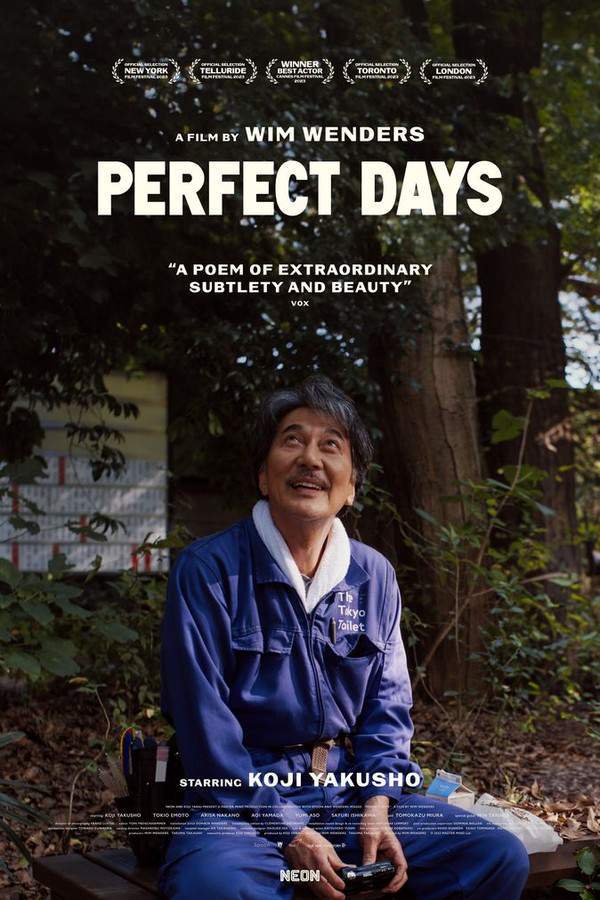
Perfect Days (2023) movie poster

Ending Explained

Perfect Days (2023) Ending Explained – Final Scene & Meaning

Release, runtime and language
2023 · 2 h 3 m · Japanese
Echo score 80
Directed by
Wim Wenders
Starring
Tokio Emoto, Kôji Yakusho, Min Tanaka, Tomokazu Miura, Yumi Asô, Sayuri Ishikawa
Budget
$14M

Hirayama finds solace and purpose in his quiet life as a cleaner in Tokyo. His meticulous routine, filled with beloved books, music, and photography, is unexpectedly altered by new connections and unexpected events. Through these encounters, he begins to appreciate the subtle beauty of everyday moments and discovers a deeper understanding of himself and the world around him. It’s a gentle exploration of happiness found in simplicity.

On this page (8)
  1. 1 Where to watch
  2. 2 What happens at the end
  3. 3 Final events in order
  4. 4 Ending questions answered
  5. 5 Movie threads
  6. 6 Movies like Perfect Days
  7. 7 Categories
  8. 8 Every angle

Where to watch

Where to Watch Perfect Days (2023)

Where can you watch Perfect Days? Stream, rent or buy it in the US, including on Kanopy, Amazon Video and Apple TV Store: current JustWatch availability with up-to-date prices.

Streaming availability powered by JustWatch

Ending explained · contains spoilers

What Happens at the End of Perfect Days?

How Perfect Days (2023) ends, what the final scene means, which earlier moments set it up and how to read the ending if the film leaves it open. The full ending explained, with every spoiler.

The ending of Perfect Days reveals the depth of Hirayama's inner peace and acceptance of his simple life. As he watches the sunrise, he plays Nina Simone’s “Feeling Good,” a choice that symbolizes his liberation and contentment with the life he's crafted for himself. The tears that surface show he has experienced struggles and emotional complexities that he has managed to reconcile within himself. Throughout the film, Hirayama’s routine—his appreciation for mundane beauty, his solitary moments, and his small acts of kindness—have all led to this quiet but profound fulfillment. His decision to live outside society's expectations, to find joy in the routine and the small moments, culminates in his sense of genuine happiness. The film suggests that true freedom and peace come from embracing life as it is, in the present moment, rather than chasing after societal ideals of success. Ultimately, Hirayama’s peaceful smile and the tears in his eyes remind us that happiness is often found in simplicity and acceptance, making his life story a gentle ode to everyday beauty and the quiet power of being truly at peace with oneself.

Last updated: June 25, 2025 at 08:44

Was this helpful?

The last 4 events

How Perfect Days Ends: The Final Events in Order

The last events of Perfect Days (2023) in chronological order, the run-up to the ending explained above. The complete timeline has all 15 events, scene by scene.

Open the full timeline
  1. Takashi's Resignation

    Takashi’s abrupt resignation places an additional burden on Hirayama, who is already emotionally fragile. This change amplifies Hirayama's sense of isolation, forcing him to confront his struggles alone.

  2. Heartbreaking Encounter

    At his favorite restaurant, Hirayama observes an emotional reunion between the proprietor and a long-lost friend. Overwhelmed by this demonstration of human connection, he retreats, seeking solace by the riverbank.

    Where
    Local restaurant
  3. Conversation with a Stranger

    By the riverbank, Hirayama meets a stranger who shares a cigarette and reveals a startling truth: the restaurant owner is his ex-wife. This revelation fills Hirayama with fleeting purpose as he reflects on the complexities of love and loss.

    Where
    Riverbank
  4. Dawn of Transformation

    As a new week begins, Hirayama is uplifted by the soothing sounds of Nina Simone's 'Feeling Good.' This moment of clarity amidst grief signals that Hirayama stands on the brink of transformation, eager to confront the core of his human experience.

    When
    Dawn

Ending questions answered

Perfect Days Ending: Your Questions Answered

The questions people ask most about the ending of Perfect Days (2023): what the final scene means, how the twist works, what happens to each character and how to read the ending. Each answer contains spoilers.

Q1

Why does Hirayama cry at the end of Perfect Days?

Hirayama cries because the song "Feeling Good" by Nina Simone triggers a release of accumulated emotions. Throughout his quiet life, he has carried struggles including family estrangement, a potential cancer diagnosis, and the weight of living outside societal expectations. The tears represent his reconciliation with these burdens and his acceptance of the life he has chosen. The crying is not sad, it is cathartic, showing he has processed his emotional complexities and found peace.

Foreshadowing: Earlier scenes show Hirayama collecting donated items and helping others subtly, hinting at his capacity for deep feeling beneath his stoic exterior.

  • hirayama tears
  • crying ending
  • feeling good nina simone
  • emotional release
  • catharsis
Q2

What does the Nina Simone song at the end mean?

"Feeling Good" symbolizes Hirayama's liberation and contentment. The lyrics about birds flying free and the world being yours perfectly capture his realization that he has found freedom by embracing simplicity rather than chasing societal success. Playing this song while watching the sunrise represents his dawn of inner peace, choosing to appreciate life's small beauties rather than regret what he does not have.

Foreshadowing: Hirayama's cassette collection and careful curation of music throughout the film establish his emotional connection to songs as personal meaning-makers.

  • feeling good nina simone
  • song meaning
  • freedom
  • liberation
  • sunrise scene
Q3

Is Hirayama happy at the end of Perfect Days?

Yes, Hirayama experiences genuine happiness at the end, though it is complex. His peaceful smile and tears together show he has found contentment in his simple routine. However, the meta notes mention a conflicted face as he drives to work, suggesting his transformation is ongoing, he has found peace but continues to process his choices. The ending is hopeful but not definitively resolved, reflecting the film's themes of perpetual self-discovery.

Foreshadowing: His consistent routines of photographing trees, reading, and small kindnesses build toward this moment of quiet fulfillment.

  • hirayama happiness
  • ending meaning
  • peace
  • contentment
  • acceptance
Q4

What does the sunrise symbolize in the ending?

The sunrise symbolizes new beginning and awakening. After years of living quietly and appreciating mundane beauty, Hirayama experiences a metaphorical dawn, his inner peace emerging fully. The darkness represents his past struggles and isolation, while the sunrise marks his acceptance and readiness to continue living authentically. It reinforces the film's message that happiness exists in the present moment.

Foreshadowing: Hirayama's photography habit focuses on trees and light, establishing his appreciation for natural transitions and cycles.

  • sunrise symbolism
  • new beginning
  • dawn
  • light metaphor
Q5

What happens to Hirayama's family in the ending?

The ending does not explicitly resolve Hirayama's family estrangement. His sister Mayumi visits and shows concern, and there are hints of a troubled past including his daughter's refusal to see him. However, the ending focuses on Hirayama's personal peace rather than family reconciliation. The film suggests he has accepted this distance while still remaining open to connection, as shown by his interactions with his niece and the young woman at the rest stop.

Foreshadowing: His sister's unexpected visit and her emotional reaction to seeing him establish the unresolved family tension.

  • hirayama family
  • sister mayumi
  • daughter
  • family estrangement
  • reconciliation
Q6

Why does Hirayama choose to live a simple life as a cleaner?

Hirayama chooses simplicity as a form of freedom and self-protection. The film suggests he deliberately stepped away from societal definitions of success after experiencing burnout or personal crisis. His meticulous routine, cleaning, reading, listening to music, photographing trees, provides structure and meaning without the pressures of corporate life. This choice represents his understanding that happiness comes from appreciating small moments rather than chasing external achievement.

Foreshadowing: His refusal of promotions and his quiet contentment with his work are established early in the film.

  • simple life
  • cleaning job
  • choosing simplicity
  • societal expectations
  • freedom
Q7

Is the ending of Perfect Days hopeful or sad?

The ending is overwhelmingly hopeful despite its melancholy tone. While tears suggest past pain, Hirayama's peaceful smile indicates he has found genuine contentment. The film's melancholic atmosphere does not equate to sadness, instead, it reflects quiet reflection and acceptance. The hopeful message is that true happiness can be found in simplicity and presence, even after difficult life events. However, the unresolved family elements and his conflicted driving moment add nuance, making it a bittersweet conclusion.

Foreshadowing: Throughout the film, small moments of joy, photographing trees, helping others, listening to music, build toward this affirming conclusion.

  • ending tone
  • hopeful
  • sad
  • melancholy
  • bittersweet
  • acceptance
Q8

What does Hirayama's conflicted face while driving mean?

The conflicted face mentioned in the meta notes suggests Hirayama's transformation is not complete. While he has found peace during the sunrise moment, driving to work indicates he must still navigate the tension between his inner contentment and external responsibilities. This moment reflects the film's ambiguity, he is changing, but the outcome remains uncertain. It shows that his journey of self-discovery is ongoing rather than finished, adding depth to the otherwise peaceful conclusion.

Foreshadowing: His interactions with his nephew and the young woman at the rest stop earlier introduced moments of emotional disruption to his routine.

  • conflicted face
  • driving
  • transformation
  • ambiguity
  • ongoing journey
Q9

Why doesn't Hirayama reconcile with his family by the end?

The film suggests Hirayama has made peace with his family situation without achieving literal reconciliation. He has accepted that he cannot control his daughter's decisions or undo past mistakes. His interactions with his niece and the young woman show he remains open to connection, but he no longer clings to the hope of family healing. This acceptance is part of his broader peace, he has let go of what he cannot change while continuing to engage gently with the world around him.

Foreshadowing: His daughter's unseen presence and his sister's complex emotions establish that family wounds run deep but remain present.

  • family reconciliation
  • daughter
  • acceptance
  • letting go
Q10

What does the film say about true freedom?

The film defines true freedom as choosing to live according to one's own values rather than societal expectations. Hirayama's freedom comes not from rebellion but from acceptance, embracing his simple routine, finding beauty in mundane tasks, and releasing attachment to conventional success. His peace demonstrates that freedom is internal: it is the ability to be present and content regardless of external circumstances. This aligns with the film's broader message about finding happiness in simplicity.

Foreshadowing: His boss's offer of promotion and his gentle refusal establish his deliberate rejection of conventional success markers.

  • true freedom
  • societal expectations
  • simplicity
  • inner peace
  • acceptance

Movie threads

More Movies Like Perfect Days, by Mood & Story

Curated lists built around what makes Perfect Days tick: the same mood, the same kind of story or the same emotional payoff. Each list explains why these movies belong together.

Meditative Movies Like Perfect Days

Stories that find profound meaning and beauty in simple, daily routines. If you enjoyed the quiet, contemplative beauty of Perfect Days, you'll appreciate these movies that also find profound meaning in everyday life. This collection features similar gentle dramas where the plot is secondary to capturing the essence of a character's routine and inner world.

  • contemplative
  • quiet
  • meditative
  • atmospheric
  • solitary
  • gentle
  • Tone: melancholic, contemplative
  • Pacing: slow, deliberate
Why these movies?

The story pattern: These stories often follow a character deeply immersed in a solitary or repetitive lifestyle. The narrative is less about major external events and more about the internal shifts that occur when small disruptions or observations challenge their peaceful existence, leading to subtle but significant personal growth.

Why they belong together: They are grouped by their shared low-intensity, slow-paced, and melancholic tone, prioritizing atmosphere and character introspection over complex plotting. The emotional journey is one of quiet appreciation and subtle transformation.

Movies About Solitude and Connection Like Perfect Days

Characters living in self-imposed isolation find their world cracked open by new connections. For viewers who liked the theme of solitude and reconnection in Perfect Days, this list features similar movies where a lone character's insulated world is changed by new relationships. These stories explore the bittersweet process of opening up after a period of isolation.

  • solitary
  • melancholic
  • introspective
  • bittersweet
  • gentle
  • nostalgic
  • Tone: melancholic, bittersweet
  • Pacing: slow, character-driven
Why these movies?

The story pattern: The narrative pattern follows a protagonist who is content, or at least settled, in their solitary existence. An external force—a new person, a piece of news, or a revisited memory—creates a ripple in their calm life. The story traces their hesitant, often ambiguous, journey toward re-engaging with others and themselves.

Why they belong together: They share a focus on the emotional arc of a solitary character, blending melancholic tones with moments of gentle hope. The pacing is typically slow to allow for deep character immersion, and the endings often feel ambiguous, reflecting the ongoing nature of personal change.

If you liked this

Movies Like Perfect Days

Similar movies to Perfect Days: the same genre, themes or kind of story. Each one comes with its own plot summary, timeline and ending explained.

Browse all movie summaries

Categories

Movie Lists Featuring Perfect Days

Perfect Days appears in these hand-built movie categories. Each one groups movies by a specific mood, theme or story type, with their plot summaries and endings explained.

View all movie categories

Every angle

Perfect Days (2023) Explained: Plot, Ending, Timeline & Characters

Everything about Perfect Days in one place: what happens in the plot summary, the timeline in chronological order, the characters and meaning, the ending explained and a spoiler-free summary. What's After the Movie adds the cast, box office and post-credit scenes.

Coming soon on iOS and Android

The Plot Explained Movie Summary App

Plot summaries, endings explained and timelines on your phone. Catch up on any movie in minutes, save your favorites and never miss a twist again.

Be the first to know when we launch. Your email stays private, always.

Learn more about the app