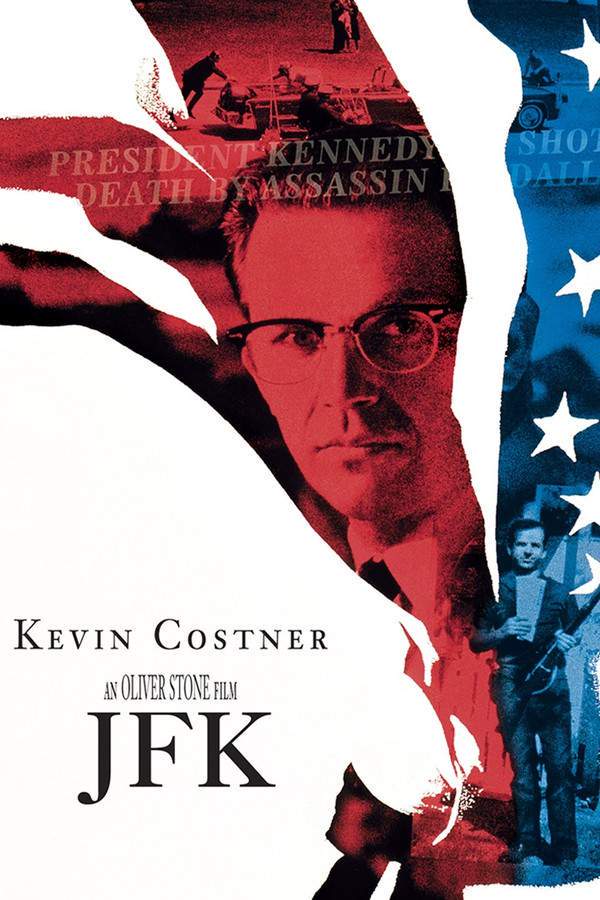
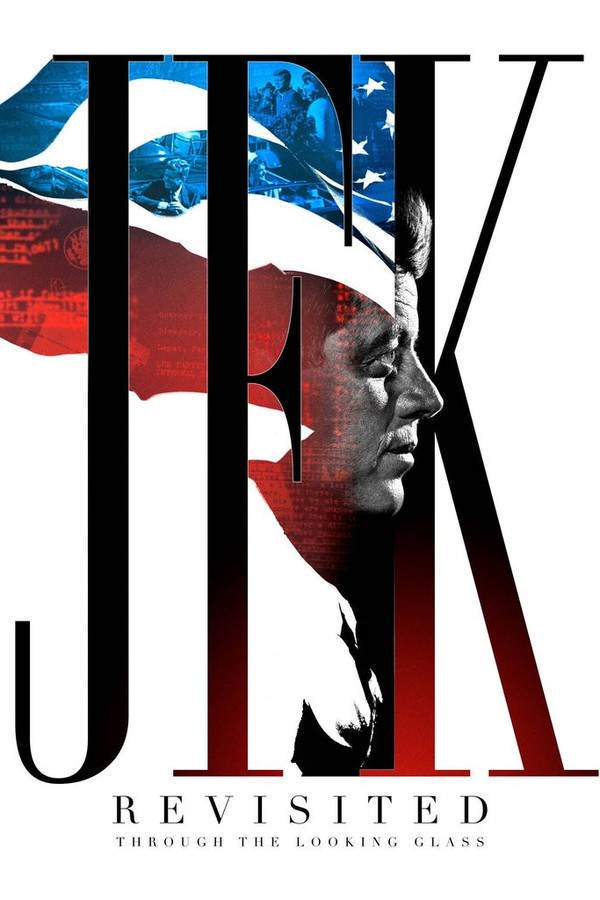
The film begins with a gripping narration by an uncredited Martin Sheen, presenting newsreel footage that encapsulates the pivotal farewell address of outgoing President Dwight D. Eisenhower from 1961, where he cautioned against the increasing power of the "military-industrial complex". Following this, the narrative delves into John F. Kennedy's presidency, shedding light on the series of events that, according to Stone's thesis, would ultimately culminate in his tragic assassination. This narrative thread climaxes with a meticulous reconstruction of the horrific assassination that transpired on November 22, 1963.
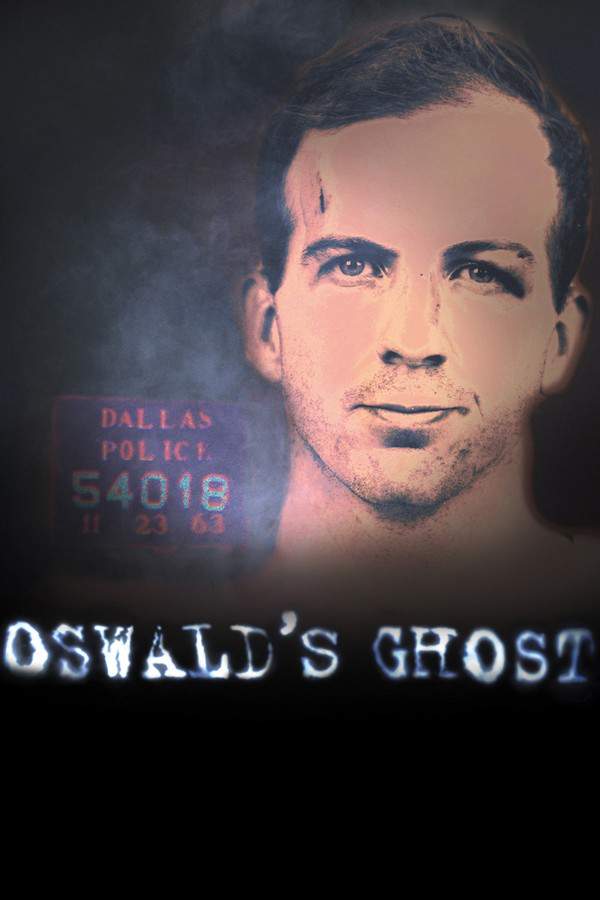
At the center of the investigation is New Orleans District Attorney Jim Garrison, portrayed by Kevin Costner, who uncovers potential connections to the assassination within New Orleans. Garrison and his investigative team focus their scrutiny on private pilot David Ferrie, played by Joe Pesci. However, they are soon compelled to release him when their inquiry is publicly criticized by federal authorities. Complicating matters, the presumed assassin Lee Harvey Oswald, portrayed by Gary Oldman, is killed by Jack Ruby two days following the assassination, leading Garrison to temporarily close the case.
Fast forward three years later to late 1966, Garrison revisits the investigation after reading the Warren Commission Report, which he believes is riddled with significant inaccuracies and contradictions. With renewed determination, Garrison and his team begin to interrogate several witnesses connected to the assassination, delving deeper into the lives of individuals involved with Oswald, Ruby, and Ferrie. Among the revelations, Russell B. Long, played by Walter Matthau, a Democrat senator, privately enlightens Garrison about the FBI's probes into Oswald, indicating it would have been nearly impossible for him to execute three shots with the precision that resulted in Kennedy’s death.
The investigation takes several twists as Garrison questions Jack Martin, a former private investigator portrayed by Jack Lemmon, who recounts a disturbing encounter with Guy Banister, before his unexpected demise due to a reported "heart attack". Martin reveals that Oswald had connections with Banister during his brief time in New Orleans and implies that Oswald and Ferrie were entangled in covert operations with Cuban anti-communist groups.
Garrison also meets Dean Andrews Jr., a quirky lawyer played by John Candy, who claims that he received a phone call from a client known as “Clay Bertrand” the day after Kennedy was assassinated, indicating a request to represent Oswald. Furthermore, Garrison interviews Willie O’Keefe, a male prostitute portrayed by Kevin Bacon, who discloses he witnessed Ferrie discussing the assassination with Oswald and a group of Latin men. O’Keefe has a romantic history with Clay Shaw, played by Tommy Lee Jones, a wealthy businessman in New Orleans. Despite Garrison's inquiries into Shaw, he staunchly denies any involvement with Ferrie, Oswald, or O'Keefe and soon finds himself charged with conspiracy to murder the President.
As the investigation unfolds, Jean Hill, characterized by Ellen McElduff, emerges with claims of hearing shots fired from the grassy knoll, suggesting the alterations made to her testimony by the Warren Commission raise red flags about the official narrative. Garrison, alongside his colleague Lou Ivon, performs a crucial test at the Texas School Book Depository, concluding that Oswald's marksmanship was insufficient to execute the shots, pointing towards the implication of one or more additional shooters.
In a compelling twist, a Dallas prostitute named Rose Cheramie, portrayed by Sally Kirkland, claims to have been assaulted by Jack Ruby's bodyguards and warns Garrison that the Mafia has plans to eliminate President Kennedy. The film makes an intriguing turn when Garrison encounters a mysterious informant, known as "X", played by Donald Sutherland, who reveals the existence of a high-level conspiracy involving various factions within the government, the CIA, and other influential parties that perceived Kennedy's foreign policy as a threat to their interests.
As the pressure mounts, Garrison's marriage to Liz, played by Sissy Spacek, deteriorates under the strain of his obsessive pursuit of the truth. Critics in the media challenge his motives, while key witnesses face intimidation, some even meeting sinister fates. With his own life in jeopardy, Garrison remains undeterred, fueled by a desire for justice.
The gripping climax unfolds with the trial of Clay Shaw, from January to March 1969, where Garrison presents compelling evidence of multiple shooters, attempting to dismantle the single-bullet theory posited by the Warren Commission. In a heart-wrenching closing statement, Garrison appeals to the jury, ensuring that his son's generation does not remain in the dark about the findings of the Commission. Despite the agonizing efforts to unveil the truth, the jury ultimately acquits Shaw on all charges, emphasizing their belief in a hidden conspiracy, yet lacking sufficient evidence to convict.
The film concludes with Garrison's vow to continue his pursuit of the concealed truths surrounding the assassination, as he and Liz exit the courthouse hand in hand. In an epilogue, viewers learn that Shaw succumbed to lung cancer in 1974, while revelations about his ties to the CIA emerged nearly five years later. The end credits foreshadow that critical records related to Kennedy's assassination will be made public in 2029, leaving a lingering sense of intrigue and unresolved questions in the pursuit of justice.