Plot Explained Spoilers guaranteed!
Plot Explained

Browse by genre

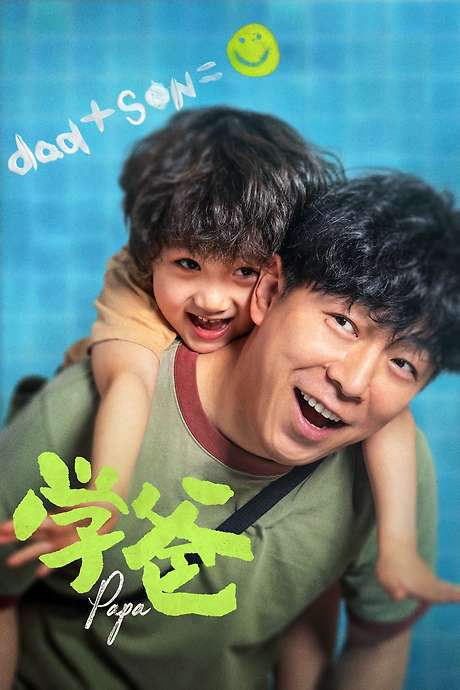
Papa (2023) movie poster

Plot Summary

Papa (2023) Plot Summary Explained

Release, runtime and language
2023 · 122 mins · Chinese
Loading streaming availability…
Directed by
Su Liang
Starring
Huang Bo, Yan Ni, Wan Qian, Janine Chang, Wang Xun, Zhang Zixian

A father and mother rack their brains in order to help their son achieve early success in China’s education system.

On this page (5)
  1. 1 Where to watch
  2. 2 What happens: full plot
  3. 3 Plot questions answered
  4. 4 Movie threads
  5. 5 Every angle
Loading streaming availability…

Full plot summary · contains spoilers

What Happens in Papa: Full Plot Summary

The whole story of Papa (2023) explained, from the opening scene to the final frame: every key event, every twist and what it all adds up to. Read it as a quick recap before the sequel, to check a scene you missed, or to finally understand what really happened.

Nin, Huang Bo returns to his busy cha chaan teng on a morning that should feel ordinary, but the atmosphere around him is thick with wary glances and quiet questions from colleagues and neighbors. The day abruptly shifts into a brutal revelation: his son Ming killed Nin’s wife Yin and daughter Grace, and turned himself in to the police the night before. In the days that follow, Nin sells the restaurant to one of his long-time waiters, choosing distance from the place that has become a chamber of painful memories. He then attends Ming’s trial, where Ming’s confession unfolds with a chilling clarity: the killings were driven by a voice telling him he had a mission to eradicate a portion of the population in order to save the world.

Sometime later, Nin spends an evening with his mother and his sister’s family, and a carefully kept lie about his wife and children finally comes to light as his mother reveals she has known the truth all along. The story then plunges into a deeper past: Nin remembers meeting Yin back in 1993, when their families opposed the union, yet Nin resolves to marry Yin, and the couple welcomes their first son. This recollection sheds light on the stubborn devotion that runs through the family’s history, even as it foreshadows the fractures to come.

Nin visits Ming in prison and asks about a pardon to increase the number of visits, a request Ming resists with a string of excuses. Left alone at home with their house cat Carnation, Nin’s loneliness edges toward desperation when he hires a door-to-door prostitute, only for deceit to break apart the fragile emotional balance and trigger an emotional breakdown. A subsequent family therapy session, guided by a psychiatrist, brings Nin and Ming into a tense, candid conversation. Nin demands an explanation for the murders, and Ming finally bares his true thoughts, admitting that he feels Nin never truly listened to what their family wished to say.

Before the tragedy, Yin once urged Nin to slow down and stop running the restaurant around the clock, but Nin’s response is to keep pushing forward. Grace, meanwhile, brings home a stray cat she names Carnation, and despite Ming’s misgivings about limiting the animal’s freedom, she insists on keeping it. The pet’s presence becomes a quiet point of contention within a family already stretched thin. Carnation disappears once, only to be found again after Ming, anxious, rescues it from a perilous edge in the corridor.

During the long summer, Ming works at Nin’s restaurant and clashes with his father over a packing method, which ends in a mess and a visible rift between them. Ming asks Nin for a new phone with photography functions, but Nin refuses, arguing that multifunctional phones are prone to failure. Instead, Nin purchases a camera, which Ming protests he doesn’t want. Using his summer job salary, Ming buys the phone himself, and on a family trip to Hainan, their mother discovers the phone and returns the money she had spent, choosing not to challenge Nin outright but quietly stepping back while Nin sleeps, leaving Ming puzzled about why a discussion never happens.

By 2013, Ming has spent four years in a psychiatric hospital, and a request for early release is denied even as Nin, now retired, expresses his willingness to care for Ming full-time. Ming writes a letter to Nin, apologizing and asking his father to visit him on his eighteenth birthday. Nin does visit, but the reunion is muted, with the murders left unspoken between them. Years pass, and Ming is released as an adult, returning to the old home and sharing a quiet lunch with his father. The film closes as Ming looks at a family photo, leaving the audience with a lingering sense of what was said and unsaid within a family marked by tragedy, memory, and the fragile possibility of reconciliation.
Last updated: October 09, 2025 at 14:16

Was this helpful?

Plot questions answered

Papa Plot Explained: Your Questions Answered

The questions people ask most about Papa (2023): what happens in the confusing scenes, why the characters do what they do, the twists, hidden details and what the ending means. Each answer contains spoilers.

Q1

Why did Ming kill his mother Yin and sister Grace?

Ming killed his mother and sister because he believed he heard a voice instructing him to eliminate part of the population to save the world. This indicates Ming was experiencing a psychotic break or severe mental illness that drove him to commit the murders, though the voice itself remains ambiguous whether it was a hallucination or delusional belief.

Foreshadowing: The family therapy scene much later reveals Ming felt unheard, suggesting his mental state had been deteriorating without intervention.

  • ming murders
  • yin death
  • grace death
  • mental illness
  • psychosis
Q2

What was the voice that told Ming to kill?

The voice Ming heard told him he had a mission to eradicate a portion of the population to save the world. This appears to be a psychotic delusion or auditory hallucination, though the film does not specify a clinical diagnosis. The voice represents the breakdown of Ming's mental state rather than any external command.

  • voice
  • mission
  • delusion
  • hallucination
  • psychiatric
Q3

Why did Nin sell his cha chaan teng after the murders?

Nin sold his restaurant because it had become a painful reminder of his lost family. The cha chaan teng, once the center of his daily life and family gatherings, now held only painful memories of his wife Yin and daughter Grace, making it impossible for him to continue working there.

  • restaurant
  • sell
  • grief
  • memory
Q4

Why did Ming turn himself in to the police?

Ming turned himself in the night after the murders, though the film does not explicitly explain his reasoning. This act suggests some remaining awareness of the gravity of his actions, or perhaps a desire to stop himself from causing further harm. The trial reveals he surrendered voluntarily after completing the killings he believed were his mission.

  • police
  • surrender
  • confession
Q5

Why did Nin hire a prostitute after his wife's death?

Nin hired a door-to-door prostitute because he was overwhelmed by loneliness and grief after losing his wife and daughter. This desperate attempt at human connection ended when the woman deceived him and left with his payment, triggering an emotional breakdown that underscores the depth of his isolation.

  • prostitute
  • loneliness
  • grief
  • breakdown
Q6

What was the significance of the cat Carnation?

Carnation was a stray cat that Grace brought home and insisted on keeping, despite Ming's objections about limiting the animal's freedom. The cat became a point of family tension, with Ming later rescuing it from a dangerous edge in the corridor. After the murders, Carnation remains with Nin as his only companion, symbolizing both the loss of Grace and a lingering connection to his family.

  • carnation
  • cat
  • grace
  • pet
Q7

What did Ming mean when he said Nin never listened?

During family therapy, Ming revealed that he killed his family because he felt Nin never truly listened to what the family wanted to say. This suggests years of communication breakdown where Nin's focus on running the restaurant constantly left Ming and the family feeling unheard and unimportant, contributing to Ming's psychological deterioration.

  • communication
  • listening
  • family therapy
  • father-son
Q8

Why did the phone cause conflict between Nin and Ming?

Ming asked Nin to buy him a new phone with photography functions, but Nin refused, insisting that multifunctional phones are prone to failure and buying him a traditional camera instead. Ming then used his summer job salary to buy the phone himself, showing his desire for independence and control over his own belongings. The incident exemplifies the friction between Nin's traditional views and Ming's modern desires.

  • phone
  • camera
  • conflict
  • summer job
Q9

Why did Nin's mother return the phone money secretly?

During a family trip to Hainan, Nin's mother discovered Ming had purchased the phone with his own money. She returned the money to Ming but waited until Nin was asleep to avoid conflict with her son. This reflects the family's pattern of avoiding direct confrontation with Nin, choosing quiet compromise over open disagreement.

  • grandmother
  • phone money
  • secret
  • hainan trip
Q10

Why was Ming denied early release from the psychiatric hospital?

By 2013, Ming had spent four years in a psychiatric hospital after being found not criminally responsible due to mental illness. His request for early release was denied, despite Nin's willingness to care for him full-time. The denial reflects the seriousness of his crimes and the hospital's assessment that he still posed a risk, though Nin remained committed to supporting his son.

  • psychiatric hospital
  • early release
  • denied
  • 2013
Q11

What was the significance of the 1993 flashback?

The 1993 flashback shows Nin meeting Yin when both families opposed their union, yet Nin insisted on marrying her anyway. This memory establishes the theme of stubborn devotion that runs through the family's history and explains the depth of Nin's love for Yin. It also foreshadows the family's later fractures, as the same determination that led Nin to fight for his wife now manifests in his inability to connect with his troubled son.

  • 1993
  • flashback
  • yin
  • marriage
  • family history
Q12

Does Ming reconcile with his father at the end?

The ending shows Ming released from the psychiatric hospital as an adult, returning to the old family home where he shares a quiet lunch with Nin. The film ends with Ming looking at a family photo. This suggests a fragile, unspoken possibility of connection rather than true reconciliation, Nin has accepted his son back, but the murders remain unaddressed between them, leaving their relationship fundamentally unresolved.

  • ending
  • reconciliation
  • family photo
  • release

Movie threads

More Movies Like Papa, by Mood & Story

Curated lists built around what makes Papa tick: the same mood, the same kind of story or the same emotional payoff. Each list explains why these movies belong together.

Movies about family tragedy aftermath like Papa

Stories exploring profound grief and the difficult path toward connection after a family tragedy. If you were moved by the heavy emotional weight and quiet exploration of grief in Papa, this section features movies with similar themes. Discover other films that deal with family tragedy, mental illness, and the long, difficult journey toward a fragile form of reconciliation.

  • somber
  • heavy
  • tragic
  • reflective
  • grief-stricken
  • lonely
  • Tone: melancholic, somber
  • Pacing: slow, reflective
Why these movies?

The story pattern: These narratives often unfold in a non-linear or reflective manner, using flashbacks to contrast a peaceful past with a traumatic present. The central journey is one of emotional survival, as characters grapple with unimaginable loss, personal guilt, and the slow, uncertain steps toward some form of understanding or peace.

Why they belong together: Movies are grouped here because they share a focus on family dynamics shattered by tragedy, a melancholic and somber tone, and a narrative that prioritizes emotional truth over plot-driven resolution. They offer a similarly heavy, reflective viewing experience.

Slow burn melancholic dramas like Papa

Character-driven dramas that use a slow pace to immerse you in a profound emotional state. If you appreciated the slow, immersive, and deeply melancholic pace of Papa, this section is for you. Find movies like Papa that use a deliberate, quiet pacing to pull you into a character's heavy emotional journey and reflective state of mind.

  • melancholic
  • quiet
  • slow burn
  • reflective
  • atmospheric
  • lonely
  • Tone: melancholic, quiet, reflective
  • Pacing: slow, deliberate, atmospheric
Why these movies?

The story pattern: The plot in these films is often secondary to the character's emotional arc. The story unfolds patiently, lingering on moments of silence and introspection. The structure may be loose or episodic, designed to mirror the protagonist's psychological state rather than drive toward a conventional climax.

Why they belong together: These films are connected by their shared commitment to a slow, deliberate pace and a consistently melancholic or somber tone. They prioritize mood and internal character development over fast-moving plots, creating a meditative and emotionally immersive experience.

Every angle

Papa (2023) Explained: Plot, Timeline & Characters

Everything about Papa in one place: what happens in the plot summary, the timeline in chronological order, the characters and meaning and a spoiler-free summary. What's After the Movie adds the cast, box office and post-credit scenes.

Coming soon on iOS and Android

The Plot Explained Movie Summary App

Plot summaries, endings explained and timelines on your phone. Catch up on any movie in minutes, save your favorites and never miss a twist again.

Be the first to know when we launch. Your email stays private, always.

Learn more about the app