Plot Explained Spoilers guaranteed!
Plot Explained

Browse by genre

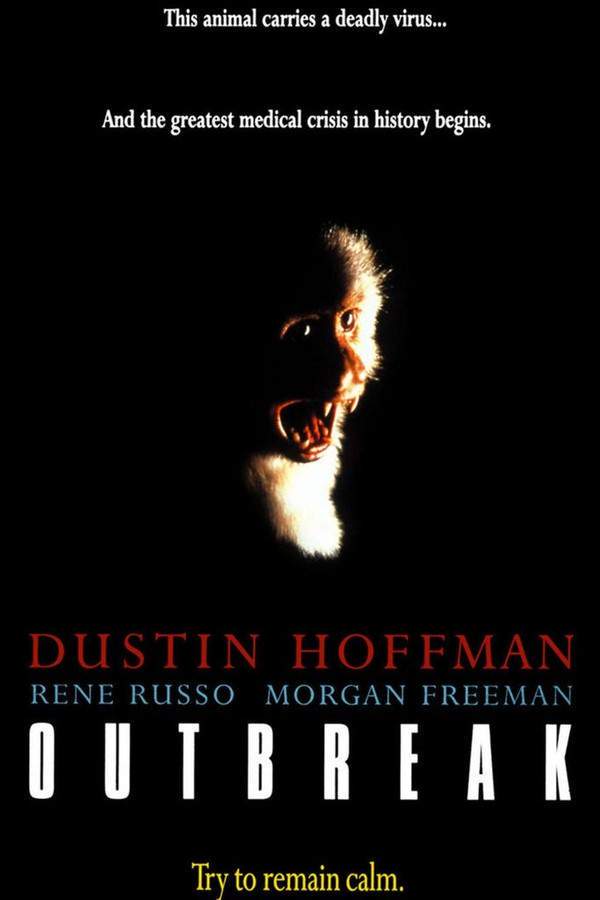
Outbreak (1995) movie poster

Plot Summary

Outbreak (1995) Plot Summary Explained

Release, runtime and language
1995 · 127 min · English
JustWatch #6,818 10
Directed by
Wolfgang Petersen
Starring
Morgan Freeman, Dustin Hoffman, Rene Russo

A deadly and highly contagious virus rapidly spreads through a California town, triggering widespread panic. A team of medical specialists, led by a respected infectious disease expert and his estranged wife, must work quickly to contain the escalating crisis. As the situation worsens, they find themselves confronting the Army's forceful methods in a race against time to protect lives and prevent a catastrophic collapse of society.

On this page (6)
  1. 1 Where to watch
  2. 2 What happens: full plot
  3. 3 Plot questions answered
  4. 4 Movie threads
  5. 5 Movies like Outbreak
  6. 6 Every angle

Where to watch

Where to Watch Outbreak (1995)

Where can you watch Outbreak? Stream, rent or buy it in the US, including on AMC, Philo and Amazon Video: current JustWatch availability with up-to-date prices.

Streaming availability powered by JustWatch

Full plot summary · contains spoilers

What Happens in Outbreak: Full Plot Summary

The whole story of Outbreak (1995) explained, from the opening scene to the final frame: every key event, every twist and what it all adds up to. Read it as a quick recap before the sequel, to check a scene you missed, or to finally understand what really happened.

In the African jungle of 1967, a deadly virus named Motaba is discovered, prompting U.S. Army officers Donald McClintock and William Ford to eliminate the site where it was found to ensure the virus remains a viable biological weapon. Fast forward to 1995, when the virus reemerges in Zaire. Enter Colonel Sam Daniels, a virologist from USAMRIID, who is dispatched to investigate this alarming resurgence.

Daniels, aided by Lieutenant Colonel Casey Schuler and rookie Major Salt, quickly learns more about the virus and returns to the U.S. He urges General Ford to issue a public health alert, but Ford dismisses the idea, insisting that the virus is unlikely to pose a threat. Meanwhile, Daniels' ex-wife, Roberta Keough, who now leads a similar team at the CDC in Atlanta, is persuaded to recommend an alert, but her superior hesitates.

The real danger arises when a white-headed capuchin monkey, the host animal of the virus, is smuggled into the U.S. by an employee named Jimbo Scott. Jimbo gets infected through contact with the monkey, which he attempts to sell on the black market. After transferring the infection to several others, the situation quickly spirals out of control, with a significant outbreak occurring in Cedar Creek, California. As the virus spreads, hospital tests reveal a new, highly contagious strain.

Amid the chaos, the U.S. Army enforces martial law in Cedar Creek, while Daniels and his team work tirelessly against Ford's directive to locate the source of the virus. A series of unfortunate accidents leads to further infections, including that of Schuler and Keough, jeopardizing their efforts. Meanwhile, Ford reveals to Daniels that a military operation (dubbed Operation Clean Sweep) is in place to bomb Cedar Creek to contain the virus and cover up its existence.

Determined to prove that a cure can be found, Daniels and Salt escape military custody, ultimately tracking down the host animal. After successfully capturing it, they learn that the military plans to bomb the town, believing it to be the only solution. In a tense confrontation involving General McClintock and the crew of the bomber plane, Daniels manages to persuade them that there is hope for a cure.

In a pivotal moment, the pilot of the bombing plane opts to detonate the bomb over water instead of the town, a decision that saves countless lives. Subsequently, McClintock's malicious actions come to light, leading to his arrest by Ford. At last, Daniels and Keough reconcile, and the citizens of Cedar Creek receive treatment to recover from the outbreak, showcasing the power of cooperation in the face of a crisis.
Last updated: November 03, 2024 at 11:07

Was this helpful?

Plot questions answered

Outbreak Plot Explained: Your Questions Answered

The questions people ask most about Outbreak (1995): what happens in the confusing scenes, why the characters do what they do, the twists, hidden details and what the ending means. Each answer contains spoilers.

Q1

Why did General Ford dismiss Colonel Daniels' request for a public health alert?

General Ford refused to issue a public health alert because he was complicit in the military's secret bioweapon program. In 1967, Ford and McClintock had deliberately eradicated the original Motaba outbreak site to preserve the virus as a weapon. Acknowledging the new outbreak would risk exposing this cover-up and the existence of Operation Clean Sweep, the planned bombing to eliminate evidence of the virus.

Foreshadowing: Ford's dismissal echoes his 1967 decision to prioritize military secrecy over public safety.

  • general ford
  • public health alert
  • cover-up
  • military secrecy
Q2

Why was the white-headed capuchin monkey critical to finding a cure?

The white-headed capuchin monkey was the natural host animal of the Motaba virus, meaning it carried the pathogen without dying from it. Finding this reservoir host was essential because scientists could study the virus in its natural state, understand how it lived and mutated, and develop an effective antidote. Without the monkey, Daniels had no reference point for creating a treatment.

Foreshadowing: Jimbo's smuggling of the monkey into the U.S. initially caused the outbreak but ultimately provided the key to stopping it.

  • capuchin monkey
  • host animal
  • cure
  • reservoir
  • virus origin
Q3

Why did General McClintock insist on bombing Cedar Creek?

McClintock insisted on bombing Cedar Creek to destroy all evidence of the Motaba virus and cover up the military's bioweapon program. Since the virus had been stored as a classified biological weapon since 1967, allowing it to spread and be studied by civilian scientists would expose the program's existence. Bombing the town would eliminate both the virus and anyone who could reveal the truth.

Foreshadowing: McClintock's 1967 decision to wipe out the original African site established his willingness to kill civilians to maintain secrecy.

  • general mcclintock
  • bombing
  • operation clean sweep
  • cover-up
  • bioweapon
Q4

How did the Motaba virus spread so quickly through Cedar Creek?

The virus spread rapidly because it was a new, highly contagious strain that transmitted through respiratory droplets. Once Jimbo Scott became infected after handling the smuggled monkey, he passed it to multiple people through casual contact while trying to sell the animal on the black market. The virus's incubation period allowed infected individuals to travel and infect others before anyone showed symptoms, causing exponential spread across the town.

Foreshadowing: The timeline shows the infection spreading from one smuggler to a town-wide crisis within days.

  • virus spread
  • contagion
  • transmission
  • highly contagious strain
Q5

Why did the pilot decide to drop the bomb over water instead of Cedar Creek?

The pilot chose to detonate the bomb over water after Colonel Daniels convinced him that a cure was possible. Daniels argued that bombing the town would be unnecessary mass murder when hope existed for an effective treatment. The pilot's decision to override his orders saved thousands of civilian lives and prevented what would have been a catastrophic war crime.

Foreshadowing: Daniels' earlier escape from military custody and capture of the monkey gave him the evidence needed to make this plea.

  • pilot decision
  • bomb over water
  • daniels persuasion
  • civilian lives saved
Q6

What was Operation Clean Sweep?

Operation Clean Sweep was a top-secret military plan to completely destroy Cedar Creek, California, with a strategic bomb to contain the Motaba virus and eliminate all evidence of the outbreak. Officially, it was presented as a necessary public health measure, but its true purpose was to cover up the decades-old bioweapon program by killing everyone who might reveal its existence or study the virus.

Foreshadowing: Ford's earlier refusal to issue alerts and McClintock's aggressive stance foreshadowed such a drastic measure.

  • operation clean sweep
  • military plan
  • bombing
  • cover-up
  • virus containment
Q7

How did Lieutenant Colonel Schuler and Roberta Keough become infected?

Schuler and Keough were infected through a series of accidents during the crisis response. Schuler was exposed while conducting field work in Cedar Creek, where accidental contact with infected patients occurred. Keough, who traveled to the outbreak zone to assist, was exposed during a similar accident. Their infections nearly collapsed the team's efforts at the most critical moment.

Foreshadowing: The meta notes identify these infections as events that jeopardized the team's ability to combat the outbreak.

  • schuler infection
  • keough infection
  • team infections
  • accident exposure
Q8

Why did the U.S. Army declare martial law in Cedar Creek?

The Army declared martial law to enforce quarantine, control the population, and prevent the virus from spreading beyond Cedar Creek. Under martial law, they could restrict movement, enforce mandatory isolation, and maintain order as the death toll rose. However, martial law also allowed the military to seize control of the situation while pursuing their hidden agenda of covering up the bioweapon program.

Foreshadowing: The rapid outbreak progression made quarantine the only logical response, though the military used it for other purposes.

  • martial law
  • quarantine
  • military control
  • cedar creek lockdown
Q9

Why did Jimbo Scott smuggle the monkey into the United States?

Jimbo Scott smuggled the white-headed capuchin monkey into the U.S. to sell it on the black market for profit. As an employee with access to the animal, he saw an opportunity to make money through illegal sale to collectors or researchers. His greed and lack of understanding about the virus's danger caused the entire outbreak in California.

Foreshadowing: The timeline identifies this smuggling as the precise moment the virus entered the United States.

  • jimbo scott
  • monkey smuggling
  • black market
  • profit motive
  • virus introduction
Q10

Why was Colonel Daniels estranged from his ex-wife Roberta Keough?

Daniels and Keough were divorced but maintained a professional rivalry. Both were top virologists leading competing government health agencies, Daniels at USAMRIID (military) and Keoho at the CDC (civilian). Their separation created personal tension that persisted throughout the crisis, though they ultimately reconciled as they worked together to save the town.

Foreshadowing: The romance subplot adds personal stakes, with their reconciliation representing a hopeful ending after the crisis.
  • daniels
  • keough
  • ex-wife
  • divorce
  • reconciliation
  • cdc
  • usamriid
Q11

Why was General McClintock arrested at the end of the movie?

General McClintock was arrested because his role in the bioweapon program and his insistence on bombing Cedar Creek to cover it up were exposed. When the pilot refused to bomb the town and Daniels revealed the truth about the virus's origins, General Ford, realizing McClintock had manipulated him, ordered his arrest. McClintock's crimes included creating a biological weapon, mass murder conspiracy, and attempting to conceal his actions.

Foreshadowing: McClintock's villainy was established early through his 1967 decision to preserve the virus as a weapon.

  • mcclintock arrest
  • bioweapon program
  • conspiracy
  • general ford
  • justice
Q12

Why did the Motaba virus reemerge in Zaire in 1995?

The Motaba virus reemerged in Zaire in 1995, though the exact source was never fully explained in the film. The reemergence triggered the film's main plot, prompting Daniels' investigation. It is implied that the virus persisted in nature or was deliberately released, bringing the decades-old bioweapon program back into the spotlight and forcing the military to confront their past decisions.

Foreshadowing: The 1967 African outbreak and the military's cover-up directly led to the 1995 events.

  • zaire
  • virus reemergence
  • 1995 outbreak
  • motaba virus return

Movie threads

More Movies Like Outbreak, by Mood & Story

Curated lists built around what makes Outbreak tick: the same mood, the same kind of story or the same emotional payoff. Each list explains why these movies belong together.

Movies about ethical crises in science like Outbreak

Professionals racing against time while confronting moral compromises. If you enjoyed the high-stakes medical and moral conflict in Outbreak, this collection features movies where professionals face a race against time while grappling with difficult ethical choices. These films blend thrilling action with thought-provoking dilemmas, perfect for fans of tense, issue-driven thrillers.

  • tense
  • urgent
  • gripping
  • anxious
  • paranoid
  • suspenseful
  • Tone: tense, urgent
  • Pacing: fast, relentless
Why these movies?

The story pattern: These narratives typically follow a linear race-against-time structure where a sudden, large-scale threat emerges. The protagonists, often experts in their field, must not only solve the technical problem but also confront a bureaucratic or military system that prioritizes containment or secrecy over transparency and ethical solutions.

Why they belong together: They are grouped by their shared focus on a professional crisis demanding both technical skill and moral courage. The tension arises equally from the external threat and the internal conflict of working within—or against—a powerful, obstructive system.

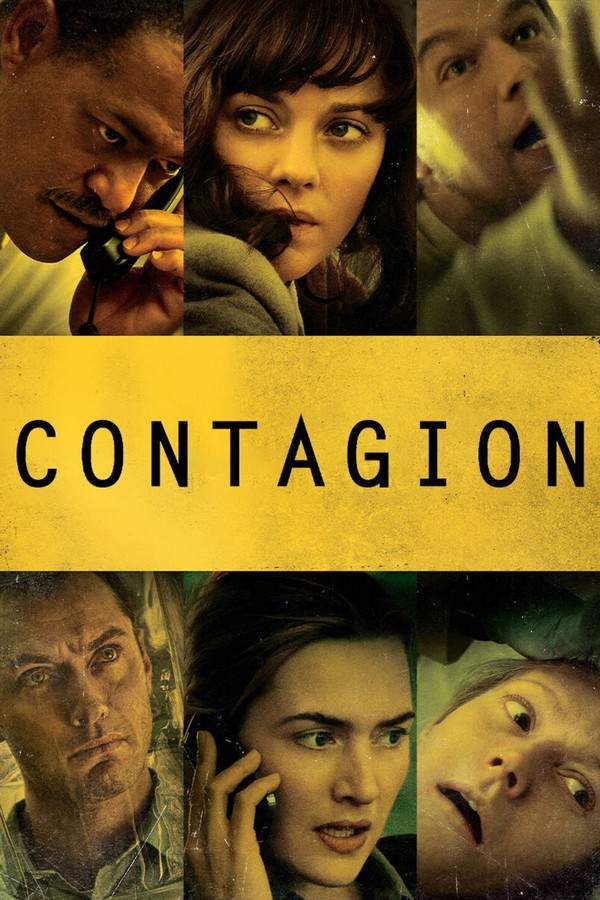
Contagion thrillers and pandemic movies like Outbreak

Stories of deadly outbreaks that threaten to unravel civilization. For viewers who liked the viral panic and high-tension containment efforts in Outbreak, this section features similar movies about deadly epidemics. These stories explore the chaos of a spreading biological threat, the struggle for survival, and the military or governmental response to a collapsing society.

  • anxious
  • urgent
  • paranoid
  • gripping
  • frightening
  • chaotic
  • Tone: anxious, paranoid
  • Pacing: fast, escalating
Why these movies?

The story pattern: The narrative pattern involves the rapid introduction of a highly contagious and deadly disease, followed by scenes of societal breakdown, military lockdowns, and a desperate search for a cure or containment method. The journey is one of escalating dread, often revealing darker truths about the origin of the threat.

Why they belong together: They share a core premise of a biological apocalypse, creating a specific atmosphere of paranoia and urgency. The similarity lies in the visceral fear of an invisible enemy, the depiction of mass panic, and the high-intensity race to prevent total catastrophe.

If you liked this

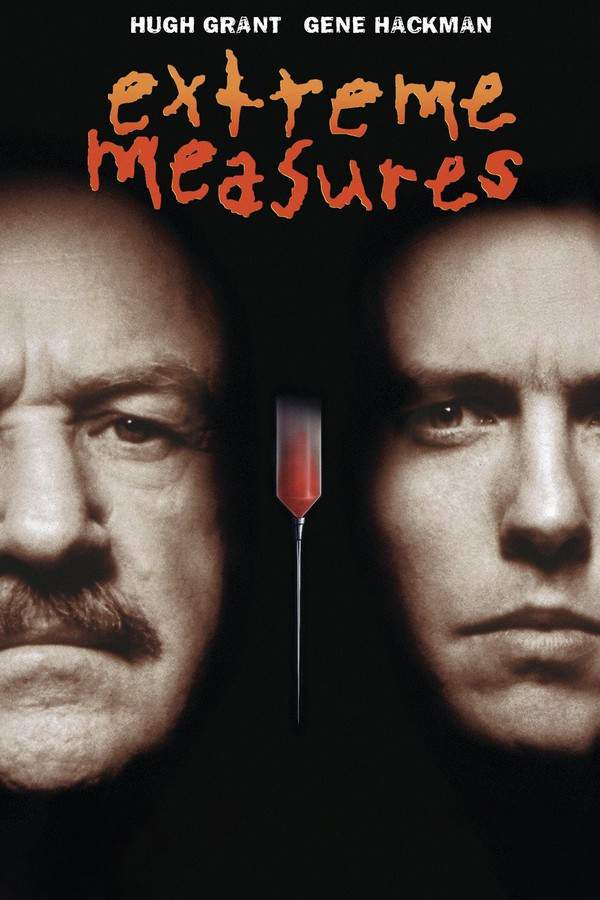
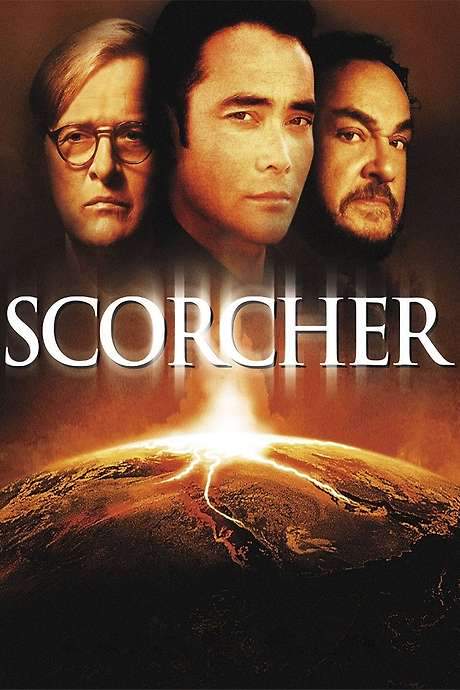
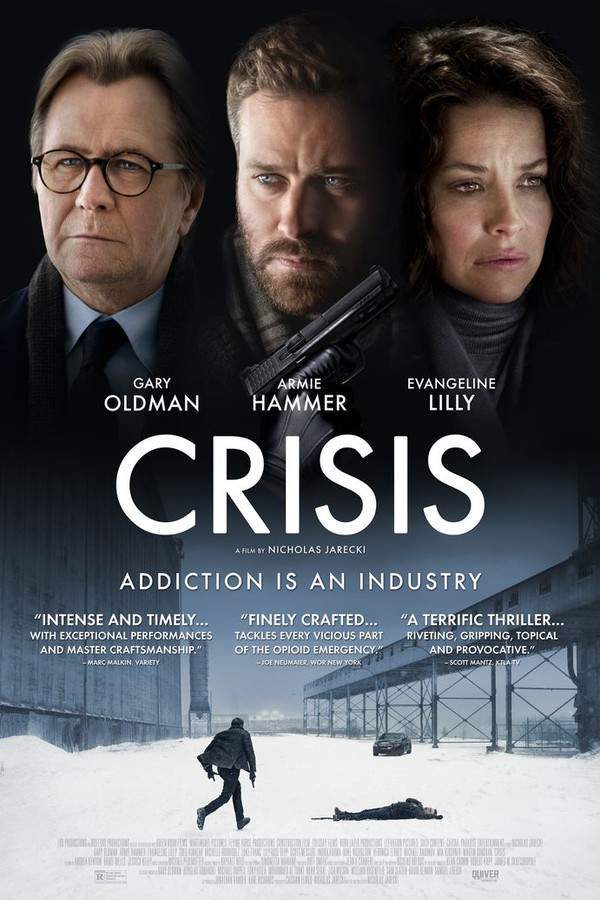
Movies Like Outbreak

Similar movies to Outbreak: the same genre, themes or kind of story. Each one comes with its own plot summary, timeline and ending explained.

Browse all movie summaries

Every angle

Outbreak (1995) Explained: Plot, Timeline & Characters

Everything about Outbreak in one place: what happens in the plot summary, the timeline in chronological order, the characters and meaning and a spoiler-free summary. What's After the Movie adds the cast, box office and post-credit scenes.

Coming soon on iOS and Android

The Plot Explained Movie Summary App

Plot summaries, endings explained and timelines on your phone. Catch up on any movie in minutes, save your favorites and never miss a twist again.

Be the first to know when we launch. Your email stays private, always.

Learn more about the app