Year: 1980
Runtime: 156 mins
Language: Japanese
Director: Kinji Fukasaku
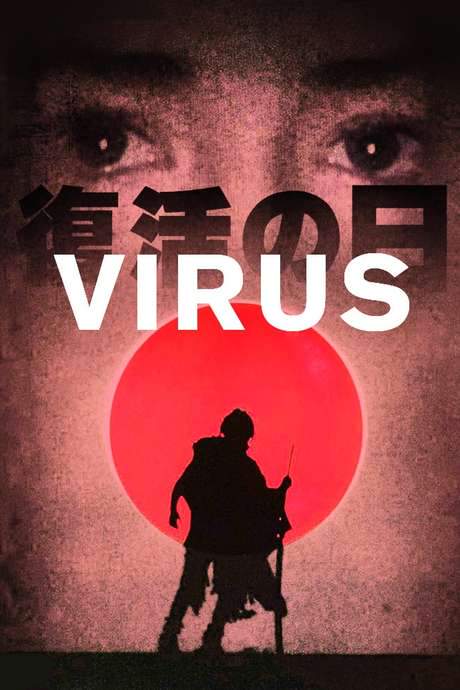
In autumn 1982, a military virus released in a plane crash has exterminated humanity, leaving only 863 survivors stranded in Antarctica. Isolated scientists race against time to develop a cure, while the world wonders who will inherit the Earth after the pandemic’s devastation.
Warning: spoilers below!
Haven’t seen Virus yet? This summary contains major spoilers. Bookmark the page, watch the movie, and come back for the full breakdown. If you're ready, scroll on and relive the story!
Read the complete plot breakdown of Virus (1980), including all key story events, major twists, and the ending explained in detail. Discover what really happened—and what it all means.
In 1982, a shadowy deal sets the stage for a perilous game of bio-politics. An East German scientist, Dr. Krause, Ken Pogue becomes a key figure in a clandestine exchange over a dangerous virus known as MM88. This pathogen, accidentally created by an American geneticist, has the terrifying ability to amplify the potency of any virus or bacterium it touches. The Americans manage to recover the virus sample, which had been stolen from a U.S. lab the year before, but disaster strikes when the plane carrying it crashes. The virus is released into the world, and a grim pandemic unfolds, initially dubbed the Italian Flu as nations scramble to understand the threat.
Within seven months, nearly the entire population perishes. Yet a remarkable, almost impossible chill saves a tiny enclave: the polar winter renders the virus inactive at temperatures below -10 degrees Celsius, and the base at Antarctica—home to 855 men and eight women—becomes a last, fragile bastion of humanity. The British nuclear submarine HMS Nereid, under the command of Captain McCloud [Chuck Connors], joins the scientists after it sinks a Soviet submarine whose infected crew attempts to land near Palmer Station.
Years pass as the survivors begin to imagine a future. A looming disaster, however, is not weather or disease alone but a cold, hard countdown: an earthquake is predicted to activate the Automated Reaction System (ARS), a doomsday device designed to launch the United States’ and the Soviet arsenal in a retaliatory lightning strike. The two superpowers each have their own ARS, and Palmer Station becomes a focal point of the looming conflict. In the midst of this tension, a plan forms to shut down the rogue systems and buy time for a possible reunion of humanity.
A daring mission unfolds as the scientists evacuate the women and children—and several hundred of the men—onto an icebreaker and preserve hope for the future. Two key figures, Dr. Yoshizumi [Masao Kusakari] and Major Carter [Bo Svenson], board HMS Nereid to race toward the ARS and disable it, shielded by an experimental vaccine that may keep MM88 at bay. The journey takes them from the brutal cold of the ice to the machinery of Washington, D.C., as they push toward the bunker that controls the ARS.
On the ground in the capital, Yoshizumi and Carter reach the ARS command bunker, only to face a grim turn of events. Carter is lost in the rubble when the earthquake strikes, silencing a critical ally in the mission. In a moment of quiet, Yoshizumi radios the Nereid and tells them that the vaccine seems to have worked—> If that still matters. The response from the ship is somber and resolute: > “At this point in time, life still matters.”
The city itself is hit by a cascade of atomic explosions, and the film splits into two endings depending on the cut you watch. In the American version, the screen goes black for a moment, and the end credits roll over stark footage of the Antarctic landscape, accompanied by a mournful refrain that whispers, “It’s not too late…” In the Japanese version, Yoshizumi survives the blast and makes his way back toward Antarctica. By 1988, in Tierra del Fuego, he finds survivors who have been immunized by the vaccine, and he is reunited with the woman he fell in love with. They embrace, and Yoshizumi softly proclaims, “Life is wonderful.” This closing moment highlights the persistence of hope against overwhelming odds, a reminder that even in the darkest times, human connection and resilience endure.
Throughout the film, the stakes are not only scientific but deeply personal, bringing together a cast of characters who anchor the story in a shared desire to protect life. The narrative threads weave together a tense chronicle of pandemic, isolation, and the fragile thread of civilization, culminating in a meditation on love, sacrifice, and the enduring possibility of renewal even after global catastrophe. The choices and losses along the way shape a testament to vigilance, cooperation, and the stubborn hope that humanity can prevail when faced with systems that could erase it in an instant.
Last Updated: October 09, 2025 at 14:52
Discover curated groups of movies connected by mood, themes, and story style. Browse collections built around emotion, atmosphere, and narrative focus to easily find films that match what you feel like watching right now.
High-stakes stories where humanity's survival hinges on a desperate scientific race.Explore movies like Virus with a similar high-stakes, apocalyptic premise. If you enjoyed the scientific race against a global pandemic, you will find these tense thrillers compelling. They share a focus on survival, sacrifice, and the fragile hope of preventing total extinction.
Stories in this thread typically begin with a world-altering catastrophe, forcing a team of survivors or scientists to confront the crisis. The plot unfolds as a procedural mission against a ticking clock, often involving geopolitical elements and significant personal sacrifices, building towards a climactic resolution of the central threat.

These movies are grouped together by their core premise of a global-scale disaster and the resulting high-tension survival mission. They share a steady, urgent pacing, a bleak yet tense tone, and a heavy emotional weight derived from the stakes of near-total annihilation.

Stories of desperate hope and human resilience in a shattered world.Discover movies like Virus that capture the bleak, isolated feel of post-apocalyptic survival. If you were drawn to the somber atmosphere and the struggle for hope amidst devastation, these films offer similar themes of human resilience, sacrifice, and the raw will to endure.
The narrative pattern follows characters navigating a desolate, dangerous world, often confined to a single location. The journey is less about a clear external mission and more about internal and interpersonal conflicts, exploring themes of community, morality, and what it means to be human when all is lost.
These films are connected by their profoundly bleak settings and the heavy emotional focus on survival's psychological cost. They share a somber, anxious mood, a steady pacing that allows for character depth, and a tone that balances despair with a stubborn, collective will to persevere.
Don't stop at just watching — explore Virus in full detail. From the complete plot summary and scene-by-scene timeline to character breakdowns, thematic analysis, and a deep dive into the ending — every page helps you truly understand what Virus is all about. Plus, discover what's next after the movie.
Track the full timeline of Virus with every major event arranged chronologically. Perfect for decoding non-linear storytelling, flashbacks, or parallel narratives with a clear scene-by-scene breakdown.
Discover the characters, locations, and core themes that shape Virus. Get insights into symbolic elements, setting significance, and deeper narrative meaning — ideal for thematic analysis and movie breakdowns.
Get a quick, spoiler-free overview of Virus that covers the main plot points and key details without revealing any major twists or spoilers. Perfect for those who want to know what to expect before diving in.
Visit What's After the Movie to explore more about Virus: box office results, cast and crew info, production details, post-credit scenes, and external links — all in one place for movie fans and researchers.
Discover movies like Virus that share similar genres, themes, and storytelling elements. Whether you’re drawn to the atmosphere, character arcs, or plot structure, these curated recommendations will help you explore more films you’ll love.
Virus (1980) Scene-by-Scene Movie Timeline
Virus (1980) Movie Characters, Themes & Settings
Virus (1980) Spoiler-Free Summary & Key Flow
Movies Like Virus – Similar Titles You’ll Enjoy
Virus (1999) Film Overview & Timeline
Extinction (2015) Story Summary & Characters
Contagion (2011) Complete Plot Breakdown
Antiviral (2013) Spoiler-Packed Plot Recap
Viral (2016) Full Movie Breakdown
Patient Zero (2018) Plot Summary & Ending Explained
Pandemic (2016) Film Overview & Timeline
Virus: 32 (2022) Movie Recap & Themes
Virus (2019) Plot Summary & Ending Explained
Alien Predators (1986) Film Overview & Timeline
Quarantine (1989) Movie Recap & Themes
Virus Shark (2021) Spoiler-Packed Plot Recap
COVID-21: Lethal Virus (2021) Complete Plot Breakdown
Virus Undead (2008) Plot Summary & Ending Explained
Mutants (2009) Movie Recap & Themes