Plot Explained Spoilers guaranteed!
Plot Explained

Browse by genre

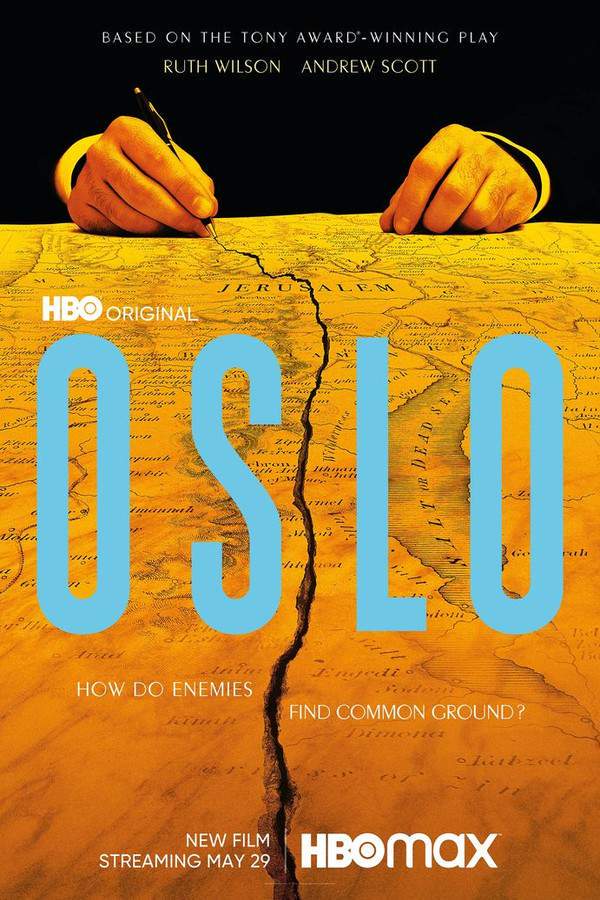
Oslo (2021) movie poster

Plot Summary

Oslo (2021) Plot Summary & Ending Explained

Release, runtime and language
2021 · 118 min · English
Echo score 55
Loading streaming availability…
Directed by
Bartlett Sher
Starring
Andrew Scott, Waleed Zuaiter, Ruth Wilson, Salim Dau, Rotem Keinan, Doval'e Glickman

A tense drama portrays the complex and secretive process behind the historic 1993 Oslo Accords. The story follows a Norwegian couple who unexpectedly find themselves facilitating clandestine negotiations between Israelis and Palestinians. As unlikely allies work together, unexpected bonds are formed, and immense challenges are overcome in an attempt to broker peace and defy seemingly insurmountable odds.

On this page (8)
  1. 1 Where to watch
  2. 2 What happens: full plot
  3. 3 Plot questions answered
  4. 4 How it ends
  5. 5 The book behind the movie
  6. 6 Movie threads
  7. 7 Movies like Oslo
  8. 8 Every angle
Loading streaming availability…

Full plot summary · contains spoilers

What Happens in Oslo: Full Plot Summary

The whole story of Oslo (2021) explained, from the opening scene to the final frame: every key event, every twist and what it all adds up to. Read it as a quick recap before the sequel, to check a scene you missed, or to finally understand what really happened.

In December 1992, Mona Juul at the Norwegian Ministry of Foreign Affairs reaches out to her husband, Terje Rød-Larsen, who is stationed in Jerusalem. He heads straight into a conversation with Yossi Beilin, who outlines a persistent deadlock in the peace talks: both sides insist on getting everything they want at once. Terje counters with a bold new idea—a unilateral shift to a more neutral ground for dialogue, proposing that an Israeli representative meet a Palestinian counterpart away from the usual environments.

The tension shifts to London, where [Mona Juul] again plays a pivotal mediator as she and Terje introduce Ahmed Qurei to the discussion and pair him with Yair Hirschfeld, an Israeli economist by training. The session remains chilly at first, but gradually warms as the parties begin to see the potential for progress. A crucial element of this phase is the sense that smaller, informal exchanges could unlock bigger formal talks.

A follow-up meeting takes place at a manor near Oslo, with Hassan Asfour joining as a Palestinian representative alongside Qurei, and Hirschfeld pairing with Ron Pundak to represent Israel. The atmosphere, while formal, relaxes as participants share meals and social moments, slowly yielding the first drafts of what would become a Declaration of Principles (DOP). Yet because neither Hirschfeld nor Pundak hold official government status, the talks teeter on the edge of collapse as the process grows entangled in national prerogatives and procedural questions.

In a bid to keep things alive, Terje makes a provocative claim—that he could recruit a bona fide Israeli official into the talks. Mona, recognizing the fragility of the moment, decides to break her “facilitate only” rule and confides in Johan Jørgen Holst, the Norwegian foreign minister, who then arranges a direct meeting with Uri Savir from the Israeli foreign ministry to review the evolving DOP.

The encounter between Savir and Qurei begins with sharp accusations and a fierce exchange of blame, but it soon shifts as Savir reveals a willingness to consider concessions: he suggests ceding the Gaza Strip and Jericho as an autonomous Palestinian region, a move that could unlock broader agreement. Savir then brings the draft to Joel Singer, the Israeli Ministry of Foreign Affairs legal adviser, who presses to rewrite the document. The tension rises again, threatening to derail the entire process.

At Hirschfeld’s urging, Mona steps into the fray with a personal perspective, offering her own experiences from the conflict to humanize the negotiations. The film employs flashbacks to hint at the experiences that shaped her viewpoint, weaving memory into the present negotiations and helping to defuse the stalemate.

From this point, the Oslo process begins to move toward a formal conclusion. A long-awaited telephone conference between Shimon Peres and Yasser Arafat is arranged, with Arafat still in exile in Tunis. Qurei speaks on behalf of Arafat and the Palestinian leadership, translating the English dialogue so the other side can follow. After a drawn-out exchange, both sides acknowledge each other’s legitimacy and agree to defer the most controversial issue—Jerusalem—long enough to finalize the broader framework.

The film closes with a montage of real-world consequences and milestones that followed the Oslo Accord: Rabin’s famous White House address—“We who have fought against you, the Palestinians, we say to you today, in a loud and clear voice: ‘enough of blood and tears, enough’”—and the grim later history that includes his assassination in 1995 and ongoing debates over Jerusalem. It also nods to the onset of the Second Intifada in 2000, reminding viewers that the road to peace remained fraught and uncertain. Yet the narrative affirms the Oslo meeting as a turning point that underscored dialogue and mutual recognition as essential tools for peace.

The ensemble cast contributes to a richly textured portrayal of the negotiations, including Jan Egeland and Yigal Naor in supporting roles, whose presence emphasizes the broader international and regional dynamics at play.
Last updated: February 10, 2026 at 08:32

Was this helpful?

Plot questions answered

Oslo Plot Explained: Your Questions Answered

The questions people ask most about Oslo (2021): what happens in the confusing scenes, why the characters do what they do, the twists, hidden details and what the ending means. Each answer contains spoilers.

Q1

Why did Terje Rød-Larsen propose neutral ground for Israeli-Palestinian talks?

Terje proposed moving negotiations away from the usual diplomatic environments because both sides had reached a deadlock, each insisted on getting everything they wanted at once. By creating a unilateral shift to more neutral ground (eventually Oslo), he hoped to break the impasse and allow informal dialogue that could later feed into formal talks.

Foreshadowing: Earlier in the film, Yossi Beilin explains the persistent deadlock preventing any progress in peace negotiations.

  • terje rød-larsen
  • neutral ground
  • backchannel talks
  • oslo accords
  • peace negotiations
Q2

Why was it problematic that Yair Hirschfeld and Ron Pundak weren't official Israeli representatives?

Because Hirschfeld was an economist and Pundak lacked official government status, their participation threatened to derail the entire process. Israel prohibited official contact with Palestinians, so using non-officials created a legal and political gray area. When the process needed to advance to official circles, this unofficial status became a major obstacle that nearly collapsed the talks.

Foreshadowing: The London meeting deliberately kept the setting secret because Israeli officials were prohibited from speaking with Palestinians.

  • yair hirschfeld
  • ron pundak
  • official status
  • israeli delegation
  • oslo talks
Q3

Why did Mona Juul break her "facilitate only" rule and involve Foreign Minister Holst?

Mona broke her rule when Terje made a provocative claim that he could recruit a bona fide Israeli official, which put the fragile process at risk. Recognizing the moment's fragility, she confided in Johan Jørgen Holst, who then arranged a direct meeting with Uri Savir from the Israeli foreign ministry to review the evolving draft, essentially moving the talks from informal backchannels toward official recognition.

Foreshadowing: Terje's claim that he could bring in an official created pressure that threatened to expose the secret negotiations prematurely.

  • mona juul
  • facilitate only rule
  • johan jørgen holst
  • uri savir
  • norwegian facilitation
Q4

What concessions did Uri Savir offer during the negotiations?

During the Savir-Qurei meeting, after initial sharp accusations about terrorism, Savir revealed willingness to consider concessions. He suggested ceding the Gaza Strip and Jericho as an autonomous Palestinian region, a significant shift that could unlock broader agreement and marked the first concrete territorial compromise from the Israeli side.

Foreshadowing: The tense opening of the Savir-Qurei session began with fierce exchanges of blame before shifting to potential compromises.

  • uri savir
  • ahmed qurei
  • gaza strip
  • jericho
  • autonomous region
  • concessions
Q5

Why was Jerusalem deferred in the Oslo Accords?

Jerusalem was deferred because it remained the most controversial issue, both sides had deeply irreconcilable claims to the city. To finalize the broader framework and Declaration of Principles, both parties agreed to postpone the Jerusalem question for future negotiations, allowing the historic agreement to move forward despite this fundamental disagreement.

Foreshadowing: The telephone conference between Shimon Peres and Yasser Arafat required lengthy discussion before both sides agreed to accept each other's legitimacy and set aside Jerusalem.

  • jerusalem
  • deferred
  • oslo accords
  • declaration of principles
  • controversial issue
Q6

What was the Declaration of Principles (DOP) in the Oslo process?

The Declaration of Principles was the first written framework emerging from the secret Oslo negotiations. It outlined the initial terms for Israeli-Palestinian recognition and a pathway toward Palestinian autonomy. Participants at the manor near Oslo, including Qurei, Asfour, Hirschfeld, and Pundak, produced early drafts that would evolve into the formal agreement signed at the White House.

Foreshadowing: The Oslo-area follow-up meeting at the manor produced the first drafts after participants socialized and debated over meals.

  • declaration of principles
  • dop
  • oslo accords
  • peace framework
  • agreement draft
Q7

How did Mona Juul's personal story affect the negotiations?

Mona shared her own experiences with the conflict, using flashbacks throughout the film to illustrate what shaped her perspective. Her personal testimony humanized the negotiations and helped defuse tensions when the process faced collapse after Joel Singer attempted to rewrite the document. Her emotional intervention allowed negotiators to see the human cost behind the political positions.

Foreshadowing: The film uses flashbacks throughout to hint at Mona's experiences that informed her viewpoint on the conflict.

  • mona juul personal story
  • flashbacks
  • human cost
  • defuse tensions
  • negotiation breakthrough
Q8

What was the significance of Yitzhak Rabin's White House speech?

Rabin's speech at the White House in September 1993 marked the international acknowledgment of the Oslo Accords. His famous declaration, "We who have fought against you, the Palestinians, we say to you today, in a loud and clear voice: 'enough of blood and tears, enough'", became a powerful symbol of the peace effort and represented the culmination of the secret negotiations portrayed in the film.

Foreshadowing: The final telephone conference paved the way for formal recognition and the White House ceremony.

  • yitzhak rabin
  • white house speech
  • oslo accords
  • peace declaration
  • 1993
Q9

What happened after the Oslo Accords were signed?

The montage at the end of the film shows the aftermath: Rabin was assassinated in 1995, the peace process remained fragile, and the Second Intifada erupted in 2000. These events underscored the deadly political risks facing the peace effort and the ongoing challenges to implementing the Oslo framework, though the film emphasizes that Oslo opened dialogue between the sides.

Foreshadowing: The film foreshadows the fragile nature of peace efforts throughout, with the tension between hope and tragedy building toward the ending.

  • rabin assassination
  • second intifada
  • oslo aftermath
  • peace process failure
  • historical consequences
Q10

Why were the secret Oslo meetings considered groundbreaking?

The Oslo process was groundbreaking because it brought Israeli and Palestinian representatives together for direct dialogue, an unprecedented step during a period of intense conflict. By creating a clandestine backchannel outside official diplomatic settings, the Norwegian facilitation allowed both sides to explore compromises freely, ultimately leading to mutual recognition and a framework for peace that had seemed impossible.

Foreshadowing: Yossi Beilin's initial outline of the deadlock establishes why traditional diplomatic channels had failed completely.

  • oslo meetings
  • secret negotiations
  • breakthrough
  • mutual recognition
  • historic peace

Ending explained

What Happens at the End of Oslo?

How Oslo (2021) ends, in short: the final scene, the last twist and what it means for the characters. The full ending explained, with every spoiler, lives on its own page.

Read the full ending explained

In the end, the film portrays the complex and often fragile process of peace negotiations, highlighting that while the Oslo Accords marked a significant step towards dialogue, they did not resolve all conflicts permanently. The assassination of Israeli Prime Minister Yitzhak Rabin in 1995 was a tragic blow to the peace process, illustrating the deep-rooted divisions and opposition that still existed. When the film's characters meet again in 2000 at Camp David, hopes for a final resolution are dashed by renewed violence, leading Mona to conclude that Oslo was ultimately a failure. Yet, amid these setbacks, she believes that establishing a secret dialogue channel was still a worthwhile effort. The film leaves us with a poignant reminder that striving for peace—despite inevitable setbacks—is a noble pursuit, driven by the hope that understanding and compassion can eventually bridge even the deepest divides. The story emphasizes that real progress often happens quietly and behind closed doors, and that the human desire for peace remains powerful, even in the midst of relentless conflict. Ultimately, the film ends on a note of cautious optimism, recognizing that peace is a continuous journey, not a final destination.**

Oslo ending explained in full

Movie threads

More Movies Like Oslo, by Mood & Story

Curated lists built around what makes Oslo tick: the same mood, the same kind of story or the same emotional payoff. Each list explains why these movies belong together.

Political negotiation thrillers like Oslo

Stories where secret talks and fragile alliances shape global events. Find more movies like Oslo that focus on high-stakes diplomacy and secret peace talks. If you enjoyed the tense, behind-the-scenes look at political breakthroughs, these films capture a similar feel.

  • tense
  • diplomatic
  • clandestine
  • urgent
  • thought-provoking
  • hopeful
  • Tone: tense, thought-provoking, urgent
  • Pacing: steady, deliberate
Why these movies?

The story pattern: These narratives follow a linear progression of meetings and escalating challenges, driven by dialogue and intellectual conflict, culminating in a momentous but often qualified success.

Why they belong together: They are grouped together based on their shared focus on real-world political processes, a tense and steady pace, and an emotionally heavy tone that grapples with complex issues.

Historically complex dramas like Oslo

Films where hope emerges from struggle, shadowed by reality. Explore more movies like Oslo that depict real events with bittersweet endings. These films capture the emotional complexity of monumental efforts that are both celebrated and tempered by subsequent realities.

  • bittersweet
  • hopeful
  • historical
  • reflective
  • somber
  • complex
  • Tone: bittersweet, heavy, reflective
  • Pacing: steady
Why these movies?

The story pattern: These stories chronicle a difficult but ultimately successful endeavor, only to contextualize the victory within a broader, more somber historical narrative, creating a poignant reflection on progress and its limits.

Why they belong together: They share a narrative structure that balances achievement with loss, resulting in a heavy emotional weight and a bittersweet conclusion that resonates deeply.

If you liked this

Movies Like Oslo

Similar movies to Oslo: the same genre, themes or kind of story. Each one comes with its own plot summary, timeline and ending explained.

Browse all movie summaries

Every angle

Oslo (2021) Explained: Plot, Ending, Timeline & Characters

Everything about Oslo in one place: what happens in the plot summary, the timeline in chronological order, the characters and meaning, the ending explained and a spoiler-free summary. What's After the Movie adds the cast, box office and post-credit scenes.

Coming soon on iOS and Android

The Plot Explained Movie Summary App

Plot summaries, endings explained and timelines on your phone. Catch up on any movie in minutes, save your favorites and never miss a twist again.

Be the first to know when we launch. Your email stays private, always.

Learn more about the app