Plot Explained Spoilers guaranteed!
Plot Explained

Browse by genre

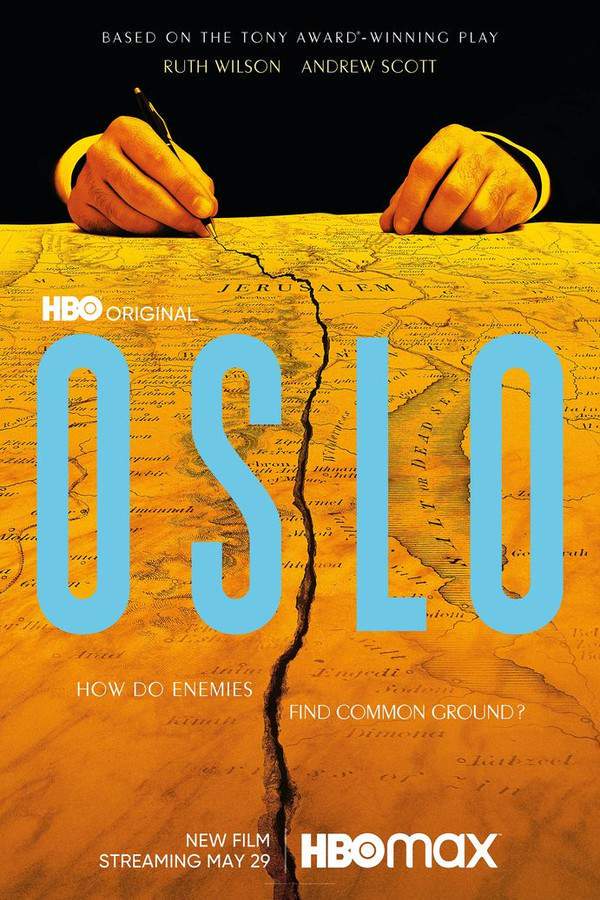
Oslo (2021) movie poster

Characters & Themes

Oslo (2021) Characters, Setting & Themes Explained

Release, runtime and language
2021 · 118 min · English
Echo score 55
Loading streaming availability…
Directed by
Bartlett Sher
Starring
Andrew Scott, Waleed Zuaiter, Ruth Wilson, Salim Dau, Rotem Keinan, Doval'e Glickman

A tense drama portrays the complex and secretive process behind the historic 1993 Oslo Accords. The story follows a Norwegian couple who unexpectedly find themselves facilitating clandestine negotiations between Israelis and Palestinians. As unlikely allies work together, unexpected bonds are formed, and immense challenges are overcome in an attempt to broker peace and defy seemingly insurmountable odds.

On this page (10)
  1. 1 Where to watch
  2. 2 Characters explained (10)
  3. 3 Character relationship map
  4. 4 Where & when it takes place
  5. 5 Themes & meaning (3)
  6. 6 Character & meaning questions
  7. 7 The book behind the movie
  8. 8 Movie threads
  9. 9 Movies like Oslo
  10. 10 Every angle
Loading streaming availability…

10 main characters · contains spoilers

Oslo Characters Explained: Who Is Who

The main characters of Oslo (2021), heroes and villains: what drives them, how they change over the course of the story and what each of them reveals about the film's bigger ideas.

  • Terje Rød-Larsen (Andrew Scott)

    Norwegian diplomat whose bold idea to move talks to neutral ground sets the tone for the process. He pushes informal channels and creative diplomacy, balancing risk with potential gains. His persistence and willingness to test unconventional approaches drive the negotiation forward, even when opposition intensifies. His role anchors the film’s belief in dialogue over dictated terms.

    • 🎯 Diplomat
    • 🧭 Pragmatist
    • 🕊️ Peace-seeker
  • Mona Juul (Ruth Wilson)

    A pivotal mediator who steers discussions between parties and foregrounds human consequences. She uses her own experiences to humanize the conflict and moves beyond a strict facilitation role. When the moment is fragile, she risks stepping into the fray to foster direct contact between negotiators. Her perspective helps shift the tone from obstruction to possibility.

    • 💬 Mediator
    • 🧭 Perspective-shaper
    • 🕊️ Humanist
  • Hassan Asfour (Waleed Zuaiter)

    Palestinian representative who participates in the talks, providing a Palestinian voice in the proceedings. He embodies pragmatism in the face of deep-seated fears and competing narratives. His role helps to balance Israeli concerns with Palestinian aspirations and demonstrates the potential for mutual concessions. He acts as a conduit for the Palestinian perspective within the negotiation

    • 🤝 Negotiator
    • 🗺️ Palestinian voice
    • 🧭 Bridge-builder
  • Ron Pundak (Rotem Keinan)

    Israeli negotiator who teams with Hirschfeld to represent Israel. Although not an official government figure in the film, he brings strategic insight and a willingness to explore creative compromises. His partnership with Hirschfeld highlights the role of non-official channels in shaping state-level decisions. He helps translate complex positions into workable draft ideas.

    • 🧭 Strategist
    • 🎯 Israeli negotiator
    • 💬 Legalistic
  • Yair Hirschfeld (Doval'e Glickman)

    Israeli economist and negotiator who prefers analytical approaches to diplomacy. He partners with Pundak to ground proposals in practical economics and feasibility. His non-official status pushes the talks toward flexible, innovative solutions. He serves as a bridge between idealism and practicality within the process.

    • 🧠 Economist
    • 🕊️ Bridge-builder
    • 💡 Idea generator
  • Yossi Beilin (Itzik Cohen)

    Israeli politician who contributes to the negotiation strategy with a combination of realism and persistence. He helps translate high-level concepts into negotiable language and maintains momentum when disagreements arise. His involvement underscores the political complexity of turning dialogue into a tangible framework.

    • 🎯 Politician
    • 🧭 Realist
    • 🤝 Negotiator
  • Uri Savir (Jeff Wilbusch)

    Israeli foreign ministry official who initially challenges concessions but ultimately engages in a willingness to consider substantial shifts. His evolution from hardline stance to conciliatory proposals demonstrates the pressure and practicality faced by negotiators. He plays a key role in moving the draft toward a formalized framework.

    • 🏛️ Foreign Ministry
    • 🤝 Concession-minded
    • 💬 Direct communicator
  • Jan Egeland (Tobias Zilliacus)

    International mediator whose involvement emphasizes the global dimension of the peace process. He provides a broader perspective that helps align regional aspirations with international expectations. His presence underscores the importance of external facilitation in achieving durable agreements. He helps stabilize the negotiation environment through neutral, global insight.

    • 🌐 Mediator
    • 🕊️ Peace advocate
    • 🧭 Global perspective
  • Yigal Naor

    Supporting figure whose presence highlights the broader international and regional dynamics at play. He represents the ancillary voices that shape the atmosphere and potential outcomes of the talks. His role underscores how a wide array of actors influences the trajectory of negotiations.

    • 🎭 Supporting player
    • 🗺️ Global observer
    • 🧭 Diplomatic analyst
  • Salim Dau

    Palestinian delegate in the negotiation context (character name not specified in the summary). Participates in rounds of discussion and represents Palestinian involvement in the process. The role illustrates the collective nature of the negotiating table beyond the named principals.

    • 🗺️ Palestinian delegate
    • 🕊️ Negotiator
    • 🤝 Bridge-builder

Last updated: October 23, 2026 at 18:46

Was this helpful?

5 characters · 3 connections · contains spoilers

Oslo Character Relationship Map

Who is connected to whom in Oslo: family, love, friendships, rivalries and hidden ties, colour-coded. Pick a character to see their side of the story, or a connection to see what brings two characters together.

How much of the story to show
TRTerjeRød-LarsenAndrew ScottMJMona JuulRuth WilsonYBYossi BeilinItzik CohenYHYair HirschfeldDoval'e GlickmanRPRon PundakRotem Keinan

Last updated: October 23, 2026 at 18:46

Was this helpful?

Setting

Where and When Does Oslo Take Place?

The setting of Oslo (2021): the year and time period, the places and locations, and how they shape the characters, the mood and the tension of the story.

Time period

Early 1990s (December 1992)

The narrative unfolds during a pivotal period of Middle East diplomacy in the early 1990s, beginning in December 1992. The story moves through key moments of the Oslo process as it gradually shifts from stalemate to a framework for negotiation. The timeline interweaves political risk, cautious optimism, and the emergence of informal dialogue as a path toward peace. It also nods to the real-world milestones and consequences that followed.

Location

Oslo, London, Jerusalem, Tunis

Oslo serves as the hinge of the peace process, with tense yet hopeful sessions that redefine traditional venue dynamics. London hosts a series of back-channel discussions that progressively warm toward formal negotiation. The film also depicts a manor near Oslo, contrasting official government spaces with intimate, candid exchanges. These environments symbolize the shift from confrontation to dialogue that underpins the Oslo Accords.

  • 🏙️ City diplomacy hubs
  • 🌍 International forums
  • 🏛️ Government offices

Last updated: October 23, 2026 at 18:46

Was this helpful?

3 major themes

Oslo Meaning: Themes & Message Explained

What is Oslo (2021) really about? The emotional, social and philosophical themes the film keeps returning to, its symbolism and the message beneath the surface.

  • Peace Process

    The film treats peace as a dialogue-driven project rather than a victory won in battle. It highlights how trust is built through informal exchanges, personal testimonies, and small concessions. The narrative suggests that human connection can unlock political stalemates and foster mutual recognition. Ultimately, it frames the Oslo talks as a turning point that demonstrates dialogue's potential to transform conflict.

  • Negotiation Dynamics

    Back-channel discussions, strategic positioning, and cautious concessions drive the plot. The characters negotiate not only policy but perception, navigating national prerogatives and procedural hurdles. The film shows how mediators and unconventional venues can nudge parties toward a draft agreement. It also underscores the fragility of progress when official status is uncertain.

  • Dialogue and Memory

    Flashbacks reveal how past traumas shape present bargaining stances and emotional stakes. The dialogue is enriched by personal experience, which humanizes opponents and broadens the scope of acceptable compromises. Memory is used to illuminate motivations without hardening positions. The film argues that memory, when humanized, can be a bridge rather than a barrier to agreement.

Last updated: October 23, 2026 at 18:46

Was this helpful?

Character & theme questions

Oslo Characters & Meaning: Your Questions Answered

The questions people ask about Oslo (2021): who the characters really are, their relationships, what the symbols mean, where it takes place and what the movie is really about. Each answer contains spoilers.

Q1

Where is the film Oslo set?

The film takes place primarily in Oslo, Norway, which serves as the neutral ground for the secret negotiations. Additional scenes occur in London, where back-channel discussions warm toward formal talks, as well as Jerusalem and Tunis, representing the broader Middle Eastern context of the conflict.

  • oslo settings
  • locations
  • norway
  • london
  • diplomatic venues
Q2

What time period does the movie cover?

The film is set in December 1992, during the early 1990s, which marks the beginning of the secret negotiations that led to the Oslo Accords. This was a pivotal moment in Middle East diplomacy when the peace process was shifting from stalemate toward a framework for negotiation.

  • 1990s
  • december 1992
  • oslo accords timeline
  • early 1990s diplomacy
Q3

Who is Terje Rød-Larsen in the film?

Terje Rød-Larsen is a Norwegian diplomat portrayed by Andrew Scott who initiates the bold idea to move talks to neutral ground. His persistence and willingness to use unconventional diplomatic approaches drive the negotiation process forward, anchored by his belief that dialogue can achieve what confrontation cannot.

  • terje rod-larsen
  • andrew scott
  • norwegian diplomat
  • mediator
Q4

What is Mona Juul's role in the negotiations?

Mona Juul, played by Ruth Wilson, serves as a pivotal mediator who bridges the parties and foregrounds human consequences of the conflict. She uses her own experiences to humanize the opposing sides and risks stepping into direct contact between negotiators when the moment is fragile, helping shift the tone from obstruction to possibility.

  • mona juul
  • ruth wilson
  • mediator
  • female lead
Q5

What are the main themes of Oslo?

The film explores three interconnected themes: Peace Process (the dialogue-driven project of building trust through informal exchanges), Negotiation Dynamics (the strategic positioning and fragile progress of back-channel discussions), and Dialogue and Memory (how past traumas shape present bargaining stances and can become bridges rather than barriers to agreement).

  • peace process
  • negotiation
  • dialogue
  • memory
  • themes
  • trust building
Q6

How does Oslo portray the peace process?

The film treats peace as a dialogue-driven project rather than a military or political victory. It shows how trust is built through informal exchanges, personal testimonies, and small concessions, suggesting that human connection can unlock political stalemates and foster mutual recognition between adversaries.

  • peace process
  • dialogue
  • trust building
  • negotiation
  • oslo accords meaning
Q7

Who represents the Palestinian side in the film?

Hassan Asfour, portrayed by Waleed Zuaiter, serves as the Palestinian representative who provides a Palestinian voice in the proceedings. He embodies pragmatism in the face of deep-seated fears and competing narratives, acting as a conduit for the Palestinian perspective and demonstrating the potential for mutual concessions.

  • hassan asfour
  • waleed zuaiter
  • palestinian representative
  • palestinian perspective
Q8

Who are the Israeli negotiators in Oslo?

The Israeli contingent includes Yair Hirschfeld (an economist who grounds proposals in practical feasibility), Ron Pundak (who brings strategic insight and creative compromise ideas), Uri Savir (who evolves from hardline to conciliatory proposals), and Yossi Beilin (who helps translate concepts into negotiable language).

  • israeli negotiators
  • yair hirschfeld
  • ron pundak
  • uri savir
  • yossi beilin
Q9

Why are back-channel negotiations important in the film?

The film shows how back-channel discussions in unconventional venues can nudge parties toward agreement when official status is uncertain. These secret talks allow negotiators to explore creative compromises without the pressure of public accountability, demonstrating how mediators and informal settings can transform seemingly insurmountable positions.

  • back-channel negotiations
  • secret talks
  • confidential diplomacy
  • informal venue
Q10

How does memory play a role in the story?

Flashbacks reveal how past traumas shape present bargaining stances and emotional stakes in the negotiations. The film argues that memory, when humanized through personal testimony, can serve as a bridge rather than a barrier, allowing negotiators to understand opponents' perspectives without hardening their positions.

Foreshadowing: Earlier scenes of personal testimony foreshadow how memories become tools for connection.

  • memory
  • flashbacks
  • past trauma
  • personal testimony
  • humanizing opponents
Q11

What does the film say about dialogue as a path to peace?

Oslo frames the Accords as a turning point demonstrating dialogue's potential to transform conflict. The narrative suggests that direct, honest conversation between former adversaries can create unexpected bonds and defy seemingly insurmountable odds, even as the film acknowledges the fragility of such progress.

  • dialogue
  • peace
  • human connection
  • transformation
  • communication
Q12

Is Oslo based on a true story?

Yes, the film dramatizes the real secret negotiations that led to the 1993 Oslo Accords between Israel and Palestine. While the ending acknowledges the historic achievement, it also notes subsequent tragedies like Yitzhak Rabin's assassination and the Second Intifada, leaving a bittersweet portrayal of hope shadowed by loss.

  • true story
  • based on real events
  • oslo accords
  • historical accuracy
  • 1993

Movie threads

More Movies Like Oslo, by Mood & Story

Curated lists built around what makes Oslo tick: the same mood, the same kind of story or the same emotional payoff. Each list explains why these movies belong together.

Political negotiation thrillers like Oslo

Stories where secret talks and fragile alliances shape global events. Find more movies like Oslo that focus on high-stakes diplomacy and secret peace talks. If you enjoyed the tense, behind-the-scenes look at political breakthroughs, these films capture a similar feel.

  • tense
  • diplomatic
  • clandestine
  • urgent
  • thought-provoking
  • hopeful
  • Tone: tense, thought-provoking, urgent
  • Pacing: steady, deliberate
Why these movies?

The story pattern: These narratives follow a linear progression of meetings and escalating challenges, driven by dialogue and intellectual conflict, culminating in a momentous but often qualified success.

Why they belong together: They are grouped together based on their shared focus on real-world political processes, a tense and steady pace, and an emotionally heavy tone that grapples with complex issues.

Historically complex dramas like Oslo

Films where hope emerges from struggle, shadowed by reality. Explore more movies like Oslo that depict real events with bittersweet endings. These films capture the emotional complexity of monumental efforts that are both celebrated and tempered by subsequent realities.

  • bittersweet
  • hopeful
  • historical
  • reflective
  • somber
  • complex
  • Tone: bittersweet, heavy, reflective
  • Pacing: steady
Why these movies?

The story pattern: These stories chronicle a difficult but ultimately successful endeavor, only to contextualize the victory within a broader, more somber historical narrative, creating a poignant reflection on progress and its limits.

Why they belong together: They share a narrative structure that balances achievement with loss, resulting in a heavy emotional weight and a bittersweet conclusion that resonates deeply.

If you liked this

Movies Like Oslo

Similar movies to Oslo: the same genre, themes or kind of story. Each one comes with its own plot summary, timeline and ending explained.

Browse all movie summaries

Every angle

Oslo (2021) Explained: Plot, Ending, Timeline & Characters

Everything about Oslo in one place: what happens in the plot summary, the timeline in chronological order, the characters and meaning, the ending explained and a spoiler-free summary. What's After the Movie adds the cast, box office and post-credit scenes.

Coming soon on iOS and Android

The Plot Explained Movie Summary App

Plot summaries, endings explained and timelines on your phone. Catch up on any movie in minutes, save your favorites and never miss a twist again.

Be the first to know when we launch. Your email stays private, always.

Learn more about the app