

Plot Explained Spoilers guaranteed!
Plot Explained

Browse by genre

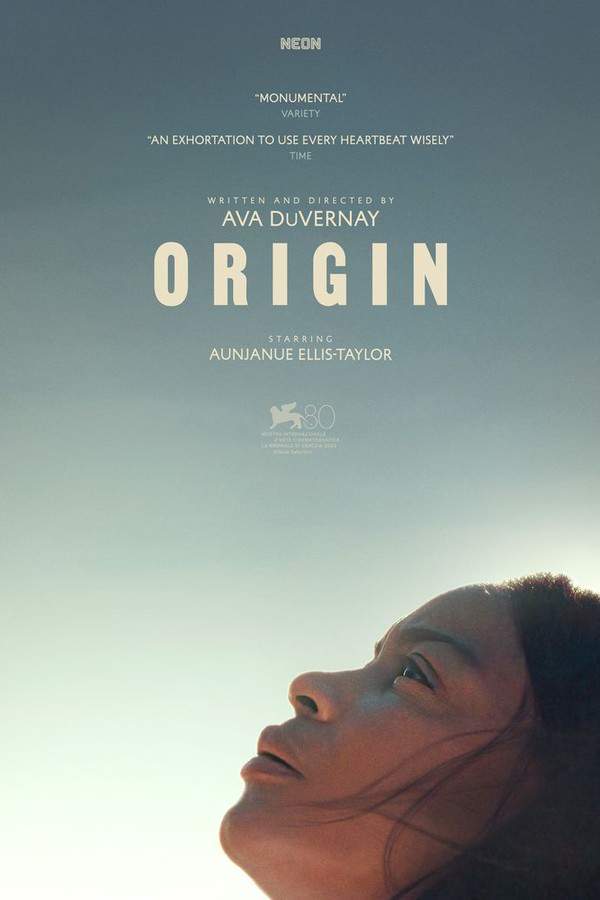
Origin (2023) movie poster

Ending Explained

Origin (2023) Ending Explained – Final Scene & Meaning

Release, runtime and language
2023 · 2 h 15 m · English
Echo score 80
Directed by
Ava DuVernay
Starring
Connie Nielsen, Nick Offerman, Vera Farmiga, Jasmine Cephas Jones, Jon Bernthal, Finn Wittrock
Budget
$38M

Following a profound personal loss, Isabel begins a journey to uncover the truth, researching historical events to create a significant work that challenges and redefines American identity. Through her dedication and passion, she produces a powerful masterpiece that expands the limits of human understanding.

On this page (8)
  1. 1 Where to watch
  2. 2 What happens at the end
  3. 3 Final events in order
  4. 4 Ending questions answered
  5. 5 The book behind the movie
  6. 6 Movie threads
  7. 7 Movies like Origin
  8. 8 Every angle

Where to watch

Where to Watch Origin (2023)

Where can you watch Origin? Stream, rent or buy it in the US, including on Kanopy: current JustWatch availability with up-to-date prices.

Streaming availability powered by JustWatch

Ending explained · contains spoilers

What Happens at the End of Origin?

How Origin (2023) ends, what the final scene means, which earlier moments set it up and how to read the ending if the film leaves it open. The full ending explained, with every spoiler.

In the climax of the film, Isabel travels to India seeking to understand the caste system more deeply, especially the plight of Dalits. She visits historical sites and learns about how deeply rooted caste discrimination is, even comparing it to other forms of systemic oppression like Nazi barbarity and racial segregation in America. The film emphasizes that these are different expressions of the same underlying ideology of superiority and subjugation. After her trip, Isabel’s journey is marked by the loss of her beloved cousin Marion, which adds a layer of personal grief to her quest. Her late phone call to Marion, which remains unanswered, symbolizes her attempt to find closure, yet it remains ambiguous whether Marian received her farewell.

Despite her efforts, the film makes it clear that Isabel eventually writes her groundbreaking book, Caste: The Origin of Our Discontents. Its existence suggests that her journey was ultimately worth it, as her insights provide a profound understanding of how casteism persists across different societies and eras. The story ends on a note of quiet resolve, with Isabel having gained clarity about the universal nature of systemic oppression—an understanding that transcends borders and time, linking the suffering of Trayvon Martin, Nazi victims, Dalits, and African Americans into one continuum of human struggle. The film leaves viewers with a sense of hope, that acknowledging this shared history can be the first step toward meaningful change, even if the journey to fight casteism and inequality is long and arduous. In this way, the ending underscores the importance of awareness, empathy, and the enduring human spirit in confronting systemic oppression.

Last updated: June 25, 2025 at 09:01

Was this helpful?

The last 4 events

How Origin Ends: The Final Events in Order

The last events of Origin (2023) in chronological order, the run-up to the ending explained above. The complete timeline has all 12 events, scene by scene.

Open the full timeline
  1. Visit to India and Ambedkar's home

    She travels to India and visits the home of Dr. Ambedkar, who championed the rights of the Dalit ('untouchable') peoples. The trip deepens her understanding of caste as a lived social order and informs the book's global scope. The Indian leg anchors the argument in historical and moral lineage.

    When
    2019
    Where
    India
  2. Stage talk about Caste

    Wilkerson speaks about her forthcoming work on stage, explaining how the caste framework helps illuminate bigotry in ways that race alone cannot. The talk positions caste as a universal lens for analyzing social hierarchy, and it signals the transition from private study to public discourse. The moment marks a tipping point toward widespread engagement with the idea.

    When
    Late 2010s
    Where
    New York, USA
  3. Caste as bestseller and public reception

    An onscreen monologue notes that Caste becomes a number-one New York Times nonfiction bestseller around the time of the November 2020 U.S. presidential election. The book spends ample time on the best-sellers list, reinforcing its impact on public conversation. The success elevates the framework of caste into mainstream discourse.

    When
    November 2020
    Where
    New York, USA
  4. Closing reflection on fighting bigotry

    The film closes with a synthesis of Wilkerson's insights, showing how caste explains many forms of oppression and offers a practical path to action. The monologue ties personal loss, historical memory, and global study into a call for understanding and reform. The work is presented as a living framework for combating bigotry.

    When
    Post-2020
    Where
    Global / Stage

Ending questions answered

Origin Ending: Your Questions Answered

The questions people ask most about the ending of Origin (2023): what the final scene means, how the twist works, what happens to each character and how to read the ending. Each answer contains spoilers.

Q1

Why does Isabel travel to India in the final act?

Isabel travels to India to deeply research the caste system and the plight of Dalits, who face severe systemic discrimination. This journey is crucial to her comparative analysis of oppression, as she examines how caste hierarchies function similarly to other forms of subjugation like Nazi atrocities and American racial segregation. The trip grounds her sociological research in lived experience, allowing her to understand how these different oppressive systems share common ideological roots.

  • isabel
  • india
  • caste
  • dalits
  • research journey
Q2

Does Marion receive Isabel's final phone call?

The film leaves this deliberately ambiguous. Isabel calls Marion near the end of the film, but the call goes unanswered, and viewers never learn whether Marion received the message or heard Isabel's goodbye. This unanswered call symbolizes the unresolved grief Isabel carries, as she never gets closure with her cousin despite her attempt to reach her.

  • marion
  • phone call
  • death
  • unanswered
  • grief
Q3

What book does Isabel write in Origin?

Isabel writes "Caste: The Origin of Our Discontents," a groundbreaking work that explores how caste systems operate across different societies and historical periods. The book draws connections between the oppression of Dalits in India, Jewish victims of Nazi Germany, African Americans experiencing racial segregation, and modern incidents like the killing of Trayvon Martin. The successful publication of this book represents the culmination of her research journey.

  • caste book
  • origin of our discontents
  • isabel wilkerson
  • publication
Q4

What is the meaning of Origin's ending?

The ending conveys that systemic oppression, whether caste discrimination, Nazi brutality, or American racism, represents different expressions of the same underlying ideology of superiority. Despite experiencing profound personal losses, Isabel achieves clarity and purpose through her book, suggesting that understanding these connections is the first step toward meaningful social change. The film ends on a hopeful note, emphasizing that awareness and empathy can inspire collective action against entrenched inequality.

  • caste
  • systemic oppression
  • meaning
  • ending explanation
  • themes
Q5

How does the ending connect different forms of oppression?

The film explicitly links caste discrimination in India, Nazi persecution of Jews, American racial segregation, and contemporary police violence as part of a continuum of human struggle. Isabel's book argues that these seemingly different systems share a common structure: a hierarchical belief in the superiority of one group over another. By connecting Trayvon Martin, Dalit victims, Holocaust survivors, and enslaved African Americans, the film argues that fighting any form of systemic oppression strengthens the fight against all others.

  • casteism
  • nazism
  • racial segregation
  • comparison
  • systemic oppression
Q6

Is Origin's ending hopeful or bittersweet?

The ending is distinctly hopeful, despite heavy themes of grief and loss. While Isabel loses her husband, mother, and cousin Marion during her journey, the film concludes with her successfully publishing a book that has already made a significant cultural impact. This sense of purpose and public engagement counters the melancholy tone, suggesting that personal sacrifice can lead to meaningful societal change. The film emphasizes that the long struggle against casteism and inequality is worth pursuing.

  • hopeful ending
  • bittersweet
  • emotional resolution
  • impact
Q7

Why can't Isabel say goodbye to Marion before she dies?

Isabel is unable to say goodbye to Marion because she is traveling in India conducting research when Marion passes away. She attempts to reach her cousin with a phone call, but Marion does not answer. This mirrors an earlier pattern in Isabel's life, her husband and mother also died while she was away, suggesting her scholarly pursuit of understanding systemic oppression requires immense personal sacrifice.

  • marion death
  • goodbye
  • unreachable
  • grief pattern
Q8

What happens to Isabel by the end of the film?

By the film's end, Isabel completes and publishes her book "Caste: The Origin of Our Discontents," which receives significant attention and acclaim. She gains clarity about the universal nature of systemic oppression across different societies and historical periods. While she carries the weight of her personal losses, her husband, mother, and cousin, she finds resolve and purpose in her scholarly achievement, leaving viewers with a sense of her transformation from grief to purposeful action.

  • isabel fate
  • conclusion
  • character outcome
  • transformation
Q9

Why does the film compare caste discrimination to Nazi atrocities?

The film draws this comparison to illustrate that all forms of systemic oppression, whether based on caste, race, or religion, share a common ideological foundation of viewing certain groups as inherently inferior. By placing Nazi barbarity alongside American segregation and Indian casteism, Isabel's research demonstrates that these are not isolated phenomena but expressions of the same supremacist thinking. This comparative framework is central to her book's argument about the universal nature of caste-like hierarchies.

  • nazi
  • caste comparison
  • holocaust
  • systemic oppression
  • analysis

Movie threads

More Movies Like Origin, by Mood & Story

Curated lists built around what makes Origin tick: the same mood, the same kind of story or the same emotional payoff. Each list explains why these movies belong together.

Movies where grief sparks a quest like Origin

Characters channel personal tragedy into profound intellectual or historical investigations. Find films similar to Origin, where a protagonist grapples with profound loss by immersing themselves in an academic or historical investigation. If you liked the blend of personal sorrow and intellectual urgency in Origin, you'll discover other thoughtful dramas centered on grief-fueled research.

  • grieving
  • academic
  • introspective
  • somber
  • thought-provoking
  • urgent
  • Tone: melancholic, thoughtful
  • Pacing: slow, contemplative
Why these movies?

The story pattern: Stories typically begin with a devastating personal tragedy that propels the protagonist into a methodical, research-heavy journey. The narrative structure often alternates between the character's emotional present and the historical or theoretical material they are exploring, leading to a synthesis that offers both personal healing and broader intellectual insight.

Why they belong together: These films are grouped together because they share a unique emotional mix: the weight of personal grief combined with the focused energy of an intellectual mission. They feature slow, deliberate pacing, complex narrative structures, and a tone that is melancholic yet purpose-driven, creating a deeply introspective viewing experience.

Epic historical investigations of injustice like Origin

Epic narratives that connect past and present to reveal the roots of social oppression. Discover movies like Origin that undertake a vast historical investigation into systemic oppression, connecting different eras and cultures. If you appreciated the complex, multi-layered approach to exposing social hierarchies in Origin, you'll find other heavy dramas with a similar scholarly and urgent vibe.

  • thought-provoking
  • oppressive
  • urgent
  • academic
  • somber
  • historical
  • Tone: somber, urgent
  • Pacing: slow, methodical
Why these movies?

The story pattern: The narrative pattern involves a central figure, often a writer or researcher, who draws parallels between distinct historical instances of oppression (e.g., caste system, racism, genocide). The plot jumps across time periods to build a comparative thesis, culminating in a work or revelation intended to challenge and redefine public understanding.

Why they belong together: These films are united by their complex, multi-stranded narratives that directly tackle large-scale social evils. They share a high intensity, a somber and thought-provoking tone, and a commitment to linking personal stories with wider historical forces. The experience is defined by its academic rigor and heavy emotional impact.

If you liked this

Movies Like Origin

Similar movies to Origin: the same genre, themes or kind of story. Each one comes with its own plot summary, timeline and ending explained.

Browse all movie summaries

Every angle

Origin (2023) Explained: Plot, Ending, Timeline & Characters

Everything about Origin in one place: what happens in the plot summary, the timeline in chronological order, the characters and meaning, the ending explained and a spoiler-free summary. What's After the Movie adds the cast, box office and post-credit scenes.

Coming soon on iOS and Android

The Plot Explained Movie Summary App

Plot summaries, endings explained and timelines on your phone. Catch up on any movie in minutes, save your favorites and never miss a twist again.

Be the first to know when we launch. Your email stays private, always.

Learn more about the app