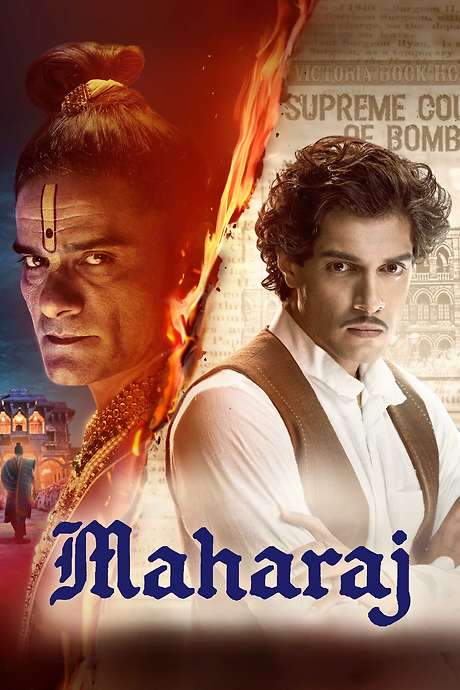
The film commences with a harrowing representation of the Jallianwala Bagh massacre, where Brigadier-General Reginald Dyer gives the order for his troops to fire on a peaceful assembly of civilians in Amritsar, resulting in the death of hundreds. Among the few survivors is a young boy named Pargat Singh, who tragically loses both his mother and sister amidst the chaos. The British authorities attempt to suppress the truth by destroying copies of the Punjab Samachar that detailed the brutal events, falsely branding the victims as violent rebels who had supposedly attacked the army, despite the fact that none of the soldiers were harmed.
The story then shifts to Chettur Sankaran Nair, a respected barrister and recent knight of the British Crown, who meets Pargat after the massacre. Nair encourages the devastated boy to abandon thoughts of violent rebellion and to focus on his education. However, he later learns of Pargat's “suicide,” prompting Nair to investigate the incident, as he is assigned by the colonial government to produce a report that will favor the British perspective. It is during this process that law student Dilreet Gill discreetly presents Nair with a surviving issue of the Punjab Samachar, which reveals the actual extent of Dyer's brutality.
Awakened to the horrific reality of the massacre, Nair publicly condemns Dyer before the Viceroy's Council, but his protests are dismissed, and he is cautioned not to oppose the Crown. Overwhelmed with guilt for having dissuaded Pargat from rebellion, Nair—with Gill's guidance—takes the bold step of suing the British government and General Dyer for genocide. In their first legal encounter, Nair manages to achieve a victory, sparking Dyer's thoughts of assassination; however, Dyer is advised against such drastic action against a man of Nair's stature. Subsequently, Dyer employs Neville McKinley, an embittered Anglo-Indian lawyer, to defend the Crown, leading to an intense courtroom drama.
The prosecution introduces a witness, Martha Stevens, a music teacher who claims she was assaulted. This accusation turns public opinion against Nair, casting him in an unfavorable light for defending the accused. Nevertheless, Nair and Gill work diligently to uncover evidence that proves Stevens had not been assaulted, but rather coerced into making false claims after having a consensual romantic relationship. In a clever twist, Gill manages to extract an admission from Stevens about her true feelings, subsequently restoring Nair's credibility. During a subsequent court victory, Nair nearly instigates Dyer into confessing his guilt.
However, McKinley retaliates with a calculated blow by accusing Nair of illegally obtaining confidential government documents. Consequently, Nair is convicted and sequestered from court proceedings, which leads to the government's exoneration. Feeling defeated and despondent, Nair returns home, where he receives a letter from the imprisoned rebel Kripal Singh, Pargat's father, revealing the shocking truth that the British officials actually murdered Pargat. Enraged and fueled by this revelation, Nair persuades Gill to rejoin him in the fight for justice. When the court dismisses his appeal, he purposefully engages in contempt of court to magnify the issue to higher authorities.
Expecting to humiliate Nair, Dyer and McKinley are caught off guard when Nair uncovers that the jury's decision was not unanimous; he presents the only truthful juror, proving that the other jurors had been bribed. Although Nair ultimately faces disbarment, his courageous revelations stir the media and spark a national wave of resistance, ensuring the truth behind the massacre cannot be concealed any longer.