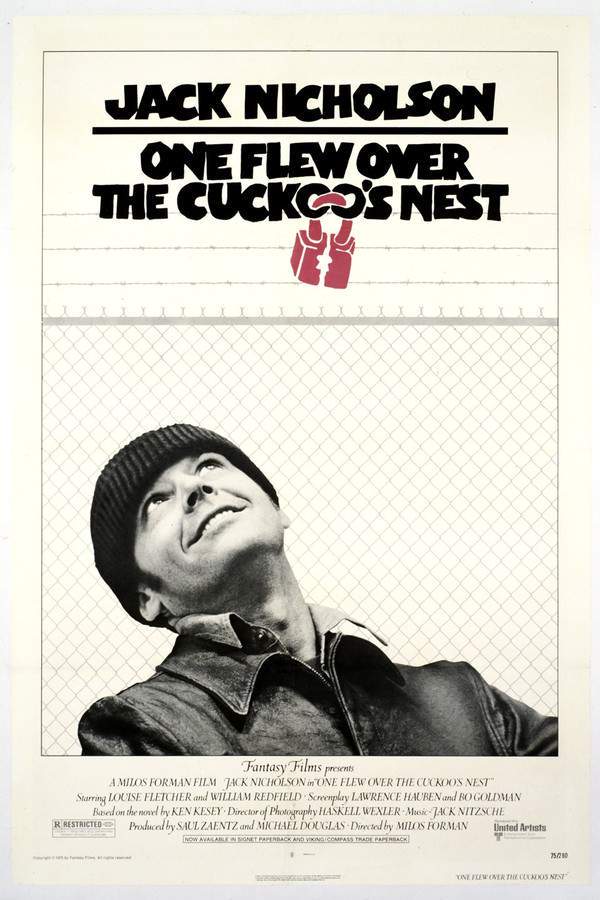
One Flew Over the Cuckoo's Nest

One Flew Over the Cuckoo's Nest

Year: 1975

Runtime: 133 min

Language: English

Director: Milos Forman

Budget: $3M

Drama

To avoid prison labor, the rebellious Randle McMurphy feigns insanity and is transferred to a mental institution. There, he clashes with the cold and controlling Nurse Ratched, disrupting the ward's rigid routine and inspiring the other patients to question their circumstances. McMurphy's arrival sparks a power struggle that challenges the hospital’s oppressive atmosphere and exposes the vulnerability of those under Nurse Ratched’s care, ultimately leading to a tense and dramatic confrontation.

Where to Watch One Flew Over the Cuckoo's Nest?

Find where to stream, rent, or buy One Flew Over the Cuckoo's Nest (1975) in the US with current JustWatch availability, up-to-date pricing, and platform listings for subscription, rental, and digital purchase options.

Warning: spoilers below!

Haven’t seen One Flew Over the Cuckoo's Nest yet? This summary contains major spoilers. Bookmark the page, watch the movie, and come back for the full breakdown. If you're ready, scroll on and relive the story!

Timeline – One Flew Over the Cuckoo's Nest (1975)

Trace every key event in One Flew Over the Cuckoo's Nest (1975) with our detailed, chronological timeline. Perfect for unpacking nonlinear stories, spotting hidden connections, and understanding how each scene builds toward the film’s climax. Whether you're revisiting or decoding for the first time, this timeline gives you the full picture.

1

Arrival in Mental Institution

In 1963 Oregon, Randle McMurphy arrives at a mental institution after feigning mental illness. His intention is to escape hard labor, but he quickly realizes the grim reality of his surroundings.

1963 Oregon
2

Encounter with Nurse Ratched

Upon arrival, McMurphy meets Nurse Ratched, the strict and controlling head nurse. Her manipulative tactics create a climate of fear among the patients, immediately setting the tone for McMurphy's challenges ahead.

Mental Institution
3

Introduction to Fellow Patients

McMurphy encounters a variety of fellow patients, each with unique struggles and personalities. Among them are Billy Bibbit, Charlie Cheswick, Martini, Dale Harding, and Chief Bromden, all of whom share their frustrations under Ratched's rule.

Mental Institution
4

Challenge to Ratched's Authority

McMurphy's vibrant personality begins to clash with Nurse Ratched's iron-fisted control. In retaliation, Ratched restricts privileges like cigarettes and card games, intensifying the conflict between them.

Mental Institution
5

The Bet for Escape

Eager to escape the institution, McMurphy bets his fellow patients that he can find a way out. This determination drives him to attempt to uproot a hydrotherapy fountain, a bold but futile act that illustrates his rebellious spirit.

Mental Institution
6

Fishing Trip Adventure

Seizing a moment of opportunity, McMurphy steals a charter bus and takes several patients, including his girlfriend Candy, on a fishing trip. This experience outside the institution serves to restore self-worth and a sense of freedom among the group.

Fishing Spot
7

Rallying the Patients

Recognizing the bleak prospect of an indefinite stay, McMurphy rallies his fellow patients to confront their oppression. After a confrontation with orderlies, they devise a plan to escape, fueled by their shared desire for freedom.

Mental Institution
8

Electroconvulsive Therapy

After enduring electroconvulsive therapy, McMurphy pretends to be brain-damaged, all the while plotting against Ratched. This strategic facade is part of his broader plan to reclaim control over his situation.

Mental Institution
9

The Christmas Party

The patients, with McMurphy leading, hold an after-hours Christmas party that features alcohol and carefree merriment. Chaos ensues, and McMurphy attempts to help Billy have a date with Candy, but the situation deteriorates rapidly.

Mental Institution
10

Aftermath of the Party

In the aftermath of the wild Christmas party, Nurse Ratched discovers the chaos and attempts to humiliate Billy Bibbit. This confrontation leads to a tragic outcome that profoundly affects all the patients.

Mental Institution
11

Violent Reaction

Moved by the tragedy that befell Billy, McMurphy lashes out violently against the orderlies. This intense struggle represents his desperate need to protect his friends and resist Ratched's oppressive authority.

Mental Institution
12

McMurphy's Fate

As the situation escalates, whispers circulate about McMurphy's fate. Chief Bromden, who has been observing the events unfold, grapples with a mix of admiration and despair as he sees McMurphy's spirit slowly diminish.

Mental Institution
13

The Tragic Return

Chief discovers McMurphy has returned to the ward after undergoing lobotomy, a tragic transformation from the vibrant man he once was. This incident deeply affects Chief, highlighting the devastating consequences of Ratched's control.

Mental Institution
14

Chief's Final Act

In a heart-wrenching decision, Chief decides to end McMurphy's suffering by taking his life. This act symbolizes both the culmination of their bond and a desperate escape from the oppressive environment of the institution.

Mental Institution
15

Tearing Down the Hydrotherapy Fountain

In a final act of defiance reminiscent of McMurphy's rebellious spirit, Chief tears away the hydrotherapy fountain. This destruction symbolizes both his escape from oppression and the lasting impact of their friendship.

Mental Institution

Last updated: November 16, 2024 at 18:32

Was this helpful?

One Flew Over the Cuckoo's Nest (1975) Timeline Questions Answered – Chronology FAQ

Find frequently asked questions about the One Flew Over the Cuckoo's Nest (1975) timeline, including chronological order, nonlinear jumps, cause-and-effect links, and scene sequence clarifications. This timeline FAQ helps explain when key events happen, how moments connect, and why the story unfolds in that specific order.

Q1

Why did Randle McMurphy pretend to be insane?

A.

McMurphy faked mental illness to avoid hard labor in prison. He had a history of legal troubles including statutory rape, and chose the mental institution as what he thought would be an easier alternative. He quickly discovers, however, that escaping the institution proves far more difficult than he anticipated.

Earlier in the film, McMurphy boasts about winning bets and manipulating situations, establishing his tendency to think he can outsmart any system.

mcmurphyfake insanitymotivationprisonhard labor
Q2

Why does Nurse Ratched have so much control over the patients?

A.

Nurse Ratched maintains power through psychological manipulation rather than physical force. She creates a climate of fear, uses privilege withdrawal as punishment, and systematically breaks down any sense of self-worth in her patients. Her methods include public humiliation, dividing patients against each other, and exploiting their vulnerabilities. This leaves the patients feeling powerless and dependent on the system.

The opening scenes show Ratched calmly observing a patient having a breakdown, demonstrating her emotional detachment and control over the ward atmosphere.

nurse ratchedcontrolpowermanipulationpatientsabuse
Q3

Why is the fishing trip significant in the story?

A.

The fishing trip represents the first time the patients experience genuine freedom and self-worth outside the institutional walls. McMurphy steals a charter bus and takes several patients, including his girlfriend Candy, to fish. This adventure restores their sense of capability and humanity, proving to them they can function in the outside world. The experience strengthens their bonds and fuels their desire for real freedom.

McMurphy's earlier bet about escaping and his attempt to uproot the hydrotherapy fountain demonstrate his persistent drive to break free from confinement.

fishing tripfreedompatientscandyself worthescape
Q4

Why does McMurphy receive electroconvulsive therapy?

A.

McMurphy undergoes electroconvulsive therapy as punishment for his continued rebellion against the ward's rules. After his failed escape attempts and challenges to Ratched's authority, the hospital administers the treatment to break his spirit. McMurphy pretends to be brain-damaged afterward, playing along with Ratched's expectations while secretly continuing to plot against her.

Ratched's earlier confiscation of cigarettes and restriction of card games establish her pattern of using institutional tools to suppress resistance.

electroconvulsive therapypunishmentrebellionratchedbrain damage
Q5

What happens to Billy Bibbit after the Christmas party?

A.

After the chaotic Christmas party, Nurse Ratched deliberately humiliates Billy by exposing his night with Candy to the other patients and the staff. Unable to handle the shame and pressure, Billy has a breakdown and tragically takes his own life. This event is a turning point that shatters the fragile hope the patients had developed, showing the devastating consequences of Ratched's psychological cruelty.

Billy's stuttering and lack of confidence throughout the film establish his vulnerability and inability to stand up to authority.

billy bibbitsuicidechristmas partyhumiliationratcheddeath
Q6

Why is McMurphy lobotomized at the end?

A.

McMurphy is lobotomized as punishment for his violent attack on the orderlies after Billy's suicide. His violent outburst, attacking the orderlies in a desperate attempt to protect his friends, leads the hospital to deem him too uncontrollable. The lobotomy destroys his vibrant personality, reducing him to a shell of his former self, effectively extinguishing his rebellious spirit.

The buildup of tension between McMurphy and Ratched, especially after the Christmas party chaos, makes his violent retaliation feel inevitable.

mcmurphylobotomypunishmentviolenceorderliesdestruction
Q7

Why does Chief Bromden kill McMurphy?

A.

Chief kills McMurphy out of compassion and mercy. After seeing his friend returned as a lobotomized shell, unable to speak, move, or function, Chief chooses to end McMurphy's suffering. He smothering him with a pillow, viewing this act as the final gift of freedom he can offer. This choice reflects Chief's transformation from a silent, fearful man into someone willing to act decisively.

Chief's earlier revelation that he has been pretending to be deaf and mute, combined with his growing connection with McMurphy, sets up his eventual act of courage.

chief bromdenkillmcmurphymercylobotomyfreedomcompassion
Q8

What does Chief's escape at the end represent?

A.

Chief's escape represents both tragic loss and fragile hope. By fleeing the institution after killing McMurphy, Chief finally breaks free from his self-imposed silence and passivity, something McMurphy spent the entire film trying to help him achieve. However, the victory is bittersweet: McMurphy's transformation into a lobotomized patient and subsequent death means his freedom came at the ultimate cost. The torn-out hydrotherapy fountain symbolizes the destruction of institutional control.

Earlier conversations between McMurphy and Chief about freedom and escape establish this as McMurphy's ultimate goal for his friend.

chief escapefreedomendingsymbolismhydrotherapy fountainvictory
Q9

How does McMurphy influence the other patients?

A.

McMurphy inspires the patients to question their circumstances and reclaim their sense of self-worth. Through his defiance of Ratched and his insistence that they are capable men, he helps them see they have power over their own lives. He gives them permission to think of themselves as free individuals rather than patients. This transformation is most visible in Chief, who goes from feigning deafness and muteness to becoming the agent of his own escape.

McMurphy's persistent challenges to Ratched's rules, even when they result in punishment, model for the patients that resistance is possible.

mcmurphypatientsinfluencechangeinspirationfreedom
Q10

Why does Chief tear out the hydrotherapy fountain at the end?

A.

Chief tears out the hydrotherapy fountain as his final act of rebellion and a tribute to McMurphy. Earlier in the film, McMurphy attempted to uproot the same fountain, shouting that he was big enough to rip it out but failed. By succeeding where McMurphy failed, Chief proves that McMurphy's spirit lives on through him. The destruction also symbolizes the shattering of the institution's control.

McMurphy's failed attempt to rip out the fountain earlier demonstrates his initial struggle against institutional oppression.

hydrotherapy fountaindestructionrebellionsymbolismchiefmcmurphy
Q11

Why don't the patients fight back against Nurse Ratched earlier?

A.

The patients accept Ratched's abuse because the institution has systematically stripped away their confidence and sense of agency. Years of psychological manipulation have convinced many that they are genuinely sick and incapable of functioning outside the hospital. Some, like Chief, have learned that silence is survival. Others, like Dale Harding, have rationalized their submission. McMurphy's arrival challenges these learned behaviors and shows them alternatives to passivity.

The initial scene establishing each patient's specific fears and weaknesses demonstrates how thoroughly Ratched has conditioned them.

patientsabuseresistancepsychological manipulationsubmissionratched
Mobile App Preview

Coming soon on iOS and Android

The Plot Explained Mobile App

From blockbusters to hidden gems - dive into movie stories anytime, anywhere. Save your favorites, discover plots faster, and never miss a twist again.

Sign up to be the first to know when we launch. Your email stays private, always.

Explore Movie Threads

Discover curated groups of movies connected by mood, themes, and story style. Browse collections built around emotion, atmosphere, and narrative focus to easily find films that match what you feel like watching right now.

Rebellion Against Oppressive Systems like in One Flew Over the Cuckoo's Nest

A defiant individual sparks a revolution against a cold, controlling institution.For viewers looking for movies like One Flew Over the Cuckoo's Nest, this thread features intense dramas about rebels confronting institutional control. These stories share a similar feel of defiance, high emotional stakes, and a clash between individuality and unyielding authority in a closed-off world.

defiantoppressiveclaustrophobicrebellioustenseinstitutionalpsychological warfare

Narrative Summary

These narratives follow a central conflict where an outsider or rebel enters a tightly controlled system. Through a series of escalating confrontations, they challenge the status quo, rally the oppressed, and force a climactic, often costly, confrontation with the powers that be.

Why These Movies?

Movies are grouped here for their shared focus on the theme of individual versus institutional authority, a claustrophobic setting, a dark and intense tone, and a central character arc of rebellion that carries heavy emotional consequences.


Bittersweet Liberation Tragedies like in One Flew Over the Cuckoo's Nest

Stories where freedom is achieved, but at a profound and tragic personal cost.If you liked the ending of One Flew Over the Cuckoo's Nest, this thread collects movies with similar bittersweet conclusions. These films feature heavy emotional weight and stories where liberation or hope emerges from profound tragedy and sacrifice.

bittersweettragichopefulliberatingsacrificeheavypoignant

Narrative Summary

The narrative pattern involves a struggle for freedom that culminates in a resolution where hope is inextricably linked with loss. The victory for the collective or an idea is paid for with a major personal tragedy, leaving the audience with a complex mix of sadness and hope.

Why These Movies?

This thread connects movies through their powerful, bittersweet endings and heavy emotional weight. They share a specific emotional mix where feelings of liberation and tragedy coexist, creating a profoundly resonant and thoughtful viewing experience.

Unlock the Full Story of One Flew Over the Cuckoo's Nest

Don't stop at just watching - explore One Flew Over the Cuckoo's Nest in full detail. From the complete plot summary and scene-by-scene timeline to character breakdowns, thematic analysis, and a deep dive into the ending - every page helps you truly understand what One Flew Over the Cuckoo's Nest is all about. Plus, discover what's next after the movie.

One Flew Over the Cuckoo's Nest Summary

Read a complete plot summary of One Flew Over the Cuckoo's Nest, including all key story points, character arcs, and turning points. This in-depth recap is ideal for understanding the narrative structure or reviewing what happened in the movie.

One Flew Over the Cuckoo's Nest Summary

Characters, Settings & Themes in One Flew Over the Cuckoo's Nest

Discover the characters, locations, and core themes that shape One Flew Over the Cuckoo's Nest. Get insights into symbolic elements, setting significance, and deeper narrative meaning - ideal for thematic analysis and movie breakdowns.

Characters, Settings & Themes in One Flew Over the Cuckoo's Nest

One Flew Over the Cuckoo's Nest Spoiler-Free Summary

Get a quick, spoiler-free overview of One Flew Over the Cuckoo's Nest that covers the main plot points and key details without revealing any major twists or spoilers. Perfect for those who want to know what to expect before diving in.

One Flew Over the Cuckoo's Nest Spoiler-Free Summary

More About One Flew Over the Cuckoo's Nest

Visit What's After the Movie to explore more about One Flew Over the Cuckoo's Nest: box office results, cast and crew info, production details, post-credit scenes, and external links - all in one place for movie fans and researchers.

More About One Flew Over the Cuckoo's Nest

Similar Movies to One Flew Over the Cuckoo's Nest

Discover movies like One Flew Over the Cuckoo's Nest that share similar genres, themes, and storytelling elements. Whether you’re drawn to the atmosphere, character arcs, or plot structure, these curated recommendations will help you explore more films you’ll love.