Plot Explained Spoilers guaranteed!
Plot Explained

Browse by genre

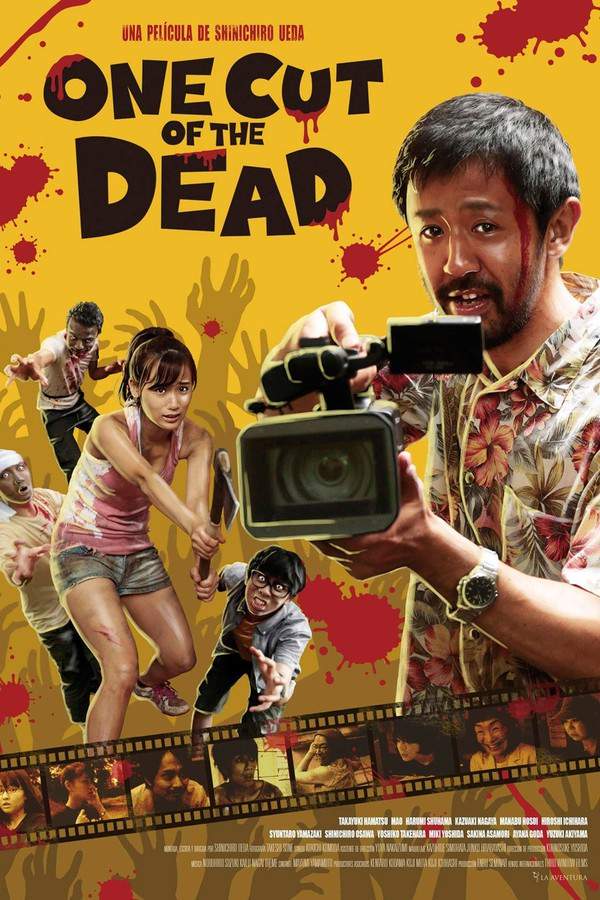
One Cut of the Dead (2019) movie poster

Plot Summary

One Cut of the Dead (2019) Plot Summary Explained

Release, runtime and language
2019 · 96 min · Japanese
Echo score 86
JustWatch #234 2,122
Directed by
Shin'ichirô Ueda
Starring
Ayana Gôda, Harumi Shuhama, Hiroshi Ichihara, Kazuaki Nagaya, Manabu Hosoi, Mao
Budget
$3M

A struggling film crew attempts to shoot a zombie movie on a shoestring budget in an abandoned WWII Japanese military base. While filming, they unexpectedly encounter actual undead creatures, leading to a chaotic and hilarious battle for survival. The film blends horror and comedy, offering a unique and unexpected cinematic experience.

On this page (6)
  1. 1 Where to watch
  2. 2 What happens: full plot
  3. 3 Plot questions answered
  4. 4 Movie threads
  5. 5 Movies like One Cut of the Dead
  6. 6 Every angle

Where to watch

Where to Watch One Cut of the Dead (2019)

Where can you watch One Cut of the Dead? Stream, rent or buy it in the US, including on AMC+, Philo and Shudder: current JustWatch availability with up-to-date prices.

Streaming availability powered by JustWatch

Full plot summary · contains spoilers

What Happens in One Cut of the Dead: Full Plot Summary

The whole story of One Cut of the Dead (2019) explained, from the opening scene to the final frame: every key event, every twist and what it all adds up to. Read it as a quick recap before the sequel, to check a scene you missed, or to finally understand what really happened.

In the first section of True Fear, the cast and crew are engaged in the chaotic production of a low-budget zombie film set in an abandoned water filtration plant. Their director, Takayuki Higurashi, driven by mounting debts and frustration over the actors' performances, attempts to conjure real horror by having a blood pentagram painted, hoping to summon actual zombies from the site’s haunted history. The situation spirals out of control when the cameraman turns into a zombie and bites the assistant director, Hiroshi Ichihara, thereby transforming him as well. Three characters—actress Yuzuki Akiyama as Chinatsu, actor Kazuaki Nagaya as Ko, and makeup artist Harumi Shuhama—manage to lock the zombies outside, but Higurashi insists on continuing the shoot with the newly risen undead.

As the chaos escalates, the sound engineer, infected and zombified, is brought back inside the plant by Higurashi, who films the terrifying event. In a moment of desperate action, Nao decapitates the sound engineer, leading to a rain of zombie blood that splatters across the set.

Chinatsu, Ko, and Nao try to flee the madness, but are met with a harrowing attack from zombified Kasahara, also captured by Higurashi’s camera. In a gripping moment, Chinatsu faces the advancing horde but is saved by Ko. They regroup with Nao, who begins to suspect that Chinatsu might be infected. Convinced she must eliminate the threat, Nao pursues Chinatsu, dispatching several zombies in the fray. The chase leads to a rooftop, where Nao meets her end at Ko's hands, who uses an axe to protect Chinatsu.

Feeling she may be turning into a zombie, Chinatsu takes refuge in a nearby building marked with a pentagram. After a narrow encounter with an unidentified zombie, she goes outside to find Ko, but shockingly discovers he has succumbed to the infection. What follows is a tragic confrontation—Chinatsu, in an echo of earlier events, is compelled to act against her zombified friend. Amidst this horrifying climax, Higurashi criticizes her for diverging from the script. In a moment of rage and survival, Chinatsu kills Higurashi and ends the first section standing on the bloodied pentagram, entranced by the gruesome scene before her.

Moving into the second section, the narrative shifts to a nostalgic flashback focused on the lives of the fictional cast and crew of a film titled One Cut of the Dead. This film-within-a-film adds complexity as viewers learn about Takayuki Higurashi, who is approached by network executives seeking a director for a one-take zombie film aimed to launch a new channel. Despite his initial reluctance, he seizes this opportunity as a means to reconnect with his daughter, Mao, a dedicated horror fan.

In the third section, the screen shifts once again to the behind-the-scenes madness of shooting One Cut of the Dead. Due to the absence of key cast members, Takayuki and his wife, Harumi Shuhama, are thrust into their roles. As the filming unfolds, the set is rife with comedic chaos: from Takayuki's over-the-top acting to actors succumbing to various mishaps, the production becomes a whimsical disaster. The crew resorts to improvisation, navigating through physical comedy as they grapple with on-set challenges, including Harumi’s unexpected assault on other cast members during an intense scene.

Notably, the misadventures culminate in a creative solution to a broken camera crane: the crew forms a human pyramid to capture the final scene, with Mao precariously holding the camera from atop Takayuki’s shoulders. This faux-crane shot concludes the hectic shoot, bringing relief and elation to the cast and crew.

As the film wraps up, the credits roll over real footage of the crew from One Cut of the Dead, immortalizing their journey, which includes the climactic faux-crane shot captured from a ladder, leaving audiences with a sense of triumph amidst the pandemonium of filmmaking.
Last updated: November 16, 2024 at 17:51

Was this helpful?

Plot questions answered

One Cut of the Dead Plot Explained: Your Questions Answered

The questions people ask most about One Cut of the Dead (2019): what happens in the confusing scenes, why the characters do what they do, the twists, hidden details and what the ending means. Each answer contains spoilers.

Q1

Why does Higurashi paint a blood pentagram on the set?

Director Takayuki Higurashi paints the blood pentagram hoping to summon real zombies from the abandoned site's haunted history. Frustrated with his actors' poor performances and mounting debts, he desperately wants to create genuine horror for his low-budget zombie film.

  • blood pentagram
  • higurashi
  • summon zombies
  • ritual
  • director
Q2

Were the zombies in the first section actually real?

The first section depicts the fictional zombie film being made - what appears to be a real zombie outbreak is actually the movie's content. The entire chaotic sequence is part of the one-take zombie film that Higurashi directed, filmed at a real abandoned water filtration plant to appear authentic.

Foreshadowing: Earlier scenes show Higurashi obsessively reviewing footage, hinting this is a production rather than a real survival scenario.

  • zombies real fake
  • twist
  • one cut of the dead
  • movie within movie
Q3

Why does Higurashi insist on continuing filming during the outbreak?

Higurashi's obsession with creating authentic horror leads him to treat the zombie outbreak as an opportunity. He sees the real chaos as a chance to capture genuine terror on camera, disregarding the danger to his cast and crew.

  • higurashi
  • filming
  • director
  • obsession
  • outbreak
Q4

Why does Ko kill Nao on the rooftop?

Nao becomes convinced that Chinatsu is infected with the zombie virus and pursues her to eliminate the threat. When Nao corners Chinatsu on the rooftop, Ko intervenes to protect his fellow actress and kills Nao with an axe.

Foreshadowing: Earlier, Nao expresses suspicion about Chinatsu after she encountered zombies, setting up the tragic confrontation.

  • ko
  • nao
  • chinatsu
  • roof
  • kill
  • infection
Q5

What happens to Chinatsu at the end of the first section?

Chinatsu believes she may be turning into a zombie and isolates herself in a building marked with a pentagram. After discovering Ko has succumbed to infection, she kills him in self-defense. When Higurashi criticizes her performance, she kills him in a rage and stands triumphantly on the bloodied pentagram, seemingly embracing the chaos.

  • chinatsu
  • infection
  • zombified
  • ko
  • higurashi
  • killed
Q6

What motivates Higurashi to direct this one-take zombie film?

Higurashi agrees to direct the one-take zombie film primarily to reconnect with his daughter Mao, who is a dedicated horror fan. The network executives' offer presents him an opportunity to create something meaningful while bonding with Mao over their shared love of horror.

  • higurashi
  • mao
  • daughter
  • director
  • horror fan
  • family
Q7

How did they film the final crane shot with no crane?

When the camera crane breaks down, the crew improvises by forming a human pyramid. Mao climbs onto Takayuki's shoulders while holding the camera, creating the faux-crane shot that captures the final scene. This improvised solution becomes the climactic moment of the film.

  • camera crane
  • human pyramid
  • mao
  • final shot
  • improvisation
Q8

Why did the film make the zombie outbreak look so realistic?

Higurashi deliberately filmed the zombie movie at a real abandoned WWII water filtration plant to create authentic atmosphere. By staging what appears to be a genuine undead outbreak, he achieved the genuine horror his low-budget production otherwise couldn't accomplish.

  • abandoned plant
  • authentic
  • wwii
  • location
  • filming
Q9

What happens to the assistant director Hiroshi Ichihara?

Hiroshi Ichihara, the assistant director, becomes the first major victim of the outbreak. The cameraman who turns into a zombie bites him, causing Hiroshi to transform into a zombie himself.

  • hiroshi ichihara
  • assistant director
  • bite
  • transformation
  • zombie
Q10

Why does Nao chase and try to kill Chinatsu?

After escaping the zombie chaos, Nao becomes convinced that Chinatsu was bitten during the attack. Believing Chinatsu will turn into a zombie and threaten everyone, Nao decides she must eliminate the supposed infected person, leading to the rooftop confrontation.

Foreshadowing: Nao witnesses Chinatsu's close encounters with zombies throughout the chaos, fueling her suspicion.

  • nao
  • chinatsu
  • chase
  • infection
  • suspicion
  • betrayal
Q11

What is the film-within-a-film structure?

The movie contains three layers: the apparent zombie attack (which is the fictional film being made), the flashback showing how Higurashi got the project, and the behind-the-scenes footage of the actual production. The first section depicts the completed zombie movie, while the third section shows how it was made.

  • film within film
  • nested narrative
  • structure
  • three act
  • meta

Movie threads

More Movies Like One Cut of the Dead, by Mood & Story

Curated lists built around what makes One Cut of the Dead tick: the same mood, the same kind of story or the same emotional payoff. Each list explains why these movies belong together.

Movies about creative chaos like One Cut of the Dead

Movies that celebrate the chaotic, joyful, and absurd process of making art. If you loved the behind-the-scenes energy of One Cut of the Dead, discover more movies that explore the hilarious and heartfelt chaos of filmmaking, theater, and other creative endeavors. These stories celebrate the passion and improvisation required to pull off an ambitious project.

  • creative
  • chaotic
  • playful
  • heartwarming
  • energetic
  • meta
  • Tone: whimsical, heartwarming
  • Pacing: variable, energetic
Why these movies?

The story pattern: Narratives in this thread often follow a group of passionate, often underprepared, creators as they attempt to realize a dream project. The conflict arises from logistical nightmares, creative differences, and unexpected mishaps, with the climax focusing on whether the show can go on against all odds.

Why they belong together: Movies are grouped here for their shared focus on the act of creation itself. They share a whimsical tone, a light emotional weight, and a heartwarming core that celebrates teamwork and resilience over perfection.

Clever meta comedies like One Cut of the Dead

Playful stories that deconstruct and celebrate their own genre conventions. Fans of the clever narrative structure and genre play in One Cut of the Dead will enjoy these other meta-comedies. These movies are smart, self-referential, and often reward viewers with a surprising shift in perspective or a deconstruction of familiar tropes.

  • meta
  • surprising
  • clever
  • playful
  • inventive
  • self-referential
  • Tone: whimsical, surprising
  • Pacing: variable, unpredictable
Why these movies?

The story pattern: The defining narrative pattern is a structural twist or reveal that recontextualizes everything the viewer has seen. The journey is one of discovery, where the initial premise is a setup for a more insightful or comedic payoff, often featuring stories within stories or characters who are aware of their own roles.

Why they belong together: These films are connected by their intelligent, playful approach to storytelling. They share a complex structure, a whimsical or humorous tone, and a focus on surprising the audience by breaking the fourth wall or cleverly manipulating genre formulas.

If you liked this

Movies Like One Cut of the Dead

Similar movies to One Cut of the Dead: the same genre, themes or kind of story. Each one comes with its own plot summary, timeline and ending explained.

Browse all movie summaries

Every angle

One Cut of the Dead (2019) Explained: Plot, Timeline & Characters

Everything about One Cut of the Dead in one place: what happens in the plot summary, the timeline in chronological order, the characters and meaning and a spoiler-free summary. What's After the Movie adds the cast, box office and post-credit scenes.

Coming soon on iOS and Android

The Plot Explained Movie Summary App

Plot summaries, endings explained and timelines on your phone. Catch up on any movie in minutes, save your favorites and never miss a twist again.

Be the first to know when we launch. Your email stays private, always.

Learn more about the app