Plot Explained Spoilers guaranteed!
Plot Explained

Browse by genre

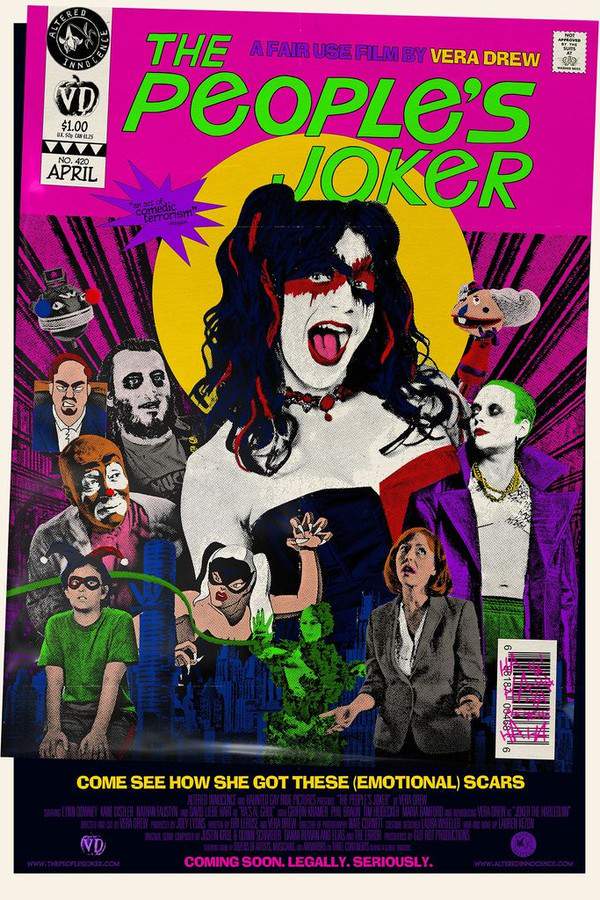
The People's Joker (2024) movie poster

Plot Summary

The People's Joker (2024) Plot Summary Explained

Release, runtime and language
2024 · 1 h 32 m · English
Echo score 78
JustWatch #9,507 28
Starring
Bob Odenkirk, Tim Heidecker, Maria Bamford, Christian Calloway, Vera Drew, Griffin Kramer

In a city where laughter is outlawed, a struggling performer known as Joker the Harlequin (Vera Drew) dreams of restoring joy to Gotham City. While exploring her gender identity, she encounters difficulties trying to join the city's last comedy program. Determined to revive the art of comedy, Joker assembles a group of fellow outcasts to rebel against the oppressive regime and fight for the freedom of laughter.

On this page (6)
  1. 1 Where to watch
  2. 2 What happens: full plot
  3. 3 Plot questions answered
  4. 4 Movie threads
  5. 5 Movies like The People's Joker
  6. 6 Every angle

Where to watch

Where to Watch The People's Joker (2024)

Where can you watch The People's Joker? Stream, rent or buy it in the US, including on MUBI, Kanopy and Tubi TV: current JustWatch availability with up-to-date prices.

Streaming availability powered by JustWatch

Full plot summary · contains spoilers

What Happens in The People's Joker: Full Plot Summary

The whole story of The People's Joker (2024) explained, from the opening scene to the final frame: every key event, every twist and what it all adds up to. Read it as a quick recap before the sequel, to check a scene you missed, or to finally understand what really happened.

In a gritty and dystopian society where the ever-watchful Caped Crusader (Batman) keeps a close eye on every move, a young individual in the seemingly idyllic town of Smallville, Kansas, becomes captivated by the entertaining antics of UCB Live, a popular sketch comedy show. However, the protagonist's mother grows concerned when her child grapples with a profound question: "Was I born in the wrong body?" In response, she promptly sets up a consultation with Dr. Crane, a prominent expert at Arkham Asylum, who prescribes Smylex—an insidious medication that compels its users to wear an unwavering smile, masking any emotions they may feel.

Fast forward fifteen years, our hero has matured and makes their way to the vibrant and chaotic city of Gotham, fueled by an unquenchable desire to join the distinguished cast of UCB Live. Upon arrival, they are dubbed "Jokeman," enjoying a sense of individuality in this troupe, in stark contrast to the female performers who are merely anonymous Harlequins, relegated to backup dancer roles. To achieve their dream of performing on air, they need to come up with a hefty $15,000 and embark on an intensive improv comedy course led by none other than Ra's al Ghul, a seasoned veteran of UCB.

As the protagonist navigates the treacherous waters of comedy, they establish a remarkable friendship with Oswald Cobblepot, another aspiring comedian struggling to pay the exorbitant fee. United in their quest, they decide to pioneer their own comedic style, dubbing it "anti-comedy," and set up a base in a worn-down carnival's dilapidated warehouse. There, they are soon joined by a colorful assembly of rebellious comedians each with their unique take on humor—deliberately awkward, uncomfortable, and unfunny.

Amidst this diverse crew is Jason "Mr. J" Todd, a charming performer who embodies the essence of his namesake, the Joker, delivering socially conscious Marxist-inspired observational humor with relentless fervor. The chemistry between Mr. J and our protagonist is undeniable, leading to a heartfelt date exploring the city's shadowy underbelly. It is during this intimate encounter that Mr. J divulges his own battles, having recently escaped a tumultuous relationship, triggering a moment of self-realization for the protagonist as they begin to embrace their true identity: that of a transgender woman.

In the backdrop of this unfolding narrative, Mr. J and our hero devise a bold plan to plunge into a vat of estrogen to ease their gender transition. As they undertake this risky endeavor, they encounter a world that uses humor as a mechanism for societal control, forcing those who choose to break away from the norm to operate from the shadows. Liberated from the stifling confines of their past, the protagonist revels in their newfound freedom until an unexpected arrival crashes their celebration—the Caped Crusader himself.

This sudden visit interrupts their plans, leaving Mr. J startled and the protagonist experiencing a whirlwind of emotions ranging from relief to anxiety. As revelations surface, it becomes evident that Mr. J has his own ties to the Dark Knight, harboring a past connection—his ex is Batman. This discovery introduces Carrie Kelley, the orphaned sidekick who would later evolve into Jason Todd, albeit their relationship is shadowed by unhealthy dynamics despite their considerable age difference.

While Batman maintains a facade of normalcy, entertaining audiences through a reality dating show while disguising himself as a straight man and being the host of UCB Live, this reinvention only fuels Jason Todd's resentment. As the protagonist embraces their identity as Joker the Harlequin, they find themselves ensnared in the toxic patterns of Mr. J's behavior.

Just when the situation appears dire, a glimmer of hope emerges in the form of Joker's mother, who arrives seeking redemption for past grievances. However, this coincides with Joker's pivotal decision to break free from Mr. J's toxic grasp and challenge the comedy establishment by hijacking a live UCB broadcast. The ultimate gamble: producer Lorne Michaels must choose between Batman and Joker as the show's host.

Michaels, with a savvy eye for rating potentials, opts to hand the helm to Joker. As expected, Batman attempts to intervene, but he encounters staunch resistance from the anti-comedy troupe. In a wildly unexpected twist, Pamela Isley's enormous venus flytrap devours Batman, providing Joker with a newfound sense of agency to carve out their path.

Now severed from Mr. J, Joker seeks wisdom from Ra's, who prophesizes the arrival of a hero capable of liberating comedy from its shackles. This hero is none other than Joker the Harlequin, setting the stage for a rigorous training odyssey that will ultimately determine their rightful place in the realm of comedy.

As the narrative unfolds, Michaels ignites the audience with Smylex, ensuring uncontrollable laughter irrespective of Joker's unpredictable antics, marking a profound transformation for Michaels as she transcends reality to explore the realm of "supersanity." Within this transcendent space, she encounters Mx. Mxyzptlk, a powerful otherworldly being, requesting the alteration of time to afford her old friend Oswald the fame and recognition akin to Batman. Surprisingly, Michaels yearns for only a simple, cherished childhood memory—a moment from a 1992 road trip shared with her mother, singing "The Joker" and reveling in joy.

As this surreal narrative comes to a close, the enigmatic Joker leaves the stage wide open for future escapades. The promise of a sequel looms on the horizon, heralding the next chapter in the saga: The People's Nightmare: Freddy vs Joker—a thrilling confrontation that will see the Clown Prince of Crime face off against the notorious nightmare-maker, Freddy Krueger. As the screen fades to black, viewers are left on the edge of their seats, eagerly anticipating the next thrilling chapter in this darkly comedic adventure.
Last updated: November 17, 2024 at 15:53

Was this helpful?

Plot questions answered

The People's Joker Plot Explained: Your Questions Answered

The questions people ask most about The People's Joker (2024): what happens in the confusing scenes, why the characters do what they do, the twists, hidden details and what the ending means. Each answer contains spoilers.

Q1

Why does Dr. Crane prescribe Smylex to the protagonist?

Dr. Crane prescribes Smylex after the protagonist's mother brings them to Arkham Asylum because they questioned whether they were born in the wrong body. Smylex is a forced medication that compels users to smile uncontrollably, effectively masking their true emotions. This serves as a metaphor for conversion therapy, suppressing the protagonist's gender identity rather than supporting it.

Foreshadowing: The Smylex subplot foreshadows the film's larger theme of institutional control over individual expression and identity.

  • smylex
  • dr crane
  • arkham asylum
  • conversion therapy
  • forced smile
Q2

What is anti-comedy and why does it matter in the film?

Anti-comedy is the rebellious comedic style developed by Jokeman and Oswald after they can't afford the UCB improv course. Rather than traditional jokes, it embraces awkwardness, discomfort, and deliberately unfunny moments. This style represents the film's critique of mainstream comedy industry gatekeeping, it rejects polished, corporate humor in favor of authentic, transgressive expression that celebrates outsiders.

Foreshadowing: The anti-comedy troupe's formation at the dilapidated carnival warehouse establishes the grassroots movement that eventually challenges UCB Live's dominance.

  • anti-comedy
  • ucb live
  • oswald cobblepot
  • comedy troupe
  • underground humor
Q3

Why does Joker decide to hijack the UCB Live broadcast?

Joker hijacks the UCB Live broadcast to break free from Mr. J's toxic influence and challenge the comedy establishment that has oppressed her and other outcasts. This act represents her reclamation of agency, she refuses to remain a backup Harlequin and demands to host the show on her own terms. The hijacking is both a personal liberation and a political statement against institutional comedy.

Foreshadowing: Earlier scenes of Joker being relegated to backup dancer roles while male performers like Jokeman get spotlight time set up this moment of rebellion.

  • joker
  • ucb live
  • hijack
  • takeover
  • comedy establishment
Q4

Why does Mr. J have a connection to Batman?

Mr. J reveals that his ex-partner is actually Batman, specifically Carrie Kelley, the orphaned sidekick who would later become Jason Todd in DC lore. This connection explains Mr. J's deep-seated resentment toward Batman and adds complexity to his character, he's not just another comedian but someone with direct ties to Gotham's oppressive power structure.

Foreshadowing: Mr. J's intense anger toward Batman's presence at the warehouse celebration hints at this deeper historical connection.

  • mr j
  • jason todd
  • batman
  • carrie kelley
  • relationship
Q5

Why does the venus flytrap eat Batman?

In a surreal twist, Pamela Isley's gigantic venus flytrap devours Batman during the showdown at UCB Live. This moment represents the symbolic defeat of the oppressive, humorless authority figure by the chaotic, authentic forces of anti-comedy. It's played for absurdist comedy while also serving as a visual metaphor for the mainstream being consumed by the underground.

Foreshadowing: Pamela Isley's presence among the anti-comedy troupe hints at her role in this bizarre culinary act.

  • venus flytrap
  • pamela isley
  • batman
  • absurd
  • defeat
Q6

What does Lorne Michaels' transformation in supersanity mean?

After taking Smylex during the broadcast, Lorne Michaels transcends into a realm called "supersanity" where she meets Mx. Mxyzptlk, a fifth-dimensional imp. This surreal sequence represents Michaels' liberation from her role as a corporate gatekeeper. Rather than seeking power or fame, she simply wants to relive a cherished childhood memory, singing "The Joker" with her mother on a 1992 road trip, showing her return to pure, innocent joy.

Foreshadowing: Michaels' initial strict control over UCB Live contrasts sharply with her eventual surrender to absurdist transcendence.

  • lorne michaels
  • supersanity
  • mx mxyzptlk
  • fifth dimension
  • transformation
Q7

Why does Joker choose to leave Mr. J?

Joker leaves Mr. J because she recognizes he's trapped in toxic, controlling patterns that mirror the oppressive systems she's fighting against. While she initially found liberation through their relationship and her gender transition, Mr. J's bitterness and manipulation ultimately hinder her growth. The arrival of Joker's mother seeking redemption gives Joker the push she needs to choose self-respect over the destructive relationship.

Foreshadowing: Mr. J's revealed connection to Batman and his anger issues foreshadow his inability to be a healthy partner.

  • joker
  • mr j
  • breakup
  • toxic relationship
  • self respect
Q8

What does Ra's al Ghul's prophecy about Joker mean?

Ra's al Ghul prophesizes that a hero will emerge to liberate comedy from its shackles, this hero is Joker the Harlequin. After training her, Ra's sends Joker on an odyssey to claim her rightful place in the comedy realm. This positions Joker not just as a performer but as a messianic figure for comedic freedom, destined to challenge and transform the entire industry.

Foreshadowing: Ra's role as the improv course instructor from the beginning establishes his mentorship role in Joker's journey.

  • ras al ghul
  • prophecy
  • hero
  • comedy liberation
  • mentor
Q9

How does the film portray the protagonist's gender transition?

The film portrays the protagonist's transition as a journey of self-discovery and liberation. After 15 years of suppression through Smylex, meeting Mr. J triggers her realization that she's a transgender woman. The "vat of estrogen" plunge symbolizes her physical transition in a society that ridicules authenticity. Her evolution from Jokeman to Joker the Harlequin represents reclaiming her true self despite oppressive forces.

Foreshadowing: The opening scene in Smallville where the child questions if they were born in the wrong body plants the seed for this entire journey.

  • gender transition
  • transgender
  • estrogen
  • identity
  • self discovery
Q10

Why is laughter outlawed in Gotham City?

In this dystopian Gotham, Batman enforces strict control over the city, and laughter represents a form of emotional authenticity that threatens his regime. The Smylex medication forces false happiness while suppressing genuine emotion, laughter becomes controlled, commodified, and ultimately banned. This satirical setup critiques how institutions police expression and emotion, making comedy a revolutionary act.

Foreshadowing: The opening establishmnet of Batman as the ever-watchful Caped Crusader sets up his role as the anti-laughter authority.

  • laughter ban
  • batman
  • gotham
  • oppression
  • comedy revolution

Movie threads

More Movies Like The People's Joker, by Mood & Story

Curated lists built around what makes The People's Joker tick: the same mood, the same kind of story or the same emotional payoff. Each list explains why these movies belong together.

Rebellious Outcast Satires like The People's Joker

Misfits unite to dismantle oppressive systems through chaotic, creative acts. Discover movies like The People's Joker, where quirky outsiders band together to creatively fight back against oppressive systems. This list features similar satirical comedies with themes of rebellion, found family, and anti-establishment action, often with a surreal and empowering vibe.

  • rebellious
  • satirical
  • quirky
  • empowering
  • subversive
  • found family
  • Tone: satirical, whimsical, darkly comedic
  • Pacing: variable, with bursts of chaotic energy
Why these movies?

The story pattern: Stories in this thread follow a pattern of disillusionment, alliance-building, and chaotic rebellion. A protagonist, often grappling with their own identity, recognizes the flaws in a powerful system. They find kinship with other outcasts, forming a makeshift family or troupe. Together, they use satire, performance, or unconventional tactics to disrupt the establishment, leading to a climactic, cathartic act of defiance.

Why they belong together: These movies are grouped by their shared core of using satire as a weapon for rebellion. They feature a similar mix of whimsical and darkly comedic tones, focus on found family dynamics among misfits, and deliver a message of empowerment through creative resistance against societal control.

Surreal Journeys of Self-Discovery like The People's Joker

Characters navigate fantastical worlds that mirror their internal identity struggles. If you liked The People's Joker's blend of personal identity exploration with surreal fantasy, explore these movies. They combine introspective character arcs with whimsical or dystopian settings, creating powerful metaphors for self-discovery, gender identity, and finding one's place in the world.

  • surreal
  • introspective
  • quirky
  • self-discovery
  • metaphorical
  • identity
  • Tone: whimsical, introspective, melancholic
  • Pacing: variable, introspective and episodic
Why these movies?

The story pattern: The narrative pattern involves a character feeling out of sync with their reality. As they question their identity, the world around them becomes increasingly surreal, absurd, or dreamlike, serving as a direct metaphor for their inner experience. The plot is less about conventional goals and more about achieving internal coherence and acceptance, often leading to an ambiguous but personally significant resolution.

Why they belong together: This thread groups films that share a specific approach to storytelling: using surrealism and metaphor to externalize the complex, internal process of self-discovery. They are united by a variable pacing that shifts between introspective depth and whimsical fantasy, and a tone that balances melancholy with quirky humor.

If you liked this

Movies Like The People's Joker

Similar movies to The People's Joker: the same genre, themes or kind of story. Each one comes with its own plot summary, timeline and ending explained.

Browse all movie summaries

Every angle

The People's Joker (2024) Explained: Plot, Timeline & Characters

Everything about The People's Joker in one place: what happens in the plot summary, the timeline in chronological order, the characters and meaning and a spoiler-free summary. What's After the Movie adds the cast, box office and post-credit scenes.

Coming soon on iOS and Android

The Plot Explained Movie Summary App

Plot summaries, endings explained and timelines on your phone. Catch up on any movie in minutes, save your favorites and never miss a twist again.

Be the first to know when we launch. Your email stays private, always.

Learn more about the app