Plot Explained Spoilers guaranteed!
Plot Explained

Browse by genre

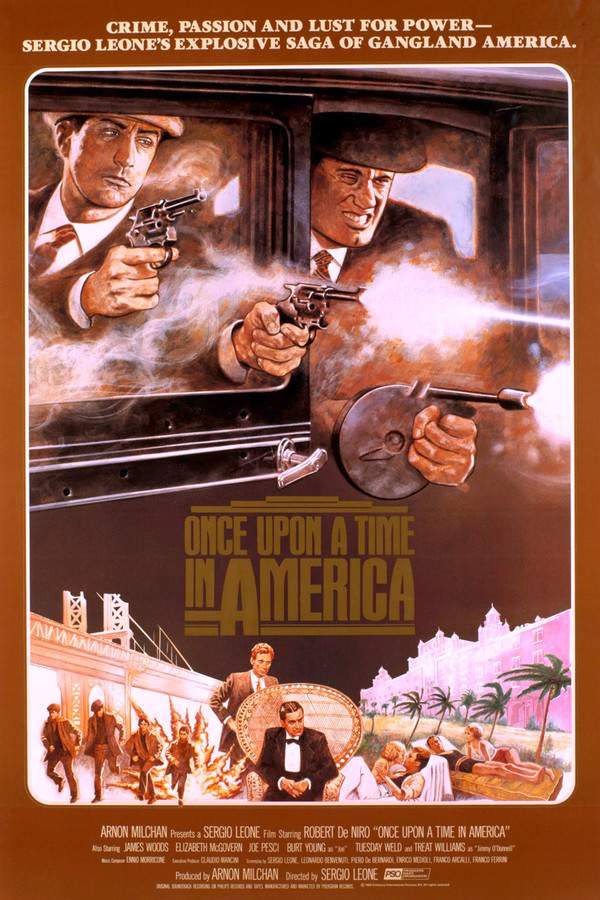
Once Upon a Time in America (1984) movie poster

Characters & Themes

Once Upon a Time in America (1984) Characters, Setting & Themes Explained

Release, runtime and language
1984 · 229 min · English
Loading streaming availability…
Directed by
Sergio Leone
Starring
Robert De Niro, Burt Young, Joe Pesci, Treat Williams, Tuesday Weld, Danny Aiello

In 1968, David "Noodles" Aaronson returns to New York City, reflecting on his complex past. Flashbacks reveal his early years in the Lower East Side, where he and his friends became involved in organized crime. The film explores themes of violence, loyalty, and the consequences of their actions as they navigate a dangerous world and face difficult choices that will shape their lives forever.

On this page (8)
  1. 1 Where to watch
  2. 2 Characters explained (3)
  3. 3 Where & when it takes place
  4. 4 Themes & meaning (3)
  5. 5 Character & meaning questions
  6. 6 Movie threads
  7. 7 Movies like Once Upon a Time in America
  8. 8 Every angle
Loading streaming availability…

3 main characters · contains spoilers

Once Upon a Time in America Characters Explained: Who Is Who

The main characters of Once Upon a Time in America (1984), heroes and villains: what drives them, how they change over the course of the story and what each of them reveals about the film's bigger ideas.

  • David 'Noodles' Aaronson

    played by Robert De Niro

    Noodles serves as the film's central character, embodying the complexity of guilt and nostalgia. Initially driven by ambition and youthful dreams, his journey becomes one of introspection as he confronts the consequences of a life filled with crime and betrayal. As he ages, Noodles transforms from a desperate boy into a haunted man seeking redemption.

    • 👤 Protagonist
    • 🎩 Ambitious
    • 😔 Reflective
  • Max Bercovic

    played by James Woods

    Max is a charismatic leader whose ambition drives the group's criminal endeavors. His cunning nature makes him a central figure in their rise and fall, merging charm with ruthless decisions. As friendships unravel, his role becomes pivotal in illustrating the theme of betrayal and the heavy toll of their chosen lifestyle.

    • 👥 Leader
    • ⚔️ Charismatic
    • 🎭 Manipulative
  • Deborah

    Deborah symbolizes both love and unattainable dreams for Noodles. Her grace and talent in ballet captivate him, yet she remains largely unrequited in her affections. Through her character, the film explores themes of longing and the painful impact of choices on relationships, forever lingering in Noodles' memories.

    • ❤️ Love Interest
    • 🎶 Talented
    • 💔 Unrequited

Last updated: October 22, 2024 at 19:25

Was this helpful?

Setting

Where and When Does Once Upon a Time in America Take Place?

The setting of Once Upon a Time in America (1984): the year and time period, the places and locations, and how they shape the characters, the mood and the tension of the story.

Time period

1920, 1932-3, 1968

The film spans several key eras, each marked by economic struggles and social upheaval. The 1920s roar with the promise of the American Dream amidst Prohibition, while the early 1930s struggle through the Great Depression's bleak landscape. By 1968, societal changes usher in an era of reflection and nostalgia as characters confront the consequences of their past actions.

Location

Lower East Side, Manhattan

The Lower East Side of Manhattan is a vibrant neighborhood known for its rich cultural history and immigrant roots. Once a hub of poverty and crime, it has transformed over the decades, reflecting the evolving identities of New York City. The area served as the backdrop for many pivotal moments in American history, making it a significant setting for personal and collective stories.

  • 🏙️ Urban
  • 🌆 Historical

Last updated: October 22, 2024 at 19:25

Was this helpful?

3 major themes

Once Upon a Time in America Meaning: Themes & Message Explained

What is Once Upon a Time in America (1984) really about? The emotional, social and philosophical themes the film keeps returning to, its symbolism and the message beneath the surface.

  • Friendship

    Friendship is a core theme in the film, illustrating the bonds formed in youth and the complexity of loyalty under pressure. The relationships among Noodles and his friends evolve from innocent camaraderie to betrayal, revealing the fragility of trust amidst crime and ambition. Ultimately, the tragic outcomes of their ties highlight the haunting repercussions of choices once made.

  • Betrayal

    Betrayal permeates the narrative as characters navigate a world where survival often hinges on treachery. Noodles’ journey explores the psychological weight of betrayal, not only from foes but also from friends, illustrating how shattered trust leads to irreversible consequences. This theme resonates deeply as each character faces the fallout from their moral choices.

  • Regret

    Regret is a prevailing sentiment, encapsulating the internal struggles of characters as they reckon with their past decisions. Noodles' haunting memories and their implications illustrate the burden of unresolved history, leading to profound reflections on lost opportunities and the inescapability of fate. The film's conclusion poses poignant questions about the nature of time and memory.

Last updated: October 22, 2024 at 19:25

Was this helpful?

Character & theme questions

Once Upon a Time in America Characters & Meaning: Your Questions Answered

The questions people ask about Once Upon a Time in America (1984): who the characters really are, their relationships, what the symbols mean, where it takes place and what the movie is really about. Each answer contains spoilers.

Q1

What is the setting of the film?

The story is primarily set in the Lower East Side of Manhattan, a historically immigrant neighborhood known for its vibrant culture and, during the film's time periods, significant poverty and crime. This urban setting serves as the backdrop for the characters' rise in organized crime and shapes the film's gritty, realistic tone.

  • lower east side
  • manhattan
  • setting
  • new york
Q2

When does the movie take place?

The film spans three distinct time periods: 1920 during the Prohibition era, 1932-3 during the Great Depression, and 1968 in a reflective postwar era. This non-linear structure means the story jumps between the roaring twenties, the bleak Depression years, and a nostalgic 1968 where characters confront their past.

  • 1920s
  • 1930s
  • 1968
  • time period
  • prohibition
  • great depression
Q3

What role does friendship play in the story?

Friendship is a central theme, depicting the bonds formed in childhood that evolve into complex loyalty under pressure. The relationships among Noodles and his friends transition from innocent camaraderie to betrayal, showing how trust becomes fragile when criminal ambition takes hold. The tragic outcomes highlight the haunting repercussions of choices made in youth.

  • friendship
  • loyalty
  • noodles
  • max
  • childhood friends
Q4

How does betrayal shape the narrative?

Betrayal permeates the entire narrative, illustrating how survival in the criminal world often hinges on treachery. Noodles experiences betrayal not only from enemies but from his closest friends, leading to irreversible consequences. This theme explores the psychological weight of shattered trust and how moral choices create lasting damage.

  • betrayal
  • trust
  • consequences
  • max
  • loyalty
Q5

What does regret represent in the film?

Regret represents the prevailing sentiment as characters, especially Noodles, grapple with past decisions that haunt them decades later. The film examines how unresolved history creates a burden that shapes present experiences, posing questions about the nature of time, memory, and whether the past can ever truly be escaped.

  • regret
  • memory
  • past
  • guilt
  • redemption
  • time
Q6

Who is Noodles and what defines his character?

Noodles serves as the film's central character, embodying guilt, nostalgia, and the passage of time. He begins as an ambitious young man dreaming of a better life, transforms into a hardened criminal, and ultimately becomes a haunted old man seeking redemption. His journey frames the entire narrative through his perspective.

  • noodles
  • david aaronson
  • protagonist
  • character
  • redemption
Q7

Who is Max and what is his role?

Max is a charismatic leader whose ambition drives the group's criminal enterprises. His cunning nature and ruthless decision-making make him central to both their rise and subsequent downfall. As the story unfolds, Max becomes pivotal in illustrating the theme of betrayal and the heavy toll their lifestyle exacts on personal relationships.

  • max
  • bercovic
  • leader
  • betrayal
  • antagonist
Q8

Who is Deborah and what does she represent?

Deborah symbolizes both love and unattainable dreams for Noodles. A talented ballet dancer, she represents the refined, aspirational life that remains forever out of his reach. Through her, the film explores themes of longing and how personal choices create lasting pain in relationships, leaving her as a lingering memory in Noodles' life.

  • deborah
  • love
  • longing
  • ballet
  • unrequited
Q9

Why does the film use a non-linear timeline?

The film weaves between 1920, 1932-3, and 1968, forcing viewers to actively piece together the story. This complex structure creates a reflective, introspective atmosphere rather than a straightforward crime narrative. The non-linear approach allows the audience to experience events through the lens of Noodles's guilt and regret, building toward a profound understanding of how past actions shape present consequences.

  • nonlinear
  • timeline
  • structure
  • narrative
  • 1968
  • flash back
Q10

What is the tone and emotional weight of the film?

The film carries a melancholic, heavy emotional weight driven by themes of betrayal, violence, and moral decay. The final scenes blur reality and memory, creating an ambiguous ending that reinforces the film's preoccupation with the unreliability of the past. Serious and reflective rather than a typical crime thriller, the movie prioritizes psychological depth and emotional resonance.

  • tone
  • ending
  • ambiguity
  • melancholy
  • emotional
  • sad

Movie threads

More Movies Like Once Upon a Time in America, by Mood & Story

Curated lists built around what makes Once Upon a Time in America tick: the same mood, the same kind of story or the same emotional payoff. Each list explains why these movies belong together.

Epic tales of memory and regret like Once Upon a Time in America

Sweeping, melancholic narratives built on the ruins of memory and irreversible choices. For viewers who enjoyed the reflective, time-hopping narrative of 'Once Upon a Time in America,' this section gathers films that share a similar epic scope and melancholic tone. These movies use memory as a central character, exploring themes of guilt and the irreversible consequences of one's actions in a life of crime or ambition.

  • fatalistic
  • nostalgic
  • melancholic
  • remorseful
  • dreamlike
  • atmospheric
  • Tone: melancholic, fatalistic, nostalgic
  • Pacing: slow, deliberate, atmospheric
Why these movies?

The story pattern: These stories often weave together multiple timelines to reveal how past actions define a character's present. The narrative is driven by introspection and regret, unfolding at a deliberate pace that allows the audience to fully absorb the emotional gravity of the protagonist's journey and the fatalistic nature of their destiny.

Why they belong together: They are grouped by their shared focus on the burden of memory, a non-linear structure that enhances the melancholic mood, and a pervasive sense of fatalism. The viewing experience is defined by a heavy emotional weight, a slow, immersive pace, and an ambiguous or bittersweet resolution that lingers long after the film ends.

Crime stories of brotherhood and betrayal like Once Upon a Time in America

Intimate crime sagas exploring the violent dissolution of loyalty among friends. If you were captivated by the complex dynamics of friendship and betrayal in 'Once Upon a Time in America,' this collection features similar movies. These films delve into the intimate, often tragic relationships within criminal enterprises, where loyalty is the ultimate currency and its violation has devastating consequences.

  • somber
  • tragic
  • intense
  • fatalistic
  • remorseful
  • violent
  • Tone: somber, tragic, intense
  • Pacing: steady, character-driven
Why these movies?

The story pattern: The narrative follows a 'coming of age' arc within a criminal context, charting the journey from idealism to corruption. The central conflict arises from within the group itself, as personal ambitions clash with collective loyalty, culminating in a pivotal act of betrayal that shatters the bonds of brotherhood and leaves a lasting legacy of guilt.

Why they belong together: These movies share a deep focus on the theme of brotherhood fractured by betrayal, set against a backdrop of organized crime. They possess a heavy emotional weight, high dramatic intensity, and a somber, often bleak tone that underscores the tragic cost of the characters' life choices.

If you liked this

Movies Like Once Upon a Time in America

Similar movies to Once Upon a Time in America: the same genre, themes or kind of story. Each one comes with its own plot summary, timeline and ending explained.

Browse all movie summaries

Every angle

Once Upon a Time in America (1984) Explained: Plot, Timeline & Characters

Everything about Once Upon a Time in America in one place: what happens in the plot summary, the timeline in chronological order, the characters and meaning and a spoiler-free summary. What's After the Movie adds the cast, box office and post-credit scenes.

Coming soon on iOS and Android

The Plot Explained Movie Summary App

Plot summaries, endings explained and timelines on your phone. Catch up on any movie in minutes, save your favorites and never miss a twist again.

Be the first to know when we launch. Your email stays private, always.

Learn more about the app