Plot Explained Spoilers guaranteed!
Plot Explained

Browse by genre

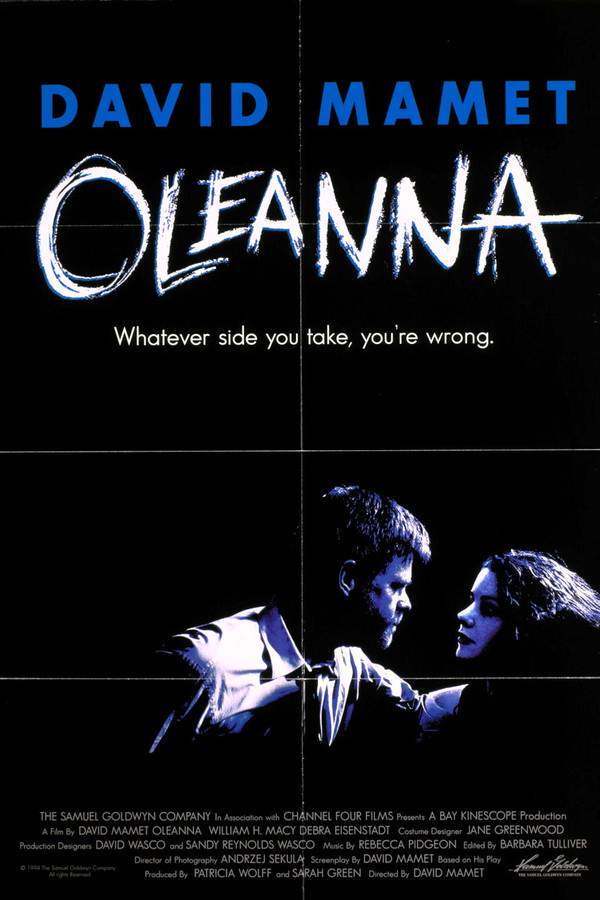
Oleanna (1994) movie poster

Timeline

Oleanna (1994) Timeline Explained – Every Event in Order

Release, runtime and language
1994 · 89 min · English
Loading streaming availability…
Directed by
David Mamet
Starring
William H. Macy, Debra Eisenstadt, Diego Pineda, Scott Zigler

A college student, Carol, seeks help from her professor, John, but encounters a dismissive and condescending attitude. Their interactions escalate into a tense power struggle fueled by John's self-centeredness and Carol's increasing frustration. The dynamic becomes toxic, blurring the boundaries between teacher and student and raising difficult questions about respect, responsibility, and the potential for misunderstanding. The situation evolves into a fraught and unsettling confrontation.

On this page (7)
  1. 1 Where to watch
  2. 2 Events in order (12)
  3. 3 Timeline questions answered
  4. 4 The book behind the movie
  5. 5 Movie threads
  6. 6 Movies like Oleanna
  7. 7 Every angle
Loading streaming availability…

12 events in order · contains spoilers

Oleanna Timeline: Events in Chronological Order

Every key event of Oleanna (1994) in order, scene by scene, with when and where it takes place. Use it to untangle flashbacks, time jumps and parallel storylines, to refresh your memory before the sequel or to find the exact scene you are thinking of.

  1. Carol visits John to discuss a failed grade

    Carol goes to Professor John's office to challenge the grade she received. John is juggling tenure and personal concerns like a potential house purchase, which colors the conversation in a tense way. During their heated exchange, John puts his hand on her shoulder to comfort her, but Carol recoils, and he suggests he could give her an A if she returns to discuss the material.

    When
    Afternoon (first visit)
    Where
    John's office
  2. Carol plans escalation after the first talk

    After the first meeting, Carol leaves with unresolved concerns and decides to plan an escalation. She prepares to document the issues and move toward a formal complaint. The tension from the encounter lingers as she prepares for a more assertive confrontation.

    When
    Later the same day
    Where
    John's office
  3. Carol's second visit and formal complaint

    During her second visit, Carol reveals that she has filed a formal complaint accusing John of sexual harassment. She presents documented remarks she says show a pattern of sexist comments and also cites the earlier offer of an A grade in exchange for a meeting. The exchange grows physically threatening when John blocks the door and grabs her, causing her to scream for help.

    When
    Second visit
    Where
    John's office
  4. John is suspended and tenure review begins

    Following the confrontation, the university suspends John and pauses tenure proceedings as investigators review the allegations. The potential dismissal hangs over him while his actions are examined and a broader discipline process begins. The incident becomes a catalyst for administrative action on campus.

    When
    Following the incident
    Where
    University administration
  5. Final meeting introduces attempted rape charges

    During a final meeting, Carol asserts that the charges have expanded to include attempted rape, an accusation she knows is false. She mentions her group and presents a list of books she wants removed from the university, including John's own work. The dialogue remains tense as she presses her demands and clarifies the stakes of the dispute.

    When
    Final meeting (aftermath)
    Where
    John's office
  6. John refuses and answers a phone call

    John refuses to withdraw the charges and tries to end the meeting. He answers a phone call from his wife during the confrontation, signaling personal pressure and further ill will in the room. The exchange shows how personal and professional lines are blurred in the dispute.

    When
    During final meeting
    Where
    John's office
  7. Carol objects to an intimate remark

    Carol explicitly tells John not to call his wife baby, revealing the personal stakes in their dispute. John becomes visibly agitated as the conflict continues to intensify. The confrontation moves closer to an explosion of violence rather than a solution.

    When
    During final meeting
    Where
    John's office
  8. John violently attacks Carol

    In a shocking turn, John savagely beats Carol and hurls obscenities during the outburst. He calms only after realizing what he has done, muttering Oh, my God. The assault marks a brutal turning point in the events described.

    When
    During the assault
    Where
    John's office
  9. Immediate aftermath and cries for help

    Carol screams for help as the room’s tension erupts into chaos and witnesses respond. The campus community becomes aware of the violent incident, triggering initial reactions from bystanders and security. The event quickly escalates from a dispute into a matter of safety and accountability.

    When
    Immediately after the assault
    Where
    John's office
  10. Administrative action and ongoing proceedings

    The university initiates disciplinary proceedings in the wake of the assault, and John faces serious consequences regarding his employment and tenure status. The case centers on harassment and violence, and the outcome remains to be determined as investigations continue. The campus community watches the process unfold.

    When
    Days after the assault
    Where
    University administration
  11. Group dynamics and the removal list

    Carol references her group as part of the broader action, tying the complaint to an agenda that includes removing specific books from the university library, including John’s own work. This framing shows how organized advocacy can intersect with personal grievances in the conflict. The matter widens beyond a single incident to institutional policy considerations.

    When
    Final proceedings
    Where
    Campus or university setting
  12. Story ends with the assault and institutional response

    The summary ends on the violent act and the ensuing institutional response, leaving the immediate outcome unresolved. The confrontation implicates power, harassment, and accountability within the campus community. The final moment centers on the consequences that ripple through both characters and the university.

    When
    End of story

Last updated: October 09, 2025 at 15:41

Was this helpful?

Timeline questions answered

Oleanna Timeline Explained: Your Questions Answered

When does it happen, and why in that order? The questions people ask about the chronology of Oleanna (1994): time jumps, flashbacks, cause and effect between scenes and the correct order of events, each answered with spoilers.

Q1

Why does Carol file a formal complaint against Professor John?

Carol files a formal complaint because she believes John made sexist remarks in class and offered her an A grade in exchange for returning to his office to discuss material privately. She sees this as a pattern of inappropriate conduct rather than a single incident, documenting what she perceives as boundary violations and a misuse of his position as her professor.

Foreshadowing: Earlier, John dismisses Carol's concerns about the course material and places his hand on her shoulder in a way that makes her recoil, signaling a breach of professional boundaries.

  • formal complaint
  • sexual harassment
  • sexist remarks
  • power imbalance
Q2

Why does John offer Carol an A grade?

John offers Carol an A grade during their first meeting when she challenges her failing mark. The offer comes as he suggests she return to his office to discuss the material further, which Carol later interprets as a coercive proposition. The offer is intertwined with John's concerns about tenure and his personal life, including a pending house purchase, suggesting he wants to quickly resolve the confrontation without proper pedagogical engagement.

Foreshadowing: This offer becomes central to Carol's formal complaint, as she cites it as evidence of John's inappropriate use of power.

  • a grade
  • offer
  • tenure
  • office meeting
  • coercion
Q3

Why does Carol accuse John of attempted rape?

During the final meeting, Carol escalates her charges to include attempted rape, an accusation she knows to be false. She frames this false allegation within a broader strategy to leverage John's fear of career destruction. She also links this to her group's agenda, using the complaint as bargaining power to demand removal of certain books from the university, including John's own work.

Foreshadowing: Carol's escalation follows a pattern of increasing accusations, starting from sexist remarks to harassment to the most serious false charge.

  • attempted rape
  • false accusation
  • escalation
  • bargaining
Q4

What triggers John's violent attack on Carol?

John's violent outburst is triggered during the final meeting when Carol objects to him calling his wife "baby" on the phone, calling it an intimate remark she finds inappropriate. This moment represents a final erosion of John's control. He explodes with rage, beating Carol savagely, then calms only after realizing what he has done, muttering "Oh, my God." The assault represents the dangerous potential of unchecked authority when provoked.

Foreshadowing: Throughout the film, John's defensiveness and refusal to acknowledge his actions build pressure, with the "baby" moment serving as the catalyst for his complete breakdown.

  • violent attack
  • outburst
  • anger
  • breakdown
  • assault
Q5

What does Carol mean when she says "Yes, that's right" at the end?

After John assaults Carol, she delivers this quiet retort, which underscores the moral gravity of the encounter. The line crystallizes the divergence between appearance and reality in their power-imbalanced relationship. It suggests Carol recognizes that her escalated accusations, though false, have pushed John to reveal his true nature, making her point about power abuse even as the cost of proving it has become violently real.

Foreshadowing: This line connects to Carol's earlier statement that her charges represent a pattern, not just a single incident, and the violence ultimately validates her claims of a toxic dynamic.

  • ending
  • yes thats right
  • moral gravity
  • reality vs appearance
Q6

What is Carol's group and what do they want?

Carol references "her group" as an organization she speaks for when filing complaints. This group advocates for removing specific titles from the university library, including John's own book. Carol presents a list of books she wants removed from the university's collection as part of her demands, showing how her complaint extends beyond personal grievance to a broader institutional and ideological agenda.

Foreshadowing: This group dynamic suggests Carol's actions are part of a larger campaign, not solely an individual response to John's behavior.

  • group
  • books
  • removal
  • university
  • agenda
Q7

Why does Carol tell John not to call his wife "baby"?

Carol explicitly objects to John calling his wife "baby" during the phone call, calling it an intimate remark. This objection reveals the personal stakes of their dispute and shows how Carol is challenging John's control over language and narrative. The moment triggers John's visible agitation and contributes to his eventual breakdown, as he perceives this as another boundary he cannot control.

Foreshadowing: This confrontation over intimate language is the final trigger before John's violent outburst.

  • baby
  • phone call
  • wife
  • intimate
  • objection
Q8

Why does Carol recoil when John puts his hand on her shoulder?

Carol recoils from John's shoulder touch during their first meeting because she interprets it as an inappropriate boundary violation. The gesture, intended by John to be comforting, signals a breakthrough in her understanding of the power dynamics in their relationship. This moment marks a turning point where Carol begins framing John's behavior as harassing, leading her to document and escalate her concerns.

Foreshadowing: This physical reaction becomes evidence in Carol's formal complaint, establishing the pattern of boundary violations she cites.

  • shoulder
  • touch
  • recoil
  • boundary
  • comfort
Q9

Why does John block the door and grab Carol?

During Carol's second visit, after she reveals her formal complaint, John blocks the door and grabs her physically. This moment shifts the confrontation from a debate about pedagogy to a physically threatening situation, causing Carol to scream. John acts out of desperation as he tries to prevent her from leaving and potentially to assert control over the narrative, though his actions only escalate the conflict and provide further evidence for her accusations.

Foreshadowing: This physical escalation foreshadows the violent assault that concludes the film.

  • door
  • grab
  • physical threat
  • desperation
  • control
Q10

What happens to John after the assault?

After John assaults Carol, the university initiates disciplinary proceedings. John is suspended and faces potential dismissal along with the end of his tenure bid. The institution responds to both the formal complaints and the violent incident, leaving the outcome uncertain as investigations continue. The campus community watches the process unfold, with both characters facing serious consequences.

Foreshadowing: The ending leaves the immediate outcome unresolved, emphasizing the ongoing institutional response to the charges and violence.

  • suspension
  • tenure
  • dismissal
  • university
  • consequences

Movie threads

More Movies Like Oleanna, by Mood & Story

Curated lists built around what makes Oleanna tick: the same mood, the same kind of story or the same emotional payoff. Each list explains why these movies belong together.

High-Tension Dialog Dramas like Oleanna

Stories where high-stakes verbal battles erupt in confined spaces. If you were captivated by the verbal sparring in Oleanna, this collection features movies like it. Discover other intense dramas where a confined setting and razor-sharp dialogue drive the entire plot, leading to explosive confrontations and deep psychological exploration.

  • claustrophobic
  • dialogue-driven
  • tense
  • uncomfortable
  • psychological
  • confined
  • Tone: tense, confrontational, unsettling
  • Pacing: steady, deliberate build
Why these movies?

The story pattern: These narratives typically involve two or a small group of characters locked in a debate or power struggle. The plot progresses not through action, but through shifting allegiances, revealing monologues, and the slow, deliberate escalation of a single conflict within a limited space, creating immense psychological pressure.

Why they belong together: Movies are grouped here for their shared commitment to a single-location, dialogue-heavy format that prioritizes psychological intensity over physical action. They create a similar feeling of being an unseen observer in a room where a life-altering argument is unfolding.

Movies with Toxic Power Dynamics like Oleanna

Narratives where good and evil blur in toxic relational battles. For viewers who appreciated the complex moral questions in Oleanna, this list features similar stories about fraught relationships and institutional power imbalances. Explore movies that challenge your sympathies and leave you contemplating the gray areas of human interaction.

  • unsettling
  • morally ambiguous
  • toxic
  • frustrating
  • thought-provoking
  • confrontational
  • Tone: bleak, tense, morally complex
  • Pacing: steady, methodical
Why these movies?

The story pattern: The narrative pattern follows a downward spiral in a relationship, often between two people of unequal status. Miscommunication, ego, and systemic pressures fuel a conflict that destroys both parties. The journey is defined by shifting power balances and a growing sense of unease as simple disagreements balloon into catastrophic confrontations.

Why they belong together: These films are united by their focus on morally ambiguous conflicts that offer no easy answers. They share a heavy emotional weight, a bleak or ambiguous tone, and a thematic preoccupation with how power can be abused, perceived, and weaponized within personal or professional relationships.

If you liked this

Movies Like Oleanna

Similar movies to Oleanna: the same genre, themes or kind of story. Each one comes with its own plot summary, timeline and ending explained.

Browse all movie summaries

Every angle

Oleanna (1994) Explained: Plot, Timeline & Characters

Everything about Oleanna in one place: what happens in the plot summary, the timeline in chronological order, the characters and meaning and a spoiler-free summary. What's After the Movie adds the cast, box office and post-credit scenes.

Coming soon on iOS and Android

The Plot Explained Movie Summary App

Plot summaries, endings explained and timelines on your phone. Catch up on any movie in minutes, save your favorites and never miss a twist again.

Be the first to know when we launch. Your email stays private, always.

Learn more about the app