Plot Explained Spoilers guaranteed!
Plot Explained

Browse by genre

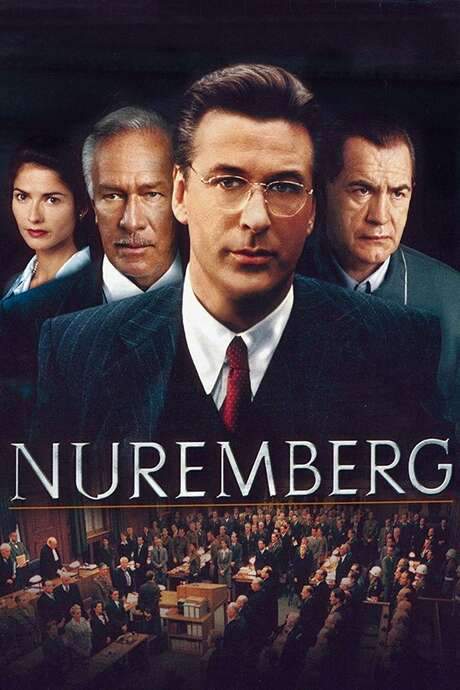
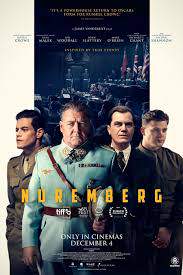
Nuremberg (2025) movie poster

Characters & Themes

Nuremberg (2025) Characters, Setting & Themes Explained

Release, runtime and language
2025 · 2 h 28 m
Echo score 78
Loading streaming availability…
Directed by
James Vanderbilt
Starring
Michael Shannon, Russell Crowe, Rami Malek, Richard E. Grant, John Slattery, Mark O'Brien
Budget
$11.8M

Chief prosecutor Robert H. Jackson (Michael Shannon) leads the Allied team in the historic 1945 Nuremberg trials, determined to hold the Nazi regime accountable for the Holocaust’s atrocities. Simultaneously, a young U.S. Army psychiatrist (Rami Malek) confronts former Reichsmarschall Hermann Göring (Russell Crowe) in a tense psychological showdown that tests both justice and conscience.

On this page (8)
  1. 1 Where to watch
  2. 2 Characters explained (4)
  3. 3 Where & when it takes place
  4. 4 Themes & meaning (3)
  5. 5 Character & meaning questions
  6. 6 Movie threads
  7. 7 Movies like Nuremberg
  8. 8 Every angle
Loading streaming availability…

4 main characters · contains spoilers

Nuremberg Characters Explained: Who Is Who

The main characters of Nuremberg (2025), heroes and villains: what drives them, how they change over the course of the story and what each of them reveals about the film's bigger ideas.

  • Robert H. Jackson (Michael Shannon)

    Robert H. Jackson is portrayed as a committed and passionate Associate Justice, advocating for an international tribunal to hold Nazi leaders accountable. He is characterized by his strong moral compass and determination despite facing significant opposition. Jackson's efforts are pivotal in shaping the proceedings of the Nuremberg Trials.

    • ⚖️ Justice
    • 🧠 Intelligence
    • 🏛️ Leadership
  • Hermann Göring (Russell Crowe)

    Hermann Göring is depicted as a complex and narcissistic figure, exuding charm while masking his malevolence. His interactions provide insight into the mindset of Nazi leadership, showcasing his evasiveness and denial about the regime’s atrocities. Göring’s ultimate actions reveal a profound moral cowardice beneath his bluster.

    • 🦅 Leadership
    • 😈 Manipulation
    • 🕵️‍♂️ Deception
  • Lt Col. Douglas Kelley (Rami Malek)

    Lt Col. Douglas Kelley is a U.S. Army psychiatrist tasked with evaluating Nazi leaders, portrayed as insightful yet conflicted. His initial rapport with Göring highlights the psychological complexities of their interactions, but he ultimately faces the moral weight of his role amidst the trials. Kelley’s personal trauma shapes his actions and decisions.

    • 🧠 Psychology
    • ⚖️ Morality
    • 📖 Truth
  • Sir David Maxwell-Fyfe (Richard E. Grant)

    Sir David Maxwell-Fyfe, a British barrister, is portrayed as shrewd and strategic, taking on the role of prosecuting counsel with a focus on establishing a strong case against the Nazi defendants. His interactions with Göring display a calculated approach to obtaining confessions and admissions of guilt. Fyfe's contributions are essential to the trial's direction.

    • ⚖️ Strategy
    • 🏛️ Leadership
    • ✎ Advocacy

Last updated: September 09, 2026 at 04:40

Was this helpful?

Setting

Where and When Does Nuremberg Take Place?

The setting of Nuremberg (2025): the year and time period, the places and locations, and how they shape the characters, the mood and the tension of the story.

Time period

1945-1946

The movie predominantly takes place in the immediate aftermath of World War II, during a time of reckoning for Nazi war criminals following Germany's surrender. The Nuremberg Trials mark a significant shift in international law and human rights accountability, setting a precedent for future war crimes tribunals.

Location

Nuremberg, Luxembourg, Austria

Nuremberg, a city in Germany, is historically significant for hosting the Nuremberg Trials, where major Nazi war criminals were prosecuted after World War II. Luxembourg serves as the initial context for the narrative, where Lt Col. Douglas Kelley evaluates Nazi leaders. Austria is pivotal as it is where Hermann Göring surrenders to U.S. forces.

  • 🌍 Location
  • 🏛️ Historical Site

Last updated: September 09, 2026 at 04:40

Was this helpful?

3 major themes

Nuremberg Meaning: Themes & Message Explained

What is Nuremberg (2025) really about? The emotional, social and philosophical themes the film keeps returning to, its symbolism and the message beneath the surface.

  • Justice

    The theme of justice resonates throughout the film, exploring the moral complexities of prosecuting war crimes. Jackson’s push for a formal tribunal signifies a striving for accountability in the face of unprecedented atrocities. The film challenges the adequacy of legal systems in addressing the horrors of war.

  • Psychology

    Psychological manipulation and understanding play vital roles, particularly in Kelley’s interactions with Göring and his evaluations of Nazi leaders. The film illustrates the complexities of human behavior under extreme circumstances, emphasizing the psychological toll of wartime traumas on both the perpetrators and the observers.

  • Truth

    Truth emerges as a critical theme, especially concerning the testimonies and defenses presented at the trials. As characters grapple with their narratives and memories, the distinction between perception and reality becomes blurred, underscoring the challenges of confronting historical atrocities.

Last updated: September 09, 2026 at 04:40

Was this helpful?

Character & theme questions

Nuremberg Characters & Meaning: Your Questions Answered

The questions people ask about Nuremberg (2025): who the characters really are, their relationships, what the symbols mean, where it takes place and what the movie is really about. Each answer contains spoilers.

Q1

What kind of movie is Nuremberg?

Nuremberg is a historical courtroom drama with roots in the biography genre, focusing on the psychological and legal confrontation between Allied prosecutors and surviving Nazi leadership. It blends methodical trial sequences with intimate character-driven scenes of psychiatric evaluation and prison interactions. The tone is consistently dark and emotionally heavy given the Holocaust backdrop, though the film frames the tribunal itself as a meaningful act of moral purpose.

  • courtroom drama
  • historical film
  • biography
  • war movie
  • psychological drama
Q2

Where is the movie Nuremberg primarily set?

Nuremberg is primarily set in the city of Nuremberg, Germany, the historic site where the post-World War II war crimes trials were held. Additional scenes take place in Luxembourg, where Lt Col. Douglas Kelley first evaluates imprisoned Nazi leaders, and in Austria, where Hermann Göring surrendered to U.S. forces. These locations together trace the geographic arc of the Allied effort to prosecute Nazi leadership.

  • Nuremberg
  • Germany
  • Luxembourg
  • Austria
  • setting
  • locations
Q3

When does the story take place?

The story takes place in the immediate aftermath of World War II, spanning 1945 to 1946. This period marks the moment when Germany had surrendered and the Allied powers moved to prosecute major Nazi war criminals. The trials held during this window established a new precedent in international law and human rights accountability that continues to shape modern tribunals.

  • 1945
  • 1946
  • post-World War II
  • time period
  • era
  • aftermath
Q4

What are the main themes explored in Nuremberg?

Nuremberg centers on three intersecting themes: justice, psychology, and truth. The film examines the moral complexities of prosecuting war crimes through Robert H. Jackson's push for a formal international tribunal, the psychological dynamics between Allied evaluators and Nazi defendants, and the difficulty of extracting truth from conflicting testimonies and self-serving memories. Together, these themes frame the trials as both a legal reckoning and a confrontation with the human capacity for evil.

  • justice
  • psychology
  • truth
  • themes
  • war crimes
  • morality
Q5

Why are the Nuremberg Trials historically significant?

The Nuremberg Trials were the first time in history that defeated national leaders were prosecuted for war crimes, crimes against peace, and crimes against humanity. They established legal principles that influenced every subsequent international tribunal, including those for the Yugoslav Wars and the Rwandan Genocide. The proceedings also produced the Nuremberg Code, a foundational document in medical ethics and human rights law.

  • Nuremberg Trials
  • historical significance
  • international law
  • war crimes
  • precedent
  • Nuremberg Code
Q6

Who is Robert H. Jackson in the film?

Robert H. Jackson, portrayed by Michael Shannon, is a U.S. Supreme Court Associate Justice who serves as the chief prosecutor for the American team at the Nuremberg Trials. He is depicted as a man of strong moral conviction who pushes for a formal international tribunal despite significant political and institutional opposition. His advocacy is pivotal in shaping the legal framework that makes the prosecution of Nazi leadership possible.

  • Robert H. Jackson
  • Michael Shannon
  • chief prosecutor
  • Supreme Court
  • American prosecution
Q7

Who is Hermann Göring in the movie?

Hermann Göring, played by Russell Crowe, is Adolf Hitler's designated successor and the highest-ranking Nazi defendant at the Nuremberg Trials. The film portrays him as charismatic and intellectually sharp, but evasive, using charm and composure to mask denial about the regime's atrocities. His psychological confrontations with Allied evaluators and prosecutors expose the moral cowardice beneath his outward bravado.

  • Hermann Göring
  • Russell Crowe
  • Reichsmarschall
  • Nazi defendant
  • second-in-command
Q8

Who is Lt Col. Douglas Kelley?

Lt Col. Douglas Kelley, portrayed by Rami Malek, is a U.S. Army psychiatrist assigned to evaluate the mental state of imprisoned Nazi leaders before and during the Nuremberg Trials. The film presents him as insightful yet personally conflicted, particularly during his extended psychological encounters with Göring. His own wartime trauma shapes how he relates to the men he is evaluating, adding emotional weight to what might otherwise be a clinical role.

  • Douglas Kelley
  • Rami Malek
  • Army psychiatrist
  • psychological evaluation
  • Nazi leaders
Q9

Who is Sir David Maxwell-Fyfe?

Sir David Maxwell-Fyfe, played by Richard E. Grant, is a British barrister who serves as a lead prosecuting counsel at the Nuremberg Trials. He is characterized as shrewd and strategically aggressive, particularly in his calculated exchanges with Göring aimed at extracting admissions of guilt. His courtroom work complements the American prosecution led by Jackson and helps shape the overall direction and momentum of the trial.

  • Sir David Maxwell-Fyfe
  • Richard E. Grant
  • British barrister
  • prosecuting counsel
Q10

What does Nuremberg say about justice after mass atrocities?

The film treats justice as both a moral imperative and an imperfect process. Jackson's pursuit of a formal tribunal reflects a belief that legal accountability is necessary in the wake of the Holocaust, even when no verdict can undo the suffering already caused. At the same time, the film acknowledges the limits of any legal system in addressing crimes of such scale, raising the question of whether true justice can ever be fully achieved through courts alone.

  • justice
  • accountability
  • moral imperative
  • Holocaust
  • legal system
  • war crimes
Q11

How does the film approach psychology as a theme?

Nuremberg uses psychology as both a narrative device and a thematic lens, primarily through Kelley's psychiatric evaluations of Nazi leaders like Göring. These encounters reveal how charm, denial, and narcissism functioned as psychological armor for men who orchestrated mass atrocities. The film suggests that understanding the minds of perpetrators is essential to confronting evil, but also shows the personal toll that such understanding takes on those doing the evaluating.

  • psychology
  • psychiatric evaluation
  • mental state
  • human behavior
  • Göring
  • Kelley
Q12

Why does the story shift between Nuremberg, Luxembourg, and Austria?

Each location represents a distinct phase of the post-war justice process. Luxembourg serves as the initial setting where Kelley begins evaluating imprisoned Nazi leaders, including Göring. Austria marks the geographic origin of Göring's capture and surrender to U.S. forces, while Nuremberg itself becomes the symbolic and legal epicenter where the trials unfold. Together, these shifts trace the journey of Nazi leadership from battlefield defeat to formal prosecution.

  • Nuremberg
  • Luxembourg
  • Austria
  • setting shifts
  • locations
  • capture
  • trial

Movie threads

More Movies Like Nuremberg, by Mood & Story

Curated lists built around what makes Nuremberg tick: the same mood, the same kind of story or the same emotional payoff. Each list explains why these movies belong together.

Historical trial dramas like Nuremberg

Legal battles where the weight of history hangs over every testimony and verdict. If you were moved by Nuremberg, explore movies like this historical courtroom drama that confront war crimes, genocide, and moral reckoning through the lens of trial and testimony. These films share Nuremberg's steady pacing, heavy emotional weight, and complex perspectives on justice, accountability, and the limits of law. Similar courtroom and tribunal stories about institutional evil, Holocaust accountability, and the personal cost of seeking justice will appear here.

  • courtroom
  • somber
  • historical
  • moral reckoning
  • grave
  • weighty
  • Tone: somber, grave, morally heavy
  • Pacing: steady, methodical, dialogue driven
Why these movies?

The story pattern: Stories in this thread typically begin with a reckoning moment: a war ends, a regime falls, or a buried atrocity resurfaces, and the question of how to judge the perpetrators takes center stage. Protagonists are often prosecutors, judges, investigators, or witnesses carrying both professional duty and personal trauma. The narrative alternates between legal procedure, flashbacks to the crimes, and intimate character moments that reveal how the weight of the case reshapes everyone it touches. Verdicts arrive as moral milestones, but rarely as clean resolutions, leaving the audience to sit with what justice can and cannot repair.

Why they belong together: These films are united by their focus on historical or quasi-historical trials, their sober and contemplative tone, and their willingness to sit with the moral complexity of prosecuting evil. They tend to share steady, dialogue-driven pacing, heavy emotional weight, dark tones, and mixed or bittersweet endings where institutional progress is shadowed by personal loss. Viewers who want to think deeply about accountability, memory, and the legacy of atrocity will find these stories coherent and demanding in the same way.

Psychological showdowns like Nuremberg

Quiet confrontations where one ordinary mind faces down something monstrous. If you were gripped by the psychiatrist versus Göring scenes in Nuremberg, this is the place for similar movies that thrive on intense one-on-one psychological confrontations. These stories share Nuremberg's oppressive mood, complex character dynamics, and the unsettling sense of two minds testing each other across a moral abyss. Expect heavy themes, character-driven drama, and tense psychological evaluation scenes that double as moral examinations.

  • psychological
  • tense
  • interrogation
  • claustrophobic
  • manipulative
  • confrontational
  • Tone: dark, tense, psychologically oppressive
  • Pacing: steady, tension driven, conversation heavy
Why these movies?

The story pattern: These films often place a principled but ordinary protagonist (a doctor, lawyer, soldier, or interrogator) into a confined space with a charismatic and dangerous figure from the other side of history or morality. Through extended conversations, the antagonist reveals ideology, manipulates, threatens, or simply radiates menace, while the protagonist struggles to maintain composure, extract truth, or hold on to their own humanity. The duel reshapes both people, often ending in personal collapse, moral compromise, or a small, hard-won form of clarity that comes at great cost.

Why they belong together: Films are grouped here for their shared reliance on psychological intensity rather than action, their use of confined settings like prison cells, courtrooms, or interview rooms, and their willingness to portray evil as articulate and seductive rather than cartoonish. They tend to feature dark, oppressive tones, steady or slow pacing, complex character work, and emotionally heavy outcomes. The common thread is the cost of sitting across from someone who has done, or believes in, terrible things, and what that encounter reveals about both sides.

If you liked this

Movies Like Nuremberg

Similar movies to Nuremberg: the same genre, themes or kind of story. Each one comes with its own plot summary, timeline and ending explained.

Browse all movie summaries

Every angle

Nuremberg (2025) Explained: Plot, Ending, Timeline & Characters

Everything about Nuremberg in one place: what happens in the plot summary, the timeline in chronological order, the characters and meaning, the ending explained and a spoiler-free summary. What's After the Movie adds the cast, box office and post-credit scenes.

Coming soon on iOS and Android

The Plot Explained Movie Summary App

Plot summaries, endings explained and timelines on your phone. Catch up on any movie in minutes, save your favorites and never miss a twist again.

Be the first to know when we launch. Your email stays private, always.

Learn more about the app