Plot Explained Spoilers guaranteed!
Plot Explained

Browse by genre

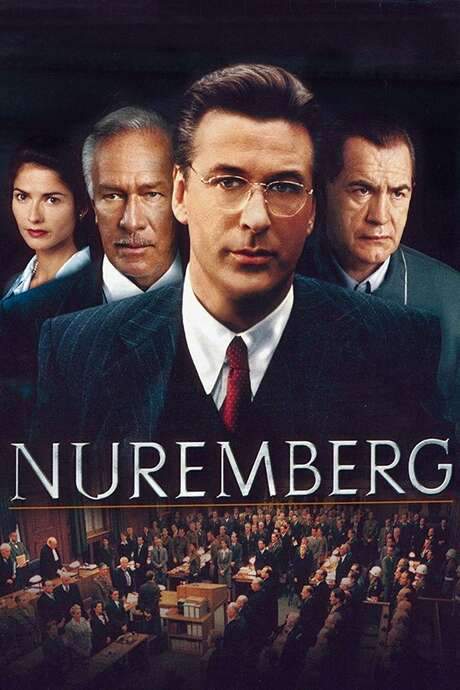
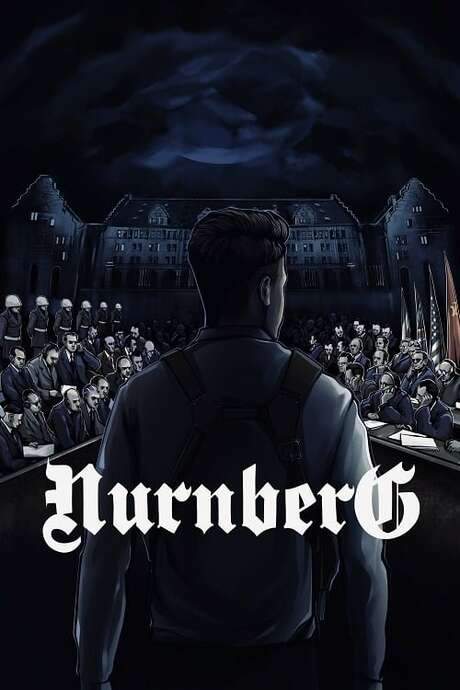
Nuremberg (2025) movie poster

Ending Explained

Nuremberg (2025) Ending Explained – Final Scene & Meaning

Release, runtime and language
2025 · 2 h 28 m
Echo score 78
Loading streaming availability…
Directed by
James Vanderbilt
Starring
Michael Shannon, Russell Crowe, Rami Malek, Richard E. Grant, John Slattery, Mark O'Brien
Budget
$11.8M

Chief prosecutor Robert H. Jackson (Michael Shannon) leads the Allied team in the historic 1945 Nuremberg trials, determined to hold the Nazi regime accountable for the Holocaust’s atrocities. Simultaneously, a young U.S. Army psychiatrist (Rami Malek) confronts former Reichsmarschall Hermann Göring (Russell Crowe) in a tense psychological showdown that tests both justice and conscience.

On this page (7)
  1. 1 Where to watch
  2. 2 What happens at the end
  3. 3 Final events in order
  4. 4 Ending questions answered
  5. 5 Movie threads
  6. 6 Movies like Nuremberg
  7. 7 Every angle
Loading streaming availability…

Ending explained · contains spoilers

What Happens at the End of Nuremberg?

How Nuremberg (2025) ends, what the final scene means, which earlier moments set it up and how to read the ending if the film leaves it open. The full ending explained, with every spoiler.

In the final hours of the film the courtroom at Nuremberg becomes the stage for the very fate the prisoners tried to avoid. Hermann Go‑Rie­ng, who had arrived at the American prison defiantly confident in his own cleverness, finally faces the British prosecutor David Fyke. Fyke exploits Goering’s vanity, forcing him to admit his blind loyalty to Hitler and his role in the genocide. The confession seals his conviction; the tribunal sentences him to death by hanging. Yet the bragging Nazi still clings to a last‑minute trick—a hidden potassium‑cyanide capsule that he swallows just before the noose is dropped, turning his execution into a self‑inflicted escape and leaving the judges stunned.

The other twenty‑one defendants meet the same grim end, each hanged as the world watches history being written. Amid the hangings, the film returns to Douglas Kelley, the army psychiatrist who began his assignment by promising to keep the Nazis from killing themselves. His personal ambition—turning the inmates’ confessions into a bestseller—has already unraveled: he loses his job after leaking confidential details to a journalist, and the only prisoner who truly breaks under pressure, Robert Ley, hangs himself using a makeshift rope despite Kelley’s notes proclaiming a “successful” treatment.

A decisive encounter with the court translator Howard Triest forces Kelley to confront his own motives. Triest, a survivor of his family’s Holocaust, reminds Kelley that the trial matters not only as a legal precedent but as an act of moral reckoning for countless victims. Moved, Kelley abandons his self‑serving plan and hands over the full record of his sessions, allowing the prosecution to use the psychologists’ insights in building its case.

The epilogue follows Kelley back to the United States. He finally publishes his book, 22 Cells in Nuremberg, but it flops, and his subsequent career as a radio commentator is marked by cynical reflections on power and oppression—suggesting he never fully reclaimed his conscience. The lingering irony is that, years later, the once‑ambitious doctor succumbs to the same poison he once watched Goering use, taking his own life with cyanide in 1958. His death mirrors the very escape he once facilitated, underscoring how the shadows of Nuremberg continued to haunt those who had witnessed its horrors.

Last updated: January 05, 2026 at 08:31

Was this helpful?

The last 4 events

How Nuremberg Ends: The Final Events in Order

The last events of Nuremberg (2025) in chronological order, the run-up to the ending explained above. The complete timeline has all 15 events, scene by scene.

Open the full timeline
  1. Göring's Suicide

    On the night before his execution, Göring commits suicide by ingesting cyanide. This shocking act leaves the authorities infuriated and the implications of his death resonate deeply through the ongoing trials.

    When
    October 15, 1946
  2. Post-Trial Executions

    Despite Göring's suicide, the executions of other Nazi leaders proceed as planned. The challenges during these executions highlight the psychological toll on those involved, with Streicher suffering a breakdown as he approaches the gallows.

  3. Kelley's Tell-All Publication

    After returning to the United States, Kelley publishes his experiences in '22 Cells in Nuremberg', which struggles to find an audience. His memoir reveals the enduring scars of his experiences during the trials and serves as a warning for future regimes.

  4. Legacy of the Trials

    The efforts of Justice Jackson at Nuremberg lay a foundational framework for the future prosecution of war crimes. As the world reflects on these events, the lessons learned resonate in today's pursuit of global justice.

Ending questions answered

Nuremberg Ending: Your Questions Answered

The questions people ask most about the ending of Nuremberg (2025): what the final scene means, how the twist works, what happens to each character and how to read the ending. Each answer contains spoilers.

Q1

Why does Göring swallow cyanide before his execution at Nuremberg?

Even after being sentenced to death by hanging, Göring refuses to let the Allied tribunal control the final moment of his life. Having maintained a defiant, vain posture throughout the trial, he hides a potassium-cyanide capsule and takes it just before the noose is dropped, turning his execution into a self-inflicted escape. His suicide is meant as a final act of defiance, denying his enemies the complete humiliation of watching him hang.

Foreshadowing: Early in the film, Göring's smug confidence and insistence on controlling every interaction foreshadow that he would rather choose his own exit than submit to the Allies' judgment.

  • göring cyanide
  • nuremberg execution
  • goring suicide
  • potassium cyanide capsule
Q2

How does prosecutor David Fyke finally break Göring in the courtroom?

In the final courtroom scenes, the British prosecutor David Fyke exploits Göring's vanity by forcing him to confront his blind loyalty to Hitler and his direct role in the Holocaust. Once Göring admits these things on the stand, the confession effectively seals his conviction and removes any remaining political ambiguity about his culpability, allowing the tribunal to sentence him to death.

  • david fyke
  • göring cross-examination
  • nuremberg courtroom
  • british prosecutor
Q3

Why does Robert Ley kill himself despite being declared a 'success' by Kelley?

Kelley's clinical notes describe Robert Ley as a successful psychiatric case, but the film treats those notes as self-serving. In truth, Ley is the one prisoner who truly breaks under the weight of the charges against him and hangs himself with a makeshift rope in his cell. His suicide exposes the gap between Kelley's professional record and the psychological reality of the defendants, undermining the doctor's credibility before the final act.

  • robert ley
  • kelley psychiatric notes
  • nuremberg prisoner suicide
  • failed treatment
Q4

Why does Douglas Kelley hand over his session notes to the prosecution?

After being confronted by the court translator Howard Triest, a Holocaust survivor whose own family was destroyed by the Nazis, Kelley is forced to recognize that his ambition to turn the prisoners' confessions into a bestseller is morally indefensible. Moved by Triest's reminder that the trial is also an act of reckoning for millions of victims, Kelley abandons his self-serving plan and surrenders the full record of his psychiatric sessions so the prosecution can use them in building its case.

Foreshadowing: Kelley's earlier casual attitude toward his patients and his eagerness to court journalists foreshadow that his conscience, not his expertise, is what eventually changes.

  • kelley notes
  • prosecution
  • howard triest
  • session records
  • moral reckoning
Q5

What does Howard Triest say that changes Kelley's mind?

Triest, who works as a court translator, reminds Kelley that he is not merely observing a legal procedure but witnessing an act of moral reckoning for the countless victims of the Holocaust, including Triest's own family. His confrontation forces Kelley to see the trial as a human responsibility rather than a career opportunity, and that pressure is what pushes Kelley to surrender his notes instead of exploiting them.

  • howard triest
  • kelley confrontation
  • holocaust survivor
  • moral reckoning
Q6

What happens to Douglas Kelley after the Nuremberg trials end?

Kelley finally publishes his book, *22 Cells in Nuremberg*, but it is a commercial failure. He drifts into a career as a radio commentator marked by cynical reflections on power and oppression, never fully reclaiming the conscience he briefly rediscovered during the trial. The epilogue reveals he died by suicide using cyanide in 1958, suggesting the psychological toll of Nuremberg stayed with him long after the verdict.

  • kelley after trial
  • 22 cells in nuremberg
  • kelley cyanide 1958
  • radio commentator
Q7

How does Kelley's suicide mirror Göring's cyanide death?

Years after the trial, Kelley kills himself with the same poison Göring used to escape the noose. The parallel is deliberate: the man who once watched a Nazi leader cheat hanging by swallowing cyanide ultimately chooses cyanide himself, implying that the moral shadow of Nuremberg consumed the witnesses as much as the perpetrators. The film uses this echo to suggest that proximity to atrocity leaves its own invisible scars.

Foreshadowing: Kelley's growing numbness and increasing reliance on alcohol in the final act foreshadow his eventual self-destruction.

  • kelley cyanide
  • goring cyanide parallel
  • nuremberg aftermath
  • witness trauma
Q8

What does Kelley's cyanide suicide symbolize about Nuremberg?

By killing himself with the same method as Göring, Kelley becomes a mirror image of the defendant he once studied. The film's implication is that Nuremberg was not a clean victory but a corrosive event that warped everyone it touched: Göring escaped justice through poison, and the man tasked with documenting the prisoners' minds was ultimately poisoned by the experience. The ending frames accountability as a process that leaves lasting damage on both sides of the bench.

  • nuremberg symbolism
  • kelley cyanide meaning
  • moral cost
  • justice aftermath
Q9

Why does the film end by following Kelley's downfall instead of Jackson's victory?

Although Jackson's prosecution successfully establishes a landmark precedent for international justice, the film deliberately pivots away from that triumph to focus on Kelley's slow unraveling. This choice reframes Nuremberg as more than a courtroom outcome: it shows that even those on the righteous side of history can be psychologically destroyed by what they encounter. By ending on Kelley rather than the verdict, the film emphasizes the personal cost of witnessing evil.

  • nuremberg ending
  • kelley downfall
  • jackson victory
  • film structure
Q10

What happens to Howard Triest after the Nuremberg trial?

Following the verdict, Triest is finally able to reunite with his sister, one of the few survivors of his family. His storyline provides a brief counterweight to the grim fates of the defendants and Kelley, showing that for Holocaust survivors, Nuremberg carried not just legal weight but personal, emotional closure.

  • howard triest sister
  • holocaust survivor
  • nuremberg reunion
  • family closure
Q11

What happens to the other Nazi defendants at the end of Nuremberg?

Of the defendants tried alongside Göring, twenty-one are sentenced to death and hanged as the world watches history being made. A few, including Robert Ley, take their own lives before execution. The film presents these hangings as a grim, public act of accountability, the practical resolution of the tribunal's mission to punish those responsible for the regime's atrocities.

  • nuremberg defendants executed
  • hangings
  • twenty-one sentenced
  • nazi punishment

Movie threads

More Movies Like Nuremberg, by Mood & Story

Curated lists built around what makes Nuremberg tick: the same mood, the same kind of story or the same emotional payoff. Each list explains why these movies belong together.

Historical trial dramas like Nuremberg

Legal battles where the weight of history hangs over every testimony and verdict. If you were moved by Nuremberg, explore movies like this historical courtroom drama that confront war crimes, genocide, and moral reckoning through the lens of trial and testimony. These films share Nuremberg's steady pacing, heavy emotional weight, and complex perspectives on justice, accountability, and the limits of law. Similar courtroom and tribunal stories about institutional evil, Holocaust accountability, and the personal cost of seeking justice will appear here.

  • courtroom
  • somber
  • historical
  • moral reckoning
  • grave
  • weighty
  • Tone: somber, grave, morally heavy
  • Pacing: steady, methodical, dialogue driven
Why these movies?

The story pattern: Stories in this thread typically begin with a reckoning moment: a war ends, a regime falls, or a buried atrocity resurfaces, and the question of how to judge the perpetrators takes center stage. Protagonists are often prosecutors, judges, investigators, or witnesses carrying both professional duty and personal trauma. The narrative alternates between legal procedure, flashbacks to the crimes, and intimate character moments that reveal how the weight of the case reshapes everyone it touches. Verdicts arrive as moral milestones, but rarely as clean resolutions, leaving the audience to sit with what justice can and cannot repair.

Why they belong together: These films are united by their focus on historical or quasi-historical trials, their sober and contemplative tone, and their willingness to sit with the moral complexity of prosecuting evil. They tend to share steady, dialogue-driven pacing, heavy emotional weight, dark tones, and mixed or bittersweet endings where institutional progress is shadowed by personal loss. Viewers who want to think deeply about accountability, memory, and the legacy of atrocity will find these stories coherent and demanding in the same way.

Psychological showdowns like Nuremberg

Quiet confrontations where one ordinary mind faces down something monstrous. If you were gripped by the psychiatrist versus Göring scenes in Nuremberg, this is the place for similar movies that thrive on intense one-on-one psychological confrontations. These stories share Nuremberg's oppressive mood, complex character dynamics, and the unsettling sense of two minds testing each other across a moral abyss. Expect heavy themes, character-driven drama, and tense psychological evaluation scenes that double as moral examinations.

  • psychological
  • tense
  • interrogation
  • claustrophobic
  • manipulative
  • confrontational
  • Tone: dark, tense, psychologically oppressive
  • Pacing: steady, tension driven, conversation heavy
Why these movies?

The story pattern: These films often place a principled but ordinary protagonist (a doctor, lawyer, soldier, or interrogator) into a confined space with a charismatic and dangerous figure from the other side of history or morality. Through extended conversations, the antagonist reveals ideology, manipulates, threatens, or simply radiates menace, while the protagonist struggles to maintain composure, extract truth, or hold on to their own humanity. The duel reshapes both people, often ending in personal collapse, moral compromise, or a small, hard-won form of clarity that comes at great cost.

Why they belong together: Films are grouped here for their shared reliance on psychological intensity rather than action, their use of confined settings like prison cells, courtrooms, or interview rooms, and their willingness to portray evil as articulate and seductive rather than cartoonish. They tend to feature dark, oppressive tones, steady or slow pacing, complex character work, and emotionally heavy outcomes. The common thread is the cost of sitting across from someone who has done, or believes in, terrible things, and what that encounter reveals about both sides.

If you liked this

Movies Like Nuremberg

Similar movies to Nuremberg: the same genre, themes or kind of story. Each one comes with its own plot summary, timeline and ending explained.

Browse all movie summaries

Every angle

Nuremberg (2025) Explained: Plot, Ending, Timeline & Characters

Everything about Nuremberg in one place: what happens in the plot summary, the timeline in chronological order, the characters and meaning, the ending explained and a spoiler-free summary. What's After the Movie adds the cast, box office and post-credit scenes.

Coming soon on iOS and Android

The Plot Explained Movie Summary App

Plot summaries, endings explained and timelines on your phone. Catch up on any movie in minutes, save your favorites and never miss a twist again.

Be the first to know when we launch. Your email stays private, always.

Learn more about the app