Plot Explained Spoilers guaranteed!
Plot Explained

Browse by genre

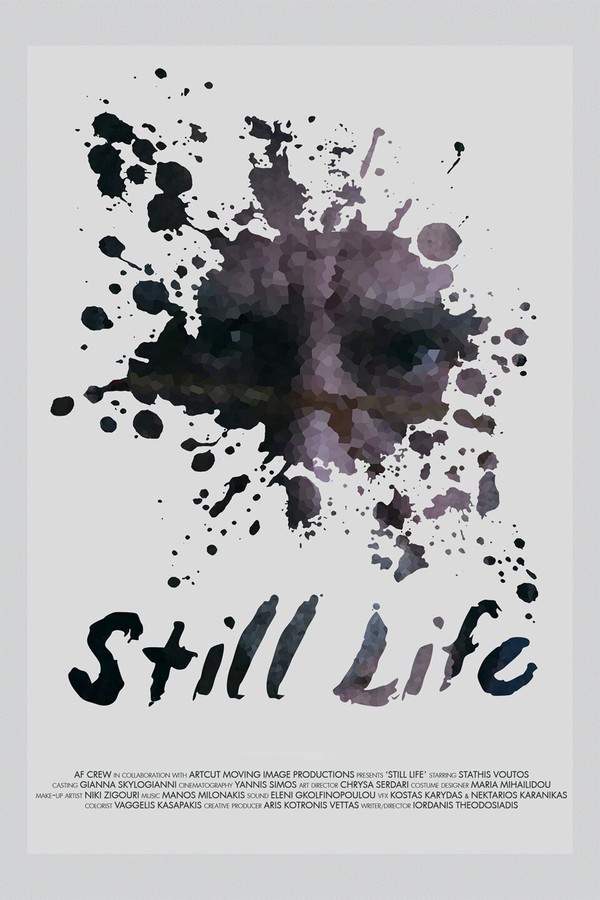
Still Life (2008) movie poster

Plot Summary

Still Life (2008) Plot Summary Explained

Release, runtime and language
2008 · 111 min
Directed by
Zhang Ke Jia

A traditional artist fiercely devoted to his craft finds himself facing the changing times and the allure of modern artistic movements. He initially resists these new influences, preferring to adhere to established techniques. However, as he works on a significant project, he unexpectedly embraces innovation, leading to a groundbreaking and ambitious work that challenges conventions and marks a bold departure from his previous style.

On this page (5)
  1. 1 What happens: full plot
  2. 2 Plot questions answered
  3. 3 Movie threads
  4. 4 Movies like Still Life
  5. 5 Every angle

Full plot summary · contains spoilers

What Happens in Still Life: Full Plot Summary

The whole story of Still Life (2008) explained, from the opening scene to the final frame: every key event, every twist and what it all adds up to. Read it as a quick recap before the sequel, to check a scene you missed, or to finally understand what really happened.

James Masino, a talented painter, finds his life upended when he is diagnosed with Guillain–Barré syndrome (GBS), a condition that will eventually leave him completely paralyzed. Confronted with the daunting reality of being unable to create art, he decides to retreat from the bustling city life, seeking solace in the seclusion of a friend's remote house on a deserted island. Here, he aims to work on his final masterpiece before succumbing to the difficulties he faces.

However, his plans take an unexpected turn when a young woman named Emma arrives, claiming she has permission from the owner to stay for a few days as well. With no means of contacting the outside world, James reluctantly allows Emma to share the house, initially feeling perturbed by her presence. Yet, as time progresses, he finds himself increasingly drawn to her warmth and candid personality.

One night, during a moment of vulnerability, Emma stumbles upon James' hidden room, which reveals a wall adorned with sketches of her likeness. This discovery sparks a deeper connection between them, leading to an evening filled with shared stories and newfound friendship. Emma learns about James' intentions to end his life, which prompts a poignant discussion about the value of existence. She challenges his perspective, urging him not to choose a path of despair, emphasizing that life is indeed precious. In sharing her own heart-rending story of lost dreams — revealing that she had to give her child up for adoption after being abandoned by the father — Emma strengthens their bond.

Inspired by their discussions and the comfort of their friendship, James embarks on an outing to a nearby town where he finally discovers the muse he needs for his final piece of art. Emma becomes the subject that reignites his passion for painting. Just as he begins to create, tragedy strikes: his illness flares up, resulting in a painful seizure that leads to his hospitalization.

Waking up to the sight of his worried mother, he learns that he was found alone in the house with injuries on his hands. Confused, he recalls his initial intentions of taking his own life but had thought he had failed. In a shocking revelation, James realizes that meeting Emma and their time together may not have been real — it was all a dream. His mother reassures him, promising that they will face the trials ahead together as a family and that he should not lose hope. She reminds him that beyond art, life continues to hold meaning.

In a poignant conclusion, James eventually returns to that same house where the dream unfolded and completes his painting. His parents are later seen paying homage at the grave of the woman who had given him up for adoption, showcasing a small framed print of his final masterpiece, honoring her spirit. The story closes with James being interviewed, reflecting on his experiences and expressing gratitude for the encounter he shared, however dreamlike it may have been, with Emma.

Last updated: September 30, 2026 at 11:09

Was this helpful?

Plot questions answered

Still Life Plot Explained: Your Questions Answered

The questions people ask most about Still Life (2008): what happens in the confusing scenes, why the characters do what they do, the twists, hidden details and what the ending means. Each answer contains spoilers.

Q1

Why did James Masino retreat to a deserted island?

After being diagnosed with Guillain–Barré syndrome, a progressive condition that would eventually leave him fully paralyzed, James chose to leave the city and isolate himself on a remote island owned by a friend. His goal was to spend his remaining able-bodied time completing one final painting before his body gave out. The isolation also reflected his desire to face his decline alone, separate from the distractions and sympathies of his everyday life.

  • james masino
  • deserted island
  • guillain-barre syndrome
  • final painting
  • self-imposed exile
Q2

Who is Emma and was she a real person?

Emma is the young woman who arrives at the island house and becomes James's companion and eventual muse. She is not a real person within the story. After James is hospitalized, his mother reveals he was found bleeding from a failed suicide attempt, meaning his entire time with Emma was a dreamlike hallucination his mind created while he was dying or unconscious. Emma represents an idealized figure of comfort and connection that his subconscious constructed to process his despair.

Foreshadowing: The summary hints at this when Emma appears too conveniently, with no verified contact with the outside world and no clear reason for her arrival.

  • emma
  • hallucination
  • dream
  • suicide attempt
  • muse
Q3

Why did James want to end his life?

James saw suicide as a way to control the terms of his exit before Guillain–Barré syndrome took away everything that defined him. As a painter, the certainty of losing the use of his hands made the prospect of a slow, helpless decline unbearable. By choosing when and how to die, he believed he could preserve one last act of agency, even if it meant abandoning his artistic ambitions and his family.

  • james masino
  • suicide
  • despair
  • guillain-barre
  • identity
  • artist
Q4

What do the sketches of Emma on the wall mean?

The hidden room covered in portraits of Emma reveals that James had already been deeply fixated on her image long before their supposed meeting, or that his subconscious had been drawing the face his mind was conjuring. Because the entire encounter turns out to be a hallucination, the sketches serve as visual evidence that Emma was a mental construct rather than a stranger who simply showed up. They blur the line between artist and subject, suggesting James was both the dreamer and the one being dreamed of.

  • sketches
  • portraits
  • emma
  • hallucination
  • hidden room
  • subconscious
Q5

How does Emma's story about giving up a child connect to James?

Emma tells James she was abandoned by her lover and had to give her baby up for adoption, a story that mirrors James's own hidden past as an adopted child. Because Emma exists only in James's mind, her confession functions as his subconscious working through feelings about his biological mother and the woman who gave him away. This connection is confirmed at the film's end when James's parents visit the grave of the woman who gave him up for adoption, framing the painting as a tribute to her.

Foreshadowing: The emotional weight of Emma's confession only makes sense retroactively once the adoption reveal lands in the final act.

  • adoption
  • biological mother
  • emma's story
  • given up
  • parents
Q6

Why was James found bleeding alone in the house?

James was found bleeding because he had attempted to take his own life before his mind drifted into the dreamlike sequence with Emma. The blood on his hands is not from a random accident but from his suicide attempt, which he failed to complete. His waking up in the hospital with injuries is the real-world aftermath of that act, not a separate tragedy caused by his illness.

  • suicide attempt
  • bleeding
  • hospital
  • injuries
  • failed attempt
Q7

What is Guillain–Barré syndrome and how does it affect James?

Guillain–Barré syndrome is a rare neurological disorder in which the immune system attacks the peripheral nerves, leading to progressive muscle weakness and, in severe cases, total paralysis. For James, the diagnosis means he will eventually lose control of his body, including the hands he depends on to paint. This looming loss of physical ability is what drives his despair, his retreat to the island, and his plan to end his life on his own terms.

  • guillain-barre syndrome
  • paralysis
  • neurological
  • diagnosis
  • illness
Q8

Why do James's parents visit a grave at the end of the film?

The grave belongs to the woman who gave James up for adoption, and the visit reveals that James was adopted, a truth the rest of the film only hints at. His parents leave a small framed print of his final painting as a tribute to her, symbolizing James's acceptance of his origins and an emotional bridge between the mother who raised him and the mother who chose to let him go. The scene reframes his entire artistic journey as a way of honoring the life he was given.

Foreshadowing: Emma's confession about giving up a child foreshadows this reveal, but its true meaning only clicks when the tomb scene appears.

  • adopted
  • biological mother
  • parents
  • grave
  • tribute
  • painting
Q9

What actually happens to James after his seizure?

The seizure is not a medical event followed by normal recovery. It marks the point where James's hallucination begins to fracture, and he wakes up in a hospital to learn that the peaceful days with Emma never happened. He was discovered bleeding at the house following a suicide attempt, and his mother is now by his side, promising to face his illness together as a family.

Foreshadowing: The seizure's severity, arriving at the exact moment James begins painting, hints that his body was already in crisis before the dream sequence began.

  • seizure
  • hospital
  • mother
  • hallucination breaks
  • suicide attempt
Q10

Why does James decide to return to the island house after being hospitalized?

Even after learning that Emma was a product of his own mind, James chooses to return to the house because the dream gave him something real, a finished vision for his painting and a reason to keep living. The hallucination restored his will to create, and going back allows him to translate that internal experience into a tangible work of art. The return is both a creative decision and a personal acceptance of everything the dream represented.

  • return
  • island
  • painting
  • acceptance
  • inspiration
Q11

What does James's final painting represent?

The final painting represents Emma as she existed in his mind, which is also a tribute to the biological mother who gave him up for adoption. Because the real Emma and the painting's subject are both projections of his longing for connection, the work becomes a layered symbol of loss, maternal love, and artistic rebirth. Completing it allows James to leave behind a piece of himself that outlives his physical decline.

Foreshadowing: The earlier sketches of Emma in the hidden room foreshadow that his final piece would center on her face as his ultimate subject.

  • final painting
  • masterpiece
  • emma
  • symbolism
  • tribute
  • rebirth
Q12

Was the entire middle of the film a dream?

Yes. The sequence in which James meets Emma, shares stories with her, and finds inspiration for his painting is a hallucination his mind produced around the time of his suicide attempt. The middle of the film plays like a memory of something that felt lived-in, but the hospital reveal recontextualizes it as an internal experience rather than a literal event. This shift turns a quiet romance into a portrait of a mind trying to save itself.

Foreshadowing: Small inconsistencies, such as no one being able to verify Emma's identity and the absence of any contact with the outside world, hint early on that her presence may not be real.

  • dream
  • hallucination
  • middle section
  • reveal
  • twist
  • reality
Q13

What does the interview scene at the end of Still Life mean?

The interview closes the film by giving James a voice to process what happened to him on the island. He speaks with quiet gratitude about meeting Emma, acknowledging that the encounter was dreamlike yet still meaningful. The scene frames his final painting not as the product of an isolated mind, but as a tribute shaped by love, loss, and the chance connection with someone who may have only ever existed inside him.

  • interview
  • ending
  • gratitude
  • reflection
  • closure
Q14

How does James's mother help him move forward?

When James wakes in the hospital convinced his experience with Emma was real, his mother gently tells him they will face his illness together as a family. She reframes his future around shared responsibility rather than isolated suffering, giving him a reason to keep living that does not depend on art or romance. Her presence is what allows him to eventually return to the house and finish his painting.

  • mother
  • family
  • support
  • hope
  • hospital scene

Movie threads

More Movies Like Still Life, by Mood & Story

Curated lists built around what makes Still Life tick: the same mood, the same kind of story or the same emotional payoff. Each list explains why these movies belong together.

Final Masterpieces and the Art of Dying like in Still Life

Quiet stories of creators pouring their remaining time into one defining work. Looking for movies like Still Life that explore art, mortality, and creative legacy? These slow, character-driven dramas follow terminally ill or aging artists who pour themselves into one last defining work, finding meaning, healing, and connection through the act of creation. Expect quiet intimacy, heavy emotional weight, and bittersweet endings that linger long after the credits roll.

  • contemplative
  • melancholic
  • artistic
  • intimate
  • mortality
  • bittersweet
  • Tone: melancholic, bittersweet, tender
  • Pacing: slow burn, contemplative
Why these movies?

The story pattern: The protagonist, often an aging or unwell artist, lives in quiet solitude, haunted by regret, loss, or a failing body. A triggering event, usually a diagnosis or a sudden loss, forces them to begin one final, ambitious project. As they work, old wounds surface and unexpected relationships form, blurring the line between the work and the self. The story builds toward a moment of acceptance where the work, and not survival, becomes the true legacy. The journey moves from despair, through obsession and reconnection, and ends on a fragile, hopeful note.

Why they belong together: They share a contemplative pace, a melancholic but ultimately tender tone, and a deep reverence for the creative process as a way to face death. The central figures are craftspeople rather than action heroes, and the emotional stakes are internal rather than external. Romance, when it appears, is gentle and secondary to the work, and endings tend to be bittersweet rather than conclusive.


Solitary Lives and Unexpected Kinship like in Still Life

Isolated souls drift together and discover they were never meant to be alone. If you loved Still Life and want more movies like it, these quiet, intimate dramas center on lonely, isolated characters in remote or self-chosen exile who gradually form unexpected bonds with strangers. Slow-paced, emotionally heavy, and bittersweet, they explore adoption, found family, second chances, and grief through restrained storytelling and haunting atmosphere rather than plot mechanics.

  • lonely
  • intimate
  • contemplative
  • found family
  • grief
  • quiet
  • Tone: melancholic, bittersweet, tender
  • Pacing: slow burn, deliberately unhurried
Why these movies?

The story pattern: A solitary protagonist, often grieving, ill, or running from something, lives apart from others in a small or remote place. A new presence, a job, or a chance meeting slowly erodes their isolation, and through small, ordinary exchanges a tentative bond takes shape. Mid-story reveals about identity, family history, or past trauma reframe the present. The arc moves from resigned isolation to tentative trust to a quietly hopeful belonging, even when circumstances remain tragic.

Why they belong together: They share an unhurried pace, a tone that balances sorrow with quiet grace, and an emotional center built on the slow accretion of intimacy rather than dramatic confrontation. Loneliness, adoption, grief, and the discovery of chosen family recur as core themes, and the visual language leans on empty landscapes, sparse dialogue, and ritualized daily life to express what words cannot.

If you liked this

Movies Like Still Life

Similar movies to Still Life: the same genre, themes or kind of story. Each one comes with its own plot summary, timeline and ending explained.

Browse all movie summaries

Every angle

Still Life (2008) Explained: Plot, Timeline & Characters

Everything about Still Life in one place: what happens in the plot summary, the timeline in chronological order, the characters and meaning and a spoiler-free summary. What's After the Movie adds the cast, box office and post-credit scenes.

Coming soon on iOS and Android

The Plot Explained Movie Summary App

Plot summaries, endings explained and timelines on your phone. Catch up on any movie in minutes, save your favorites and never miss a twist again.

Be the first to know when we launch. Your email stays private, always.

Learn more about the app