









Plot Explained Spoilers guaranteed!
Plot Explained

Browse by genre

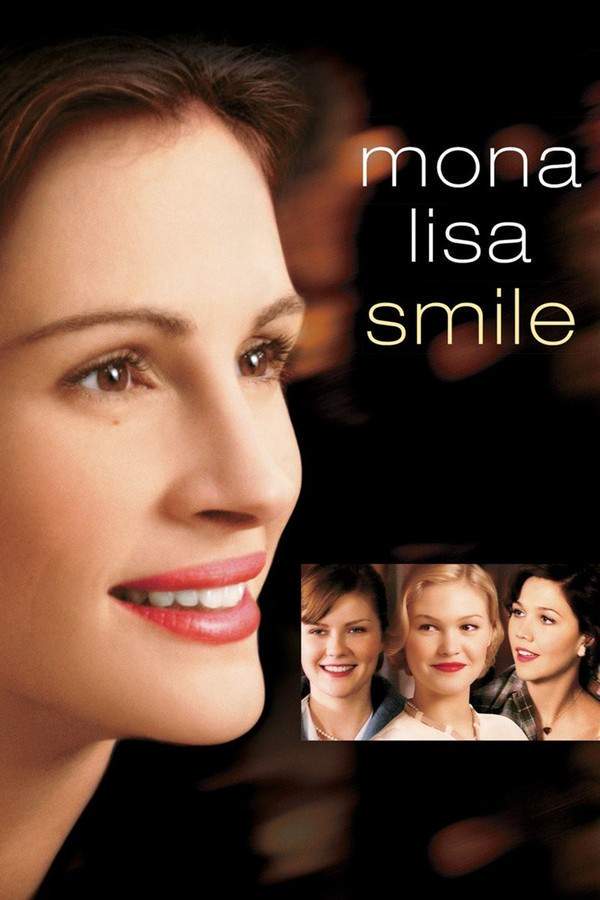
Mona Lisa Smile (2003) movie poster

Timeline

Mona Lisa Smile (2003) Timeline Explained – Every Event in Order

Release, runtime and language
2003 · 117 min · English
JustWatch #1,436 7
Directed by
Mike Newell
Starring
Julia Roberts, Julia Stiles, Kirsten Dunst, Marcia Gay Harden
Budget
$65M

During the 1950s at Wellesley College, art historian Katherine Watson challenges the traditional roles expected of women. Her unconventional teaching methods and passionate lectures inspire her students to question societal norms and pursue their ambitions beyond marriage and motherhood. Katherine's influence sparks a transformative journey of self-discovery for the young women, encouraging them to embrace their intellect and individuality in a conservative era.

On this page (6)
  1. 1 Where to watch
  2. 2 Events in order (14)
  3. 3 Timeline questions answered
  4. 4 Movie threads
  5. 5 Movies like Mona Lisa Smile
  6. 6 Every angle

Where to watch

Where to Watch Mona Lisa Smile (2003)

Where can you watch Mona Lisa Smile? Stream, rent or buy it in the US, including on Hoopla, Kanopy and Amazon Video: current JustWatch availability with up-to-date prices.

Streaming availability powered by JustWatch

14 events in order · contains spoilers

Mona Lisa Smile Timeline: Events in Chronological Order

Every key event of Mona Lisa Smile (2003) in order, scene by scene, with when and where it takes place. Use it to untangle flashbacks, time jumps and parallel storylines, to refresh your memory before the sequel or to find the exact scene you are thinking of.

  1. Katherine Accepts Position

    Katherine Watson, a Ph.D. student from Oakland State University, takes on a role as an Art History instructor at the prestigious Wellesley College for the 1953/54 academic year. This decision marks the beginning of her transformative journey, as she faces the challenges of being an outsider in a traditional institution.

    When
    1953
    Where
    Wellesley College
  2. First Day in Class

    Upon entering her first class at Wellesley, Katherine learns that her academic pedigree influences her students' perception of her. The girls, despite their impressive knowledge, quickly undermine her authority, suggesting that there is little left for her to teach.

    When
    1953
    Where
    Classroom, Wellesley College
  3. Life with Roommates

    Katherine shares a home with her roommates, Amanda and Nancy, who work at the college in different capacities. Their supportive presence helps Katherine navigate the challenges she faces as an instructor in a conservative environment.

    Where
    Wellesley's Faculty Housing
  4. Cultural Clash in the Classroom

    Katherine strives to introduce her students to unconventional art history topics that challenge their thinking. However, Betty, one of her most influential students, remains adamantly opposed to liberal ideas, representing a significant cultural clash within the classroom.

    Where
    Classroom, Wellesley College
  5. Struggles with Joan's Aspirations

    Joan, another talented student, grapples with her dreams of attending Yale for law school while being torn between her ambitions and traditional expectations of marriage. Katherine supports Joan in her endeavors, encouraging her to prioritize her education and career over societal pressures.

    Where
    Wellesley College
  6. Amanda's Termination

    The oppressive atmosphere at Wellesley intensifies when Betty's editorial power results in the termination of Amanda, Katherine's roommate. This incident serves to reinforce the traditional values upheld by the institution, impacting Katherine and her students deeply.

    Where
    Wellesley College
  7. Friction from Joan's Engagement

    Joan's engagement to Tommy brings complications to her aspirations and her relationship with Katherine. Betty, who holds strong traditional values, comes into conflict with the evolving dynamics of her peers as they start to question societal norms.

    Where
    Wellesley College
  8. Katherine Inspiring Change

    Katherine's efforts to foster independent thinking in her students begins to bear fruit, as some start to embrace ideas of empowerment and personal ambition. This gradual shift represents a challenge to the school's conservative ethos, even as opposition arises.

    Where
    Classroom, Wellesley College
  9. Challenges in Personal Life

    As Katherine faces turmoil in her personal life, including her budding romance with fellow instructor Bill Dunbar, she simultaneously navigates the complexities of her students' romantic entanglements. This dual struggle illustrates the intertwining of professional and personal growth.

    Where
    Wellesley College
  10. Confronting Tradition

    As the academic year progresses, both Katherine and her students confront their roles within the traditional confines of Wellesley College. Betty begins to question her steadfast beliefs, mirroring the evolving independence of her classmates.

    Where
    Wellesley College
  11. Katherine's Departure

    As the academic year concludes, Katherine prepares to leave Wellesley College, symbolically rejecting the limitations imposed by conventional roles. Her departure marks a pivotal moment of self-discovery and empowerment, inspired by the changes she ignited within her students.

    When
    End of Academic Year 1954
    Where
    Wellesley College
  12. Betty's Turning Point

    Following Katherine's departure, Betty faces the realization of her failing marriage and the pressures of her traditional beliefs. This moment marks a significant turning point for her character as she begins to explore her own independence.

  13. Changes in Enrollment

    The heightened enrollment in Katherine's Art History class stands as a testament to the impact she made on her students. This surge reflects a growing interest in new ideas and perspectives, challenging the established norms of Wellesley College.

    Where
    Wellesley College
  14. Katherine's Next Journey

    Katherine departs for Europe, leaving behind the conservative environment at Wellesley. This decision not only represents her personal growth but also symbolizes the ongoing fight for women's empowerment beyond societal expectations.

    Where
    Europe

Last updated: October 27, 2024 at 21:13

Was this helpful?

Timeline questions answered

Mona Lisa Smile Timeline Explained: Your Questions Answered

When does it happen, and why in that order? The questions people ask about the chronology of Mona Lisa Smile (2003): time jumps, flashbacks, cause and effect between scenes and the correct order of events, each answered with spoilers.

Q1

Why does Betty write the editorial that leads to Amanda's termination?

Betty writes the editorial against Amanda because she strongly believes in maintaining Wellesley's conservative values. When Betty discovers that Amanda, Katherine's roommate and the school nurse, is providing birth control information to students, she views this as a direct violation of the school's moral standards. Using her influence on the school newspaper, Betty publishes the editorial that results in Amanda's termination, reinforcing the oppressive atmosphere at Wellesley.

  • betty warren
  • amanda termination
  • birth control
  • wellesley conservative values
  • school newspaper
Q2

Why does Joan choose to get engaged to Tommy despite her Yale Law dreams?

Joan gets engaged to Tommy because she struggles to reconcile her ambitious career aspirations with the traditional expectations placed on women in the 1950s. Although Katherine encourages her to pursue her dreams of attending Yale Law School, Joan feels torn between her personal desires and societal pressures to marry. Her engagement to Tommy represents a concession to those traditional values, though it creates friction with her ambitions.

  • joan
  • yale law
  • tommy engagement
  • marriage vs career
  • 1950s women expectations
Q3

What causes Betty to question her traditional beliefs and change her views?

Betty's transformation occurs gradually through witnessing the positive changes in her classmates and experiencing the failure of her own traditional choices. After Katherine leaves Wellesley, Betty faces a failing marriage and realizes that blindly adhering to conservative values did not guarantee happiness. This personal tragedy, combined with seeing her classmates gain independence and pursue their ambitions, prompts her to question everything she once believed.

  • betty transformation
  • conservative beliefs
  • failing marriage
  • independence
  • wellesley change
Q4

Why does Katherine leave Wellesley College at the end of the year?

Katherine leaves Wellesley because she comes to realize that the institution's conservative values and resistance to change have created an environment where her teaching philosophy cannot fully flourish. Her departure symbolizes both a personal rejection of the limitations imposed by conventional roles and a recognition that her influence has already sparked meaningful change in her students. She departs for Europe, choosing to continue her own journey of self-discovery rather than remain in an oppressive academic environment.

  • katherine departure
  • europe
  • wellesley resignation
  • teacher leaving
  • 1950s women roles
Q5

How does Katherine's teaching method challenge her Wellesley students?

Katherine challenges her students by introducing unconventional art history topics that force them to think independently rather than simply memorize the established curriculum. She encourages them to question societal norms and consider possibilities beyond marriage and motherhood. Her teaching philosophy emphasizes intellectual growth and personal ambition, directly contradicting the traditional education these women have received, which focused primarily on becoming suitable wives for wealthy men.

  • katherine watson teaching method
  • art history
  • independent thinking
  • wellesley education
  • unconventional curriculum
Q6

Why do the Wellesley students initially disrespect Katherine and undermine her authority?

The Wellesley students disrespect Katherine because they perceive her as academically inferior due to her background at Oakland State University, a less prestigious institution compared to the elite Wellesley. The students possess extensive knowledge of the curriculum and believe they have little left to learn from her. Additionally, the school's conservative culture encourages students to challenge anyone who threatens their traditional values, and Katherine's modern teaching approach makes her an immediate target.

  • katherine watson
  • students disrespect
  • oakland state
  • wellesley prestige
  • first day class
Q7

Why is Betty so strongly opposed to women's liberation and liberal ideas?

Betty opposes women's liberation because she has been thoroughly conditioned by Wellesley's conservative ethos and her family's values. She genuinely believes that traditional gender roles, marriage, motherhood, and domestic life, represent the ideal path for women. Her father's influence and the societal pressures she grew up with have shaped her worldview, making her view feminist ideas as threats to the stable future she envisions. Betty sees women like Katherine and Giselle as threatening the social order she values.

  • betty warren
  • women's liberation
  • conservative views
  • giselle levy
  • wellesley traditional values
Q8

What ultimately triggers Joan to pursue her Yale Law ambition?

Joan eventually decides to pursue her Yale Law ambition after experiencing the tension between her engagement to Tommy and her true career aspirations. Katherine's encouragement plays a crucial role in helping Joan recognize that she can choose her own path. While the summary indicates complications arise from her engagement, Joan's ultimate decision to pursue law school represents a rejection of the traditional marriage-focused future that had been expected of her.

  • joan yale law
  • career ambition
  • tommy
  • engagement
  • katherine encouragement
Q9

What does the increased enrollment in Katherine's class signify?

The increased enrollment in Katherine's Art History class signifies the profound impact she has had on her students and the growing challenge to Wellesley's traditional values. Despite Katherine's departure, more students are drawn to her innovative teaching approach and the new perspectives she offered. This surge represents a shift in the college's culture, more women are now interested in independent thinking and pursuing ambitions beyond the traditional roles of wife and mother, demonstrating that Katherine's influence will continue beyond her time at Wellesley.

  • enrollment increase
  • art history class
  • katherine impact
  • student change
  • wellesley transformation
Q10

Why does Katherine's relationship with Bill Dunbar matter to the story?

Katherine's relationship with fellow instructor Bill Dunbar illustrates the personal struggles she faces while trying to inspire change at Wellesley. Their budding romance represents Katherine's own journey of navigating personal happiness against the backdrop of professional challenges. The relationship also shows how the conservative environment affects not just students but faculty members as well, adding depth to Katherine's character and demonstrating that she too must navigate the complexities of relationships within an oppressive institutional framework.

  • bill dunbar
  • katherine romance
  • wellesley instructor
  • personal struggle
  • relationship storyline
Q11

Why does the conservative environment at Wellesley create such tension throughout the story?

The conservative environment at Wellesley creates tension because it actively suppresses progressive ideas and maintains strict gender expectations that limit women's potential. President Jocelyn Carr upholds these traditional values, and the institutional pressure discourages both students and faculty from thinking independently. This creates constant conflict between Katherine's modern teaching methods and the school's expectations, between students' emerging desires for independence and their upbringing, and ultimately fuels the central drama of the film.

  • wellesley conservative environment
  • jocelyn carr
  • gender expectations
  • oppression
  • institutional pressure
Q12

How does Giselle represent the possibility of a liberated lifestyle for Wellesley students?

Giselle represents the possibility of a liberated lifestyle by openly embracing ideas that challenge traditional gender roles. Unlike Betty, Giselle recognizes that women like Katherine can forge meaningful lives independent of marriage and family expectations. Her more liberated perspective provides a contrast to the conservative norms at Wellesley and serves as one of the influences that gradually helps other students, particularly those questioning their futures, consider alternatives to the traditional path of marriage and motherhood.

  • giselle levy
  • liberated woman
  • alternative lifestyle
  • wellesley student
  • progressive ideas

Movie threads

More Movies Like Mona Lisa Smile, by Mood & Story

Curated lists built around what makes Mona Lisa Smile tick: the same mood, the same kind of story or the same emotional payoff. Each list explains why these movies belong together.

Movies about inspirational teachers like Mona Lisa Smile

Films about teachers who inspire change and challenge the status quo. If you enjoyed the story of Katherine Watson in Mona Lisa Smile, you'll appreciate these movies about educators who challenge tradition. Discover similar films and drama stories featuring unconventional teachers inspiring their students to think differently and pursue their own paths.

  • inspiring
  • thoughtful
  • rebellious
  • dramatic
  • hopeful
  • educational
  • Tone: hopeful, thoughtful
  • Pacing: steady, character-driven
Why these movies?

The story pattern: These narratives typically follow an outsider educator who brings new ideas to a resistant institution. Their methods clash with tradition, leading to conflict with authorities, but they ultimately foster profound self-discovery and empowerment in their students, often concluding with a sense of hopeful legacy despite personal sacrifice.

Why they belong together: Movies in this thread share a core narrative of educational inspiration and societal challenge. They blend a hopeful tone with dramatic conflict, featuring steady pacing and medium emotional weight, creating a cohesive experience of intellectual and personal liberation.

Period dramas about women's liberation like Mona Lisa Smile

Stories of women breaking free from societal constraints in historical settings. Fans of Mona Lisa Smile will find more movies like it in this collection of historical dramas about women challenging norms. Explore similar 1950s stories and feminist films focused on female empowerment, self-discovery, and the bittersweet fight for independence in a conservative era.

  • feminist
  • liberating
  • nostalgic
  • thoughtful
  • dramatic
  • bittersweet
  • Tone: hopeful, bittersweet
  • Pacing: steady, deliberate
Why these movies?

The story pattern: The narrative pattern involves individuals or a group confronting the limitations of their era—be it gender roles, class structures, or social conventions. The central conflict is between personal ambition and societal pressure, leading to a climax of defiance. The endings are typically bittersweet, celebrating hard-won freedom while acknowledging the sacrifices made.

Why they belong together: These films are grouped by their shared focus on feminist themes within a specific historical context. They combine a nostalgic setting with a thoughtful, liberating mood, and a steady pace that allows for deep character exploration, resulting in a consistently poignant and inspiring vibe.

If you liked this

Movies Like Mona Lisa Smile

Similar movies to Mona Lisa Smile: the same genre, themes or kind of story. Each one comes with its own plot summary, timeline and ending explained.

Browse all movie summaries

Every angle

Mona Lisa Smile (2003) Explained: Plot, Timeline & Characters

Everything about Mona Lisa Smile in one place: what happens in the plot summary, the timeline in chronological order, the characters and meaning and a spoiler-free summary. What's After the Movie adds the cast, box office and post-credit scenes.

Coming soon on iOS and Android

The Plot Explained Movie Summary App

Plot summaries, endings explained and timelines on your phone. Catch up on any movie in minutes, save your favorites and never miss a twist again.

Be the first to know when we launch. Your email stays private, always.

Learn more about the app