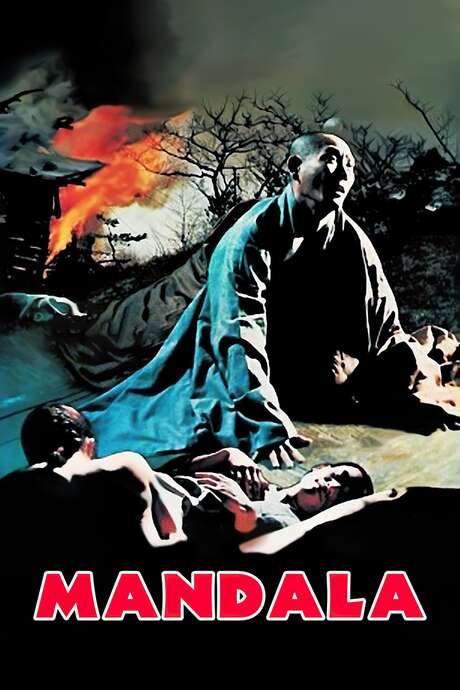
The story opens with a brutal confrontation that spirals into a nightmare for a family. After discovering her husband’s affair, the Mother tries to end the betrayal with violence, attempting to castrate him. When that plan fails, she commits an even more shocking act: she mutilates her son’s genitals and cannibalizes the severed penis. The mother then runs off into the night, leaving behind the grieving Father and Son. A brief encounter with a passing, praying spiritual man on the sidewalk hints at themes of guilt, judgment, and possible redemption as the mother contemplates her actions from a distance.
In the aftermath, the Father is overcome with sorrow over his son’s lost sense of manhood. He becomes obsessed with helping the boy reclaim sexuality, not through conventional means but through explorations of alternative forms of sexual pleasure that tilt toward the sadomasochistic. His quest leads him to research experimental ways to restore what was taken from his child, including the possibility of penile transplantation. The tragedy of the family’s breakdown reverberates through the community as rumors of the boy’s penectomy spread, casting him low in the male social hierarchy and turning many of his peers into bullies and aggressors.
To prove his resilience and power, the Son participates in a gang rape of the Father’s mistress. He does so under immense pressure and fear, and to avoid suspicion he pretends to penetrate, mimicking thrusting motions on top of the mistress to give the appearance of activity while concealing the truth of his physical impotence. The act pushes him deeper into a cycle of violence and social exclusion, and it lands him in prison after being apprehended for his role in the assault.
While behind bars, the Son endures further brutality at the hands of fellow inmates. The Father continues to seek unconventional paths to healing, even showing his son how to experience pleasure through self-stimulation, guiding him to rub a rough rock against his skin as a means to relearn touch and sensation in the absence of a functional penis. The physical trauma and the isolation intensify the chasm between the two, yet the father’s insistence on alternative forms of connection remains a central thread.
Upon release, the Son discovers that his lack of a penis prevents him from penetrating the mistress, complicating any hope for a normal relationship. Returning to the mistress’s workplace, he finds her involved with the gang leader in what appears to be a consensual arrangement, though the entire dynamic is chaotic and consuming. The trio engage in a violent, knife-tinged act as the Son participates, and in a shocking turn the mistress sides with the castrated gang leader, turning their sexual energies toward mutual harm. The gang leader’s severed penis is met with a brutal end when it is run over by a truck, leaving it unrecoverable and sealing a grim fate for the would-be power figure.
The Father learns of a potential solution in the form of an experimental penile transplantation. He makes a radical choice: he donates his own penis to his son via the surgical procedure. The operation is a watershed moment, balancing hope with a new set of complications. The Son discovers that even with the transplanted penis, he struggles to achieve an erection, creating tension in his relationship with the mistress. Her interest in sex wanes as physical responsiveness remains elusive, and she ultimately begins a relationship with the castrated gang leader, a development that deeply unsettles the household. The Son witnesses the two together, their coupling punctuated by a shared knife that underscores the film’s raw, unsettling mood.
Meanwhile, the Mother returns after a long absence, seeking to rejoin the family and rekindle her relationship with the Father. She is met with a different reality, however, as he has become impotent after giving up his penis for his son. The Son learns a disturbing truth: his father’s penis, now physically part of him, responds with instinctive arousal to his mother, complicating loyalties and igniting a fresh wave of jealousy and rage. A brutal, desperate confrontation follows when a failed attempt to reclaim the penis culminates in the father killing the mother and then himself in a moment of tragic collapse.
With the house emptied of its adult figures and the social fabric torn apart, the Son finally asserts a new path. He arms himself and shatters the last tie to conventional masculinity by shooting off his own penis. The film closes on a stark, almost spiritual note: the son turns away from the old definitions of manhood and instead embraces a life of spiritualism, suggesting a rebirth of identity beyond physical form. In the final tableau, he seems to be aligned with the same silent, praying figure the mother encountered at the start, signaling a strange convergence of faith, violence, and the search for meaning in a world where traditional notions of gender and power have been irreparably upended.