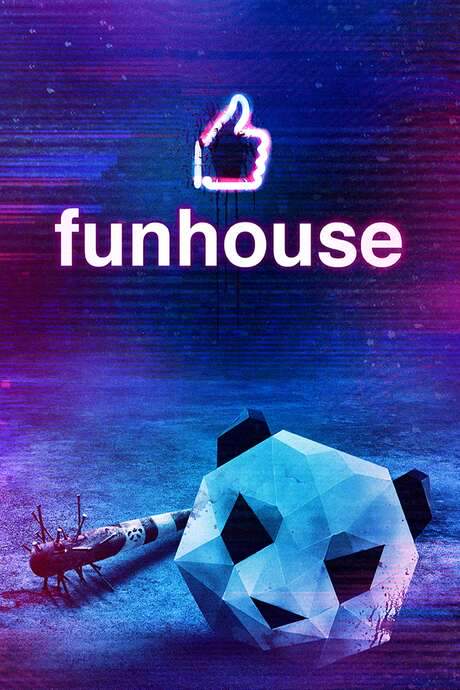
Stina, Karin Brauns, is a down-on-her-luck single mother who stands on the edge of survival. With bills piling up and a child to feed, she teeters toward desperate choices, until a mysterious invitation promises salvation: one million dollars and a lead role in a horror film if she can endure a simple, terrifying challenge—survive being hunted by a masked killer in a remote forest. The lure is undeniable, and her circumstances push her toward a decision that could change everything, even as the shadows of doubt creep in around the edges of this slick setup.
She isn’t alone in this perilous game. Among the other contestants is Magnus, a Colin Bryant, a former soldier who joins the hunt after agreeing to serve as a bodyguard for a participant who drops out. He hopes the prize will secure a steadier future for his own son, and accepts the offer without realizing the real danger that awaits. The cast of hopefuls is flown to a secluded woodland cabin, a place rigged with hidden cameras and an unsettling, oppressive quiet that seems to swallow every sound. What begins as a manufactured reality show quickly reveals itself as something far more sinister, as the backdrop is manipulated by a shadowy presence orchestrating every moment for voyeuristic amusement.
From a hidden surveillance bunker, Richard Tyson embodies The Watcher, a chilling figure who oversees the carnage for his own morbid entertainment. The show is revealed to be a front for a live-streamed slaughter, with no crew, no producers, and no rules—only the next kill in a deadly sequence. The danger arrives in the form of Prisoner AYO-886, a towering masked brute whose appearance signals nothing but doom. The killings begin with swift brutality: Rodrigo, portrayed by Andrew Espinoza Long, wanders too far from the cabin and is crushed by a hammer, the blow reverberating through the trees like a harsh metronome of doom.
Nico, played by Elonda Seawood, suffers a far more cruel fate. She is captured, bound to a tree, and subjected to a grotesque mutilation that distorts her face and body into a haunting, unsettling mockery of life. It’s an image that lingers long after the credits roll, a stark reminder of the stakes at hand. The horror escalates as another unnamed woman becomes a brutal example—a slow, deliberate removal with a rusted hacksaw, followed by a merciless sledgehammer blow that ends her life in a spray of blood and fear. The sequence is depicted with unflinching detail, underscoring the relentless horror that defines this deadly game.
As the body count rises, Stina and Magnus become acutely aware that escape is possible only through vigilance and courage. They move to break free, trying to outrun the inexorable stalker, who moves through the woods with ghostlike precision. The tension peaks in a desperate, confrontation-filled chase as Magnus faces The Watcher’s orchestrated nightmare head-on in a final, visceral struggle. The film withholds the outcome—there is no clean resolution—and the screen fades to black, leaving both the characters and the audience suspended in a brutal, unresolved ambiguity about who survives, who pays, and what comes next.
Meanwhile, The Watcher remains in his bunker, an expressionless observer who catalogs the carnage with cold detachment. With one hunt concluded, he quietly begins preparations for the next, ensuring that the cycle of spectacle and slaughter will continue. The tension between performance and perfect cruelty, between survival and surrender, lingers as the forest absorbs the echoes of the night’s events and the audience is left to ponder what lies beyond the next broadcast.
- The premise centers on vulnerable, real-world stakes—a mother fighting against crushing debt, a man seeking stability for his son—set against a backdrop of calculated, virtual spectatorship.
- The nightmare unfolds in a remote setting where the absence of a traditional crew intensifies the isolation and fear.
- The Watcher’s cold, methodical control frames the entire ordeal, turning a supposed game into a cruel menagerie.
- The violence is depicted as relentless and uncompromising, underscoring the chilling premise without offering simple comfort or clear moral outcomes.
- The ending purposefully defers resolution, inviting viewers to confront the ethics of entertainment and the price of survival in a world where every move is being watched.