Plot Explained Spoilers guaranteed!
Plot Explained

Browse by genre

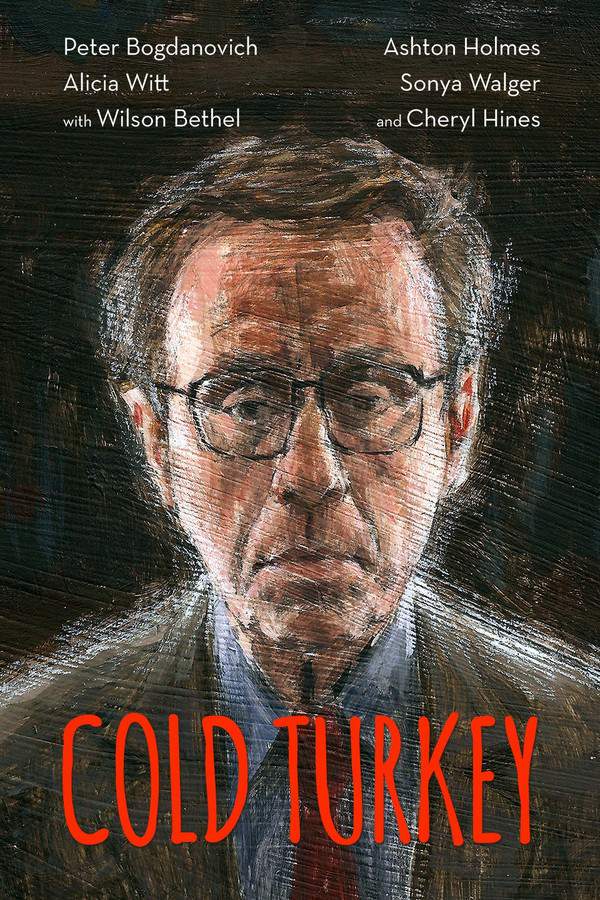
Cold Turkey (1971) movie poster

Plot Summary

Cold Turkey (1971) Plot Summary Explained

Release, runtime and language
1971 · 99 mins · English
Starring
Barnard Hughes, Dick Van Dyke, Woodrow Parfrey, Richard Nixon, Edward Everett Horton, Vincent Gardenia

Reverend Brooks rallies his tiny Iowa community to quit smoking for a full month, entering a national “Cold Turkey” contest. As they struggle, scheming tobacco executives deploy every trick to tempt them back into nicotine. The townsfolk must resist cravings and keep their tempers in check to claim the sizable prize.

On this page (5)
  1. 1 What happens: full plot
  2. 2 Plot questions answered
  3. 3 Movie threads
  4. 4 Movies like Cold Turkey
  5. 5 Every angle

Full plot summary · contains spoilers

What Happens in Cold Turkey: Full Plot Summary

The whole story of Cold Turkey (1971) explained, from the opening scene to the final frame: every key event, every twist and what it all adds up to. Read it as a quick recap before the sequel, to check a scene you missed, or to finally understand what really happened.

In this sharp, tongue-in-cheek drama about public image and moral high ground, a suave advertising executive sets a flamboyant game plan that could redefine corporate philanthropy and public health. Merwin Wren, Bob Newhart, pitches a bold wager for Valiant Tobacco: offer a tax-free check for $25,000,000 (about $214.4 million today) to any American town that can quit smoking for thirty days. The catch is simple and daunting—the town must demonstrate a complete, cold-turkey commitment to staying smoke-free, turning a private vice into a nationwide spectacle. The stunt is framed as a humanitarian gesture, a dramatic contrast to the grim realities of Big Tobacco, but the clock starts ticking with the world watching.

Into this setup steps Reverend Clayton Brooks, Dick Van Dyke a warm, principled yet formidable pastor who views the challenge as a spiritual test as much as a public relations stunt. He hails from Eagle Rock, Iowa, a community struggling under economic strain after a base closure sent jobs fleeing and families packing. Brooks rallies the town to seize the prize, urging every smoker to sign up and showing a rare blend of moral conviction and practical leadership. To him, the mission becomes a chance to prove communal resilience and redeem a town’s fortunes through a collective rite of restraint.

To underscore his solidarity with his flock, Brooks even resumes smoking himself, a symbolic act that serves as a bridge between his pulpit and the smoky reality his people face. He mobilizes volunteers, including the elderly, the anxious, and the hopeful, to pledge abstinence. One of his reluctant recruits is Edgar Stopworth, a man struggling with alcoholism who confesses that his drinking fuels his smoking. In a moment of candor, Edgar tells the Reverend, “My drinking is directly connected to my smoking. The booze bone's connected to the smoke bone.” The Reverend, filled with mixed resolve, decides to give Edgar a thirty-day away-from-town retreat to preserve the town’s chances.

As midnight marks the start of the thirty-day clock, Eagle Rock becomes the stage for a nationwide experiment. The town proudly claims every smoker has signed the pledge, a feat that would set it apart from every other community. The parish priest’s own cravings intensify, and he seeks solace in the familiar—though his personal life keeps him busy, his public purpose remains unwavering. The town’s center, once vibrant, grows quieter, and Brooks’s personal life—his relationship with his wife, Natalie Brooks—adds a human cadence to the campaign.

The situation grows more complicated as the media descend. National reporters, talk shows, and magazine profiles transform Eagle Rock into a symbol of whether a community can resist an addictive habit under the gaze of the nation. Brooks’s rising fame—he even appears on the cover of Time—boosts the town’s profile and complicates his own sense of mission: if he succeeds, he could become a national hero; if he fails, the prize slips away and the town faces further hardship.

Amid the organized effort, a dedicated faction within Eagle Rock—29 members of the Christopher Mott Society—takes it upon themselves to police every entrance and exit for any tobacco product, determined to safeguard the pledge at all costs. Yet the public scrutiny and the influx of countermeasures—massage parlors, beer vendors, souvenir shops—test the town’s resolve and transform the quiet Iowa streets into a theater of public opinion. The town’s attempt to preserve moral order even extends to Brooks’s personal life, as he searches for balance between leadership and ordinary human needs.

Valiant’s board, impatient for results, orders Merwin to undermine the town’s plan by any means necessary. The clock races toward midnight, and the company’s scheme is set to hinge on a single broken link: one smoker must relapse. The tension peaks as the planners deploy a battery of manipulations to trigger a relapse, from high-tech distractions to last-minute social pressure.

With moments to spare, chaos erupts. A dramatic, almost farcical sequence unfolds as the plan spirals into violence and misfortune. Dr. Proctor, a respected physician who has gritted to resist the pledge even under pressure, fights the urge to smoke with all his remaining will. The climactic gathering turns perilous as a cigarette lighter shaped like a gun and a gun-shaped misadventure collide in a fateful scramble. In the ensuing confusion, Dr. Proctor is shot, Merwin Wren is struck by a gun, and Reverend Brooks, attempting to intervene, is fatally wounded. An elderly woman, Odie Turman, who has long guarded the crowd with a conservative vigilance, intervenes, and tragedy compounds as she fires, taking the Reverend’s life.

The town’s perseverance, however, prevails. Eagle Rock succeeds in staying smoke-free for thirty days, securing the promised prize. In a public-relations turn that mirrors the very spectacle that began the whole affair, the president appears in a motorcade to declare Eagle Rock the home of a new missile plant. The final image is stark and unsettling: the plant’s smokestacks spew thick, black smoke into the air, a grim reminder that progress in one form can bring new shadows in another.

In this blend of satire, public spectacle, and human drama, the film probes the uneasy alliance between empathy and publicity, the costs of moral posturing, and the way communities rally—and fracture—under pressure. The story unfolds with a dark humor that never loses sight of its core humanity, leaving viewers to weigh the price of collective virtue against the pull of sensationalism.

Last updated: October 09, 2025 at 09:32

Was this helpful?

Plot questions answered

Cold Turkey Plot Explained: Your Questions Answered

The questions people ask most about Cold Turkey (1971): what happens in the confusing scenes, why the characters do what they do, the twists, hidden details and what the ending means. Each answer contains spoilers.

Q1

Why did Reverend Brooks start smoking again?

Reverend Brooks resumed smoking to show solidarity with his congregation. As a spiritual leader, he wanted to demonstrate that he was participating in the same struggle as his flock, rather than preaching abstinence from a distance. This symbolic act was meant to strengthen his credibility and moral authority as he rallied the town to quit smoking for thirty days.

Foreshadowing: Earlier, Brooks frames the challenge as both a spiritual test and a practical opportunity for the town's economic revival.

  • reverend brooks
  • solidarity
  • smoking
  • campaign
  • leader
Q2

Why was Edgar Stopworth sent away from Eagle Rock?

Edgar Stopworth was a struggling alcoholic who revealed that his drinking and smoking were directly connected, he claimed 'the booze bone's connected to the smoke bone.' Since Brooks needed every smoker to stay smoke-free for the town to win, removing Edgar for thirty days prevented a likely relapse that could disqualify Eagle Rock from the contest.

Foreshadowing: Edgar's confession about the link between his drinking and smoking foreshadows the complexity of addiction the town would face.

  • edgar stopworth
  • alcoholism
  • relapse
  • removed from town
Q3

How did Valiant Tobacco try to sabotage Eagle Rock's effort?

Valiant's board ordered Merwin Wren to undermine the town by any means necessary, knowing they only needed one person to relapse. They deployed various tactics including setting up distractions like massage parlors and beer vendors, deploying helicopters to drop cigarettes at the last moment, and creating general chaos to trigger a smoking incident before the deadline.

Foreshadowing: The company's initial publicity stunt was framed as humanitarian, but their true intent to prevent any town from winning was established early.

  • valiant tobacco
  • merwin wren
  • sabotage
  • conspiracy
  • cigarettes
Q4

What caused the shooting deaths at the end of the movie?

As midnight approached, Merwin orchestrated a desperate final scheme involving helicopters dropping cigarettes and a crowd swarming the town. During the chaotic scramble, a cigarette lighter shaped like a gun was mistaken for an actual weapon. In the ensuing confusion, Dr. Proctor was shot, Merwin was struck by a gun, and Reverend Brooks was fatally wounded when elderly Odie Turman fired in panic, taking the Reverend's life.

Foreshadowing: The timeline builds tension toward a climactic 'clock moment' where violence erupts from the escalating stakes.

  • shooting
  • Reverend Brooks
  • Dr. Proctor
  • Merwin Wren
  • Odie Turman
  • climax
Q5

Why did Reverend Brooks die in the final scene?

Reverend Brooks was killed during the chaotic climax when Odie Turman, an elderly woman who had been guarding the crowd, fired a gun in panic during the scramble over a gun-shaped cigarette lighter. Brooks was attempting to intervene in the violence when he was struck and fatally wounded. Despite his death, the town successfully completed the thirty-day challenge and won the prize.

Foreshadowing: The buildup toward midnight creates escalating tension that culminates in violent, unintended consequences.

  • Reverend Brooks
  • death
  • Odie Turman
  • fatal shooting
  • climax
Q6

What was the significance of the missile plant at the end?

After Eagle Rock wins the prize, the president arrives to announce a new missile plant for the town. This ironic twist serves as the film's dark commentary, the town's victory over tobacco is overshadowed by the arrival of new industrial smokestacks, literally replacing one form of smoke with another. The ending suggests that progress and moral victories often come with new costs and environmental consequences.

Foreshadowing: The town's economic struggles after the base closure set up their desperate need for industrial investment.

  • missile plant
  • ending
  • irony
  • pollution
  • smokestacks
  • president
Q7

Why did Eagle Rock agree to the smoking challenge?

Eagle Rock was struggling economically after a military base closure sent jobs and families fleeing. Reverend Brooks viewed the $25 million prize as a spiritual test and an opportunity to redeem the town's fortunes through collective action. The challenge promised both financial relief and a chance to prove communal resilience against addiction.

Foreshadowing: The economic desperation of the town was established early as the primary motivation for accepting the risky challenge.

  • Eagle Rock
  • challenge
  • economic struggle
  • Reverend Brooks
  • base closure
Q8

What was the Christopher Mott Society's role in the town?

The Christopher Mott Society, consisting of 29 ultra-conservative members, took it upon themselves to police every entrance and exit to Eagle Rock. They searched vehicles and monitored anyone entering town to prevent any tobacco products from being smuggled in. Their vigilant enforcement symbolized the community-wide commitment to keeping the town smoke-free and represented the town's attempt to preserve moral order during the challenge.

Foreshadowing: The society's conservative vigilance was established as part of the town's organized resistance to temptation.

  • Christopher Mott Society
  • patrols
  • tobacco
  • enforcement
  • vigilant
Q9

Why did Reverend Brooks want to become a national hero?

After appearing on the cover of Time magazine, Brooks realized that successfully saving the town could transform him into a national hero. The publicity turned the challenge from a public duty into an opportunity for personal legacy. This realization shifted his motivation, adding a layer of personal ambition to his originally selfless mission of helping the town.

Foreshadowing: The Time magazine cover marked the turning point where Brooks's public purpose became intertwined with personal glory.

  • Reverend Brooks
  • Time magazine
  • hero
  • publicity
  • fame
Q10

What was the connection between Edgar Stopworth's drinking and smoking?

Edgar Stopworth explicitly stated that his drinking and smoking were directly interconnected, saying 'The booze bone's connected to the smoke bone.' This made his addiction particularly difficult to overcome, as quitting smoking would likely trigger increased drinking and vice versa. This complexity is what prompted Reverend Brooks to remove him from town for the thirty-day period.

Foreshadowing: Edgar's candid confession reveals the intertwined nature of multiple addictions facing the town.

  • Edgar Stopworth
  • drinking
  • smoking
  • addiction
  • connection

Movie threads

More Movies Like Cold Turkey, by Mood & Story

Curated lists built around what makes Cold Turkey tick: the same mood, the same kind of story or the same emotional payoff. Each list explains why these movies belong together.

Dark Satires of Small-Town Morality like Cold Turkey

Where community ideals are ruthlessly tested by greed and hypocrisy. If you liked the cynical humor and moral collapse in Cold Turkey, explore other movies like it that satirize small-town America. These films feature communities under pressure, clashes with corporate greed, and a darkly humorous look at the cost of integrity.

  • satirical
  • darkly humorous
  • unsettling
  • farcical
  • gritty
  • anxious
  • Tone: dark, cynical, satirical
  • Pacing: steady, methodical
Why these movies?

The story pattern: These narratives typically follow a group or community that embarks on a high-stakes venture based on a moral principle. The story unfolds as external pressures and internal flaws test their resolve, revealing hypocrisy and leading to a victory that feels hollow or a failure that exposes deeper truths.

Why they belong together: They share a distinct tone that blends cynical humor with serious themes, a steady pacing that builds tension through social pressure rather than action, and a focus on the collective rather than an individual hero. The experience is defined by its satirical bite and bittersweet resolution.

Movies about Fighting Corporate Greed like Cold Turkey

Ordinary people fight a manipulative system, often at a great cost. Find more movies like Cold Turkey where ordinary people stand up to powerful corporations. These stories explore themes of manipulation, addiction, and public spectacle, often featuring a steady build of tension and a morally complex, bittersweet conclusion.

  • anxious
  • gritty
  • unsettling
  • satirical
  • tense
  • determined
  • Tone: anxious, gritty, darkly humorous
  • Pacing: steady, escalating pressure
Why these movies?

The story pattern: The pattern involves a seemingly simple challenge or contest set up by a cynical corporation, which a naive group accepts. The corporation then employs increasingly underhanded tactics to ensure failure, forcing the protagonists to rely on sheer willpower and unity, with the outcome casting a dark shadow on the nature of such battles.

Why they belong together: They are united by a central thematic conflict, a specific antagonistic force (the corporation), and a shared mood of anxious resistance against overwhelming odds. The pacing is typically steady, building pressure as the corporate tricks escalate, leading to an ending that questions the true cost of winning.

If you liked this

Movies Like Cold Turkey

Similar movies to Cold Turkey: the same genre, themes or kind of story. Each one comes with its own plot summary, timeline and ending explained.

Browse all movie summaries

Every angle

Cold Turkey (1971) Explained: Plot, Timeline & Characters

Everything about Cold Turkey in one place: what happens in the plot summary, the timeline in chronological order, the characters and meaning and a spoiler-free summary. What's After the Movie adds the cast, box office and post-credit scenes.

Coming soon on iOS and Android

The Plot Explained Movie Summary App

Plot summaries, endings explained and timelines on your phone. Catch up on any movie in minutes, save your favorites and never miss a twist again.

Be the first to know when we launch. Your email stays private, always.

Learn more about the app