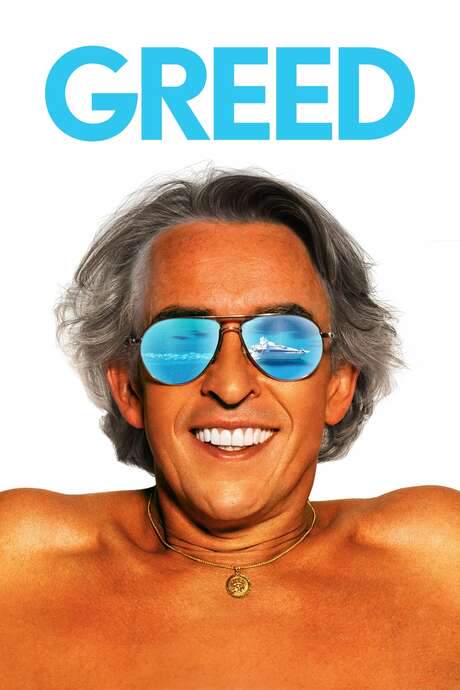
The film unfolds in a non-linear arc that traces the life of Sir Richard “Greedy” McCreadie, Steve Coogan, a billionaire fashion mogul whose dazzling public image hides a deep history of exploitation and financial ruthlessness. After a bruising government inquiry into greed and ethics in the industry, he retreats into publishing his memoirs, hiring Nick, a mild-mannered journalist, David Mitchell, to ghostwrite the story for him. As Nick digs into McCreadie’s past, the narrative flips between the glossy present and the rugged, often troubling rise that built his empire, revealing a pattern of sweatshops in Southeast Asia, aggressive tax maneuvers, and asset stripping that financed his success.
Nick’s investigation becomes a tour through memory, and the film offers a vivid look at the man behind the brand. A younger Richard McCreadie, a rebellious student at an unnamed British public school, is introduced by the actor Jamie Blackley as the youthful version of the tycoon, hinting at the foundations of the ruthless ambition that would define his adult life. The flashbacks chart his ascent through the 1970s and 1980s, when he crafts a high-street fashion empire built on aggressive expansion, savvy PR, and a willingness to bend rules when it serves profit. The story makes no attempt to flatter the figure at its center; instead, it peers into the mechanisms of power that sustain him, from peripheral loyalties to calculated public appearances, showing how wealth can grow through methods that are ethically questionable even if legally permissible.
In the present, the centerpiece of the narrative sits on McCreadie’s planned 60th birthday party—a Gladiator-themed spectacle on the island of Mykonos meant to be a triumphant moment of celebration and control. The project rapidly exposes cracks: the makeshift arena built with lax local labor, a tiger‑like sense of entitlement on display, and a crowd of celebrity guests who increasingly distance themselves from the man who has toppled many reputations. The beach nearby is crowded by a camp of Syrian refugees who refuse to leave, adding a stark counterpoint to the party’s opulence. McCreadie’s family complicates the picture too: Samantha McCreadie, Isla Fisher his ex-wife, lingers as a complicated figure of attraction and leverage; Naomi, his much younger wife, embodies the personal costs of his public life; Lily McCreadie, Sophie Cookson, and her boyfriend Fabian, Ollie Locke, film a reality‑TV show as the party unfolds; and Finn McCreadie, Asa Butterfield, his son, carries a troubling Oedipal tension and a penchant for taking dangerous risks.
Behind the glitter, Nick finds his moral compass tested as he grows closer to Amanda, Dinita Gohil, one of McCreadie’s personal assistants who embodies the human cost of the empire. Amanda’s revelations about the human price of McCreadie’s success—her own mother’s death after being forced to work in a sweatshop, and later a fire with tragic consequences—force Nick to confront the ethical weight of the portrait he’s being asked to paint. The bond between Nick and Amanda becomes a quiet counterpoint to the public spectacle, a grounded thread that keeps the film from tipping entirely into satire.
Tensions come to a head on the night of the party. McCreadie attempts to squeeze one more advantage from the event, enlisting the labor of refugees in a three-card monte scam as his own employees down tools in protest. The party’s drama escalates as Lily and Fabian navigate the reality-show angle, while Finn pilfers cocaine from Naomi and taints the arena’s atmosphere with reckless bravado. In a moment of impulsive cruelty, McCreadie stumbles into the arena and meets the lion in its cage. Amanda, driven by a mixture of anger, desperation, and a sense of justice, releases the beast, and the animal turns on McCreadie, mauling him in a drug‑fueled frenzy. Nick witnesses the brutal moment, and with Amanda’s quiet resolve, helps her slip away without detection.
McCreadie’s death triggers a swift, uneasy shift in the family’s dynamic. The public’s memory rewrites him into a legend, and Nick’s memoir begins to tilt toward a hagiography, even as the real costs of his wealth remain undeniable. Finn steps into his father’s shoes to run the business, a future that promises further duplicity rather than reform. Amanda and Nick agree to keep her role in the night’s events secret, a choice that mirrors the grim logic of the machinery that produced McCreadie’s fortune. Amanda retreats to a Leicester sweatshop, returning to the cycle of labor that the film has laid bare as the true backbone of the empire.
As the credits roll, the film shifts from narrative drama to a stark, documentary-like cadence, presenting facts about exploitation and inequality within the fashion industry. The closing minutes underscore a bitter truth: profits may glitter, but the cost is paid by workers who remain unseen and unprotected. The movie’s ambitious structure and its intertwining of personal betrayal, public spectacle, and systemic abuse invite viewers to reflect on what counts as success in a world where glamour often masks a harder, less forgiving reality.