The Boss of It All

The Boss of It All

JustWatch#13,18119

Year: 2007

Runtime: 99 min

Language: danish

Comedy

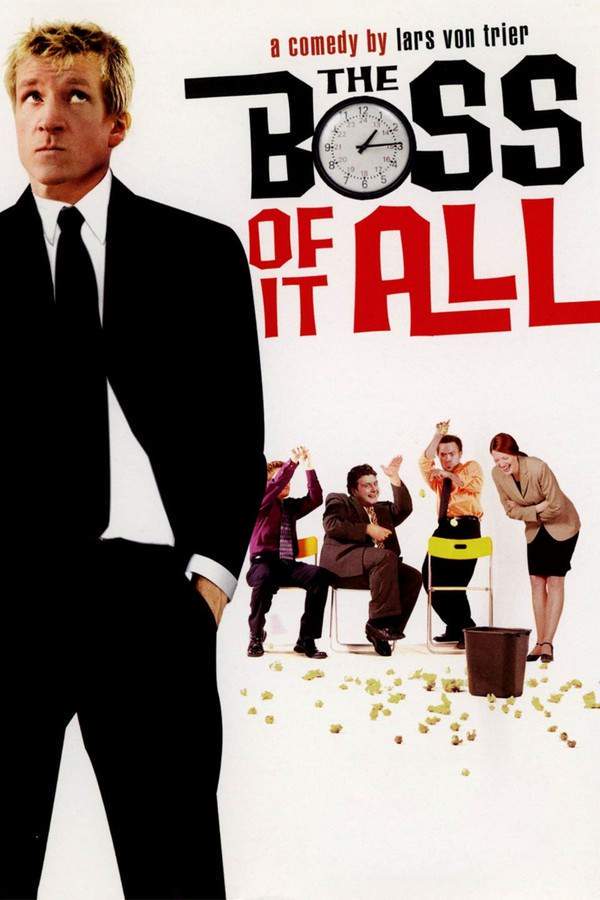
A tech mogul planning to sell his company encounters a surprising problem: the invented CEO persona he created has gained a separate existence. Desperate to finalize the sale, he enlists a struggling actor to portray the boss. This decision unexpectedly throws the actor into a complicated situation, blurring the lines between performance and reality, and leading to humorous consequences for everyone involved.

Where to Watch The Boss of It All?

Find where to stream, rent, or buy The Boss of It All (2007) in the US with current JustWatch availability, up-to-date pricing, and platform listings for subscription, rental, and digital purchase options.

Streaming availability powered by JustWatch

Warning: spoilers below!

Haven’t seen The Boss of It All yet? This summary contains major spoilers. Bookmark the page, watch the movie, and come back for the full breakdown. If you're ready, scroll on and relive the story!

The Boss of It All (2007) – Full Plot Summary & Ending Explained

Read the complete plot breakdown of The Boss of It All (2007), including all key story events, major twists, and the ending explained in detail. Discover what really happened, and what it all means.

The film kicks off with a unique introduction featuring Lars von Trier, whose presence is only felt through a reflection in a camera crane positioned in front of a building. He directly acknowledges the audience, humorously stating that this film is not to be taken with any seriousness. At the heart of the narrative is Ravn, an IT company owner in a bit of a pickle, who resorts to hiring an unemployed actor, Kristoffer, driven by a peculiar obsession with Pier Antonio Quarantotti Gambini. Ravn’s intention is to have Kristoffer impersonate him during a pivotal meeting aimed at selling the company to a rival Icelandic firm.

However, the meeting spirals into chaos when the irate Icelandic representative unleashes his frustration about what he perceives as excessive sentimentality and verbosity from the Danes. In the aftermath, Ravn reveals to Kristoffer that he is, in fact, the actual boss, but had been too anxious to step into the role himself. For the past decade, he had crafted a fictitious narrative to the employees, claiming that the true owner of the company resided in America, only communicating through email, blaming the faceless “boss of it all” for any troubles that arose.

Intrigued by this new position, Kristoffer takes on the role, immersing himself with the staff over the subsequent days as they prepare for the next meeting concerning the sale of the company. This leads to a series of comedic moments, particularly as Kristoffer grapples with misunderstandings. One notable incident arises when he attempts to respond to a vague query from an employee, unaware that he previously sent an email proposing marriage. The laughter escalates as Kristoffer frequently seeks Ravn’s guidance in public spaces, trying to navigate the murky waters of corporate interactions and his newfound authority.

As the plot unfolds, Kristoffer learns a startling secret from Lise, one of the original six staff members. Each of them had invested $15,000 in Ravn’s business endeavors, under the belief that they hold a stake in the company. Yet, unbeknownst to them, Ravn is planning to sell the company and dismiss all of them, pocketing the profits for himself. Disturbed by this revelation, Kristoffer feels compelled to change the course of events and persuades Ravn to come clean to the staff about their current situation. However, when Ravn attempts to pass the blame onto the “boss,” the deception continues.

At a subsequent meeting with the Icelandic company’s president, Kristoffer boldly negotiates an additional $50 million on top of the initial offer of $254 million, which leads to another tumultuous fallout as the president storms out in anger. In a climactic final meeting where the six original staff members are present, Ravn gathers his courage and admits the truth about being the boss. Surprisingly, the staff responds with unexpected equanimity and instead choose to retain the company rather than going through with the sale. Yet, Kristoffer still possesses the legal rights as the owner, leaving him at a moral crossroads as he weighs his options.

Ultimately, despite his better judgment, when the Icelandic boss mentions Gambini, Kristoffer finds himself swept away by the admiration and unexpectedly agrees to sign the deal. The film concludes with a poignant scene of everyone vacating the premises while Kristoffer channels his inner Gambini, performing a passionate monologue directed at the astounded Icelandic boss. With laughter, deception, and unexpected twists, this film delivers a rich tapestry of corporate intrigue wrapped in comedic absurdity.
Last updated: February 04, 2025 at 09:32

Was this helpful?

The Boss of It All (2007) Plot Questions Answered – Summary FAQ

Explore frequently asked questions about The Boss of It All (2007) with spoiler-rich answers covering the full plot summary, major story beats, character motivations, hidden details, and ending meaning. This movie summary FAQ helps explain confusing scenes, plot twists, and narrative decisions in clear, searchable detail.

Q1

Why does Ravn hire an actor to pretend to be the company CEO?

A.

Ravn invented a fictional CEO named Gambini living in America ten years earlier to avoid taking responsibility for any problems at his company. When he needed to sell the company to the Icelandic firm, he realized he couldn't face the buyers himself after lying about Gambini's existence for so long. Desperate to finalize the sale, he hired unemployed actor Kristoffer to impersonate him, believing an actor could handle the role convincingly.

ravnactorceoimpersonationgambinideception
Q2

What was the $15,000 investment the staff made?

A.

Each of the six original staff members invested $15,000 when Ravn was starting the company. They believed this money bought them an ownership stake in the business. In reality, Ravn kept the money as personal investment and never gave them any actual equity. When he planned to sell the company, he intended to fire all six staff members and keep the entire profit for himself without their knowledge.

staffinvestmentfifteen thousandownershipravndeception
Q3

Why does Kristoffer decide to sell the company at the end?

A.

Despite initially planning to expose Ravn's deception and potentially keep the company himself, Kristoffer impulsively agrees to sell after hearing the Icelandic CEO mention Gambini's name. The reference to this fictional figure that Kristoffer had been impersonating triggers something in him, and he chooses to finalize the deal rather than fight for control of the company.

kristoffersellcompanygambinidecisionimpulse
Q4

Who is Pier Antonio Quarantotti Gambini and why does Kristoffer impersonate him?

A.

Gambini is the fictional CEO that Ravn invented, a name he created while obsessing over a self-help book by Pier Antonio Quarantotti Gambini. When Kristoffer is hired, Ravn tells him to pretend to be this fictional CEO during meetings to sell the company. Kristoffer adopts the persona completely, even delivering a dramatic monologue in Gambini's style at the film's conclusion.

Ravn's obsession with the self-help book is mentioned early in the film.

gambinipier antonio quarantottifictional ceoimpersonationravn
Q5

Why does the Icelandic company representative get so angry?

A.

During the first meeting, the Icelandic representative explodes with rage, accusing the Danes of being overly sentimental and verbose. He finds the corporate approach and emotional language from the Danish side off-putting, causing him to storm out and derail the entire sale negotiation. This tantrum leads Ravn to realize he cannot face the buyers himself, prompting the plan to hire Kristoffer.

icelandicmeetingangernegotiationdanishsentimental
Q6

How does Kristoffer find out about Ravn's deception?

A.

Lise, one of the original six staff members, reveals to Kristoffer that everyone invested $15,000 with the understanding they owned part of the company. When Kristoffer discovers Ravn plans to sell the company and fire the staff while keeping all profits, he realizes the full extent of Ravn's deception and confronts him about the ethical breach.

Kristoffer gradually becomes confused by company matters he doesn't understand as the real owner.

kristofferliserevelationdeceptionstaffinvestment
Q7

Why do the staff accept Ravn's confession so easily?

A.

When Ravn finally admits he is the actual boss and has been lying for ten years, the staff surprisingly responds with equanimity rather than anger. This likely reflects the film's absurdist tone, they may have suspected something was wrong all along, or the revelation simply comes as no surprise given the bizarre circumstances. Either way, they choose to keep the company rather than proceed with the sale.

staffravnconfessionacceptancecompanysale
Q8

Why does Kristoffer perform the Gambini monologue at the end?

A.

In the final scene, as the staff packs up the office, Kristoffer delivers a passionate, theatrical monologue while channeling the Gambini persona for the Icelandic boss. This represents the culmination of his immersion in the role, having spent the film pretending to be this fictional character, he embraces the performance one last time as a whimsical farewell to the entire absurd situation.

Kristoffer repeatedly adopts the Gambini persona throughout the film when interacting with staff.

kristoffergambinimonologuefinaleperformanceicelandic boss
Q9

What was the marriage proposal email Kristoffer sent accidentally?

A.

Earlier in the film, Kristoffer had sent a vague email to the staff that he thought was simply answering a question. In reality, due to his misunderstanding of company matters, the email was interpreted as a marriage proposal to one of the employees. This creates a humorous situation where Kristoffer must navigate the confusion without knowing what he actually wrote.

kristofferemailmarriage proposalmisunderstandingcomedy
Mobile App Preview

Coming soon on iOS and Android

The Plot Explained Mobile App

From blockbusters to hidden gems - dive into movie stories anytime, anywhere. Save your favorites, discover plots faster, and never miss a twist again.

Sign up to be the first to know when we launch. Your email stays private, always.

Explore Movie Threads

Discover curated groups of movies connected by mood, themes, and story style. Browse collections built around emotion, atmosphere, and narrative focus to easily find films that match what you feel like watching right now.

Absurd Workplace Comedies like The Boss of It All

Funny tales where elaborate corporate lies spiral into comedic chaos.If you enjoyed the farcical corporate deception in The Boss of It All, you'll appreciate these other movies that find humor in elaborate workplace ruses and the chaos they create. These films share a similar whimsical, satirical tone and a lighthearted take on the absurdities of professional life.

satiricalabsurdfarcemisunderstandingsworkplace humorlightheartedplayful

Narrative Summary

The narrative typically involves a protagonist inventing a persona, situation, or company to solve a problem, leading to a snowballing series of lies. As more people become involved, the deception becomes increasingly difficult to maintain, resulting in a cascade of humorous misunderstandings and near-misses that test the characters' improvisational skills.

Why These Movies?

These films are grouped by their shared premise of a high-stakes (but comedic) lie within a professional context, their whimsical tone that treats the ensuing chaos as farce rather than drama, and their steady pacing that builds humor through accumulating complications.

Movies about Performance and Identity like The Boss of It All

Stories where actors or impostors find their role consuming their real life.Fans of The Boss of It All who enjoyed its meta-fictional exploration of an actor becoming his role will find similar themes in these selections. These movies delve into the comedy and complexity that arises when a performed identity starts to feel real, blending humor with questions about authenticity.

meta-fictionalquirkyidentity crisisactinghumorousplayfulabsurd

Narrative Summary

The central journey involves a character embracing a fictional persona, initially for pragmatic or artistic reasons. As they immerse themselves in the role, the boundaries between their performance and their genuine identity become blurred. This creates internal conflict and external comedy, often questioning what constitutes 'real' personality versus acting.

Why These Movies?

These films are united by their thematic focus on identity, performance, and the absurd situations that arise when the two collide. They share a playful, often meta-fictional tone, a moderate narrative complexity stemming from the dual identities, and a light emotional weight that keeps the exploration humorous rather than deeply psychological.

Unlock the Full Story of The Boss of It All

Don't stop at just watching - explore The Boss of It All in full detail. From the complete plot summary and scene-by-scene timeline to character breakdowns, thematic analysis, and a deep dive into the ending - every page helps you truly understand what The Boss of It All is all about. Plus, discover what's next after the movie.

The Boss of It All Timeline

Track the full timeline of The Boss of It All with every major event arranged chronologically. Perfect for decoding non-linear storytelling, flashbacks, or parallel narratives with a clear scene-by-scene breakdown.

The Boss of It All Timeline

Characters, Settings & Themes in The Boss of It All

Discover the characters, locations, and core themes that shape The Boss of It All. Get insights into symbolic elements, setting significance, and deeper narrative meaning - ideal for thematic analysis and movie breakdowns.

Characters, Settings & Themes in The Boss of It All

The Boss of It All Spoiler-Free Summary

Get a quick, spoiler-free overview of The Boss of It All that covers the main plot points and key details without revealing any major twists or spoilers. Perfect for those who want to know what to expect before diving in.

The Boss of It All Spoiler-Free Summary

More About The Boss of It All

Visit What's After the Movie to explore more about The Boss of It All: box office results, cast and crew info, production details, post-credit scenes, and external links - all in one place for movie fans and researchers.

More About The Boss of It All