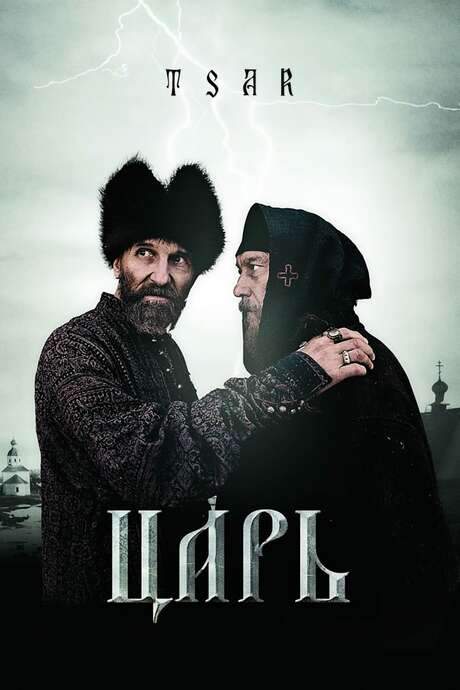
Year: 1939
Runtime: 110 mins
Language: Russian
Director: Vsevolod Pudovkin
Set against the turmoil of early‑17th‑century Muscovy, the film dramatizes the Polish occupation of Moscow in 1610‑11 and the birth of the citizen militia organized by merchant Kuzma Minin and Prince Dmitry Pozharsky. As the Kremlin falls to deceitful Polish forces, scattered peasant uprisings are brutally crushed, yet the determined leaders rally the people to drive out the invaders and restore Russian independence.
Warning: spoilers below!
Haven’t seen Minin and Pozharsky yet? This summary contains major spoilers. Bookmark the page, watch the movie, and come back for the full breakdown. If you're ready, scroll on and relive the story!
Explore the full timeline and setting of Minin and Pozharsky (1939). Follow every major event in chronological order and see how the environment shapes the story, characters, and dramatic tension.
Last updated: October 04, 2025 at 16:43
Meet the key characters of Minin and Pozharsky (1939), with detailed profiles, motivations, and roles in the plot. Understand their emotional journeys and what they reveal about the film’s deeper themes.
Last updated: October 04, 2025 at 16:43
Explore the central themes of Minin and Pozharsky (1939), from psychological, social, and emotional dimensions to philosophical messages. Understand what the film is really saying beneath the surface.
Last updated: October 04, 2025 at 16:43
Browse frequently asked questions about Minin and Pozharsky (1939) focused on characters, relationships, themes, symbols, setting, and story context. This movie info FAQ gives spoiler-aware explanations for character arcs, world details, and thematic interpretation so readers can better understand what the film is really about.
The film is set in early 17th-century Russia, primarily in Moscow and its surrounding areas. Key locations include the Kremlin, rural regions near Moscow, a monastery used as a waypoint, and Nizhny Novgorod where the popular assembly forms the militia. The climactic march proceeds toward Moscow and concludes at Lobnoye Mesto, a historic public speaking place.
The movie is set during 1610–1611, a period known as the Time of Troubles in Russian history. This era was marked by foreign intervention, political chaos, and internal strife following the decline of the Rurik dynasty. The film dramatizes the Polish occupation of Moscow and the subsequent rise of citizen resistance.
The Time of Troubles was a period of Russian history from 1598 to 1613 characterized by political instability, famine, civil war, and foreign intervention. The dynasty crisis left no clear heir to the throne, leading to Polish and Swedish occupations of Moscow and other key cities. The era ended with the election of Michael Romanov and the expulsion of foreign forces.
The film explores three interconnected themes: Patriotism, showing how ordinary citizens unite against foreign occupation; Leadership, depicted through the collaboration between Minin's organizational skills and Pozharsky's military strategy; and Sacrifice, emphasizing the personal risks and costly choices required to reclaim Moscow and restore Russian independence.
Kuzma Minin is portrayed as a pragmatic merchant who becomes the catalyst for Russian resistance against the Polish occupation. He rallies the people by spearheading fundraising efforts for the militia, sustaining the movement's momentum during difficult times. His role embodies the power of ordinary citizens to effect historical change.
Prince Dmitry Pozharsky is depicted as a noble military leader who guides the volunteer militia and coordinates its defense of Moscow. Despite sustaining injuries, he directs military operations and helps transform scattered volunteers into a cohesive fighting force. His leadership represents the aristocratic contribution to the patriotic cause.
Nizhny Novgorod serves as the crucial regional center where the popular assembly gathers to form the citizen militia. This city represents the heart of grassroots resistance, where merchants, peasants, and nobles unite under Minin's organizational leadership to answer the call for liberation.
The film portrays patriotism as a unifying force that transcends social classes. Minin's fundraising and the mobilization of merchants, peasants, and nobles demonstrate how national identity can unite disparate groups against a common enemy. The story showcases collective action as the response to foreign invasion, culminating in a durable sense of national unity.
Grigori Orlov is depicted as a scheming nobleman involved in political intrigue who delivers incriminating information to the Polish garrison. He represents the theme of betrayal within the conflict, symbolizing the treacherous elements among the Russian nobility during the occupation.
Roman is a wounded peasant whom Minin shelters and who later joins the militia. He emerges as a truth-seeker within the conflict and takes decisive action against traitors. His arc represents the transformation of ordinary peasants into active participants in the national liberation effort.
Lobnoye Mesto is a historic stone platform in Red Square used for public announcements and speeches. In the film, it serves as the location for the climactic public speech following the militia's successful march on Moscow, symbolizing the victory of the people and the restoration of Russian sovereignty.
The film presents leadership as a shared, adaptive effort rather than a single heroic figure. Pozharsky provides strategic military guidance while Minin offers organizational acumen and public persuasion. Their collaboration keeps the militia cohesive amid setbacks, demonstrating that effective leadership combines different strengths working toward a common goal.
Discover curated groups of movies connected by mood, themes, and story style. Browse collections built around emotion, atmosphere, and narrative focus to easily find films that match what you feel like watching right now.
Stories of ordinary people uniting to reclaim their freedom from invaders.If you liked the patriotic fervor and strategic triumph in Minin and Pozharsky, explore other movies about resistance and liberation. These films capture the spirit of a people fighting back against occupation, featuring tense struggles, unifying leadership, and ultimately hopeful, victorious conclusions.
The narrative follows a clear arc: initial defeat and occupation, the emergence of unlikely leaders from within the oppressed populace, the arduous process of uniting a fractured people, and the final, cathartic battle for freedom. The emotional journey moves from heavy despair to determined resolve, culminating in a satisfying, hard-worn victory.
These movies are grouped by their shared focus on national or communal identity under threat, the theme of courageous leadership emerging in crisis, and a tonal balance between the grim reality of conflict and the ultimate hopefulness of collective action leading to a happy ending.
Methodically paced dramas about pivotal, emotionally charged moments in history.For viewers who appreciated the serious historical depth and steady pacing of Minin and Pozharsky, this collection features other weighty historical dramas. These movies share a high-stakes atmosphere, a focus on leadership during crisis, and a methodical build-up to a defining moment in history.
Narratives in this thread are typically linear, charting a course through a complex historical situation with clarity. They balance large-scale events with intimate personal stories, showcasing how individuals are swept up in and contribute to grand historical forces. The steady pacing builds tension methodically towards a climactic resolution that carries significant emotional and historical consequence.
These films are united by their immersive historical settings, a consistently high emotional weight, and a steady, deliberate narrative pace that prioritizes dramatic impact over speed. They offer a gripping, substantial viewing experience for those interested in history's dramatic turns.
Don't stop at just watching - explore Minin and Pozharsky in full detail. From the complete plot summary and scene-by-scene timeline to character breakdowns, thematic analysis, and a deep dive into the ending - every page helps you truly understand what Minin and Pozharsky is all about. Plus, discover what's next after the movie.
Read a complete plot summary of Minin and Pozharsky, including all key story points, character arcs, and turning points. This in-depth recap is ideal for understanding the narrative structure or reviewing what happened in the movie.
Track the full timeline of Minin and Pozharsky with every major event arranged chronologically. Perfect for decoding non-linear storytelling, flashbacks, or parallel narratives with a clear scene-by-scene breakdown.
Discover movies like Minin and Pozharsky that share similar genres, themes, and storytelling elements. Whether you’re drawn to the atmosphere, character arcs, or plot structure, these curated recommendations will help you explore more films you’ll love.
Minin and Pozharsky (1939) Plot Summary & Movie Recap
Minin and Pozharsky (1939) Scene-by-Scene Movie Timeline
Minin and Pozharsky (1939) Spoiler-Free Summary & Key Flow
Movies Like Minin and Pozharsky – Similar Titles You’ll Enjoy
Union of Salvation (2019) Full Summary & Key Details
1612: Chronicles of the Dark Time (2007) Movie Recap & Themes
Gunpowder (1985) Detailed Story Recap
Say a Word for the Poor Hussar (1980) Film Overview & Timeline
Battle for Moscow (1000) Detailed Story Recap
In the Moscow Slums (2023) Complete Plot Breakdown
Bogdan Khmelnitskiy (1941) Full Movie Breakdown
The Czarina Commands (1933) Complete Plot Breakdown
Russian Pioneers (1967) Full Movie Breakdown
Mussorgsky (1950) Plot Summary & Ending Explained
Golden Mountains (1931) Plot Summary & Ending Explained
Tsar (2009) Story Summary & Characters
Little Moscow (2008) Ending Explained & Film Insights
With Fire and Sword (1999) Plot Summary & Ending Explained
Prisoner of the Mountains (1996) Film Overview & Timeline