Plot Explained Spoilers guaranteed!
Plot Explained

Browse by genre

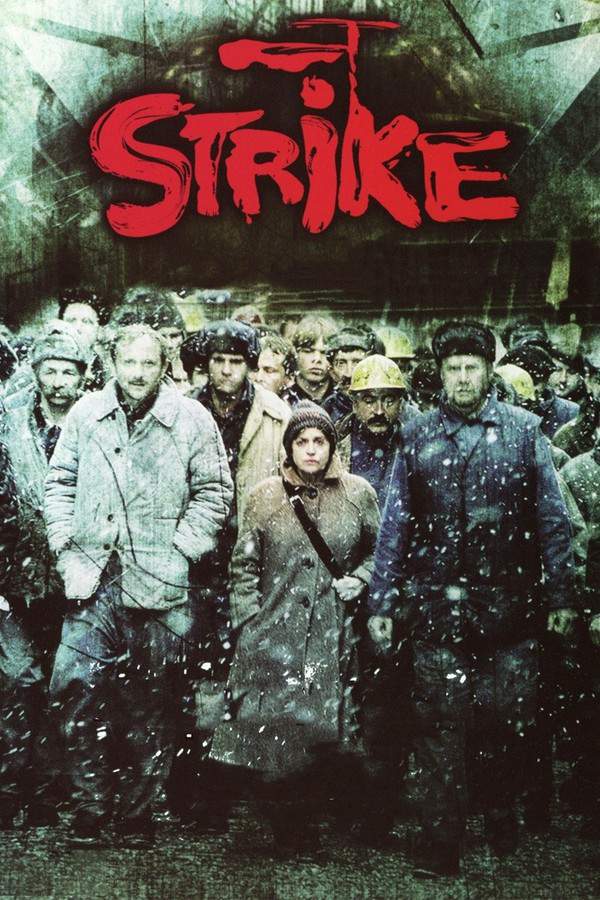
Strike (2007) movie poster

Plot Summary

Strike (2007) Plot Summary Explained

Release, runtime and language
2007 · 104 min · German
Loading streaming availability…
Directed by
Volker Schlöndorff

This drama tells the remarkable true story of a woman whose actions ignited Poland's Solidarity movement and ultimately helped to usher in democracy. The film portrays her journey of quiet determination and courage as she confronts injustice, inspiring others to join her in the fight for freedom. It's a powerful tribute to an unsung hero whose bravery changed a nation.

On this page (6)
  1. 1 Where to watch
  2. 2 What happens: full plot
  3. 3 Plot questions answered
  4. 4 Movie threads
  5. 5 Movies like Strike
  6. 6 Every angle
Loading streaming availability…

Full plot summary · contains spoilers

What Happens in Strike: Full Plot Summary

The whole story of Strike (2007) explained, from the opening scene to the final frame: every key event, every twist and what it all adds up to. Read it as a quick recap before the sequel, to check a scene you missed, or to finally understand what really happened.

In the Lenin Shipyard in Gdańsk, a diligent welder named Agnieszka Kowalska earns steady respect as she is repeatedly honored as an “activist of the Year” for being a stellar superquota worker. Marked by this tenth victory, she receives a television and offers a grateful speech about coming to the shipyard in 1950 with nothing and now having a skilled trade and a home. Yet the celebration is complicated by the whispers of her colleagues, especially the other women workers, who are not impressed by how hard she has pushed herself to meet the quotas demanded by the Party.

During a meeting of Party and union officials, Agnieszka pushes for a longer lunch break, but the officials refuse to budge, with Sobecki leading the resistance. Frustrated by the callous attitude toward grueling working conditions, she quietly organizes a simple act of solidarity—bringing soup to her exhausted coworkers so they have time to eat. When Sobecki confronts her, she does not back down and even mocks him after his threat to report her.

Determined to change her lot, Agnieszka gambles with a pay cut and swaps roles with Mateusz, a crane operator. She immerses herself in learning to read and write, and she grows close to her neighbor, Kazimierz. Her perseverance pays off when she passes the exam and becomes the first female crane operator at the yard.

Months pass, and a devastating diagnosis changes everything: kidney cancer. Grief and fear loom as she worries about her young son, Krystian. In time, Kazimierz pledges to raise Krystian as his own, and he and Agnieszka marry. On their honeymoon, tragedy strikes again when Kazimierz dies of a heart attack, leaving her a widow.

As Agnieszka navigates new pain and responsibilities, a Party official pressures her to push the workers harder to meet deadlines. She refuses, recognizing the toll of constant overtime on her colleagues. The strain culminates in a catastrophic fire caused by exhaustion, killing 21 workers, including her friend Mateusz. In the aftermath, the shipyard director withholds pensions for surviving dependents and even fabricates timecards to hide the excessive overtime. He offers Agnieszka overtime pay only if she stops speaking out about the forged records, a demand she rejects, renouncing the man she calls Bochnan.

As Krystian grows older, he shows promise with a girlfriend and plans to pursue a polytechnic, but Agnieszka’s defiance begins to affect her family’s standing. It is revealed that Sobecki is in fact Krystian’s father. In a moment of desperation, Krystian seeks a chance to prove himself and enlists, hoping to secure a path to higher education afterward.

The story moves to the turbulent strikes of 1970, when workers are crushed by violence. Agnieszka is arrested, beaten, and returns home to find her son wearing the uniform of those who had mistreated her. Krystian reveals he knows the truth about his parentage, and she recounts the arc of her relationship with Sobecki.

Fast forward to 1978, when Sobecki’s secretary invites Agnieszka to join an underground newspaper, Robotnik. The election of Pope John Paul II—a fellow Pole—becomes a turning point as Agnieszka and others begin to disseminate newsletters that reveal what is really happening in the shipyards. Officials respond by isolating her during shifts and later firing her on a charge of misplacing her late husband’s trumpet. The firing ignites a strike wave, spreading to other shipyards and to streetcar drivers who walk off the job in solidarity.

Negotiations yield limited gains for the Lenin shipyard, with Leszek offering narrow concessions. Yet Agnieszka rises to deliver a forceful speech that motivates the workers to press their demands further, rallying them to continue striking in solidarity with others who had helped them win concessions. The archival moment of the 21 Accords (1980) and the birth of Solidarity unfold on screen, signaling a wider awakening that extends beyond the yard and into a broader workers’ movement.
Last updated: October 09, 2025 at 15:43

Was this helpful?

Plot questions answered

Strike Plot Explained: Your Questions Answered

The questions people ask most about Strike (2007): what happens in the confusing scenes, why the characters do what they do, the twists, hidden details and what the ending means. Each answer contains spoilers.

Q1

Why did Agnieszka refuse the overtime pay after the fire?

Agnieszka refused the overtime payment because it came with a condition: she had to stop speaking out about the forged timecards that management had created to hide the excessive overtime that caused the deadly fire. She chose to denounce the corruption rather than accept hush money, calling the official Bochnan.

  • overtime pay
  • fire
  • forged timecards
  • corruption
  • refusal
Q2

How did Agnieszka become the first female crane operator at the shipyard?

Agnieszka took a pay cut to switch roles with Mateusz, the crane operator. She then taught herself to read and write, studied diligently, and passed the required exam, making history as the first woman to operate a crane at the Lenin Shipyard.

Foreshadowing: Earlier in the story, colleagues criticize her for pushing herself too hard to meet quotas, showing her determination to improve her situation.

  • crane operator
  • first female
  • exam
  • Mateusz
  • promotion
Q3

What caused the deadly fire at the Lenin Shipyard?

The fire was caused by worker exhaustion from relentless overtime demanded by Party officials. The constant pressure to meet unrealistic deadlines led to negligence, resulting in a catastrophic blaze that killed 21 workers, including Agnieszka's friend Mateusz.

Foreshadowing: After Kazimierz's death, a Party official pushed Agnieszka to force workers harder, and she refused, warning about the toll of constant overtime.

  • fire
  • 21 workers
  • overtime
  • exhaustion
  • Mateusz death
Q4

Why did Krystian enlist in the military?

Krystian enlisted because he desperately wanted a path to higher education. With limited opportunities available to him, he believed military service would give him access to a polytechnic education and a better future.

  • Krystian
  • enlist
  • military
  • polytechnic
  • education
Q5

Why was Agnieszka fired from the shipyard?

Agnieszka was fired on the pretext of allegedly misplacing her late husband Kazimierz's trumpet. In reality, the firing was retaliation for her work with Robotnik, the underground newspaper, and her efforts to distribute newsletters exposing the truth about shipyard conditions.

Foreshadowing: Earlier, Sobecki's secretary recruited her to join Robotnik, and officials had already begun isolating her during shifts to prevent the distribution of underground literature.

  • fired
  • trumpet
  • Robotnik
  • underground newspaper
  • retaliation
Q6

What triggered the strikes to spread beyond the Lenin Shipyard?

Agnieszka's firing sparked the initial wave. Her dismissal for distributing underground newsletters galvanized workers, and the strikes quickly spread to other shipyards and streetcar drivers who walked off the job in solidarity, creating a broader labor movement.

  • strikes spread
  • firing
  • solidarity
  • streetcar drivers
  • wider movement
Q7

Why was Pope John Paul II's election significant in the story?

The election of Pope John Paul II, a fellow Pole, became a turning point that energized the workers and gave them hope. His election inspired Agnieszka and others to intensify their efforts to disseminate newsletters through Robotnik, revealing the truth about shipyard conditions and galvanizing the underground resistance.

  • Pope John Paul II
  • Poland
  • election
  • hope
  • inspiration
Q8

Why did Sobecki agree to help Krystian only after learning the truth?

Sobecki agreed to help Krystian only after Agnieszka revealed that he was the boy's father. He agreed to meet his son, though his willingness to help was contingent on this paternal connection being acknowledged.

  • Sobecki
  • Krystian
  • father
  • paternity
  • help
Q9

What were the 21 Accords and what is their significance?

The 21 Accords were the landmark agreements signed in 1980 at the Lenin Shipyard between workers and management. They marked a major victory for the labor movement, leading to the formation of Solidarity as a nationwide workers' union that would eventually transform Poland's political landscape.

Foreshadowing: Agnieszka's speech rallying workers to continue striking in solidarity with others helped build momentum toward these historic agreements.

  • 21 Accords
  • 1980
  • Solidarity
  • agreements
  • workers union
Q10

Why did Agnieszka's colleagues criticize her for being a top worker?

Fellow women workers criticized Agnieszka because her relentless pursuit of quota achievements made them feel pressured to work harder under the Party's demands. They viewed her as someone who blindly complied with a system that exploited all workers, rather than standing in solidarity with them.

  • colleagues
  • criticism
  • quotas
  • party
  • women workers
Q11

Why did Agnieszka bring soup to her coworkers?

Agnieszka brought soup to her exhausted coworkers because the Party officials refused her request for a longer lunch break. The action was a quiet act of solidarity, ensuring workers had time to eat properly without rushing, even though it violated official rules.

  • soup
  • lunch break
  • solidarity
  • workers
  • organization
Q12

Why did Agnieszka renounce Bochnan after the fire?

Agnieszka renounced Bochnan (the Party official) in anger because he offered her overtime pay only if she stopped speaking out about the forged timecards. She viewed this as a corrupt attempt to buy her silence about the deaths of 21 workers and the managerial misconduct that caused the tragedy.

  • Bochnan
  • renounce
  • overtime pay
  • forged timecards
  • corruption

Movie threads

More Movies Like Strike, by Mood & Story

Curated lists built around what makes Strike tick: the same mood, the same kind of story or the same emotional payoff. Each list explains why these movies belong together.

Unsung Hero Stories like Strike

Ordinary people whose quiet courage sparks extraordinary historical change. Explore movies like Strike that tell the powerful true stories of ordinary individuals who changed history through quiet determination. If you liked the journey of a single person sparking a movement, you'll find similar inspiring dramas about courage and resilience here.

  • inspiring
  • determined
  • resilient
  • gritty
  • somber
  • hopeful
  • Tone: hopeful, determined, inspiring
  • Pacing: steady, chronological
Why these movies?

The story pattern: The narrative follows a relatable protagonist facing systemic injustice, often at great personal cost. Their journey is marked by perseverance through adversity, inspiring others to join their cause. The arc culminates in a significant, tangible victory for collective action, affirming the impact of their bravery.

Why they belong together: These films are grouped by their focus on a specific character arc: the transformation of an everyday person into a historical force. They share a heavy emotional weight, a hopeful tone despite tragedy, and a central theme of individual action leading to collective liberation.

Gritty Historical Triumph movies like Strike

Heavy dramas where collective struggle against oppression leads to a hard-won victory. Discover films similar to Strike that portray intense, realistic struggles for workers' rights or social justice within a historical setting. If you appreciated the blend of gritty realism with an inspiring, hopeful outcome, this collection of heavy yet uplifting dramas is for you.

  • gritty
  • hopeful
  • intense
  • somber
  • determined
  • historical
  • Tone: hopeful, gritty, somber
  • Pacing: steady, methodical
Why these movies?

The story pattern: Stories are grounded in a real-world historical conflict, often involving labor rights or social justice. They portray the high costs and personal tragedies of the struggle with unflinching realism. The narrative structure is linear and steady, methodically building tension and solidarity until it culminates in a significant, tangible victory for the oppressed group.

Why they belong together: These movies share a potent mix of high intensity, heavy emotional weight, and a hopeful tone. They are connected by their focus on successful collective action within a grim historical setting, offering a coherent experience of navigating tragedy to achieve a profound win.

If you liked this

Movies Like Strike

Similar movies to Strike: the same genre, themes or kind of story. Each one comes with its own plot summary, timeline and ending explained.

Browse all movie summaries

Every angle

Strike (2007) Explained: Plot, Timeline & Characters

Everything about Strike in one place: what happens in the plot summary, the timeline in chronological order, the characters and meaning and a spoiler-free summary. What's After the Movie adds the cast, box office and post-credit scenes.

Coming soon on iOS and Android

The Plot Explained Movie Summary App

Plot summaries, endings explained and timelines on your phone. Catch up on any movie in minutes, save your favorites and never miss a twist again.

Be the first to know when we launch. Your email stays private, always.

Learn more about the app