Plot Explained Spoilers guaranteed!
Plot Explained

Browse by genre

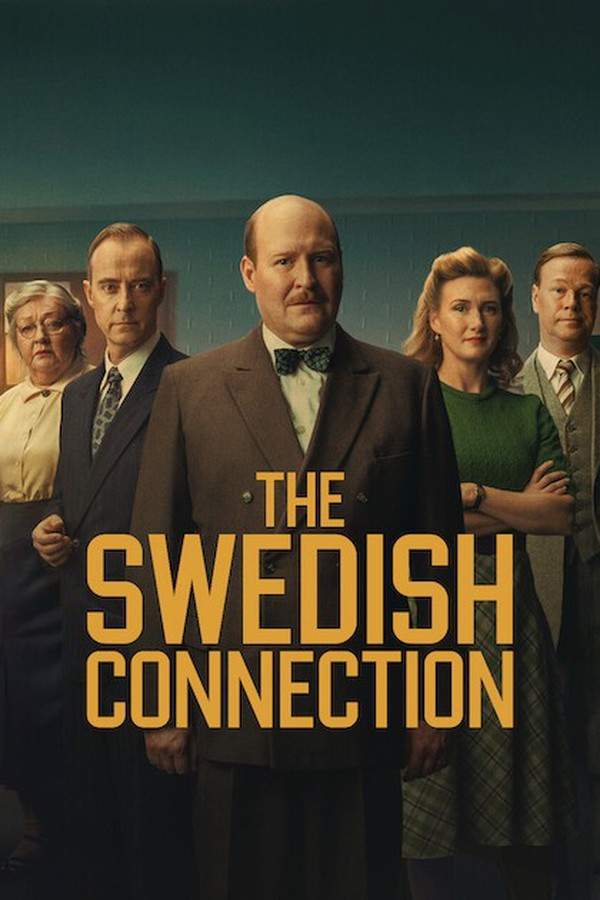
The Swedish Connection (2026) movie poster

Plot Summary

The Swedish Connection (2026) Plot Summary & Ending Explained

Release, runtime and language
2026 · 1 h 42 m · Swedish
JustWatch #14,905 15
Directed by
Marcus Olsson, Thérèse Ahlbeck
Starring
Jonas Karlsson, Christoffer Nordenrot, Sissela Benn, Oscar Töringe, Marianne Mörck, Loa Falkman

Swedish Foreign Ministry bureaucrat Gösta Engzell, largely overlooked during World II, organized covert operations that saved thousands of refugees and turned Sweden’s neutral stance into a moral force. By defying diplomatic conventions, his daring humanitarian work challenged the status quo and forged a lasting legacy of compassion.

On this page (6)
  1. 1 Where to watch
  2. 2 What happens: full plot
  3. 3 Plot questions answered
  4. 4 How it ends
  5. 5 Movie threads
  6. 6 Every angle

Where to watch

Where to Watch The Swedish Connection (2026)

Where can you watch The Swedish Connection? Stream, rent or buy it in the US, including on Netflix and Netflix Standard: current JustWatch availability with up-to-date prices.

Streaming availability powered by JustWatch

Full plot summary · contains spoilers

What Happens in The Swedish Connection: Full Plot Summary

The whole story of The Swedish Connection (2026) explained, from the opening scene to the final frame: every key event, every twist and what it all adds up to. Read it as a quick recap before the sequel, to check a scene you missed, or to finally understand what really happened.

Gösta Engzell, a mid‑level diplomat who works in a dim basement, becomes the focal point of Sweden’s wartime dilemma in 1942. While the country proclaims neutrality, the government quietly bows to German demands and enforces press censorship to avoid provocation. Engzell oversees a flood of asylum requests from Jews, a daunting task that tests his devotion to mercy against the chilly calculus of politics. His new secretary, Rut Vogl, brings a human spark to the department, but both are soon met with resistance from the cabinet secretary and Staffan Söderström, Engzell’s blunt, ambitious superior. The atmosphere is tense: a Swedish consul in Oslo whispers of a Jewish detainee, and Engzell is told to stay quiet about it, even as the chorus of silence grows louder.

On a journey through information and conscience, a train‑ride in Poland brings another figure into view—Göran von Otter—a Swedish diplomat who learns the grim reality of the Final Solution from Kurt Gerstein, whose abhorrence of genocide contrasts starkly with the political pressures around him. Rut urges the office to help as many Norwegian Jews as possible, and Engzell, initially cautious, softens his stance after overhearing Söderström discuss the genocide and after a personal moment—the image of a child reading The Little Match Girl at bedtime. A door of possibility opens as Engzell’s team begins sifting through roughly 7,000 asylum requests, searching for anyone with a Swedish thread in their story. They identify about 150 cases that truly connect to Sweden, starting with weaker claims and moving toward more consequential ones.

Among the early cases is the Bondy family in Prague, a mother’s Jewish identity paired with a Swedish stepfather, a situation that seems ripe for a humanitarian precedent but is immediately rebuffed by German authorities. As the pressure builds, Engzell and his colleagues discover a much larger, looming catastrophe: hundreds of Norwegian Jews are being rounded up and snatched into death camps. Engzell’s initial attempts to involve the press are rebuffed by Söderström, but a sympathetic censor—Nils Erik Eklund—allows a controlled trickle of reporting. Public outcry grows until Prime Minister Per Albin Hansson—Per-Albin Hansson—demands to know who is steering Sweden’s Jewish issue; Söderström reluctantly concedes that Engzell is driving the process, a turning point that empowers further action.

With the political footing established, Engzell’s diplomacy bears fruit. Some Norwegian Jews with Swedish connections are released, and he pushes for the admission of 100 more, proposing an unofficial approach to avoid angering Germany while saving lives. In parallel, Göran von Otter negotiates for the Bondy twins, and Engzell facilitates a delicate workaround to reach them. Yet the road remains perilous: the twins’ fate could pivot at any moment, and a last‑ditch visit to their guardians in Copenhagen reveals a cruel delay—the twins do not arrive as hoped. As the plan shifts, Rut travels deeper into the maze of visa rules and identity papers. A Jewish passport stamp becomes a target, and she narrowly evades exposure by seeking sanctuary within the Swedish embassy in Copenhagen, a moment that tests loyalty, courage, and trust.

From there, Engzell pursues a sweeping policy shift. He and Dag Hammarskjöld — Dag Hammarskjöld — strike a discreet alliance with exiled Danish minister Johan C. W. Kruse to circumvent a law that would require the Swedish Jewish community to bear the financial burden of incoming refugees. When Söderström fights back, Engzell counters by publicly announcing the revocation of the visa requirement for Jewish immigrants, a bold move that redefines Sweden’s wartime stance. The country’s shores begin to open: Sweden earns international praise for sheltering Jews from Denmark, and the film highlights how the broader rescue effort by others who later become famous—like Raoul Wallenberg—was built on the groundwork laid by Engzell’s team, who pioneered the provisional visa process that would save countless lives, including the Bondy twins, whose new photographs mark a hopeful turn.

As the film unfolds toward its historical echo, the weight of responsibility settles on the shoulders of those who chose to act. Engzell’s approach draws praise and complications in equal measure: Söderström is maneuvered toward Moscow by senior leadership in the wake of the publicity, while Rut completes her arc by returning to Sweden, bearing witness to a world slowly waking to the truth of what happened. The narrative closes with a reflective nod to the broader rescue effort, underscoring how a small bureaucratic floor in Stockholm became a conduit for thousands of lives saved—lives that would one day be remembered in the testimonies of survivors and the chronicles of history.
Last updated: April 05, 2026 at 17:04

Was this helpful?

Plot questions answered

The Swedish Connection Plot Explained: Your Questions Answered

The questions people ask most about The Swedish Connection (2026): what happens in the confusing scenes, why the characters do what they do, the twists, hidden details and what the ending means. Each answer contains spoilers.

Q1

Why did Gösta Engzell work in a basement office?

Engzell was a mid-level bureaucrat in the Swedish Foreign Ministry assigned to handle the massive influx of asylum requests from Jewish refugees. His basement location reflected his low position in the diplomatic hierarchy, important work but overlooked by senior officials who preferred to avoid the politically sensitive issue of Jewish refugees.

Foreshadowing: The dim basement office becomes the nerve center for Sweden's humanitarian response to the Holocaust.

  • gosta engzell
  • basement office
  • foreign ministry
  • diplomat
Q2

How could Sweden stay neutral while helping Jewish refugees?

Sweden officially maintained neutrality to avoid provoking Germany, yet the government quietly permitted bureaucratic workarounds to help Jews. Engzell exploited gaps in the system, finding Swedish connections in refugee cases, that allowed rescue without explicit diplomatic confrontation with Germany.

Foreshadowing: The film's tension stems from this contradiction between public neutrality and private humanitarian action.

  • sweden neutrality
  • world war 2
  • german occupation
  • diplomatic policy
Q3

What was the Bondy twins case and why did it matter?

The Bondy twins were two Jewish boys in Prague with a Swedish stepfather, giving Sweden a legal basis to intervene. Their case became a test: if Sweden could save them without German retaliation, it would set a precedent for rescuing hundreds more. Germany initially rejected the case, but continued diplomatic pressure eventually saved the twins.

Foreshadowing: The Bondy case establishes the pattern of using Swedish family connections as a humanitarian loophole.

  • bondy twins
  • prague
  • jewish children
  • theriesienstadt
Q4

Why did Staffan Söderström oppose Gösta Engzell's rescue efforts?

Söderström represented the cautious diplomatic establishment, he feared that helping Jews would provoke Germany and endanger Sweden's safety. He threatened to transfer Engzell to Moscow and publicly denigrated the rescue work, viewing it as dangerous political meddling rather than humanitarian duty.

Foreshadowing: Söderström's antagonism drives much of the film's tension and eventual political maneuvering.

  • staffan soderstrom
  • diplomat opposition
  • political resistance
Q5

How did Engzell and his team revoke the visa requirement for Jewish immigrants?

Engzell, Rut, Dag Hammarskjöld, and Danish exile minister Johan C.W. Kruse orchestrated a clever workaround: they removed the requirement that Swedish Jewish communities financially sponsor incoming refugees. The team then publicly announced the policy change at a press conference, forcing the government's hand without direct confrontation with Söderström.

Foreshadowing: This bold move fundamentally changed Sweden's refugee policy and opened the country to thousands of survivors.

  • visa requirement
  • immigration policy
  • hammarskjold
  • refugee law
Q6

How did the Swedish rescue effort connect to Raoul Wallenberg?

Raoul Wallenberg appears as the film's narrator and visits Engzell's department in 1943-1944. The film suggests Wallenberg learned and adopted the provisional visa process that Engzell's team pioneered. This connection establishes Engzell as a pioneer whose methods influenced the more famous Wallenberg rescue missions in Budapest.

Foreshadowing: Wallenberg's visit frames Engzell's work as foundational to Sweden's larger rescue legacy.

  • raoul wallenberg
  • budapest
  • rescue mission
  • legacy
Q7

What happened to the Bondy twins?

The Bondy twins were successfully rescued. After being moved to Theresienstadt concentration camp, diplomatic pressure from Göran von Otter and Engzell secured their release. The film's epilogue shows their survival and new photographs, confirming their rescue as one of the successful outcomes of Engzell's work.

Foreshadowing: The twins' rescue represents the successful proof of concept for Engzell's humanitarian strategy.

  • bondy twins
  • survival
  • rescued
  • Theresienstadt
Q8

Why was Rut's passport stamp dangerous?

Rut acquired a Jewish passport stamp while traveling in Copenhagen to help secure the Bondy twins' passage. This stamp identified her as Jewish, which would have endangered her under Nazi occupation. She had to seek shelter in the Swedish embassy to avoid detection and deportation.

Foreshadowing: Rut's dangerous detour to Copenhagen nearly exposes the rescue operation to Nazi authorities.

  • rut vogl
  • passport stamp
  • copenhagen
  • embassy
  • undercover
Q9

How did press censorship about the Holocaust get relaxed in Sweden?

Engzell initially faced press restrictions, but a sympathetic censor named Nils Erik Eklund allowed limited reporting on the genocide. As more information leaked and public outrage grew, Prime Minister Per Albin Hansson demanded accountability, creating political cover for Engzell to escalate the rescue operations.

Foreshadowing: The easing of censorship transformed public opinion and empowered Engzell's work.

  • press censorship
  • nils erik eklund
  • public outcry
  • media
Q10

What did Göran von Otter contribute to the rescue operation?

Göran von Otter was a Swedish diplomat who learned about the Final Solution from Kurt Gerstein on a train through Poland. This firsthand knowledge of the genocide motivated him to work alongside Engzell, particularly negotiating for the Bondy twins' release from Theresienstadt.

Foreshadowing: Von Otter's direct knowledge of the Holocaust added urgency to the diplomatic negotiations.

  • goran von otter
  • kurt gerstein
  • final solution
  • train journey

Ending explained

What Happens at the End of The Swedish Connection?

How The Swedish Connection (2026) ends, in short: the final scene, the last twist and what it means for the characters. The full ending explained, with every spoiler, lives on its own page.

Read the full ending explained

The ending of The Swedish Connection hinges on a defining moment of moral courage, when Gosta Engzell decides to bypass the bureaucratic paralysis of his superiors and take unilateral action. After months of navigating red tape, internal opposition, and the constant fear of provoking Nazi Germany, Engzell realizes that quiet diplomacy will no longer suffice. In a pivotal move, he secretly organizes a press conference to publicly announce that Sweden is ready to welcome Jewish refugees from Denmark and will stand against any nation that opposes this humanitarian effort. This act effectively forces the government's hand, turning a reluctant ministry into an active participant in saving lives, and rendering the objections of Cabinet Secretary Soderstrom irrelevant.

The film provides a deeply personal resolution to its central storyline through the character of Rut Vogl, Engzell's dedicated assistant. Earlier in the narrative, Vogl—a Jewish woman—had been barred from re-entering Sweden due to the very discriminatory policies Engzell was fighting to overturn. Her eventual return to the country symbolizes the tangible success of Engzell's struggle, proving that the laws he championed have real-world consequences for vulnerable people. Similarly, the Bondy twins, who represent the "weak case" Engzell used to set a legal precedent, are finally reunited with their parents. The film beautifully illustrates the aftermath of Engzell's decision, depicting a horizon filled with thousands of small boats arriving along the Swedish coast, carrying Jewish refugees who have finally found a safe harbor.

Continue reading the ending (1 more paragraphs)

Ultimately, the conclusion zooms out to reveal the lasting legacy of Engzell's quiet heroism. The provisional passport system he pioneered saved over 100,000 lives in Sweden and was subsequently adopted by other nations, exponentially increasing the number of people rescued from Nazi persecution. A poignant final reveal introduces the film's narrator as Raoul Wallenberg, a young man who visits the Legal Department to meet the team he considers heroes. While the film doesn't explicitly state his future, history knows that Wallenberg would go on to become a famed humanitarian who saved thousands of Hungarian Jews using similar methods. Thus, The Swedish Connection ends on a powerful note of continuity, showing how one man's decision to do the right thing in the face of institutional indifference sparked a chain of hope that outlived the war itself.

The Swedish Connection ending explained in full

Movie threads

More Movies Like The Swedish Connection, by Mood & Story

Curated lists built around what makes The Swedish Connection tick: the same mood, the same kind of story or the same emotional payoff. Each list explains why these movies belong together.

Movies about bureaucratic rescuers like The Swedish Connection

Quiet civil servants use their positions to defy authority and save lives. Discover more movies like The Swedish Connection, where protagonists use their administrative roles to perform heroic acts. These similar historical dramas and thrillers feature tense, procedural plots about defying the system from within to achieve a moral victory.

  • tense
  • procedural
  • determined
  • sobering
  • hopeful
  • urgent
  • Tone: tense, hopeful, determined
  • Pacing: steady, procedural
Why these movies?

The story pattern: The narrative follows a protagonist who discovers a profound moral failure within their own organization or government. Their journey involves navigating complex bureaucratic mazes, leveraging rules against their creators, and making quiet, calculated decisions under immense pressure, often risking their career and safety to do what is right.

Why they belong together: These films are grouped by their shared focus on procedural, system-based problem-solving, a steady and tense pacing driven by intellectual maneuvering, and a tone that balances the heaviness of the subject matter with the hopefulness of individual action making a difference.

Hopeful historical dramas about moral courage like The Swedish Connection

Stories of individuals making a difference against overwhelming historical tragedy. If you liked The Swedish Connection, explore these similar movies about hope and defiance during dark historical periods. These dramas share a heavy emotional weight but focus on uplifting stories of survival, compassion, and the individuals who made a difference.

  • hopeful
  • sobering
  • compassionate
  • urgent
  • determined
  • tense
  • Tone: hopeful, sobering, compassionate
  • Pacing: steady, determined
Why these movies?

The story pattern: The narrative is set against a backdrop of widespread historical suffering, such as war or genocide. The central conflict is a moral one, pitting the protagonist's compassion and courage against systemic evil or overwhelming apathy. The plot charts their difficult, often lonely journey to achieve a meaningful, if limited, victory for good.

Why they belong together: These films are united by their specific emotional mix: the heavy weight of their historical setting is counterbalanced by a fundamentally hopeful tone and a focus on successful acts of resistance. They share a steady, determined pacing and deliver a satisfying, happy ending that affirms the value of moral action.

Every angle

The Swedish Connection (2026) Explained: Plot, Ending, Timeline & Characters

Everything about The Swedish Connection in one place: what happens in the plot summary, the timeline in chronological order, the characters and meaning, the ending explained and a spoiler-free summary. What's After the Movie adds the cast, box office and post-credit scenes.

Coming soon on iOS and Android

The Plot Explained Movie Summary App

Plot summaries, endings explained and timelines on your phone. Catch up on any movie in minutes, save your favorites and never miss a twist again.

Be the first to know when we launch. Your email stays private, always.

Learn more about the app