Plot Explained Spoilers guaranteed!
Plot Explained

Browse by genre

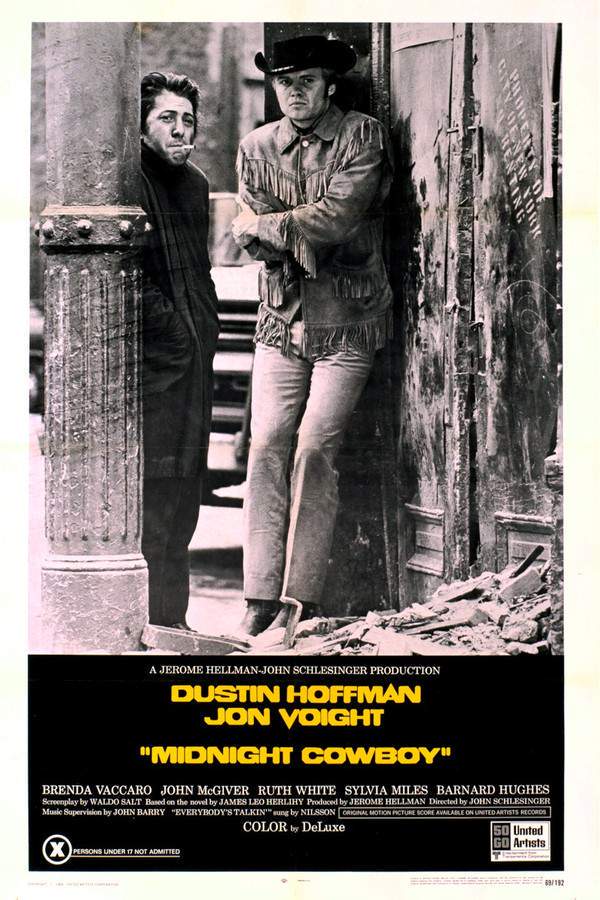
Midnight Cowboy (1969) movie poster

Plot Summary

Midnight Cowboy (1969) Plot Summary Explained

Release, runtime and language
1969 · 113 min · English
JustWatch #5,592 80
Directed by
John Schlesinger
Starring
Jon Voight, Dustin Hoffman

A charming Texan, Joe Buck, arrives in New York City with dreams of success as a ladies’ man. He unexpectedly encounters Enrico "Ratso" Rizzo, a streetwise hustler with his own struggles. As they navigate the gritty underbelly of the city, an unlikely friendship develops between the naive Joe and the cynical Ratso. Their bond is tested by Ratso’s declining health and Joe’s difficult journey to adapt to urban life, revealing a poignant exploration of loneliness and connection.

On this page (7)
  1. 1 Where to watch
  2. 2 What happens: full plot
  3. 3 Plot questions answered
  4. 4 The book behind the movie
  5. 5 Movie threads
  6. 6 Movies like Midnight Cowboy
  7. 7 Every angle

Where to watch

Where to Watch Midnight Cowboy (1969)

Where can you watch Midnight Cowboy? Stream, rent or buy it in the US, including on fuboTV, MGM Plus and Philo: current JustWatch availability with up-to-date prices.

Streaming availability powered by JustWatch

Full plot summary · contains spoilers

What Happens in Midnight Cowboy: Full Plot Summary

The whole story of Midnight Cowboy (1969) explained, from the opening scene to the final frame: every key event, every twist and what it all adds up to. Read it as a quick recap before the sequel, to check a scene you missed, or to finally understand what really happened.

As the film begins, Joe Buck (Jon Voight), a young Texan dishwasher, sets off on a bold adventure dressed in brand-new cowboy attire. He packs his suitcase and walks away from his mundane job, heading to the bustling streets of New York City with aspirations of becoming a male prostitute catering to women. However, his initial attempts at success fall flat. Despite managing to spend the night with a wealthy middle-aged New Yorker, played by Sylvia Miles, Joe surprisingly finds himself giving her money instead.

In the city, Joe encounters the shrewd and streetwise Enrico Salvatore "Ratso" Rizzo (Dustin Hoffman), a limping con artist who tricks Joe out of $20 by promising to introduce him to a well-known pimp. This leads Joe to an uncomfortable meeting with a Bible-thumping figure played by John McGiver, from which he hastily escapes in pursuit of Ratso. As Joe wanders aimlessly through the city, he eventually finds himself locked out of his hotel room, with most of his possessions being held captive.

Desperate for cash, Joe foolishly agrees to engage in a transaction with a young man in a movie theater, only to discover that the kid has no money to pay. In a moment of anger, Joe threatens him for his watch but ultimately lets the young man walk away unharmed. The following day, in a fit of rage, Joe confronts Ratso, who, in turn, suggests they share an apartment in a run-down building where he’s been squatting. Joe, with no better option, reluctantly agrees, and they quickly establish a “business relationship” as hustlers in the gritty reality of New York City.

As their connection deepens, Ratso's health continues to deteriorate due to his long-standing ailments. Flashbacks throughout the movie reveal Joe's troubled upbringing by a neglectful grandmother after being abandoned by his mother, alongside the heartbreak of a past romance with a local girl named Annie. Ratso shares his own grim family history, detailing how his father, a shoeshiner and illiterate Italian immigrant, suffered greatly from the hard life in the subways. Ratso aspires to escape the city and dream of one day moving to Miami.

Their lives take a twist when a unique couple at a diner hands Joe an invitation to a party. The ensuing scene is reminiscent of the Warhol era, complete with cameos from Warhol superstars. After partaking in a joint he thought was a regular cigarette and taking a mysterious pill, Joe begins to hallucinate at the party. He exits with a socialite, Brenda Vaccaro, who offers him $20 for the night, yet when faced with the moment, Joe struggles to perform. However, after engaging in a game of Scribbage, he hilariously proves his limited intellect, and soon a teasing remark about possibly being gay seems to unlock his ability to function.

After what appears to be a successful encounter, Joe returns home to find Ratso bedridden with a fever. Refusing medical assistance due to his lack of funds, Ratso implores Joe to secure bus tickets for their escape to Florida. In a desperate act, Joe resorts to robbing a man at an amusement arcade when he attempts to pay with a religious medallion instead of cash. With the stolen money, Joe manages to buy two bus tickets, but the journey takes a tragic turn as Ratso's health declines further.

As they travel closer to Miami, Joe, feeling hopeful, discards his cowboy attire for something more practical, but their dream of a new life shatters when he realizes Ratso has passed away. The bus driver informs Joe that the only course of action is to continue to Miami, leading to a heart-wrenching conclusion where Joe, alone and terrified, sits with his arm around his deceased friend, embodying the harsh realities and unfulfilled hopes of their lives.
Last updated: November 08, 2024 at 03:05

Was this helpful?

Plot questions answered

Midnight Cowboy Plot Explained: Your Questions Answered

The questions people ask most about Midnight Cowboy (1969): what happens in the confusing scenes, why the characters do what they do, the twists, hidden details and what the ending means. Each answer contains spoilers.

Q1

Why does Joe Buck give money to the wealthy woman instead of taking payment?

Joe is genuinely naive about how prostitution works. When the wealthy woman (Sylvia Miles) offers him $20 for the night, Joe assumes this means he pays her since he believes his 'services' should be free given his inexperience. This moment establishes Joe's fundamental misunderstanding of the transaction and his desperate need for validation, making him vulnerable to exploitation in the city.

  • joe buck
  • prostitute
  • payment
  • first client
  • nyc
Q2

Why does Joe struggle to perform with the socialite but eventually succeed after playing Scribbage?

Joe suffers from performance anxiety driven by his insecurity about his intelligence and worth. When the socialite teases him about possibly being gay, it actually releases his anxiety by normalizing the situation and taking the pressure off the transactional nature of the encounter. The game of Scribbage reveals his intellectual limitations but also allows him to relax enough to function sexually.

Foreshadowing: Earlier scenes show Joe's insecurity about being seen as unintelligent, particularly in his flashbacks about being mocked by the local girl Annie.

  • joe buck
  • performance anxiety
  • socialite
  • scribbage
  • sexual encounter
Q3

Why does Ratso refuse to go to the hospital despite being so sick?

Ratso has no health insurance or money to pay for medical treatment. His tuberculosis has progressed too far for simple intervention, and he knows the system won't help someone like him. Instead of dying in a hospital charity ward, Ratso chooses to spend his final days pursuing his dream of reaching Miami, preferring hope over surrender.

Foreshadowing: Earlier scenes establish Ratso's poverty and his constant limping from untreated health issues.

  • ratso rizzo
  • tuberculosis
  • hospital
  • illness
  • medical treatment
Q4

Why does Joe resort to robbing a man at the amusement arcade?

Joe desperately needs money to buy bus tickets so he and Ratso can escape to Florida. When the man at the arcade offers a religious medallion instead of cash, Joe's frustration and desperation push him to violence. This moment marks a moral turning point for Joe, showing how far he's willing to go for his friend.

Foreshadowing: The film builds to this moment through Joe's growing desperation and Ratso's worsening condition.

  • joe buck
  • robbery
  • arcade
  • bus tickets
  • florida escape
Q5

Why does Joe throw away his cowboy clothes during the bus journey to Florida?

Joe discards his cowboy costume as a symbolic rejection of his failed identity. The cowboy outfit represented his naive dream of being a successful ladies' man in New York, but that dream has died. By swapping it for practical clothes, Joe signals his acceptance of who he really is and his willingness to start fresh in Florida with Ratso.

Foreshadowing: The cowboy identity has been progressively diminished throughout the film, from failed encounters to the harsh reality of city life.

  • joe buck
  • cowboy clothes
  • bus journey
  • florida
  • identity
Q6

What happens to Ratso on the bus ride to Miami?

Ratso dies during the bus journey as they approach Miami. Joe initially doesn't notice because he's feeling hopeful about their future. When he realizes Ratso has passed away, the bus driver tells him they must continue to Miami, leaving Joe alone with his dead friend in a devastating conclusion.

Foreshadowing: The film foreshadows Ratso's death through his deteriorating health and fever throughout the journey.

  • ratso rizzo
  • death
  • bus
  • miami
  • ending
Q7

How does Joe and Ratso's relationship evolve from a scam to a genuine friendship?

Their relationship develops gradually through shared hardship. After Ratso tricks Joe out of $20, Joe confronts him and they become roommates out of necessity. Over time, as they share their painful backstories, Joe's neglectful upbringing and Ratso's immigrant family struggles, they form a genuine bond based on mutual need and understanding rather than transaction.

Foreshadowing: Early scenes show Joe's anger at being scammed, but also his isolation and need for connection.

  • joe buck
  • ratso rizzo
  • friendship
  • relationship
  • backstory
Q8

Why does Ratso want to go to Miami so badly?

Miami represents Ratso's ultimate dream of escaping the harsh New York City streets. He's lived his entire life in poverty, suffering from illness caused by the brutal conditions of the city. Florida symbolizes warmth, health, and a new beginning, a place where his tuberculosis might be treated and where he can finally live with dignity.

Foreshadowing: Ratso mentions his dream of Miami early in the film, and his backstory explains why he yearns for escape.

  • ratso rizzo
  • miami
  • escape
  • dream
  • florida
Q9

Why does Joe go to meet the Bible-thumping pimp and what happens?

Joe follows Ratso's advice thinking he'll get connected to a legitimate pimp. Instead, he encounters an intimidating Bible-thumper who preaches at him, making Joe increasingly uncomfortable. Sensing something wrong, Joe runs away from the situation, realizing he's been tricked again and that the city offers no easy paths to success.

  • joe buck
  • bible thumper
  • pimp
  • scam
  • new york city
Q10

Why does the movie end so bleakly with Joe alone on the bus?

The ending represents the ultimate failure of the American Dream for these two marginalized men. Despite their desperate attempt to escape poverty and illness, death claims Ratso anyway. Joe is left alone, having lost the only person who truly understood him, sitting with his deceased friend in a gesture that shows the brief comfort they found in each other was real, even if their dreams were never achievable.

Foreshadowing: The film consistently foreshadows this outcome through its bleak tone, Ratso's declining health, and the harsh realities of their lives.
  • ending
  • conclusion
  • american dream
  • loneliness
  • poverty

Movie threads

More Movies Like Midnight Cowboy, by Mood & Story

Curated lists built around what makes Midnight Cowboy tick: the same mood, the same kind of story or the same emotional payoff. Each list explains why these movies belong together.

Movies about urban survival friendships like Midnight Cowboy

Stories where friendship is the only refuge against a harsh and unforgiving metropolis. If you liked the poignant, gritty friendship in Midnight Cowboy, explore more movies where unlikely bonds form on the margins of society. These films capture the struggle for connection and survival in a harsh urban landscape, emphasizing character-driven stories over plot.

  • gritty
  • lonely
  • poignant
  • desolate
  • anxious
  • tragic
  • Tone: bleak, poignant
  • Pacing: steady, character-driven
Why these movies?

The story pattern: The narrative follows outsiders or down-and-out characters as they collide in a large, intimidating city. Their initial relationship, often based on necessity or hustling, deepens into a genuine, life-sustaining bond. The central conflict typically involves external urban pressures—poverty, exploitation, illness—that test the limits of their friendship and survival.

Why they belong together: These films are grouped by their focus on the redemptive power of human connection in dehumanizing environments. They share a gritty, realistic tone, a steady character-driven pace, and an emotionally heavy weight, finding profound meaning in the small acts of loyalty between people the world has discarded.

Movies about shattered dreams like Midnight Cowboy

Journeys where naive hope is systematically dismantled by harsh reality. Fans of Midnight Cowboy's exploration of broken aspirations will find similar themes here. Discover movies that follow characters whose grand plans fail, leaving them with the bittersweet or bleak realization of their own limitations and the world's cruelty.

  • tragic
  • desolate
  • poignant
  • lonely
  • disillusioned
  • melancholic
  • Tone: bleak, tragic
  • Pacing: steady, downward spiral
Why these movies?

The story pattern: A protagonist, often naive or from a simpler background, travels to a new place with a specific, romanticized goal. Their journey is a steady unraveling as each encounter with reality chips away at their dream. The narrative arc is typically downward, moving from hope to despair, culminating in a bleak or bittersweet acceptance of a much harsher truth.

Why they belong together: These films share a powerful thematic focus on the failure of the American Dream or similar ideals. They are united by a bleak tone, heavy emotional weight, and a narrative structure that deliberately leads the audience and characters toward a painful awakening, creating a deeply poignant and devastating experience.

If you liked this

Movies Like Midnight Cowboy

Similar movies to Midnight Cowboy: the same genre, themes or kind of story. Each one comes with its own plot summary, timeline and ending explained.

Browse all movie summaries

Every angle

Midnight Cowboy (1969) Explained: Plot, Timeline & Characters

Everything about Midnight Cowboy in one place: what happens in the plot summary, the timeline in chronological order, the characters and meaning and a spoiler-free summary. What's After the Movie adds the cast, box office and post-credit scenes.
Coming soon on iOS and Android

The Plot Explained Movie Summary App

Plot summaries, endings explained and timelines on your phone. Catch up on any movie in minutes, save your favorites and never miss a twist again.

Be the first to know when we launch. Your email stays private, always.
Learn more about the app