Year: 1988
Runtime: 105 mins
Language: Cantonese
Director: Mou Tun-Fei
The film graphically portrays the wartime atrocities carried out by Japan’s Unit 731, the secret Imperial Army program that conducted biological‑weapon experiments in World War II. The film does not shy away from graphic gore, making the horror vivid. It chronicles the brutal medical tests inflicted on Chinese and Soviet prisoners, exposing the horrific methods and suffering inflicted at the war’s end.
Warning: spoilers below!
Haven’t seen Men Behind the Sun yet? This summary contains major spoilers. Bookmark the page, watch the movie, and come back for the full breakdown. If you're ready, scroll on and relive the story!
Trace every key event in Men Behind the Sun (1988) with our detailed, chronological timeline. Perfect for unpacking nonlinear stories, spotting hidden connections, and understanding how each scene builds toward the film’s climax. Whether you're revisiting or decoding for the first time, this timeline gives you the full picture.
Last updated: October 09, 2025 at 14:24
Find frequently asked questions about the Men Behind the Sun (1988) timeline, including chronological order, nonlinear jumps, cause-and-effect links, and scene sequence clarifications. This timeline FAQ helps explain when key events happen, how moments connect, and why the story unfolds in that specific order.
The boys naively complied with orders to bring the mute Chinese boy to the facility, believing he would not be harmed. Their youth and lack of understanding of the true nature of the experiments led them to accompany the boy inside, where they witnessed the senior medical staff vivisect him and preserve his organs for research. This moment of blind obedience resulted in the boy's death and shocked the youths into rebellion.
Earlier scenes show the boys forming a fragile friendship with the boy, giving them a personal connection that makes the betrayal more devastating.
The senior medical staff at Unit 731 vivisected the boy while the Japanese Youth Corps watched in horror. His organs were preserved for research purposes. This atrocity directly triggered the youths to stage a desperate uprising against their commanding officers, marking a turning point in their involvement with the facility.
The boys' friendship with the child while playing catch establishes an emotional connection that makes the subsequent violence more impactful.
The youths were driven to rebel after witnessing the vivisection of the Chinese boy they had befriended. The shock of this atrocity, combined with their growing revulsion at the experiments they were being forced to observe, ignited a desperate protest where they beat their commanding officer in an attempt to defend the vulnerable and push back against the cruel authority of the facility.
The boys' increasing discomfort and revulsion at the experiments throughout their early days at the facility builds toward this breaking point.
Lt. Gen. Shirō Ishii developed a prototype ceramic bomb designed to keep fleas alive inside, creating a more effective delivery system for spreading bubonic plague. The bomb's ceramic casing was intended to subvert conventional defenses and allow the infected fleas to survive longer, potentially weaponizing the plague as a last-ditch biological weapon against Chinese civilians.
Earlier scenes establish that Unit 731's primary research goal was developing a highly contagious strain of bubonic plague for use as a biological weapon.
When Unit 731 learned of the atomic bombings of Hiroshima and Nagasaki and Russia's declaration of war, Ishii initially ordered his subordinates and their families to commit suicide to avoid capture and prevent the exposure of their crimes. However, a shift in mindset led to a reluctant evacuation instead of mass suicide, with Ishii allowing suicide only if capture became imminent.
The facility's culture of secrecy and the gravity of their crimes create the desperate logic behind the suicide order.
To test the ceramic bomb's effectiveness, Ishii ordered Chinese prisoners to be tied to crosses for exposure to the infected fleas. The test was botched when Japanese aerial forces retreated prematurely. During the chaos, Chinese prisoners broke free while Japanese troops hunted them down, resulting in many prisoners being shot or trampled to death, including some Japanese soldiers.
The development of the ceramic bomb directly leads to this deadly demonstration of its supposed effectiveness.
After the war, Ishii made the strategic decision to cooperate with the Americans, turning over his research and agreeing to work for them. This deal allowed him to avoid prosecution for his crimes. Years later, his biological warfare expertise was utilized during the Korean War, where biological weapons appeared on the battlefield again, allowing his horrific research to influence future conflicts.
The facility's destruction of evidence and rush to evacuate hints at Ishii's concern about accountability and his desire to preserve his work.
The lone survivor was a former test subject from Unit 731, disguised as a Japanese soldier. He attacked one of the waiting Japanese crowds at the train station but was suddenly stopped and impaled by a Japanese flag. The Youth Corps clutched the blood-stained flag in stunned silence as they departed, leaving them with a haunting final image of the war's lingering specter.
Earlier scenes show the destruction of evidence and killing of test subjects, suggesting some survivors escaped the mass execution.
During the final operations, Unit 731 destroyed its research and blew up the facilities. Surviving test subjects were gassed to death as the project was scrubbed from history. This systematic elimination ensured that no witnesses remained to expose the atrocities committed at the facility.
The earlier destruction of documents and the order to eliminate evidence foreshadows the complete eradication of human witnesses.
The Japanese boys who served in the Youth Corps at Unit 731 endured hard lives after the war. Their wartime involvement cast a long shadow over their education and future prospects. The stigma associated with their connection to Unit 731 shaped their futures, leaving them burdened by their past for decades after the conflicts ended.
The opening line "Friendship is friendship; history is history" establishes the lasting weight these experiences would have on the boys.
Unit 731's research aimed to find a highly contagious strain of bubonic plague to be used as a last-ditch biological weapon against the Chinese population. The goal was to create an effective means of mass infection that could be deployed if conventional military strategies failed, representing one of the most sinister aspects of Japan's wartime chemical and biological warfare programs.
The facility's introduction establishes the clinical, scientific veneer used to justify these monstrous experiments.
Two hundred Japanese boys were conscripted into the Youth Corps and assigned to the Kwantung Army, then ushered into the Unit 731 facility. They were quickly exposed to the brutal experiments conducted there, experiencing deep revulsion at what they witnessed and participated in. Their youth and naivety made them susceptible to manipulation while also allowing the narrative to explore themes of complicity and moral awakening.
The opening scene establishes their conscription with the line "Friendship is friendship; history is history," framing their entry into the dark world of Unit 731.
Discover curated groups of movies connected by mood, themes, and story style. Browse collections built around emotion, atmosphere, and narrative focus to easily find films that match what you feel like watching right now.
Films that expose real-world atrocities with raw, uncompromising honesty.Explore movies like Men Behind the Sun that confront disturbing historical events head-on. These films share a commitment to realism and a bleak, oppressive tone, immersing viewers in stories of war crimes, tyranny, and human suffering with unflinching brutality.
These stories are typically based on true events and follow a methodical, often episodic structure that builds a cumulative case against a system, regime, or ideology. The narrative arc focuses less on individual triumph and more on exposing the mechanics of evil and the scale of suffering.
Movies are grouped here for their shared commitment to depicting historical atrocities with graphic realism, a consistently dark tone, and a heavy emotional weight centered on accountability and the bleak truths of human cruelty.
Stories where bureaucratic systems turn people into objects of experimentation.If you were disturbed by the systemic brutality in Men Behind the Sun, this thread gathers similar films about the dehumanizing effects of bureaucracy and science. These stories depict cruelty as a process, often set in isolated facilities where ethics are abandoned.
The narrative often unfolds within a closed, controlled environment like a lab, prison, or camp. It contrasts the detached perspective of the perpetrators with the visceral suffering of the victims, exploring themes of complicity, obedience to authority, and the corruption inflicted by absolute power.
This thread connects films that share a specific setting (isolated facilities) and a central theme: the cold, procedural nature of evil within a system. The pacing is steady, focusing on the escalation of horrors within a rigid structure.
Don't stop at just watching - explore Men Behind the Sun in full detail. From the complete plot summary and scene-by-scene timeline to character breakdowns, thematic analysis, and a deep dive into the ending - every page helps you truly understand what Men Behind the Sun is all about. Plus, discover what's next after the movie.
Read a complete plot summary of Men Behind the Sun, including all key story points, character arcs, and turning points. This in-depth recap is ideal for understanding the narrative structure or reviewing what happened in the movie.
Discover the characters, locations, and core themes that shape Men Behind the Sun. Get insights into symbolic elements, setting significance, and deeper narrative meaning - ideal for thematic analysis and movie breakdowns.
Discover movies like Men Behind the Sun that share similar genres, themes, and storytelling elements. Whether you’re drawn to the atmosphere, character arcs, or plot structure, these curated recommendations will help you explore more films you’ll love.
Men Behind the Sun (1988) Plot Summary & Movie Recap
Men Behind the Sun (1988) Scene-by-Scene Movie Timeline
Men Behind the Sun (1988) Spoiler-Free Summary & Key Flow
Movies Like Men Behind the Sun – Similar Titles You’ll Enjoy
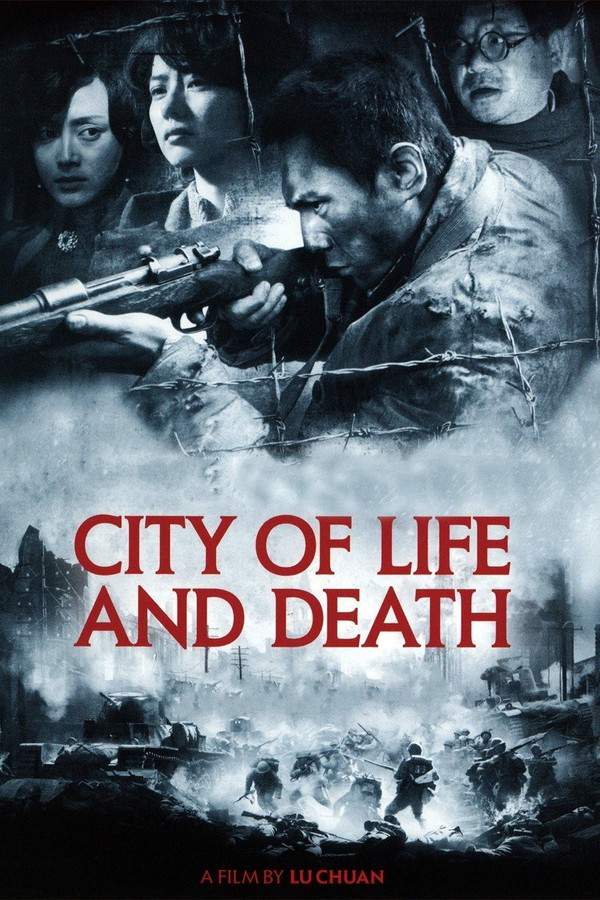
City of Life and Death (2011) Spoiler-Packed Plot Recap
Japanese Devils (2001) Detailed Story Recap
Blood Oath (1990) Spoiler-Packed Plot Recap
Prisoner of War (1954) Plot Summary & Ending Explained
Back Door to Hell (1964) Plot Summary & Ending Explained
The Camp on Blood Island (1958) Ending Explained & Film Insights
Women in the Night (1948) Complete Plot Breakdown
Yesterday’s Enemy (1959) Complete Plot Breakdown
Philosophy Of a Knife (2008) Full Summary & Key Details
Men Behind the Sun 3: A Narrow Escape (1994) Film Overview & Timeline
Black Sun: The Nanking Massacre (1995) Full Movie Breakdown
Blood on the Sun (1945) Ending Explained & Film Insights
City of Life and Death (2009) Complete Plot Breakdown
Man Behind the Sun 2: Laboratory of the Devil (1992) Complete Plot Breakdown
The Human Condition II: Road to Eternity (1959) Full Movie Breakdown