





Plot Explained Spoilers guaranteed!
Plot Explained

Browse by genre

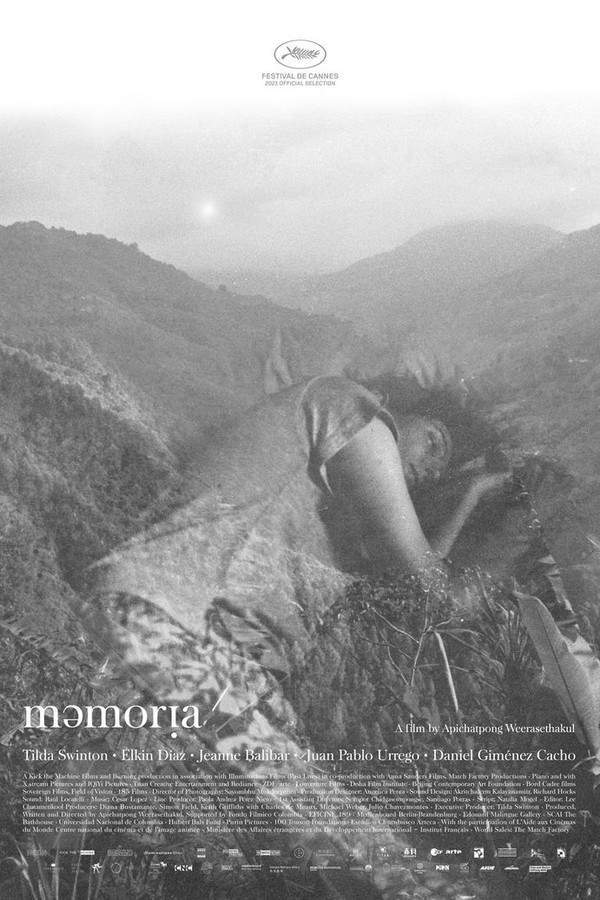
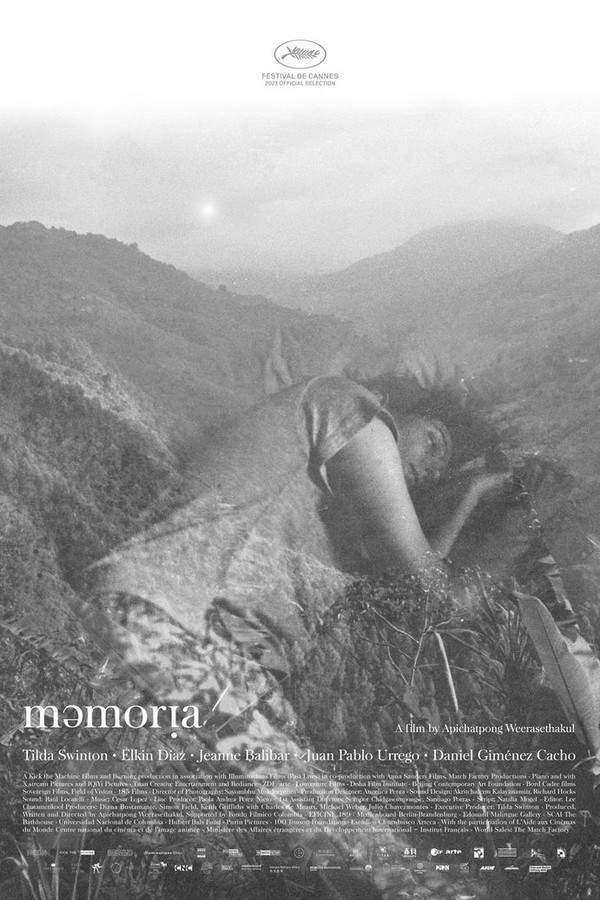
Memoria (2016) movie poster

Ending Explained

Memoria (2016) Ending Explained – Final Scene & Meaning

Release, runtime and language
2016 · 70 min · English
Directed by
Vladimir de Fontenay, Nina Ljeti

Ivan Cohen's adolescence in Palo Alto, California, is portrayed in this coming-of-age story. He grapples with the challenges of friendships, unreciprocated feelings, and a turbulent family dynamic. The film explores the difficulties of growing up and finding one's place amidst personal struggles and complex relationships.

On this page (7)
  1. 1 Where to watch
  2. 2 What happens at the end
  3. 3 Final events in order
  4. 4 Ending questions answered
  5. 5 Movie threads
  6. 6 Movies like Memoria
  7. 7 Every angle

Where to watch

Where to Watch Memoria (2016)

Where can you watch Memoria? Stream, rent or buy it in the US, including on Hoopla, Kanopy and Apple TV Store: current JustWatch availability with up-to-date prices.

Streaming availability powered by JustWatch

Ending explained · contains spoilers

What Happens at the End of Memoria?

How Memoria (2016) ends, what the final scene means, which earlier moments set it up and how to read the ending if the film leaves it open. The full ending explained, with every spoiler.

Jessica's journey in "Memoria" leads her to a revelation about the nature of her reality and herself. Throughout the film, she experiences strange noises and disjointed memories that blur the line between what is real and what is imagined. Her encounters, especially with the man who claims he remembers everything, suggest a deeper connection to a universe where time and memory are fluid. When Jessica reaches the house in the forest and converses with this man, she begins to remember her own childhood and, surprisingly, sees an alien spaceship fly away into the sky, symbolizing a bridge between the human experience and cosmic or otherworldly realms. This ending suggests that Jessica's perception of reality may be more expansive and interconnected than she initially believed. It is possible that she is losing her grip on conventional reality, or perhaps she is awakening to a higher understanding of existence beyond linear time. In true Apichatpong style, the film leaves many questions unanswered, emphasizing the subjective nature of memory, the universe, and consciousness. The sonic boom, the disjointed memories, and the surreal imagery all point toward a realm where human understanding is limited, and true knowing might be beyond what the mind can grasp. Ultimately, the film invites viewers to reflect on the mysterious, interconnected fabric of reality and the obscure depths of memory and consciousness.

Last updated: June 25, 2025 at 08:44

Was this helpful?

The last 4 events

How Memoria Ends: The Final Events in Order

The last events of Memoria (2016) in chronological order, the run-up to the ending explained above. The complete timeline has all 13 events, scene by scene.

Open the full timeline
  1. Alcohol theft and confrontation

    Back downstairs, a teen accuses Ivan of stealing alcohol and punches him. The fight intensifies his anger and sense of injustice.

    When
    late high school / night
    Where
    End-of-high-school party location
  2. Return home and arm his plan

    After the brutal night, Ivan drives home, grabs his stepfather's hunting rifle, and heads back to the party with the intent to shoot it up. He seeks a release for his mounting rage when the targets are present.

    When
    late night
    Where
    Drive to party and back to party
  3. Cannot find a target and contemplates violence at home

    When he arrives, there is no one suitable to attack, so he returns home and sneaks into his parents' room planning to kill his stepfather, but his nerves prevent him from acting.

    When
    late night
    Where
    Ivan's home
  4. Ending on the Golden Gate Bridge

    The film ends with Ivan standing on the Golden Gate Bridge, gazing out at the water while leaving his father's jacket behind on the bridge.

    When
    ending
    Where
    Golden Gate Bridge, San Francisco

Ending questions answered

Memoria Ending: Your Questions Answered

The questions people ask most about the ending of Memoria (2016): what the final scene means, how the twist works, what happens to each character and how to read the ending. Each answer contains spoilers.

Q1

Who is the man Jessica meets in the forest who claims to remember everything?

The man Jessica encounters at the house in the forest appears to be a cosmic or supernatural figure whose nature remains deliberately ambiguous. He represents a gateway to a different level of consciousness or reality where time and memory function non-linearly. His claim to remember everything suggests he exists outside normal human temporal constraints, possibly embodying the film's theme of a universe where past, present, and future are interconnected.

Foreshadowing: Earlier strange noises and disjointed memories hinted at Jessica's growing receptivity to these atypical perceptions.

  • the man
  • forest house
  • memory
  • consciousness
  • cosmic
Q2

What does the alien spaceship at the end of Memoria represent?

The alien spaceship flying away into the sky symbolizes a bridge between Jessica's personal human experience and something much larger - cosmic or otherworldly realms that exist beyond ordinary perception. This moment represents either Jessica's awakening to a higher understanding of existence or the final break from conventional reality. The spaceship serves as visual confirmation that what she experienced was not merely psychological disintegration but a genuine expansion of consciousness.

Foreshadowing: The strange sonic boom and fragmented memories throughout the film prepared viewers for this convergence of the mundane and the extraordinary.

  • alien spaceship
  • sky
  • awakening
  • cosmic
  • reality
Q3

What is the strange noise Jessica keeps hearing throughout the film?

The strange noise, described as a sonic boom, functions as a recurring motif that marks the boundaries between Jessica's ordinary reality and the expanding perceptual realm she enters. This sound acts as a threshold - when she hears it, she is pulled deeper into experiences that defy conventional explanation. The noise represents the membrane between what we consider real and what exists beyond our normal understanding of time and memory.

Foreshadowing: The sonic boom first appears as an unsettling anomaly, signaling that Jessica's reality is beginning to destabilize.

  • sonic boom
  • noise
  • strange sound
  • perception
  • threshold
Q4

Why does Jessica suddenly remember her childhood at the end?

Jessica's sudden recollection of her childhood at the house in the forest occurs because the encounter with the man who remembers everything awakens dormant memories that were previously inaccessible to her conscious mind. This moment suggests that her entire life has been leading to this point of recognition - that her sense of self and reality is far more expansive than her everyday consciousness acknowledged. The childhood memories represent the core of her true identity, which has been obscured by conventional living.

Foreshadowing: Her disjointed memories throughout the film were fragments of these deeper childhood recollections struggling to surface.

  • childhood memories
  • recall
  • identity
  • unconscious
  • awakening
Q5

Is Jessica losing her mind or awakening to a higher reality at the end?

The ending deliberately leaves this question unresolved, which is central to the film's philosophical approach. Jessica could be experiencing a psychological break where her mind is fragmenting under stress, creating elaborate delusions. Alternatively, she may be genuinely awakening to a higher level of consciousness where time, memory, and reality function differently than in ordinary human experience. The film suggests both possibilities are equally valid interpretations of the same events.

Foreshadowing: The progression from strange noises to disjointed memories to surreal experiences supports both interpretations equally.

  • reality
  • imagination
  • mind
  • awakening
  • psychological
Q6

What is the significance of the house Jessica visits in the forest?

The house in the forest serves as a liminal space - a threshold between ordinary reality and the cosmic realm where time and memory operate fluidly. It is the place where Jessica's transformation occurs, regardless of whether that transformation is psychological or metaphysical. The isolated setting represents the journey inward, away from society and into the depths of consciousness where these profound revelations become possible.

Foreshadowing: Jessica's increasing isolation and withdrawal throughout the film pointed toward this solitary journey.

  • forest house
  • threshold
  • transformation
  • liminal space
  • isolation
Q7

What is the overall meaning of Memoria's ending?

The ending of Memoria suggests that human understanding of reality is fundamentally limited and that there may exist realms of experience - cosmic, spiritual, or psychological - that transcend what the mind can normally comprehend. Jessica's journey represents the tension between what we perceive as reality and what might actually be true about the nature of existence, time, and consciousness. The film invites viewers to consider that memory and perception are far more mysterious than conventional wisdom acknowledges.

Foreshadowing: The entire film built toward this moment of revelation by progressively blurring the line between what is real and what is imagined.

  • meaning
  • ending
  • reality
  • consciousness
  • mystery
  • universe
Q8

Is the alien spaceship at the end actually real or just in Jessica's mind?

This question cannot be definitively answered, which is the film's deliberate choice. The spaceship could represent a literal extraterrestrial event that Jessica finally perceives clearly, or it could be a visual metaphor for her psychological transformation. The ambiguity reflects the film's core theme that the distinction between what is real and what is imagined may itself be an illusion created by limited human perception.

Foreshadowing: All surreal elements throughout the film existed in this same space between literal and metaphorical interpretation.

  • alien
  • spaceship
  • real
  • imagination
  • perception
  • literal

Movie threads

More Movies Like Memoria, by Mood & Story

Curated lists built around what makes Memoria tick: the same mood, the same kind of story or the same emotional payoff. Each list explains why these movies belong together.

Movies about alienated adolescence like Memoria

Slow-paced stories of teenagers grappling with profound alienation and quiet angst. Discover movies like Memoria that delve into the quiet psychological turmoil of teenage life. These coming-of-age stories share a slow, melancholic pace and a heavy emotional weight, focusing on themes of family dysfunction, unrequited love, and the search for identity in a seemingly indifferent world.

  • melancholic
  • alienated
  • introspective
  • angst-ridden
  • atmospheric
  • quiet
  • Tone: melancholic, introspective
  • Pacing: slow, deliberate
Why these movies?

The story pattern: Stories in this thread typically follow a linear, character-driven path, where the protagonist's internal struggles are the primary focus. The narrative builds tension through psychological pressure, often culminating in a moment of quiet desperation or an ambiguous ending that reflects the unresolved nature of their emotional journey.

Why they belong together: These films are grouped by their shared commitment to portraying the raw, introspective side of growing up. They prioritize a melancholic tone, slow pacing, and a heavy emotional atmosphere, creating a cohesive viewing experience for those interested in nuanced, character-focused dramas about youth.

Psychological dramas in suburban settings like Memoria

Character studies of internal collapse within the confines of suburban life. If you liked Memoria's portrayal of suburban psychological turmoil, explore these similar dramas. They feature characters grappling with heavy emotional burdens, family dysfunction, and a slow-building tension that simmers beneath the surface of everyday life.

  • psychological distress
  • suburban life
  • family dysfunction
  • atmospheric
  • quiet tension
  • alienation
  • Tone: melancholic, tense
  • Pacing: slow burn
Why these movies?

The story pattern: Narratives often follow a straightforward chronological progression, using the setting as a cage that amplifies the protagonist's feelings of entrapment. The conflict is primarily internal and interpersonal, building towards a climax that may involve a contemplation of violence or a symbolic act of release, rather than a neatly resolved conclusion.

Why they belong together: These movies are connected by their shared setting and thematic focus. They use the suburb as a microcosm for exploring psychological distress, familial breakdown, and the struggle for identity, all delivered with a restrained, atmospheric approach that prioritizes mood over plot.

If you liked this

Movies Like Memoria

Similar movies to Memoria: the same genre, themes or kind of story. Each one comes with its own plot summary, timeline and ending explained.

Browse all movie summaries

Every angle

Memoria (2016) Explained: Plot, Ending, Timeline & Characters

Everything about Memoria in one place: what happens in the plot summary, the timeline in chronological order, the characters and meaning, the ending explained and a spoiler-free summary. What's After the Movie adds the cast, box office and post-credit scenes.

Coming soon on iOS and Android

The Plot Explained Movie Summary App

Plot summaries, endings explained and timelines on your phone. Catch up on any movie in minutes, save your favorites and never miss a twist again.

Be the first to know when we launch. Your email stays private, always.

Learn more about the app