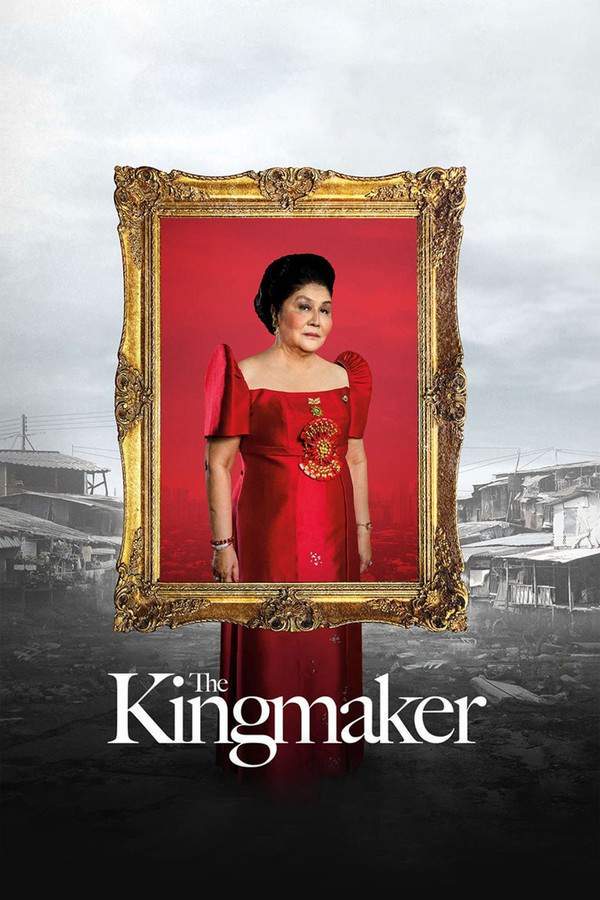
Imee Marcos flies back to the Philippines from Singapore at the insistence of her father, Ferdinand E. Marcos Sr., the sitting president. Upon arriving at Malacañang Palace, she learns that her brother, Bongbong Marcos Jr., has managed to foil a violent plot aimed at murder or harm against the first family. The revelation sets off a chain of loyalties tested and secrets exposed, as the Marcos clan finds itself confronting betrayal from within the government and even among trusted palace staff. Outside, the nation’s streets swell with unrest, and crowds begin to assemble at EDSA, the city’s critical artery, signaling a turning point that could redefine the country’s future.
A political milestone shadows the crisis: a snap election is held on February 7, with the Marcos camp claiming victory to reassure wary supporters that control remains intact. Yet the results are controversial, with NAMFREL and others questioning the legitimacy of the outcome. The parallel inaugurations of Cory Aquino and Marcos are staged, but the media is abruptly silenced for Marcos’ ceremony, cutting off the usual channels of information and intensifying the sense of a nation at a crossroads. Inside the palace, supplies begin to dwindle as rebels cut off food lines, and the Marcos children—torn between filial duty and their own safety—press their parents to depart.
Within this pressure cooker, the Marcos siblings do everything they can to hold their family together. Irene, their sister, pleads with their father in a moment of quiet desperation, while Irene Marcos stands by her brothers, trying to bridge the gap between a fading era and an uncertain dawn. As fear grows, the family unites with the loyal palace staff, sharing stories and memories as if to anchor a sinking ship. The father, Ferdinand, delivers a final farewell in a scene that mixes resolve with resignation, and the young rulers of the household—guided by the practical wisdom of their elder kin—try to chart a path forward amid chaos.
In a bid to shield the staff from the fury of a restless populace, Imee Marcos orders the workers to don yellow bands fashioned from the cutouts of her mother’s gowns, a symbolic gesture meant to broadcast solidarity and to spare those who have served the family from harm. The act embodies a fragile hope: that symbol and memory can withstand the heat of revolt and the sting of betrayal. Yet outside, the palace’s gates become a maelstrom as the crowd storms the premises, looting and damaging what has stood for decades of power and privilege.
With the palace’s security stretched thin and access to the outside world severed, the Marcos family weighs one bleak option after another. They resolve to travel to Ilocos Norte, but the incoming administration of Cory Aquino demands that the family leave the Philippines altogether, sealing their exile in Hawaii and scattering a centuries-old chapter to the winds of political upheaval. The departure marks not just a physical relocation but a rupture in a dynasty’s narrative, a moment when legitimacy and legitimacy’s price collide at the edge of a sea of uncertain loyalties and unanswered questions.
The film closes with a sober tribute, returning attention to the people who stood closest to the action during those turbulent days. The real-life palace staff, including the Presidential Security Command, along with the three maids—each played by actors who carried a quiet, steadfast presence off-camera—are honored for their service and endurance. In that final frame, the legacy of a pivotal historical moment is remembered not only through power and politics but through the quiet courage of those who kept a day hope-filled and daily, even as a nation began to redefine its direction.