Plot Explained Spoilers guaranteed!
Plot Explained

Browse by genre

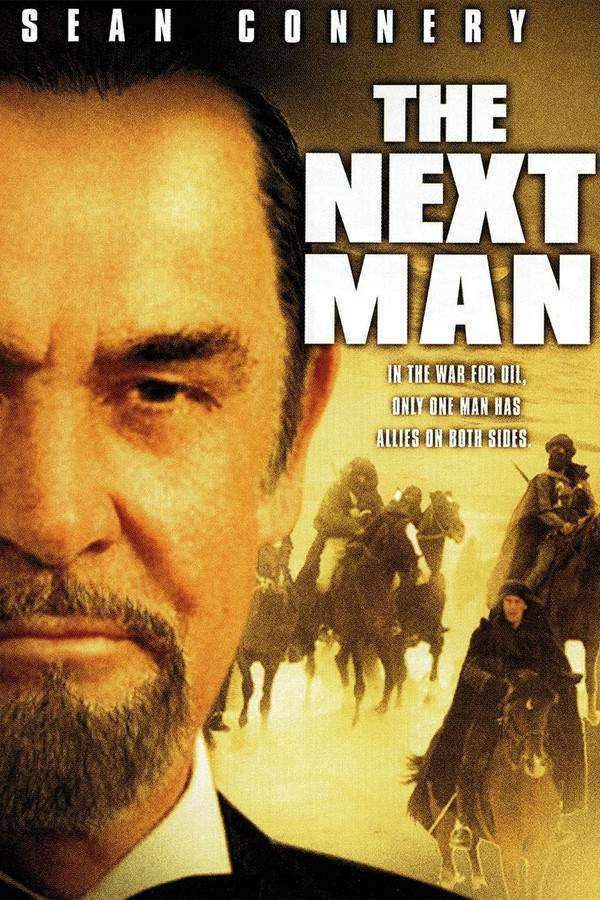
The Next Man (1976) movie poster

Plot Summary

The Next Man (1976) Plot Summary Explained

Release, runtime and language
1976 · 108 min · English
Directed by
Richard C. Sarafian
Starring
Sean Connery, Adolfo Celi, Jaime Sanchez, Charles Cioffi, Albert Paulsen, Cornelia Sharpe

A resourceful Saudi diplomat attempts to broker peace with Israel, initiating a dangerous and intense pursuit. When a formidable assassin is sent to eliminate him, the diplomat steadfastly pursues his goal of establishing a landmark alliance, even amidst rising threats and escalating violence. The film explores themes of diplomacy, betrayal, and the high stakes involved in international relations.

On this page (6)
  1. 1 Where to watch
  2. 2 What happens: full plot
  3. 3 Plot questions answered
  4. 4 Movie threads
  5. 5 Movies like The Next Man
  6. 6 Every angle

Where to watch

Where to Watch The Next Man (1976)

Where can you watch The Next Man? Stream, rent or buy it in the US, including on Amazon Prime Video, Artiflix and Tubi TV: current JustWatch availability with up-to-date prices.

Streaming availability powered by JustWatch

Full plot summary · contains spoilers

What Happens in The Next Man: Full Plot Summary

The whole story of The Next Man (1976) explained, from the opening scene to the final frame: every key event, every twist and what it all adds up to. Read it as a quick recap before the sequel, to check a scene you missed, or to finally understand what really happened.

The film unfolds in November 1976, shortly after the Arab Oil Embargo of 1973–1974. A cadre of politicians in the Arab world endorses a radical agenda that includes imposing a ceiling on international oil prices. Within 48 hours of this initiative becoming known to the Americans and Russians, the three main figures in this group are brutally eliminated: the Kuwaiti is thrown from a window, the Saudi is shot dead, and the Tunisian, portrayed by Adolfo Celi, falls victim to seduction, drugging, and asphyxiation. In the first two murders, the assassins meet their end shortly after — one is dealt with by another hitman named Gregory Zolnikov (played by director Richard C. Sarafian in an uncredited appearance), while the bodyguard Hamid, played by Albert Paulsen, takes care of the other.

In this chaotic atmosphere, Khalil Abdul-Muhsen, played by Sean Connery, ascends to the role of Saudi Arabian minister of state, stepping up as the "next man." He passionately addresses the United Nations, advocating for a "new global socio-political order" that includes a cap on oil prices, the exploration of alternative energy sources, international recognition for Israel, the establishment of a Palestinian state, and Saudi Arabian support for disadvantaged third-world nations. He concludes this pivotal speech by quoting Yasser Arafat's 1974 UN General Assembly address: > "I hold neither a symbol nor a gun. My hands are empty. They reach out to you. Which of you will take them?" His police bodyguard quickly informs him that this bold declaration has elevated his assassination risk from a "C-minus" to an alarming "A."

Simultaneously, Nicole Scott, the part-time assassin and Irish aristocrat portrayed by Cornelia Sharpe, travels to New York, where she arranges a meeting with Abdul-Muhsen at an evening gathering. Their flirtation continues at an auction, where despite being outbid for a snuffbox, Abdul-Muhsen wins it and gifts it to her. Their chemistry deepens over drinks and a game of backgammon, leading them to a spontaneous trip to the Bahamas to escape the harsh New York winter. However, their getaway takes a perilous turn when a group of commandos, masquerading as Palestinian terrorists, attempts to assassinate Abdul-Muhsen. With the help of Hamid and Scott, who chooses to save Abdul-Muhsen by taking out his attacker instead of fulfilling her potential hit, he narrowly escapes.

Returning to the UN, Abdul-Muhsen gives yet another fervent speech, declaring that Saudi Arabia is prepared to invite Israel to join OPEC. Meanwhile, Scott receives an urgent message from her handler instructing her with a single word: "Now!" Despite this, she hesitates. Abdul-Muhsen professes his love for her and encourages her to accompany him back to Saudi Arabia. As events unfold, the NYPD uncovers Zolnikov's presence in New York. As Abdul-Muhsen and his entourage leave the Saudi embassy to head to the airport, their adversaries plant four suitcase bombs among the protesters gathered outside. Just as the bombs detonate around Abdul-Muhsen's limousine, a crucial decision puts him in a different vehicle, thanks to his wise police escort. However, their car becomes ensnared in traffic. Hamid suddenly reveals a gun, commanding Scott, "Now. Kill him now." In a shocking twist, Scott reacts swiftly—she shoots Hamid in the temple, then turns her weapon on Abdul-Muhsen, ending his life.

The movie closes with Scott navigating customs in London, concealing the snuffbox and revealing it as "a gift." As she exits the airport, we see Zolnikov shadowing her, suggesting that her tumultuous journey is far from over.

Last updated: November 15, 2024 at 17:44

Was this helpful?

Plot questions answered

The Next Man Plot Explained: Your Questions Answered

The questions people ask most about The Next Man (1976): what happens in the confusing scenes, why the characters do what they do, the twists, hidden details and what the ending means. Each answer contains spoilers.

Q1

Why are the three Arab politicians killed at the beginning of the film

The three politicians, Kuwaiti, Saudi, and Tunisian, are killed within 48 hours of endorsing a radical agenda that would impose a ceiling on international oil prices. Both the Americans and Russians oppose this initiative, and the assassinations are carried out to silence the key figures behind the proposal. The killings demonstrate the brutal efficiency of the forces working against any change to the oil status quo.

  • oil prices
  • arab politicians
  • assassination
  • oil embargo
  • geopolitical
Q2

Why does Nicole Scott hesitate to complete her assassination mission

Nicole Scott falls in love with Abdul-Muhsen during their encounters in New York and the Bahamas. Their chemistry develops quickly through flirtation at an auction, drinks, and backgammon, creating a genuine emotional connection that conflicts with her professional assignment. This internal struggle between duty and personal feeling ultimately defines her tragic choice at the climax.

  • nicole scott
  • abdul-muhsen
  • love
  • assassin
  • hesitation
  • romance
Q3

What does Abdul-Muhsen propose at the United Nations

At the UN, Abdul-Muhsen proposes a comprehensive peace initiative called the 'new global socio-political order.' His plan includes capping international oil prices, developing alternative energy sources, granting international recognition to Israel, establishing a Palestinian state, and providing Saudi support for disadvantaged third-world nations. This ambitious proposal positions Saudi Arabia as a moderate broker between conflicting parties.

  • united nations
  • oil prices
  • peace proposal
  • israel
  • palestine
  • saudi arabia
Q4

Why does Nicole Scott shoot Hamid and then Abdul-Muhsen

When Hamid suddenly reveals a gun and orders Scott to kill Abdul-Muhsen, she instinctively shoots Hamid in the temple to protect the man she loves. However, she then turns her weapon on Abdul-Muhsen and kills him. This shocking twist reveals that Scott was ultimately loyal to her handler's order, she used the chaos of Hamid's betrayal as cover to complete her original mission, eliminating both witnesses to the assassination.

  • nicole scott
  • hamid
  • betrayal
  • assassination
  • climax
  • twist ending
Q5

Who is Zolnikov and what is his role in the story

Gregory Zolnikov is a professional hitman played by director Richard C. Sarafian. He appears early in the film, killing one of the assassins responsible for the initial political murders. At the film's conclusion, Zolnikov is shown shadowing Scott as she exits the airport in London, suggesting he has been hired to eliminate her as loose ends are tied up, creating a ominous sense that her story is far from over.
  • zolnikov
  • hitman
  • assassin
  • london
  • ending
  • sequel hook
Q6

Why is Abdul-Muhsen marked for assassination

Abdul-Muhsen becomes a prime assassination target because his moderate peace initiative threatens the interests of multiple powerful forces. His proposal to recognize Israel, cap oil prices, and support Palestinian statehood makes him enemies among hardliners. After his daring UN speech, his assassination risk rating jumps from 'C-minus' to 'A,' reflecting the intense threat level. Both Western and Eastern powers have reasons to prevent his diplomatic breakthrough.

  • assassination threat
  • political enemies
  • peace initiative
  • risk level
  • un speech
Q7

What is the significance of the snuffbox in the film

The snuffbox becomes a symbolic object connecting Abdul-Muhsen and Nicole Scott. At a New York auction, Abdul-Muhsen is outbid but still wins the snuffbox and gifts it to Scott, demonstrating his affection. At the film's end, Scott conceals the snuffbox in her luggage as she passes through London customs, declaring it 'a gift.' The object serves as a tangible reminder of their brief romance and the tragedy of their relationship.

  • snuffbox
  • symbol
  • gift
  • london
  • romantic connection
  • object meaning
Q8

Why do the assassins in the Bahamas disguise themselves as Palestinian terrorists

The commandos who attack Abdul-Muhsen in the Bahamas masquerade as Palestinian terrorists, likely to deflect suspicion and create political confusion. By making it appear that radical Palestinians are responsible for the assassination, the real sponsors, presumably those opposed to peace, can avoid accountability while achieving their goal. This false flag operation demonstrates the geopolitical manipulation underlying the violence.

  • bahamas
  • false flag
  • palestinian terrorists
  • commando attack
  • disguise
Q9

Why does bodyguard Hamid turn against Abdul-Muhsen

Hamid, who has protected Abdul-Muhsen throughout the film and even helped save his life in the Bahamas, reveals his betrayal at the climax by pulling a gun on him. Hamid's orders likely came from higher-level powers who wanted Abdul-Muhsen dead regardless of the political outcome. His betrayal represents the pervasive corruption and cynicism that undermines Abdul-Muhsen's idealistic peace mission.

  • hamid
  • bodyguard
  • betrayal
  • corruption
  • final attack
  • inside threat
Q10

What happens with the suitcase bombs outside the Saudi embassy

As Abdul-Muhsen's convoy prepares to leave the Saudi embassy for the airport, adversaries plant four suitcase bombs among the protesters gathered outside. When the bombs detonate around Abdul-Muhsen's limousine, he survives because a wise police escort moved him to a different vehicle at the last moment. However, their car gets trapped in traffic, setting up the final confrontation where Hamid and Scott make their moves.

  • suitcase bombs
  • saudi embassy
  • explosion
  • escape
  • traffic
  • final scene setup
Q11

Who hired Nicole Scott to assassinate Abdul-Muhsen

Nicole Scott is an Irish aristocrat who works as a part-time assassin. She receives instructions from a handler who ultimately sends her the single word 'Now!' demanding she complete the mission. While the film doesn't explicitly name her employers, her assignment aligns with the interests of the same forces behind the earlier political assassinations, those who oppose any settlement that threatens the oil pricing status quo or normalization with Israel.

  • nicole scott
  • handler
  • hired killer
  • mission
  • employer
  • covert operation
Q12

What does Abdul-Muhsen mean by inviting Israel to join OPEC

In his second UN speech, Abdul-Muhsen announces Saudi Arabia is prepared to invite Israel to join OPEC, the Organization of the Petroleum Exporting Countries. This shocking proposal represents the ultimate gesture of regional integration and peace, literally bringing Israel into the same economic bloc as Arab nations. It represents the culmination of his moderate vision and is likely the action that most directly triggers the final assassination attempt.

  • israel
  • opec
  • peace proposal
  • second un speech
  • integration
  • diplomatic breakthrough

Movie threads

More Movies Like The Next Man, by Mood & Story

Curated lists built around what makes The Next Man tick: the same mood, the same kind of story or the same emotional payoff. Each list explains why these movies belong together.

Relentless Paranoia Thrillers like The Next Man

Thrillers where the hunter is always close, and trust is a fatal mistake. If you enjoyed the high-tension pursuit and pervasive sense of betrayal in The Next Man, this selection features movies with a similar vibe. These are fast-paced, high-intensity political thrillers and spy stories where the protagonist is a marked individual, creating a world of constant danger and suspense.

  • tense
  • suspenseful
  • paranoid
  • bleak
  • deadly
  • politically charged
  • Tone: tense, bleak, paranoid
  • Pacing: fast, relentless
Why these movies?

The story pattern: Stories in this thread typically follow a protagonist—often a diplomat, spy, or official—who becomes the target of a sophisticated assassination plot. The narrative is propelled by a series of escalating attacks and narrow escapes, underscored by the growing realization that the threat comes from within their own circle. The journey is one of isolation and grim determination against overwhelming odds.

Why they belong together: These movies are grouped by their shared high-intensity pacing and tense, paranoid tone. They create a cohesive experience of being hunted, focusing on the psychological toll of betrayal and the deadly mechanics of political power plays. The emotional weight is consistently heavy, often culminating in bleak or tragic conclusions.

Fatalistic Political Tragedies like The Next Man

Stories where noble goals are crushed by cynical realities and personal betrayal. For viewers who appreciated the heavy emotional weight and tragic ending of The Next Man, this list features similar movies about doomed idealism. These stories explore the high costs of diplomacy and peacemaking in a world governed by violence and betrayal, often culminating in a profoundly sad conclusion.

  • bleak
  • tragic
  • politically charged
  • heavy
  • sad
  • betrayal
  • Tone: bleak, tragic, heavy
  • Pacing: steady, building to climax
Why these movies?

The story pattern: The narrative pattern involves a protagonist dedicated to a cause like peace or justice, whose efforts are systematically undermined by more powerful, cynical forces. A key element is often a romantic or trusted relationship that turns out to be instrumental in their downfall. The story arc is a downward spiral, ending with the failure of their mission and their personal destruction, reinforcing a fatalistic worldview.

Why they belong together: These films are united by their heavy emotional weight, sad endings, and exploration of themes like failed diplomacy and betrayal. They share a bleak tone and a focus on the futility of idealism in the face of entrenched power, creating a coherent experience of tragic inevitability.

If you liked this

Movies Like The Next Man

Similar movies to The Next Man: the same genre, themes or kind of story. Each one comes with its own plot summary, timeline and ending explained.

Browse all movie summaries

Every angle

The Next Man (1976) Explained: Plot, Timeline & Characters

Everything about The Next Man in one place: what happens in the plot summary, the timeline in chronological order, the characters and meaning and a spoiler-free summary. What's After the Movie adds the cast, box office and post-credit scenes.

Coming soon on iOS and Android

The Plot Explained Movie Summary App

Plot summaries, endings explained and timelines on your phone. Catch up on any movie in minutes, save your favorites and never miss a twist again.

Be the first to know when we launch. Your email stays private, always.

Learn more about the app