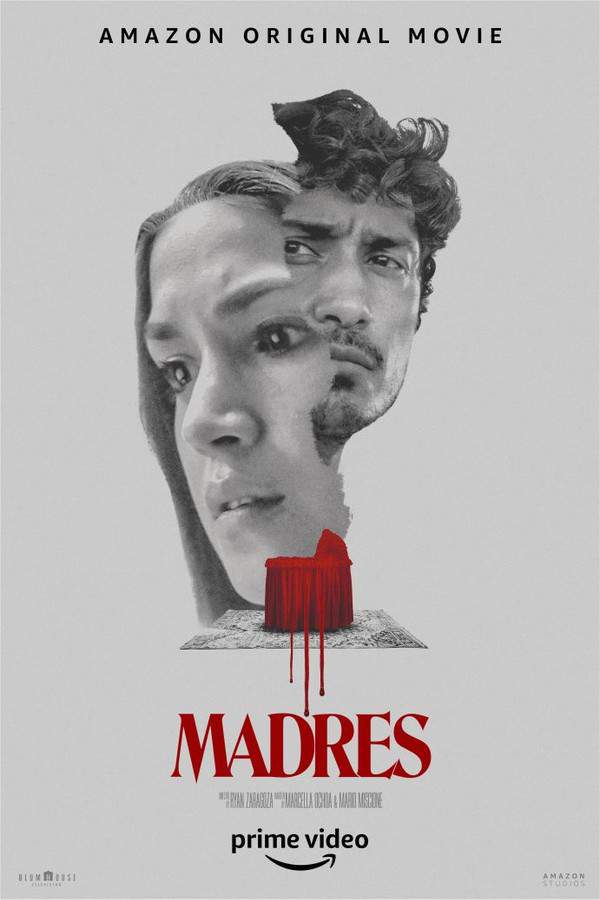
In a remote farming town in rural California during the 1970s, a young Mexican-American couple, Diana and Beto, search for a fresh start as Beto takes a job managing a farm. Diana, who is several months pregnant with their first child, hopes this move will bring stability and safety. The new house they move into feels tense from the moment they arrive: it’s old, creaky, and crowded with strange symbols and ominous objects, including a doll that seems buried in the backyard like a secret from the past. The atmosphere is heavy with unspoken histories, and Diana senses an uncomfortable weight that she cannot shake off, even as they try to settle in and begin the next chapter of their lives.
From the first night, Diana is haunted by unsettling sensations. She experiences terrifying hallucinations and disturbing visions that bleed into waking life. Whispering voices slit through the silence, shadows skulk in the corner of her vision, and her dreams are filled with faceless women screaming in pain while walls bleed and swallow light. These experiences are more than nightmares; they are physical, touching her skin with rashes that spread across her stomach and arms, accompanied by stomach cramps and bleeding that worry her but are dismissed by the local doctor as stress or the challenges of a difficult pregnancy. Diana feels a pull toward something dangerous and unseen, a truth that is somehow tied to the town and its murky past, and she refuses to surrender to the fear that others call harmless.
As her condition worsens, Diana begins to investigate the town’s deeper history. She learns that many Latina women in the area have suffered miscarriages or become infertile after giving birth, and the community has long whispered about curses and a suspected bruja behind the sickness. The more she digs, the more she suspects that these so-called curses are a veneer masking something far more sinister. The town’s past appears to be stitched together with fear, secrecy, and a willingness to look the other way when vulnerable women are harmed. Diana’s curiosity becomes a dangerous beacon, drawing her toward records, rumors, and a profile of a community that has normalized controlling and harming women for reasons that feel disturbingly contemporary.
The visions sharpen into more concrete apparitions. A ghostly woman haunts the house, sometimes bloodied and clutching a dead infant, other times simply crying or screaming in anguish. These spectral visits push Diana to explore every corner of the home, including a locked basement where she uncovers medical files, photographs, and newspaper clippings that reveal a chilling pattern: women like her were taken and sterilized without their knowledge, under the pretense of delivering their babies. The revelation shakes her to the core, turning her personal fear into a desperate resolve to uncover what was done to generations of women and why their bodies were treated as instruments to be controlled rather than lives to be protected.
The investigation leads Diana to confront the town’s health care system. Her patient, friendly nurse—who has seemed unusually insistent about pre-natal checkups—becomes a focal point of her fear. The nurse’s kindness begins to feel coercive, and the truth she uncovers is more horrifying than any nightmare: the local clinic has been secretly sterilizing Latina women without their consent, drugging them during labor and forcing a permanent loss of fertility in what appears to be a broad eugenics program designed to suppress non-white reproduction. The clinic’s operation is not just unethical; it’s a deliberate attempt to erase entire communities under the guise of medical care. The ghostly victims who appear at Diana’s bedside seem to confirm the worst fears: the specters are not only witnesses but also guardians, trying to warn her of the danger and the conspiracy that has stretched across decades.
Diana’s own life becomes the target of this malignant plot. She learns that she is being singled out for sterilization, a fate she will fight with every ounce of strength she has left. In a moment of early labor, she is taken to the clinic and must fight to stay conscious long enough to resist the procedure. A fellow local woman, whose sister vanished after giving birth, lends her quiet but steadfast support, and together they attempt to disrupt the operation. A fierce confrontation erupts among Diana, the nurse, and the attending doctor, a battle that is as elemental as it is brutal. In the chaos, the ghosts materialize with a fury born of decades of injustice, terrifying the nurse and turning the room into a scene of supernatural reckoning. The doctor is fatally wounded in a nightmarish tableau, his body grotesquely exposed to the instruments that were meant to bring life into the world, as the spirits enact their long-overdue revenge.
Despite the peril, Diana manages to give birth to her child safely, and the truth about the clinic finally comes to light. Authorities arrive to uncover a long history of medical abuse: files are unearthed that document the forced sterilizations, and the public learns of the hidden eugenics agenda that had hidden in plain sight behind the veneer of care. The community reels as long-buried secrets are laid bare, and justice—though imperfect and hard-won—begins to take shape in the wake of the exposed crimes. The house that housed these terrors is burned to the ground, along with the relics and remnants of the past that had kept the town chained to its darker impulses. In the final moments, Diana cradles her newborn and steps into the aftermath of what has been uncovered, a stark image of resilience in a place haunted by history. The last shot lingers on a bloodstain on the nursery wall, a quiet reminder of the cost of uncovering truth and the enduring strength of new life.