














Plot Explained Spoilers guaranteed!
Plot Explained

Browse by genre

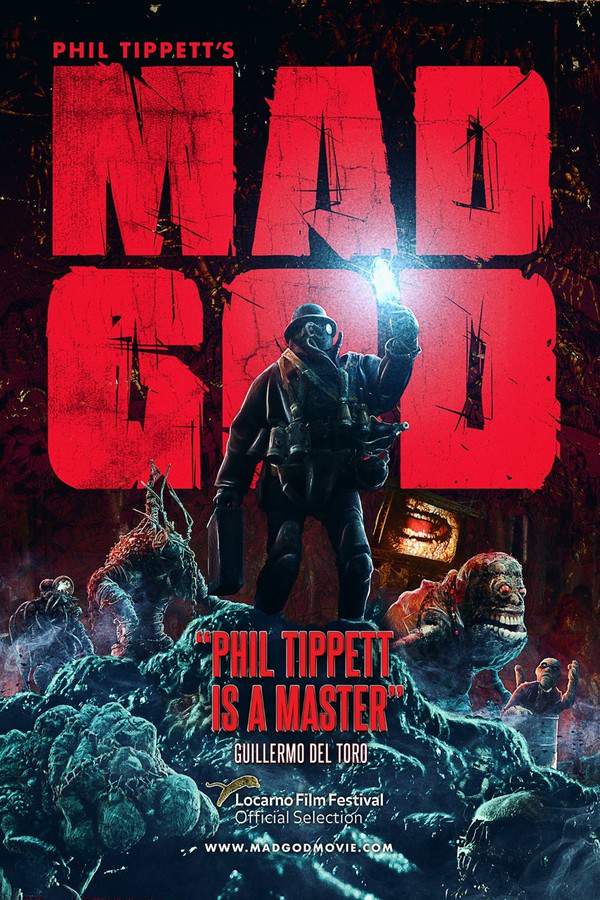
Mad God (2022) movie poster

Plot Summary

Mad God (2022) Plot Summary Explained

Release, runtime and language
2022 · 83 min · English
Echo score 60
JustWatch #1,150 15
Directed by
Phil Tippett
Starring
Alex Cox, Brynn Taylor, Hans Brekke, Harper Gibbons, Harper Taylor, Jake Freytag
Budget
$250K

A lone assassin descends into a decaying, nightmarish world filled with bizarre and horrifying creatures. Lowered by a rusted diving bell, he journeys through a labyrinthine landscape of ruins and grotesque fortresses, facing relentless undead guardians. As he navigates this post-apocalyptic realm of madness, the assassin undergoes a disturbing and profound transformation, confronting the very nature of existence.

On this page (6)
  1. 1 Where to watch
  2. 2 What happens: full plot
  3. 3 Plot questions answered
  4. 4 Movie threads
  5. 5 Movies like Mad God
  6. 6 Every angle

Where to watch

Where to Watch Mad God (2022)

Where can you watch Mad God? Stream, rent or buy it in the US, including on Philo, Shudder and Hoopla: current JustWatch availability with up-to-date prices.

Streaming availability powered by JustWatch

Full plot summary · contains spoilers

What Happens in Mad God: Full Plot Summary

The whole story of Mad God (2022) explained, from the opening scene to the final frame: every key event, every twist and what it all adds up to. Read it as a quick recap before the sequel, to check a scene you missed, or to finally understand what really happened.

A tall, enigmatic figure, known only as the assassin, descends into a nightmarish, ravaged world through a diving bell, draped in a jacket and gas mask. Armed with a map and a suitcase, he embarks on a treacherous journey through the underworld, where grotesque creatures are mercilessly hunted by even larger predators. His quest leads him to a city dominated by a legion of faceless drones, seemingly governed by a terrifying entity with filthy teeth and seared flesh. This monstrosity communicates solely through incoherent babble, its presence conveyed through close-ups of its eyes and mouth on screens affixed to a towering structure.

Delving deep into the city's depths, the assassin uncovers a staggering mound of identical suitcases. Curiosity gets the better of him, and upon opening his own suitcase, he uncovers a time bomb. As he prepares to detonate it, he remains blissfully unaware of a lurking menace that eventually strikes, dragging him away just as the bomb's ticking progresses towards a cataclysmic conclusion.

Captured and restrained on a surgical table before a crowd of spectators, the assassin finds himself at the mercy of a surgeon and a nurse. The surgeon slices open the assassin's abdomen, methodically rummaging through his innards, releasing various jewelry and papers onto the floor. The surgeon's grisly search culminates when he retrieves a peculiar, wailing larva-like creature. Handing it over to the nurse, she carries it away to an unknown fate.

In a grotesque twist, the surgeon proceeds to drill a hole into the assassin's skull, connecting his brain to a nearby television. As he observes the flickering screen, the narrative shifts to the realm above, where the last man, played by Alex Cox, presents a map created by twisted witches to an assassin, sending him into the darkness via the diving bell. The assassin rides on a motorcycle and later transitions to a jeep, navigating through a munitions depot, a graveyard, and a war-torn zone before spiraling down a treacherous road.

Meanwhile, deep in the underbelly, the nurse delivers the larva to a spectral, floating being, who guides the child to an alchemist's lair. In a startling display, the alchemist grinds the infant into a liquid form and transforms the remnants into gold. This precious metal fuels the creation of a fresh cosmos, which inevitably mirrors the cycle of evolution, civilization, and ultimate self-destruction experienced by its predecessor. Remarkably, as these events unfold, the clock on the assassin's bomb appears to reset, edging closer to the dreadful climax as its mechanism completes its circuit.

Last updated: November 16, 2024 at 16:23

Was this helpful?

Plot questions answered

Mad God Plot Explained: Your Questions Answered

The questions people ask most about Mad God (2022): what happens in the confusing scenes, why the characters do what they do, the twists, hidden details and what the ending means. Each answer contains spoilers.

Q1

Why does the assassin carry a time bomb in his suitcase?

The assassin carries the time bomb as part of his mission. When he opens his suitcase in the city's depths, he discovers the bomb and prepares to detonate it. However, before he can activate it, a lurking threat drags him away, leaving the bomb's countdown ticking toward a catastrophic conclusion.

Foreshadowing: Earlier, the assassin is shown descending with a suitcase, suggesting he brought something dangerous with intentional purpose.

  • time bomb
  • suitcase
  • assassin
  • mission
  • detonate
Q2

What is the wailing larva creature found inside the assassin?

During the surgery, the surgeon cuts open the assassin's abdomen and retrieves a peculiar, wailing larva-like creature. This infant is later taken by the nurse to be delivered to a spectral being in the city's depths, continuing the dark cycle of the narrative.

Foreshadowing: The assassin carries this creature within him from the start, suggesting he was unknowingly serving as a vessel for something significant.

  • larva
  • infant
  • creature
  • surgeon
  • surgery
  • abdomen
Q3

What happens during the surgeon's operation on the assassin?

The surgeon cuts open the assassin's abdomen and rummages through his innards, extracting various jewelry and papers. He then retrieves the larva-like creature from inside him. Finally, the surgeon drills a hole in the assassin's skull and connects his brain to a television, allowing the assassin to witness flickering images while the narrative shifts to events above ground.

Foreshadowing: The operation appears ritualistic, suggesting the assassin was specifically chosen and prepared for this procedure.

  • surgeon
  • nurse
  • operation
  • television
  • brain
  • surgery
  • dissect
Q4

Who is the last man and why does he send the assassin into the underworld?

The last man, played by Alex Cox, presents a map created by twisted witches to the assassin. This map guides the assassin's descent into the nightmarish underworld, suggesting the entire journey was orchestrated by forces above ground. The last man acts as a conductor, sending the assassin into darkness with purpose.

Foreshadowing: The witches' map implies the journey was predetermined and part of a larger design.

  • last man
  • alex cox
  • map
  • witches
  • send
  • underworld
Q5

What happens when the alchemist grinds the infant into gold?

The nurse delivers the larva (the infant) to a spectral, floating being who guides it to the alchemist's lair. There, the alchemist grinds the infant into a liquid and transforms it into gold. This gold is used to create a fresh cosmos, mirroring the cycle of evolution, civilization, and self-destruction that the previous world experienced.

Foreshadowing: The infant represents the seed of new creation, and its transformation into gold fuels the rebirth of existence.

  • alchemist
  • infant
  • gold
  • cosmos
  • creation
  • rebirth
  • cycle
Q6

Why does the bomb clock reset at the end of the movie?

As the alchemist creates a new cosmos using the infant's golden essence, the clock on the assassin's bomb appears to reset. This suggests the cycle is beginning again, a new world is born while the old one reaches its cataclysmic end. The resetting clock symbolizes the eternal recurrence of creation and destruction.

Foreshadowing: The cyclical theme is established early through the repetitive nature of the world's decay and regeneration.

  • bomb
  • clock
  • reset
  • cycle
  • ending
  • climax
  • time
Q7

What is the terrifying entity with filthy teeth that controls the drones?

The city is governed by a terrifying entity characterized by filthy teeth and seared flesh. This monstrosity communicates only through incoherent babble, its presence conveyed through close-ups of its eyes and mouth displayed on screens across the towering structure. It controls the legion of faceless drones that patrol the area.

Foreshadowing: The entity's appearance on screens throughout the city suggests omnipresent surveillance and control.

  • entity
  • filthy teeth
  • drones
  • faceless
  • control
  • city
  • screens
Q8

What is the significance of the diving bell in Mad God?

The diving bell serves as the mechanism that lowers the assassin into the nightmarish underworld. It represents the descent into a hellish realm beneath the surface world. This deliberate entry point establishes the vertical structure of the narrative, above ground (the last man's realm) and below (the assassin's journey through chaos).

Foreshadowing: The diving bell is introduced immediately, establishing it as the gateway to the story's main events.

  • diving bell
  • descent
  • underworld
  • journey
  • underground
Q9

How does the assassin's journey relate to the alchemist's creation of a new world?

The assassin's journey and the alchemist's creation are interconnected. The assassin carries the larva (the future infant) within him. Once the assassin reaches the depths, the larva is extracted and delivered to the alchemist, who transforms it into gold to forge a new cosmos. The assassin's descent essentially facilitates the cycle of rebirth.

Foreshadowing: The assassin's mission was likely designed to transport the larva to its destination, unknowingly serving the cyclical creation process.

  • assassin
  • alchemist
  • connection
  • larva
  • gold
  • world
  • cycle
Q10

What does the ending of Mad God mean?

The ending depicts the completion of a cosmic cycle. As the alchemist uses the infant's essence to create a new world, the old world reaches its destructive end through the bomb's countdown. However, the clock resets, implying this new world will inevitably follow the same pattern of evolution, civilization, and self-destruction. The ending emphasizes an inescapable, nihilistic cycle of creation and destruction.

Foreshadowing: Throughout the film, the repetitive decay and the alchemist's process foreshadow this eternal recurrence.

  • ending
  • meaning
  • cycle
  • creation
  • destruction
  • rebirth
  • nihilism

Movie threads

More Movies Like Mad God, by Mood & Story

Curated lists built around what makes Mad God tick: the same mood, the same kind of story or the same emotional payoff. Each list explains why these movies belong together.

Movies with a surreal, apocalyptic nightmare vibe like Mad God

Visually stunning and psychologically taxing voyages through decaying, otherworldly landscapes. For viewers seeking movies like Mad God, this thread gathers films that share its unique blend of surreal, post-apocalyptic imagery and a nightmarish, oppressive tone. If you appreciated the journey through a grotesque and decaying underworld, you'll find similar stories here that prioritize atmospheric world-building over straightforward narrative.

  • surreal
  • nightmarish
  • oppressive
  • grotesque
  • apocalyptic
  • existential dread
  • Tone: dark, bleak, nightmarish
  • Pacing: slow, deliberate, atmospheric
Why these movies?

The story pattern: Narratives in this thread often follow a lone figure on a descent into a bizarre, collapsed reality. The plot is secondary to the experience of navigating a world of symbolic ruin, where the journey itself is a metaphor for internal or existential collapse, frequently leading to a bleak or ambiguous conclusion.

Why they belong together: These films are grouped by their shared commitment to creating a cohesive, surreal atmosphere. They connect through their high-intensity visual style, bleak tone, and focus on themes of decay, transformation, and the grotesque, offering a similarly challenging and immersive viewing experience.
Movies with profound existential body horror like Mad God

Stories where physical metamorphosis reflects a deeper, more terrifying psychological or philosophical collapse. If you were fascinated by the graphic body horror and deep existential themes in Mad God, this collection features similar movies that explore transformation and decay. These films use visceral physical change to symbolize psychological breakdown and philosophical dread, creating a heavy, thought-provoking experience.

  • body horror
  • existential dread
  • disturbing
  • transformation
  • psychological
  • bleak
  • Tone: dark, disturbing, nihilistic
  • Pacing: slow, methodical
Why these movies?

The story pattern: The narrative pattern involves a character undergoing a radical, often unwelcome, physical change that forces them to confront nihilistic truths or cyclical patterns of destruction. The horror is as much internal and conceptual as it is visual, culminating in a realization of futility or a bleak acceptance of a new, monstrous state of being.

Why they belong together: They are linked by a central focus on the intersection of the physical and the philosophical. The shared elements are a high degree of body horror, complex or symbolic narratives, a dark and heavy tone, and an ending that emphasizes bleakness or existential despair.

If you liked this

Movies Like Mad God

Similar movies to Mad God: the same genre, themes or kind of story. Each one comes with its own plot summary, timeline and ending explained.

Browse all movie summaries

Every angle

Mad God (2022) Explained: Plot, Timeline & Characters

Everything about Mad God in one place: what happens in the plot summary, the timeline in chronological order, the characters and meaning and a spoiler-free summary. What's After the Movie adds the cast, box office and post-credit scenes.

Coming soon on iOS and Android

The Plot Explained Movie Summary App

Plot summaries, endings explained and timelines on your phone. Catch up on any movie in minutes, save your favorites and never miss a twist again.

Be the first to know when we launch. Your email stays private, always.

Learn more about the app