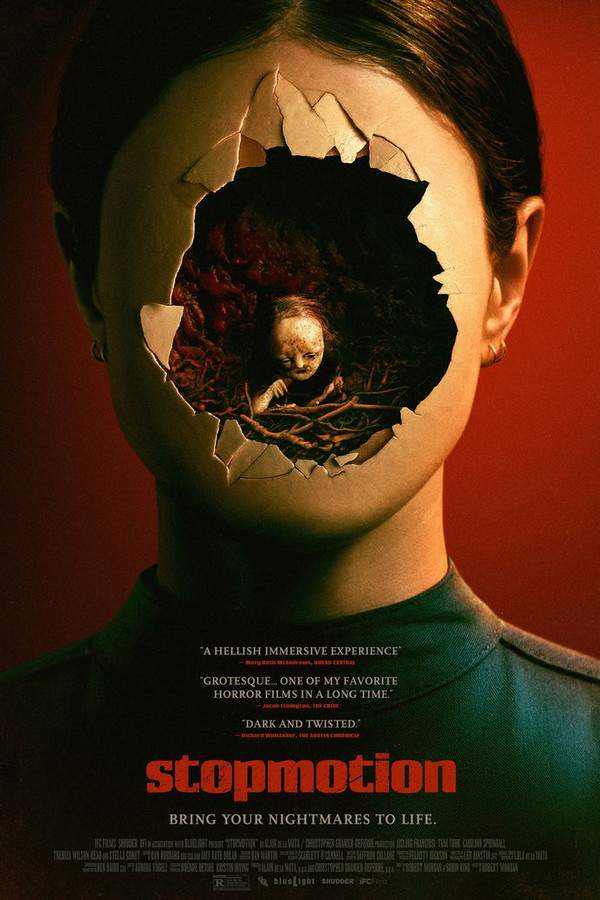
Ella Blake is a gifted yet burdened stop-motion animator whose arthritis makes hands tremble with every frame. She labors under the exacting eye of her mother, Suzanne Blake, a renowned filmmaker whose high standards often blur into pressure and control. When Suzanne suffers a stroke and slips into a coma, Ella vows to finish the film herself, hoping to honor her mother’s legacy even as the weight of abuse and exhaustion tightens around her.
To carve out space for her work, Ella moves into a semi-abandoned apartment building that Tom, her boyfriend, manages. In the dim corridors and echoing stairwells, she encounters a young resident—the Little Girl Little Girl—who critiques the submitted story as “boring” and presses a different vision: a tale about a girl who wanders lost in the woods. Rather than cling to the original project, Ella allows the newly proposed story to take the lead, hoping the fresh perspective will spark the inspiration she has been chasing. The Little Girl returns, insisting the figures must feel real, and nudges Ella toward a more visceral approach, even suggesting that the dolls be fashioned from flesh-like material fashioned from spoiled steak. At first hesitant, Ella yields to the unsettling instruction.
As the girl pushes the project deeper into darkness, shedrives Ella into the forest to confront the roots of the tale. The Little Girl insists that the Ash Man must be made from “something dead,” and together they discover a dead fox. Ella resists using it, but the girl’s urgency grows louder, and she withholds parts of the story until Ella adheres to her increasingly disturbing demands. The attempt to finish the film becomes less about art and more about survival as Ella grapples with a creeping creative block that won’t loosen its grip.
Seeking a spark, Ella attends a party in the building and turns to Tom’s sister Polly for a shot of LSD, hoping feverishly for a breakthrough. The experiment leads to a grim, frantic vividness, and Ella remakes the Ash Man puppet using the fox carcass, blurring the line between animation and nightmare. That night, she hallucinates the Ash Man peering through her peephole, a chilling image that mirrors a scene from the film. Tom finds her unconscious and wonders aloud whether she imagined the vision. Ella pockets the untouched drug, but the fear lingers and shadows every room she enters.
Polly—also a stop-motion animator—arranges a studio opportunity for Ella, thinking she’ll assist with the animation. Instead, the director makes it clear that Ella’s task is to craft the eyeballs for the stop-motion figures. Disappointed but determined, she spends the day working. While wandering the studio, she uncovers a jarring truth: Polly has plagiarized her film. A confrontation erupts, and Ella destroys the set Polly built in anger, a vicious moment that braids professional rivalry with a sense of betrayal.
The Little Girl returns again, expanding the script with new details: the Ash Man comes back and touches the girl in the night. Ella refuses to add that portion, insisting that the girl escapes, but the story continues to unfold in her own delirious way. A fresh wave of fear washes over her as another hallucination of the Ash Man stalks her apartment. She wakes in a hospital bed with a leg injury, and Tom visits, cautioning that the project has gone too far. He plans to go to her apartment, destroy the set, and delete the footage—unless he must accompany her to do it. In a quieter, crushing revelation, Ella learns that her mother has died.
Back in the apartment, the tension and desperation spill into a brutal climax. The Little Girl reappears, and Ella—driven by a fractured sense of art and love—strangles the girl to death. Yet the girl returns moments later, unharmed, offering a strange comfort as Ella’s world spirals further out of control. The girl pushes Ella to demand even more: to remake the Ash Man with “something that bleeds.” In a harrowing act, Ella tears the stitches on her own leg and pulls out a strip of flesh, linking body and sculpture in a nightmarish fusion.
Tom and Polly intervene, trying to pull Ella back, but the hemorrhaging torch of obsession flares. Ella kills them both, and uses their flesh to craft life-sized figures of the Little Girl and the Ash Man. The lifelike creations begin to advance toward Ella and the girl, the Ash Man a looming, waxen sentinel. In the confrontation, the Little Girl cries out that this isn’t part of the story, and the room tightens with inevitability.
The Ash Man ultimately consumes part of Ella’s face, its grotesque hunger framed as a perverse form of completion. She stumbles toward a forest cabin that mirrors the one in the film, where the Little Girl watches a sickening loop: footage of Ella bleeding out on her own apartment floor. The girl confesses love for the film, and in a final, eerie calm, Ella sinks into a satin-lined box and closes the lid, leaving the viewer to interpret the fate of art, obsession, and the price of bringing a vision to life.