Plot Explained Spoilers guaranteed!
Plot Explained

Browse by genre

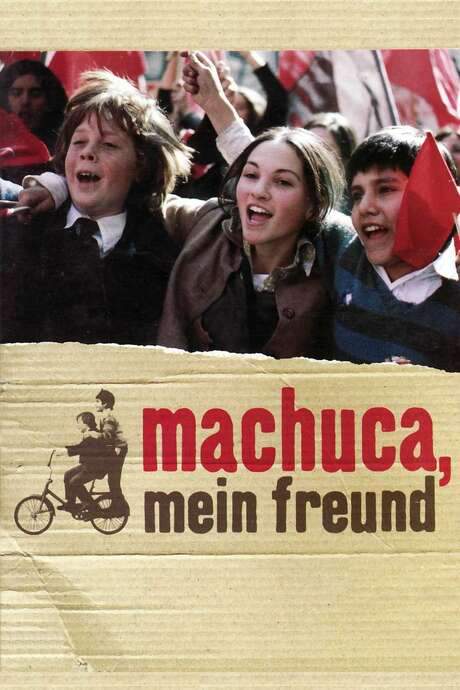
Machuca (2004) movie poster

Timeline

Machuca (2004) Timeline Explained – Every Event in Order

Release, runtime and language
2004 · 116 mins · Spanish
Loading streaming availability…
Directed by
Andrés Wood
Starring
Alejandro Goic, Aline Küppenheim, Francisco Reyes, Manuela Martelli, Federico Luppi, Ariel Mateluna

In 1970s Santiago, during Salvador Allende’s socialist presidency, Father McEnroe opens St. Patrick’s Catholic prep school to admit a handful of working‑class children. Pedro Machuca, the son of a cleaning lady, befriends Gonzalo Infante, a wealthy liberal’s son. Their friendship endures the 1973 Pinochet coup, which topples Allende, ousts supporters like McEnroe, and shatters the fragile bridge between their disparate worlds.

On this page (6)
  1. 1 Where to watch
  2. 2 Events in order (14)
  3. 3 Timeline questions answered
  4. 4 Movie threads
  5. 5 Movies like Machuca
  6. 6 Every angle
Loading streaming availability…

14 events in order · contains spoilers

Machuca Timeline: Events in Chronological Order

Every key event of Machuca (2004) in order, scene by scene, with when and where it takes place. Use it to untangle flashbacks, time jumps and parallel storylines, to refresh your memory before the sequel or to find the exact scene you are thinking of.

  1. Gonzalo's sheltered world meets rising political tensions

    Gonzalo, a 12-year-old from a comfortable family, navigates a city on edge as Chile's early 1970s tensions mount. The story follows his measured, observant view of the world around him as social change frays the borders of his privileged life. The political mood foreshadows upheaval that will challenge everything Gonzalo has known.

    When
    Early 1970s, Chile
    Where
    Gonzalo's home and private school neighborhood
  2. Society- and education-reform introduces new students

    Father McEnroe launches a social integration project at the private school, inviting five disadvantaged students to join the class. Some parents view it as a risky political maneuver, while others hope for reform through education. The program sets the stage for cross-class encounters that will test loyalties.

    When
    Early 1970s
    Where
    Private school
  3. Gonzalo meets Pedro and a fragile friendship forms

    Gonzalo befriends Pedro Machuca, a boy from a poorer neighborhood, and their bond begins in the classroom. Their friendship survives derision from wealthier classmates and becomes a quiet beacon amid rising class tensions. The pairing exposes hidden commonalities across social divides.

    When
    Early 1970s
    Where
    School classroom
  4. Silvana joins their street world

    Silvana becomes a companion in their street ventures, adding a new dynamic to the trio. Teasing gives way to a tender, evolving affection and a shared sense of rebellion against rigid social codes.

    When
    Early 1970s
    Where
    Around Gonzalo's home and Pedro's neighborhood
  5. A day of political street theater

    The trio navigates demonstrations, selling nationalist flags at a right-wing event and socialist flags at a leftist rally. Their improvisation braids personal courage with the volatile politics surrounding them.

    When
    Early 1970s
    Where
    City streets and demonstrations
  6. Gonzalo visits Pedro's shantytown

    Gonzalo is confronted with the harsh poverty of Pedro's neighborhood, a stark contrast to his own comfortable surroundings. The visit unsettles him and deepens the awareness of social inequality.

    When
    Early 1970s
    Where
    Pedro's shantytown
  7. Pedro visits Gonzalo's home

    Pedro steps into Gonzalo's world and discovers a room packed with toys and clothes, highlighting the material divide between their lives. The moment underscores the fragility of their friendship amid growing social friction.

    When
    Early 1970s
    Where
    Gonzalo's home
  8. Shared love of Lone Ranger comic bonds them

    The boys discover a shared love for a Lone Ranger and Tonto comic, a small, defiant moment that binds them across class lines. Reading together becomes a quiet act of solidarity in a time of mounting fear.

    When
    Early 1970s
    Where
    School or neighborhood reading corner
  9. The school garden struggles, threatening funding

    As McEnroe's project gains momentum, the school's vegetable garden fails, jeopardizing the funding that sustains the integration program. Adults on all sides argue over changing times versus stability, heightening the emotional stakes for the students.

    When
    Before the coup
    Where
    School grounds and garden
  10. Anti-Communist protests and family tensions

    Anti-Communist protests swell in the streets, and Gonzalo's mother participates, even taking Silvana's merchandise during a confrontation. The clash of loyalties within the families intensifies the growing rift between worlds.

    When
    Pre-coup unrest
    Where
    City streets
  11. Coup disrupts life at the school

    The military coup arrives, removing Father McEnroe and bringing a new priest who unsettles faith and ritual. In the first mass, the priest refuses to swallow the communion, preserving it in protest, while Pedro leads the students in honoring the departing priest. The upheaval rips at Gonzalo's carefully balanced world.

    When
    Day of the coup
    Where
    School chapel
  12. Violence erupts and Silvana is shot

    Gonzalo returns to the shantytown to find soldiers raiding the area and chaos erupts; Silvana is shot. Gonzalo is briefly mistaken for someone from that world and is spared only by his clean clothes and pale complexion, a stark reminder of how easily a child can be consumed by power.

    When
    During the coup period
    Where
    Shantytown streets
  13. Wealth shifts under the new government

    Back at home, wealth moves in new directions as his mother's Argentine lover contributes to redistribution, changing the social landscape. Yet the gains feel hollow against the memory of Pedro, Silvana's danger, and their lost friendship.

    When
    After the coup
    Where
    Gonzalo's home
  14. A memory of friendship amid ruins

    Older and wary, Gonzalo stares at the ruined city and recalls his friend Pedro. The film closes as a restrained meditation on class, loyalty, and the human cost of political upheaval.

    When
    After the coup; years later
    Where
    Ruined cityscape

Last updated: October 09, 2025 at 16:51

Was this helpful?

Timeline questions answered

Machuca Timeline Explained: Your Questions Answered

When does it happen, and why in that order? The questions people ask about the chronology of Machuca (2004): time jumps, flashbacks, cause and effect between scenes and the correct order of events, each answered with spoilers.

Q1

Why was Father McEnroe removed from the school?

Father McEnroe was removed after the 1973 military coup that overthrew President Allende. The new military-backed government viewed his social integration project, bringing working-class students into the private school, as a leftist political gesture. He was expelled and denied the ability to celebrate mass in the school chapel, with a new priest installed in his place who symbolically preserved the communion bread rather than consume it, declaring the space profane.

Foreshadowing: Earlier, wealthy parents had criticized the project as a 'leftist venture' rather than a Christian act of charity, foreshadowing McEnroe's vulnerability to political purge.

  • father mcenroe
  • expulsion
  • coup
  • chilean politics
  • school integration
Q2

What happened to Pedro Machuca after the coup?

The film does not explicitly show Pedro's fate after the coup, but the implication is devastating. When Gonzalo returns to the shantytown during the military raid, he witnesses violence and chaos. Silvana is shot, and Gonzalo himself is only spared because his clean clothes and pale complexion mark him as not belonging to that world. The film strongly suggests Pedro, as a resident of that same poor neighborhood and as the son of a cleaning woman, would have been a target. The final scene shows older Gonzalo remembering his friend among the ruins, implying Pedro was lost to the violence.

  • pedro machuca
  • fate
  • coup
  • disappearance
  • military violence
Q3

Why was Silvana shot in the movie?

Silvana was shot during a military raid on the shantytown shortly after the coup. The soldiers were conducting a sweep of the poor neighborhood, and anyone present during the raid was at risk. Silvana was caught in the crossfire of this indiscriminate violence against residents of the area. Her shooting represents how the coup's violence swept across all of Chile, striking not just political targets but ordinary people in their homes.

Foreshadowing: The earlier scene where Silvana spits on Gonzalo's mother's car and calls her a 'whore' marked the fragility of their alliance and the deepening rifts between classes.

  • silvana
  • shooting
  • shantytown
  • military raid
  • coup violence
Q4

Why did Gonzalo's mother join the anti-Communist protests?

Gonzalo's mother, María Luisa, was conflicted but ultimately sided with the wealthy establishment as tensions escalated. While her husband Patricio was generally sympathetic to the less privileged, María Luisa represented the tension between social idealism and entrenched privilege. She participated in the anti-Communist tumult, even taking Silvana's merchandise during a confrontation. This reflects how even those with some social conscience often capitulated to fear and protected their class interests when the political situation turned violent.

Foreshadowing: Her earlier private contradictions, including a relationship with a wealthy Argentinean man, established her attachment to privilege.

  • maría luisa
  • mother
  • anti-communist
  • protests
  • class loyalty
Q5

Why did the school's vegetable garden fail?

The school garden, symbolizing Father McEnroe's social integration project and hopes for unity between classes, failed as a plot device to show how the broader social tensions were affecting even small attempts at reconciliation. The garden's failure jeopardized the funding that sustained the integration program, heightening pressure on McEnroe and the students. It mirrored the larger societal collapse happening outside the school walls, where seeds of change were being trampled by political division.

  • school garden
  • funding
  • mcEnroe project
  • symbol
  • failure
Q6

What did the communion scene represent?

The communion scene during the first mass after the coup is loaded with religious and political symbolism. The new priest, installed by the military-backed government, receives communion but does not swallow the sacramental bread, he preserves it from desecration and declares the place profane. This act signals that the new regime has corrupted sacred spaces, including the church. Meanwhile, Pedro leads the students in honoring the departing Father McEnroe, showing where the children's true loyalties lie despite the political upheaval.

  • communion
  • first mass
  • priest
  • symbolism
  • desecration
Q7

Why was Gonzalo spared by the soldiers in the shantytown?

Gonzalo was spared during the military raid because his clean clothes and pale complexion marked him as clearly not belonging to the shantytown. The soldiers, hunting for suspected Allende supporters and leftist elements in the poor neighborhood, immediately recognized him as an outsider from the privileged class. He was warned never to return. This moment starkly illustrates how class privilege provided protection even amid indiscriminate violence, while the poor residents, people like Pedro and Silvana, faced deadly danger.

  • gonzalo
  • spared
  • soldiers
  • class privilege
  • shantytown raid
Q8

Why couldn't Gonzalo and Pedro's friendship survive the coup?

Gonzalo and Pedro's friendship was destroyed not by any choice they made, but by the violent forces beyond their control. The coup divided Chile into those who supported the new regime and those who were targets of it. As a poor resident of a shantytown, Pedro became part of a population the military considered dangerous. Gonzalo, from a wealthy family, represented the class that was largely spared. The physical and social barriers erected by the coup made it impossible for them to maintain their bond. Additionally, Gonzalo's warning to never return to the shantytown effectively severed their connection.

Foreshadowing: Silvana's earlier comment about the unlikelihood of a white boy and an Indigenous friend sharing a bond foreshadowed how their friendship defied the social codes that ultimately reasserted themselves.

  • friendship
  • class division
  • coup
  • separation
  • political upheaval
Q9

Why did the military coup happen in Chile?

The 1973 coup that overthrew President Salvador Allende happened because of deep political polarization in Chile during the early 1970s. Allende's socialist government implemented reforms that redistributed wealth and challenged the interests of the wealthy classes and foreign businesses. Many in the upper classes and military grew increasingly opposed to his government, fearing it was leading Chile toward communism. The United States also supported opposition to Allende. The military, led by General Augusto Pinochet, staged the coup on September 11, 1973, resulting in Allende's death and the establishment of a brutal dictatorship.

Foreshadowing: The escalating anti-Communist protests and the tense political climate throughout the film foreshadowed the violent rupture of the coup.

  • chile coup
  • allende
  • pinochet
  • 1973
  • military takeover
Q10

What happened to Father McEnroe after being expelled?

Father McEnroe was forcibly removed from the school and the church by the new military-backed regime. He was denied the ability to celebrate mass in the school chapel, and a new priest was installed in his place. The film shows him being escorted out as the students, led by Pedro, pay their respects to him. Beyond this, his ultimate fate is not specified in the film, but his removal represents the purging of progressive religious figures who advocated for social justice during Allende's government.

  • father mcenroe
  • expelled
  • after expulsion
  • faith
  • purge
Q11

Why were the Lone Ranger comics significant to Gonzalo and Pedro?

The Lone Ranger and Tonto comics represented a small, defiant act of solidarity and common ground across class lines. Both boys loved the same comic book series featuring a white hero and his Indigenous sidekick. Reading together became a quiet rebellion against the social codes that kept their families apart, it showed they shared the same imagination and escapism despite their vastly different circumstances. This shared love underscored how much they had in common as children, even as the adult world insisted on dividing them.

  • lone ranger
  • comics
  • friendship
  • solidarity
  • childhood
Q12

Why was Gonzalo's visit to Pedro's shantytown a turning point?

Gonzalo's visit to Pedro's shantytown was a turning point because it confronted him with the extreme poverty that existed just miles from his comfortable home. He saw firsthand the scarcity and harsh living conditions that Pedro faced daily, a stark contrast to his own room filled with toys and a closet full of clothes. This experience deepened his awareness of social inequality and made his friendship with Pedro more meaningful, but it also placed him in danger once the political situation deteriorated.

  • shantytown visit
  • poverty
  • class contrast
  • awareness
  • turning point
Q13

What does the ending scene imply about Gonzalo's future?

The ending shows an older Gonzalo, now wary and changed, staring at the ruined cityscape and recalling his friend Pedro. This final image suggests that the coup and the loss of his friendship left permanent scars. He carries the memory of Pedro, of Silvana's danger, and of the day the shantytown 'withered away under gunfire.' The film closes as a meditation on class, loyalty, and the human cost of political upheaval, a childhood friendship that should have survived was destroyed by forces beyond the children's control.

  • ending
  • memory
  • ruins
  • future
  • grief
  • loss

Movie threads

More Movies Like Machuca, by Mood & Story

Curated lists built around what makes Machuca tick: the same mood, the same kind of story or the same emotional payoff. Each list explains why these movies belong together.

Childhood innocence shattered by political upheaval like in Machuca

Stories where a child's world is fractured by overwhelming historical forces. If you liked the way Machuca uses a child's friendship to tell a story of political collapse, you'll appreciate these movies. This thread collects similar films where youthful innocence is a lens for exploring historical trauma, featuring stories with a heavy emotional weight and melancholic tone.

  • nostalgic
  • oppressive
  • tender
  • sad
  • thoughtful
  • historical
  • Tone: melancholic, observant, tragic
  • Pacing: steady, character-driven
Why these movies?

The story pattern: Films in this thread typically follow a linear, character-focused narrative seen through a child's eyes. The journey begins in a state of relative normalcy or budding friendship, which is then violently interrupted by external political events. The climax is often the irreversible shattering of the child's world, resulting in an ending defined by grief and historical trauma.

Why they belong together: These movies are grouped together because they share a specific narrative device: using childhood as a microcosm for larger societal conflicts. They blend the personal with the political, creating a uniquely powerful and melancholic viewing experience defined by a steady, observant pace that builds to a high-intensity, emotionally devastating climax.

Fragile friendships across class divides like in Machuca

Intimate bonds formed across social lines, tested by an unforgiving world. For viewers who were moved by the central friendship in Machuca, this thread finds other movies about tender bonds formed across social classes. These films explore how such connections are tested by a harsh world, often leading to moving, melancholic stories with a heavy emotional weight.

  • tender
  • sad
  • thoughtful
  • melancholic
  • moving
  • observant
  • Tone: melancholic, tender, thoughtful
  • Pacing: steady, relationship-focused
Why these movies?

The story pattern: The narrative follows the formation and deepening of a friendship between characters from different worlds. The middle act explores the joy and challenge of this connection. The conflict arises not from within the friendship itself, but from the overwhelming external forces of class conflict or societal unrest, which ultimately sever the bond and leave characters grieving a lost possibility.

Why they belong together: These films are united by their core focus on a specific type of relationship dynamic. They share a melancholic, observant tone and a steady pacing that allows the friendship to feel authentic. The emotional journey is consistently heavy, culminating in a sense of loss that comments on broader social injustices.

If you liked this

Movies Like Machuca

Similar movies to Machuca: the same genre, themes or kind of story. Each one comes with its own plot summary, timeline and ending explained.

Browse all movie summaries

Every angle

Machuca (2004) Explained: Plot, Timeline & Characters

Everything about Machuca in one place: what happens in the plot summary, the timeline in chronological order, the characters and meaning and a spoiler-free summary. What's After the Movie adds the cast, box office and post-credit scenes.

Coming soon on iOS and Android

The Plot Explained Movie Summary App

Plot summaries, endings explained and timelines on your phone. Catch up on any movie in minutes, save your favorites and never miss a twist again.

Be the first to know when we launch. Your email stays private, always.

Learn more about the app