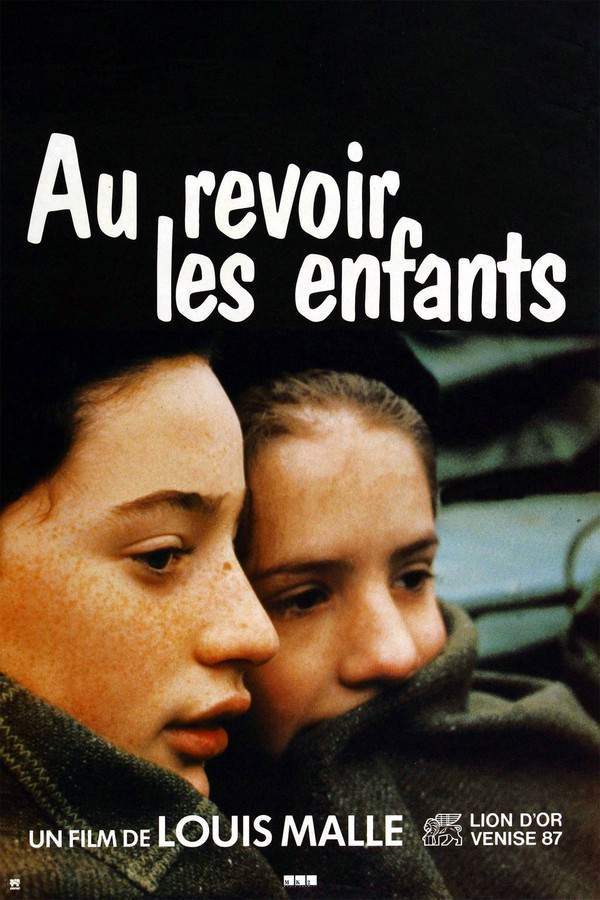
Au Revoir les Enfants

Au Revoir les Enfants

JustWatch#25,5543

Year: 1988

Runtime: 104 min

Language: French

Director: Louis Malle

DramaWar

During wartime in 1943 France, a young boy named Julien’s life is disrupted by the arrival of three unfamiliar students at his boarding school. He quickly befriends Jean, a reserved and enigmatic boy, but soon discovers Jean’s secret—he is Jewish and living in hiding. As the dangers of the war intensify, Julien must grapple with difficult choices and the risk of exposing his friend while navigating the innocence of childhood and the harsh realities of a nation at war.

Where to Watch Au Revoir les Enfants?

Find where to stream, rent, or buy Au Revoir les Enfants (1988) in the US with current JustWatch availability, up-to-date pricing, and platform listings for subscription, rental, and digital purchase options.

Warning: spoilers below!

Haven’t seen Au Revoir les Enfants yet? This summary contains major spoilers. Bookmark the page, watch the movie, and come back for the full breakdown. If you're ready, scroll on and relive the story!

Au Revoir les Enfants (1988) – Full Plot Summary & Ending Explained

Read the complete plot breakdown of Au Revoir les Enfants (1988), including all key story events, major twists, and the ending explained in detail. Discover what really happened, and what it all means.

During the winter of 1943-44, Julien Quentin, a student returning to his Carmelite boarding school in occupied France, attempts to project a tough demeanor to his peers. However, beneath this façade lies a deeply pampered boy who longs for his mother’s presence. As he settles back into the mundane routine of school life, things take an unexpected turn with the arrival of three new students. One of them is Jean Bonnet, who shares Julien’s age. Initially, Julien and his classmates look down on Jean, who struggles socially but possesses remarkable talent in mathematics and piano.

One night, Julien awakens to find Jean wearing a kippah, engaged in Hebrew prayers. Driven by curiosity, Julien explores Jean’s locker and uncovers his true identity—Kippelstein. This revelation comes alongside learning that Père Jean, the headmaster played by François Berléand, has heroically chosen to offer secret sanctuary to hunted Jews.

After a playful treasure hunt, a friendship blossoms between Julien and Jean. The bond strengthens when Julien, during a visit from his mother, invites Jean to join them for lunch at a fancy restaurant since Jean’s own parents could not attend. The atmosphere at the table shifts dramatically when Julien’s father is discussed. Upon hearing Julien’s brother question their father’s allegiance to Marshal Pétain, Madame Quentin insists, “No one is anymore.” The meal takes a distressing turn when the Milice arrive, attempting to expel a Jewish diner. In a moment of defiance, Julien’s brother refers to them as “Collabos,” inciting the wrath of the Milice commander, who retorts, “We serve France, madam. He insulted us.” When a Wehrmacht officer orders the Milice to leave, they comply, albeit begrudgingly. Madame Quentin remarks on the dignity of the Jewish diner, expressing her neutrality towards Jews but revealing her disdain for socialist politician Léon Blum.

Troubles arise when Joseph, the school’s assistant cook, is caught selling food supplies on the black market. He implicates several students, including Julien and his brother, François. Despite his anguish over the injustice, Père Jean chooses not to expel the students, concerned about the ramifications for their affluent families.

As January 1944 arrives with an icy chill, a Gestapo raid targets the school in search of Jean Kippelstein. In a moment of unintended betrayal, Julien inadvertently reveals Jean’s location. While chaos ensues as the Jewish boys are hunted, Julien confronts Joseph, who justifies his act of treachery by saying, “Don’t act so pious. There’s a war going on, kid.” Julien, filled with disgust, hastily departs. He and Jean engage in their habitual book exchange as they prepare to leave, marking a poignant farewell amidst the school’s closure.

When the students are gathered in the courtyard, a Gestapo officer denounces Père Jean’s noble deeds, labeling the French as weak. A heart-wrenching farewell unfolds as Père Jean, trailed by the Jewish boys, is escorted away. As he passes through the students, they call out, “Au revoir, mon père!” He stops, turns slightly, and with a reassuring voice responds, “Au revoir, les enfants! À bientôt!” Jean is the final one to exit through the garden’s metal gate, offering Julien a brief, wistful glance, which Julien shyly acknowledges with a wave.

The film concludes with an older Julien reflecting on the events of that fateful January morning. He shares the somber reality that Bonnet, Negus, and Dupre perished in Auschwitz, while Père Jean met his fate at Mauthausen. Although over 40 years have passed, Julien asserts that those haunting memories will remain engraved in his mind until the end of his days.
Last updated: November 16, 2024 at 18:12

Was this helpful?

Au Revoir les Enfants (1988) Plot Questions Answered – Summary FAQ

Explore frequently asked questions about Au Revoir les Enfants (1988) with spoiler-rich answers covering the full plot summary, major story beats, character motivations, hidden details, and ending meaning. This movie summary FAQ helps explain confusing scenes, plot twists, and narrative decisions in clear, searchable detail.

Q1

Why did Julien accidentally reveal Jean's location during the Gestapo raid?

A.

During the chaotic Gestapo raid in January 1944, Julien was searching for Jean to warn him. In the panic and confusion of the search, Julien inadvertently called out or indicated where Jean was hiding. This moment of unintended betrayal haunts Julien throughout the film, representing the tragic innocence lost, his action came from a place of wanting to help his friend, but the chaos of the raid made him unknowingly lead the Nazis directly to Jean.

Earlier, Julien had discovered Jean's secret identity and promised to keep it, making his accidental betrayal particularly devastating.

julienjeangestapo raidbetrayalaccident
Q2

What happened to Jean Bonnet after the Gestapo took him?

A.

Jean Bonnet (whose real name was Kippelstein) was deported along with the other Jewish students, Negus and Dupre, to Auschwitz, where they all perished. The film confirms this in the epilogue when older Julien reveals the tragic fate of his childhood friend, underscoring the brutal reality faced by hidden Jewish children during the Holocaust.

The ominous presence of the Gestapo officer and the military presence during the raid signaled the grave danger facing the Jewish boys.

jean bonnetauschwitzdeportationdeathkippelstein
Q3

Why did Père Jean decide to shelter Jewish children at his school?

A.

Père Jean, the Carmelite headmaster, made a deliberate moral choice to protect hunted Jewish children during the Nazi occupation of France. He believed it was his religious and ethical duty to save lives, even at tremendous personal risk. This act of defiance against the occupying forces ultimately led to his arrest and death at Mauthausen concentration camp.

The discovery of Jean wearing a kippah during prayer and finding Jewish texts in his locker revealed the headmaster's secret operation.

pere jeanheadmastershelterjewish childrenresistance
Q4

What is the significance of the film's title "Au Revoir les Enfants"?

A.

"Au Revoir les Enfants" means "Goodbye, Children" in French. The title refers to the final farewell between Père Jean and his students as he is led away by the Gestapo. When the children cry out "Au revoir, mon père!" he turns and replies "Au revoir, les enfants! À bientôt!", a heartbreaking promise of goodbye that became permanent. The title captures both the personal goodbye to friends and the broader loss of innocence and childhood during wartime.

The film opens with Julien returning to school, establishing the boarding school as a place of childhood, making the final departure devastating.

titlefarewellpere jeangoodbyechildren
Q5

Why did Julien's mother make negative comments about Jews at the restaurant?

A.

During the lunch at the fancy restaurant, Julien's mother expressed a complicated attitude toward Jews. While she admired the dignity of the Jewish diner being expelled by the Milice, she revealed her disdain for socialist politician Léon Blum. This scene illustrates the nuanced anti-Semitism present in parts of French society at the time, even among those who did not actively support the Nazis. It reflects how ordinary French people, while not all collaborators, held complex and often contradictory views about Jews during the occupation.

This scene establishes the political climate of occupied France and the moral compromises many French citizens made.

madame quentinjewsrestaurantpolitical viewsblum
Q6

Why did Joseph the cook betray the students to the Gestapo?

A.

Joseph, the school's assistant cook, was caught selling food supplies on the black market and, when confronted, implicated several students including Julien and his brother François to save himself. When Julien confronted him after the raid, Joseph justified his betrayal by saying, "Don't act so pious. There's a war going on, kid." This reveals how desperation and survival instincts during wartime led ordinary people to betray others, contrasting with the moral courage of Père Jean.

Joseph's earlier black market activities established his character as someone willing to profit from the war's chaos.

josephbetrayalblack marketgestaposurvival
Q7

What was the significance of the Milice arriving at the restaurant?

A.

The Milice scene demonstrates the complexity of collaboration in occupied France. When they attempted to expel a Jewish diner, Julien's brother defiantly called them "Collabos," provoking the Milice commander. A Wehrmacht officer then ordered the Milice to leave, showing tensions between the German military and the French collaborationist paramilitaries. Madame Quentin's observation about the Jewish diner's dignity, while she still held anti-Semitic views, illustrates the contradictions of French society under occupation.

This scene foreshadows the escalating dangers for Jews in occupied France and the varying responses of French citizens.

milicerestaurantcollaborationjewish dinergerman officer
Q8

How did the friendship between Julien and Jean develop?

A.

Julien and Jean's friendship evolved from initial hostility, Julien and his classmates looked down on the reserved newcomer, into a deep bond after Julien discovered Jean's secret. A pivotal moment was when Julien invited Jean to lunch with his mother, treating him as an equal despite knowing his true identity. Their friendship was marked by shared book exchanges and the innocent joy of childhood, making the eventual betrayal and separation devastating. Their relationship represents how childhood friendship can transcend the divisions imposed by wartime society.

The treasure hunt scene early in the film shows the boys beginning to connect before Julien learns Jean's secret.

julienjeanfriendshipchildhoodbook exchange
Q9

What happened to Père Jean after being arrested at the school?

A.

After the Gestapo raid in January 1944, Père Jean was arrested for sheltering Jewish children. He was deported to Mauthausen concentration camp, where he died. The film shows him being led away through the courtyard, with the students calling out "Au revoir, mon père!" He responded with the famous line "Au revoir, les enfants! À bientôt!", a heartbreaking farewell that proved to be final. His sacrifice represents the moral courage of those who risked everything to save Jewish lives during the Holocaust.

The Gestapo officer's condemnation of the French as "weak" for harboring Jews foreshadows the severity of Père Jean's punishment.

pere jeanarrestmauthausendeportationpriest
Q10

Why did Julien carry guilt over Jean's betrayal for over 40 years?

A.

Julien's guilt stems from his accidental betrayal of Jean during the Gestapo raid, he was trying to warn Jean but inadvertently revealed his location in the chaos. Even 40 years later, Julien states that these memories remain engraved in his mind until the end of his days. The film uses this guilt to explore themes of innocence, moral responsibility, and the lasting psychological impact of wartime choices. Julien's story is partly an attempt to process this guilt and honor the memory of those lost.

The film opens with Julien's melancholic, reflective narration, establishing his burdened perspective from the very beginning.

julienguiltbetrayalmemoryremorse
Mobile App Preview

Coming soon on iOS and Android

The Plot Explained Mobile App

From blockbusters to hidden gems - dive into movie stories anytime, anywhere. Save your favorites, discover plots faster, and never miss a twist again.

Sign up to be the first to know when we launch. Your email stays private, always.

Explore Movie Threads

Discover curated groups of movies connected by mood, themes, and story style. Browse collections built around emotion, atmosphere, and narrative focus to easily find films that match what you feel like watching right now.

Movies about lost childhood innocence like Au Revoir les Enfants

Stories where children's sheltered lives are pierced by harsh adult realities.If you were moved by the poignant loss of innocence in Au Revoir les Enfants, explore these films. This collection features similar stories where children's sheltered worlds are fractured by war, societal conflict, or difficult truths, capturing that tender and heartbreaking transition.

nostalgictenderheartbreakingsomberreflectiveoppressivequiet

Narrative Summary

These narratives typically follow a young protagonist living in a relatively sheltered environment. A catalyst event—often the arrival of an outsider or a glimpse into a hidden danger—forces them to grapple with complex moral issues, betrayal, or the weight of history, leading to a fundamental and often sad change in their worldview.

Why These Movies?

Movies in this thread share a melancholic, reflective tone and a steady, observational pacing. They are united by their focus on the emotional journey of a child facing adult-sized problems, resulting in a heavy emotional weight and a profound sense of loss, even when moments of friendship and tenderness are present.

Movies with quiet oppressive tension like Au Revoir les Enfants

Stories where everyday life is charged with the silent dread of authoritarian rule.For viewers who appreciated the building dread in Au Revoir les Enfants, this list highlights similar movies. Discover films set under authoritarian rule where the tension is felt in everyday routines and quiet moments, creating a deeply suspenseful and emotionally resonant experience.

tenseoppressivesomberquietdreadclaustrophobicsuspenseful

Narrative Summary

The narrative pattern involves characters attempting to maintain a semblance of normal life while hiding a secret or resisting a powerful, threatening force. The tension builds steadily through small incidents and close calls, often culminating in a devastating betrayal or raid that shatters the fragile peace.

Why These Movies?

These films are grouped by their specific mood mix: a steady, deliberate pacing that contrasts with high-stakes tension, a somber and melancholic tone, and a focus on the psychological weight of living in fear. They create an experience that is both quietly observed and intensely gripping.

Unlock the Full Story of Au Revoir les Enfants

Don't stop at just watching - explore Au Revoir les Enfants in full detail. From the complete plot summary and scene-by-scene timeline to character breakdowns, thematic analysis, and a deep dive into the ending - every page helps you truly understand what Au Revoir les Enfants is all about. Plus, discover what's next after the movie.

Au Revoir les Enfants Timeline

Track the full timeline of Au Revoir les Enfants with every major event arranged chronologically. Perfect for decoding non-linear storytelling, flashbacks, or parallel narratives with a clear scene-by-scene breakdown.

Au Revoir les Enfants Timeline

Characters, Settings & Themes in Au Revoir les Enfants

Discover the characters, locations, and core themes that shape Au Revoir les Enfants. Get insights into symbolic elements, setting significance, and deeper narrative meaning - ideal for thematic analysis and movie breakdowns.

Characters, Settings & Themes in Au Revoir les Enfants

Au Revoir les Enfants Spoiler-Free Summary

Get a quick, spoiler-free overview of Au Revoir les Enfants that covers the main plot points and key details without revealing any major twists or spoilers. Perfect for those who want to know what to expect before diving in.

Au Revoir les Enfants Spoiler-Free Summary

More About Au Revoir les Enfants

Visit What's After the Movie to explore more about Au Revoir les Enfants: box office results, cast and crew info, production details, post-credit scenes, and external links - all in one place for movie fans and researchers.

More About Au Revoir les Enfants

Similar Movies to Au Revoir les Enfants

Discover movies like Au Revoir les Enfants that share similar genres, themes, and storytelling elements. Whether you’re drawn to the atmosphere, character arcs, or plot structure, these curated recommendations will help you explore more films you’ll love.