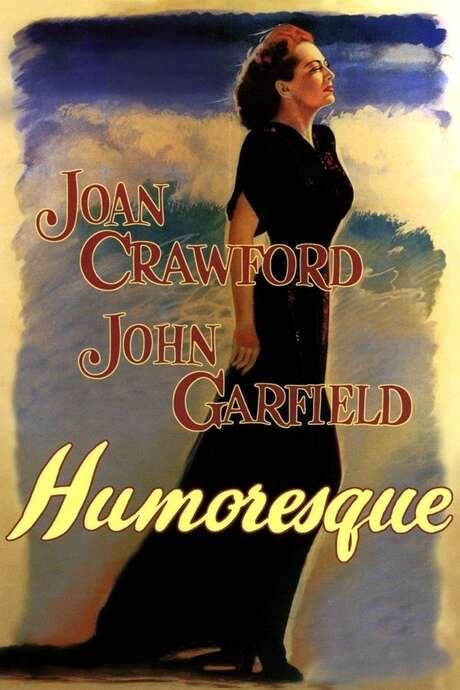
Pierre, Hardy Krüger, a pilot who was shot down in the French Indochina War, returns to a haunted quiet where his crash may have killed a young Vietnamese girl. Now physically recovered, he shares a Paris suburb apartment in Ville-d’Avray with Madeleine, Nicole Courcel, who was one of his nurses during his long convalescence. Yet he carries a childlike vulnerability, suffering from amnesia and vertigo that clinic visits and routine days barely mask. He spends his days with Carlos, Daniel Ivernel, Madeleine’s friend, helping an artist pursue his projects. The trio forms a fragile, intimate circle around Pierre, trying to rebuild a sense of normalcy from the fragments of a war-torn past.
One quiet evening, while waiting for Madeleine at the train station, a man asks for directions to St. Marguerite’s boarding school, where he plans to take his 11-year-old daughter who herself does not want to go. The encounter plants a delicate seed of a plan in Pierre’s mind. The following Sunday, posing as the girl’s father to the nuns, Pierre takes her for a walk at St. Marguerite’s. The girl confides that the nuns renamed her “Françoise” because her given name isn’t Christian, and she will reveal her real name only if Pierre brings her a metal rooster sculpture from a church spire. Abandoned by her mother and rejected by her grandmother, she shares her loneliness and longing for a different fate, and, finding a kinship in Pierre’s own estrangement, she gradually asks him to take her away from the school on Sundays. Pierre agrees, and together they begin to spend Sundays in the park, a ritual that quietly unsettles the town and unsettles Madeleine, who notices the unusual bond but cannot yet acknowledge its depth.
The girl, who now calls Pierre by a growing sense of affection, declares she would like to marry him when she turns eighteen. Pierre’s growing jealousy—of her adoration for a handsome horseman and even of her time with other children in the park—triggers a troubling moment when he slaps a boy during a park outing. Madeleine, preoccupied with her own life and responsibilities, sees that something is shifting but cannot immediately grasp its gravity. When Pierre’s Sunday outings become harder to hide, Madeleine’s quiet uncertainty turns to concern, and she fears for Cybèle’s safety. A lunch-hour distraction—the result of Pierre’s overstimulated state—blooms into a brawl at a fair, pushing the story toward a danger Pierre may not be able to measure or control.
As Christmas nears, neighbors reveal what they’ve observed: Pierre has spent Sundays with the girl rather than with Madeleine, and Madeleine, torn between affection and fear, asks for advice from Bernard, a doctor at the hospital where she works, who harbors a quiet crush on her. Carlos, ever protective, believes Pierre is not a danger, but Madeleine cannot shake the fear that Cybèle’s safety depends on keeping them apart. She follows Pierre on his next Sunday outing, and what she sees eventually reassures her that the relationship is innocent in its essence, yet impossible to ignore.
On Christmas Eve, Pierre forcibly enters Carlos’s apartment to steal a Christmas tree for a private celebration—complete with champagne—sharing the moment with the girl at a rickety shed in the park. The girl gives him her real name, Cybèle. Pierre departs to retrieve the metal rooster from the church, and up on the steeple, his vertigo mysteriously clears. Meanwhile, Madeleine contacts Bernard, who arrives with Carlos to support her, and the two of them alert the nuns and the police, anxious for Cybèle’s safety. The long night ends with the police bringing the pair together again, and they learn that Pierre is dead.
When Madeleine, Bernard, and Carlos reach the park shed, they find Cybèle in tears and a grieved officer notes the strange miracle of their rescue: the moment the police arrive, Cybèle is safe, and Pierre lies dead nearby, his last act a dagger he and Cybèle had used in their shared ritual of listening to spirits in trees, and a plan to unscrew the metal rooster from the church. Cybèle’s cries echo through the shed as she realizes the loss of the only guardian she felt she had.
> "miracle" that the police found Cybèle in time to protect her from Pierre
In the end, the film lingers on the fragile bond between a lost child and a man who is both protector and danger, and it leaves the circle of Madeleine, Bernard, and Carlos to grieve a tragedy that grew from a longing for companionship, a painting of innocence, and the perilous thin line between care and perception.