



Plot Explained Spoilers guaranteed!
Plot Explained

Browse by genre

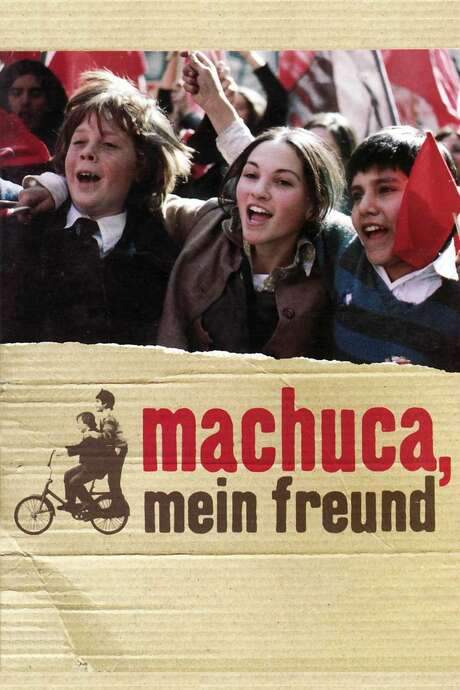
Machuca (2004) movie poster

Characters & Themes

Machuca (2004) Characters, Setting & Themes Explained

Release, runtime and language
2004 · 116 mins · Spanish
Directed by
Andrés Wood
Starring
Alejandro Goic, Aline Küppenheim, Francisco Reyes, Manuela Martelli, Federico Luppi, Ariel Mateluna

In 1970s Santiago, during Salvador Allende’s socialist presidency, Father McEnroe opens St. Patrick’s Catholic prep school to admit a handful of working‑class children. Pedro Machuca, the son of a cleaning lady, befriends Gonzalo Infante, a wealthy liberal’s son. Their friendship endures the 1973 Pinochet coup, which topples Allende, ousts supporters like McEnroe, and shatters the fragile bridge between their disparate worlds.

On this page (8)
  1. 1 Where to watch
  2. 2 Characters explained (6)
  3. 3 Where & when it takes place
  4. 4 Themes & meaning (4)
  5. 5 Character & meaning questions
  6. 6 Movie threads
  7. 7 Movies like Machuca
  8. 8 Every angle

Where to watch

Where to Watch Machuca (2004)

Where can you watch Machuca? Stream, rent or buy it in the US, including on Kino Film Collection, Kanopy and Fandor: current JustWatch availability with up-to-date prices.

Streaming availability powered by JustWatch

6 main characters · contains spoilers

Machuca Characters Explained: Who Is Who

The main characters of Machuca (2004), heroes and villains: what drives them, how they change over the course of the story and what each of them reveals about the film's bigger ideas.

  • Gonzalo Infante (Matías Quer)

    A 12-year-old from a comfortable, upper-class upbringing who becomes immersed in a world of inequality. He forms a thoughtful, sometimes conflicted bond with peers from a different social stratum, showing sensitivity beyond privilege. His perspective shifts as political events unfold, testing loyalties and curiosity.

    • 🎯 Protagonist
    • 🧒 Child
    • 💼 Privileged upbringing
  • Pedro Machuca (Ariel Mateluna)

    An Indigenous boy from a poorer neighborhood who forms a close friendship with Gonzalo while facing regular derision from wealthier classmates. He reveals resilience and warmth, serving as a bridge between two worlds. His experiences highlight poverty, prejudice, and the human cost of political upheaval.

    • 👦 Working-class
    • 🧭 Outsider
    • 💪 Resilient
  • Silvana (Manuela Martelli)

    A neighbor who becomes a companion to Gonzalo and Pedro, navigating loyalty, friendship, and danger. Her presence challenges class assumptions and personal choices, adding tenderness amid social tension. She embodies both vulnerability and courage in a divided city.

    • 👧 Street-smart
    • 🤝 Friend
    • 🌸 Compassion
  • Father McEnroe (Ernesto Malbrán)

    A determined priest and head of the private school who launches the social integration project, turning the school into a stage for reform and controversy. His ideals collide with entrenched interests, and when political winds shift, the project is threatened and ultimately removed from the school.

    • 🕊️ Priest
    • 🎯 Reformist
    • 🏫 Education
  • Patricio Infante (Francisco Reyes)

    Gonzalo’s father, outwardly supportive of reform but cautious about how far change should go. He balances empathy with prudence as his son encounters new ideas and a changing society. His stance reflects the divided attitudes of the upper class toward upheaval.

    • 💼 Father
    • 🧭 Cautious
  • Maria Luisa Infante (Aline Küppenheim)

    Gonzalo’s mother, resigned to the state of affairs yet carrying private contradictions, including a relationship with a wealthy Argentinean man. She embodies privilege while witnessing the tensions and consequences of social change. Her perspective demonstrates the complexities of adapting to a shifting world.

    • 👩 Mother
    • 💎 Privilege
    • 🗣️ Complicity

Last updated: October 03, 2025 at 14:11

Was this helpful?

Setting

Where and When Does Machuca Take Place?

The setting of Machuca (2004): the year and time period, the places and locations, and how they shape the characters, the mood and the tension of the story.

Time period

Early 1970s

Chile in the early 1970s is marked by rising social tensions as Allende’s socialist reforms meet strong opposition from the right. The country experiences protests, labor strikes, and political paranoia that color everyday life in urban centers. Amid this climate, families navigate changing loyalties and the looming threat of disruption, culminating in the 1973 military coup that reshapes society.

Location

Santiago, Chile

Set in urban Santiago, the film contrasts a well-off private school with a nearby shantytown. The school hosts a bold social integration project led by Father McEnroe, while the surrounding neighborhoods reveal stark poverty and inequality. The urban setting acts as a microcosm of a country teetering between reform and upheaval.

  • 🌆 Urban Santiago
  • 🏫 Private School
  • 🏚️ Shantytown

Last updated: October 03, 2025 at 14:11

Was this helpful?

4 major themes

Machuca Meaning: Themes & Message Explained

What is Machuca (2004) really about? The emotional, social and philosophical themes the film keeps returning to, its symbolism and the message beneath the surface.

  • Class Divide

    Machuca juxtaposes Gonzalo’s comfortable upbringing with Pedro’s poverty, showing how wealth structures opportunities and biases. The private school’s integration project exposes both sides to each other’s realities, while provoking tension among adults who fund or oppose it. Small moments of shared curiosity reveal the fragility and complexity of social bonds under pressure.

  • Friendship

    Gonzalo and Pedro form an unlikely bond born of shared interests and curiosity, challenging rigid social codes. Silvana’s presence adds a layer of tenderness and risk to their alliance. The friendship endures in private moments even as public conflict threatens to pull them apart.

  • Politics

    The film situates personal lives within a combustible political landscape: Allende’s presidency, anti-communist sentiment, and mass demonstrations. Political upheaval seeps into the school and streets, altering loyalties and opportunities. The coup marks a turning point that tests the resilience of friendships and the safety of families.

  • Authority & Education

    Father McEnroe’s integration project makes the school a battleground for social change, with the garden failing and funding at risk illustrating how institutions are pressured by politics. Parents’ debates reflect competing visions of reform and order. The upheaval leads to expulsions and resignations, showing how education becomes both tool and casualty in times of crisis.

Last updated: October 03, 2025 at 14:11

Was this helpful?

Character & theme questions

Machuca Characters & Meaning: Your Questions Answered

The questions people ask about Machuca (2004): who the characters really are, their relationships, what the symbols mean, where it takes place and what the movie is really about. Each answer contains spoilers.

Q1

Where is the movie set?

The film takes place in Santiago, Chile, specifically contrasting the world of an upscale private Catholic school with a nearby shantytown. This urban setting serves as a microcosm for a nation caught between social reform and political upheaval.

  • santiago
  • chile
  • private school
  • shantytown
  • urban setting
Q2

When does the story take place?

The movie is set in the early 1970s, during Salvador Allende's presidency, culminating in the 1973 military coup. This period is marked by intense social polarization, labor strikes, and political paranoia that permeates everyday life in Chile's cities.

  • 1970s
  • santiago
  • allende
  • chile
  • coup
  • pinochet
Q3

What is Father McEnroe's integration project?

Father McEnroe, the head of St. Patrick's Catholic prep school, launches an initiative to admit a small group of working-class children, including Pedro Machuca. The project aims to bridge class divides but faces resistance from parents and ultimately collapses after the 1973 coup.

  • father mc enroe
  • integration
  • school
  • private school
  • reform
Q4

What is the class divide theme in the film?

Machuca explores how wealth structures opportunities and biases in Chilean society. The film juxtaposes Gonzalo's comfortable upbringing with Pedro's poverty, showing how the private school's integration project forces both privileged and working-class students to confront each other's realities, revealing the fragility of social bonds under pressure.

  • class divide
  • poverty
  • wealth
  • social class
  • inequality
Q5

What is the friendship between Gonzalo and Pedro about?

Gonzalo Infante, a privileged 12-year-old, and Pedro Machuca, an Indigenous boy from a poor neighborhood, form an unlikely bond that transcends rigid social codes. Their friendship becomes a private refuge as public political conflict intensifies, representing a fragile bridge across class lines that ultimately cannot withstand historical forces.

  • gonzalo
  • pedro
  • friendship
  • class divide
  • connection
Q6

How does the film portray Chile's political climate?

The movie situates personal lives within Chile's combustible political landscape: Allende's socialist reforms, growing anti-communist sentiment, and mass demonstrations. Political upheaval seeps into the school and streets, altering loyalties and opportunities, with the 1973 coup testing the resilience of friendships and the safety of families.

  • allende
  • politics
  • coup
  • chile
  • socialism
  • 1973
Q7

Who is Pedro Machuca?

Pedro Machuca is an Indigenous boy from a poor shantytown neighborhood who is admitted to the prestigious St. Patrick's school through Father McEnroe's integration project. He faces derision from wealthier classmates but forms a close friendship with Gonzalo, demonstrating resilience and warmth while highlighting the human cost of political upheaval on the working class.

  • pedro machuca
  • indigenous
  • poverty
  • shantytown
  • working class
Q8

Who is Gonzalo Infante?

Gonzalo Infante is a 12-year-old from an upper-class family whose perspective shifts as he encounters the reality of inequality through his friendship with Pedro. He represents privileged youth grappling with new ideas and changing loyalties as political events unfold around him.

  • gonzalo infante
  • privileged
  • upper class
  • youth
Q9

How does the film treat education and authority?

Father McEnroe's integration project turns the school into a battleground for social change, with failing gardens and threatened funding illustrating how institutions come under political pressure. When political winds shift after the coup, the project is dismantled, students are expelled, and educators are forced out, showing how education becomes both a tool and a casualty of political crisis.

  • education
  • school
  • authority
  • institution
  • coup
Q10

What happens after the 1973 coup in the film?

The 1973 military coup that brings Pinochet to power marks a turning point that shatters the fragile bridge between the disparate worlds represented in the film. The political upheaval leads to the expulsion of Father McEnroe and working-class students, destroys the integration project, and tests the durability of friendships across class lines.

  • pinochet
  • coup
  • military
  • 1973
  • fall
  • aftermath
Q11

Who is Silvana in the story?

Silvana is a neighbor who becomes a companion to both Gonzalo and Pedro, navigating loyalty and danger in a divided city. Her presence challenges class assumptions and adds tenderness amid social tension, embodying both vulnerability and courage as the political situation deteriorates.

  • silvana
  • neighbor
  • companion
  • danger
  • courage
Q12

What is the overall tone of the film?

The film maintains a consistently melancholic tone marked by quiet, reflective sadness rather than sensationalism. Its power lies in the contrast between intimate, tender moments of connection between characters and the overwhelming reality of societal collapse, resulting in a sad and heavy ending defined by grief and historical trauma.

  • tone
  • melancholy
  • sadness
  • emotional
  • ending
  • grief

Movie threads

More Movies Like Machuca, by Mood & Story

Curated lists built around what makes Machuca tick: the same mood, the same kind of story or the same emotional payoff. Each list explains why these movies belong together.

Childhood innocence shattered by political upheaval like in Machuca

Stories where a child's world is fractured by overwhelming historical forces. If you liked the way Machuca uses a child's friendship to tell a story of political collapse, you'll appreciate these movies. This thread collects similar films where youthful innocence is a lens for exploring historical trauma, featuring stories with a heavy emotional weight and melancholic tone.

  • nostalgic
  • oppressive
  • tender
  • sad
  • thoughtful
  • historical
  • Tone: melancholic, observant, tragic
  • Pacing: steady, character-driven
Why these movies?

The story pattern: Films in this thread typically follow a linear, character-focused narrative seen through a child's eyes. The journey begins in a state of relative normalcy or budding friendship, which is then violently interrupted by external political events. The climax is often the irreversible shattering of the child's world, resulting in an ending defined by grief and historical trauma.

Why they belong together: These movies are grouped together because they share a specific narrative device: using childhood as a microcosm for larger societal conflicts. They blend the personal with the political, creating a uniquely powerful and melancholic viewing experience defined by a steady, observant pace that builds to a high-intensity, emotionally devastating climax.

Fragile friendships across class divides like in Machuca

Intimate bonds formed across social lines, tested by an unforgiving world. For viewers who were moved by the central friendship in Machuca, this thread finds other movies about tender bonds formed across social classes. These films explore how such connections are tested by a harsh world, often leading to moving, melancholic stories with a heavy emotional weight.

  • tender
  • sad
  • thoughtful
  • melancholic
  • moving
  • observant
  • Tone: melancholic, tender, thoughtful
  • Pacing: steady, relationship-focused
Why these movies?

The story pattern: The narrative follows the formation and deepening of a friendship between characters from different worlds. The middle act explores the joy and challenge of this connection. The conflict arises not from within the friendship itself, but from the overwhelming external forces of class conflict or societal unrest, which ultimately sever the bond and leave characters grieving a lost possibility.

Why they belong together: These films are united by their core focus on a specific type of relationship dynamic. They share a melancholic, observant tone and a steady pacing that allows the friendship to feel authentic. The emotional journey is consistently heavy, culminating in a sense of loss that comments on broader social injustices.

If you liked this

Movies Like Machuca

Similar movies to Machuca: the same genre, themes or kind of story. Each one comes with its own plot summary, timeline and ending explained.

Browse all movie summaries

Every angle

Machuca (2004) Explained: Plot, Timeline & Characters

Everything about Machuca in one place: what happens in the plot summary, the timeline in chronological order, the characters and meaning and a spoiler-free summary. What's After the Movie adds the cast, box office and post-credit scenes.

Coming soon on iOS and Android

The Plot Explained Movie Summary App

Plot summaries, endings explained and timelines on your phone. Catch up on any movie in minutes, save your favorites and never miss a twist again.

Be the first to know when we launch. Your email stays private, always.

Learn more about the app