Plot Explained Spoilers guaranteed!
Plot Explained

Browse by genre

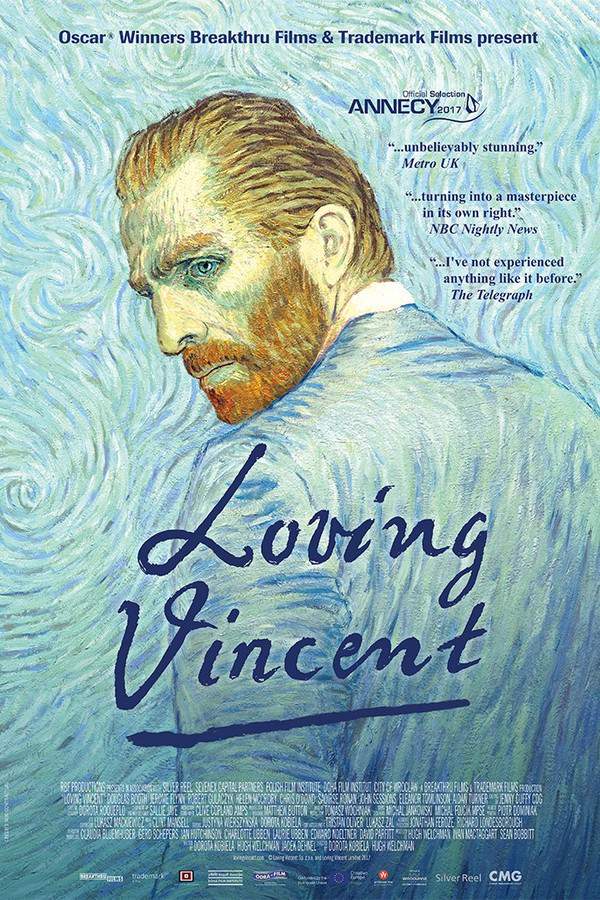
Loving Vincent (2017) movie poster

Plot Summary

Loving Vincent (2017) Plot Summary Explained

Release, runtime and language
2017 · 94 min · English
Echo score 67
JustWatch #3,892 15
Directed by
Dorota Kobiela, Hugh Welchman
Starring
Jerome Flynn, Saoirse Ronan, Chris O'Dowd, Helen McCrory, Eleanor Tomlinson, Douglas Booth
Budget
$5M

In Auvers-sur-Oise, France, Vincent van Gogh dies under mysterious circumstances. This film explores the events leading up to the iconic artist's final hours and seeks to uncover the truth behind his untimely death. Through a poignant inquiry, the story sheds light on the events and people surrounding Van Gogh during his last days, offering a unique perspective on the life and legacy of a celebrated genius whose work profoundly impacted the world.

On this page (6)
  1. 1 Where to watch
  2. 2 What happens: full plot
  3. 3 Plot questions answered
  4. 4 Movie threads
  5. 5 Movies like Loving Vincent
  6. 6 Every angle

Where to watch

Where to Watch Loving Vincent (2017)

Where can you watch Loving Vincent? Stream, rent or buy it in the US, including on Netflix, Netflix Standard and Hoopla: current JustWatch availability with up-to-date prices.

Streaming availability powered by JustWatch

Full plot summary · contains spoilers

What Happens in Loving Vincent: Full Plot Summary

The whole story of Loving Vincent (2017) explained, from the opening scene to the final frame: every key event, every twist and what it all adds up to. Read it as a quick recap before the sequel, to check a scene you missed, or to finally understand what really happened.

One year following the tragic suicide of Vincent van Gogh, postman Joseph Roulin enlists his son Armand to deliver Vincent's final letter to his brother, Theo. Troubled by the circumstances surrounding Vincent's death—especially since he had communicated a sense of calm just weeks prior—Roulin is convinced that something is amiss. Reluctantly, Armand sets off for Paris to fulfill his father's request.

Upon arriving, he meets Père Tanguy, a local art supplier from Montmartre, who reveals a shocking detail: Theo had passed away six months after Vincent. This revelation leads Armand to Auvers-sur-Oise, where he hopes to seek out Dr. Paul Gachet, the doctor who had taken care of Van Gogh following his release from an asylum, shared a passion for art with him, and was present at the funeral. Unfortunately, Dr. Gachet is away on business, so Armand decides to stay at the same inn where Vincent had lodged. There he encounters Adeline Ravoux, the inn's temporary owner, who expresses her fondness for Van Gogh and her surprise over his untimely death.

Prompted by Adeline, Armand visits a local boatman, who informs him of Van Gogh's close friendship with Dr. Gachet's introverted daughter, Marguerite. However, when Armand approaches Marguerite, she adamantly denies any implication that an argument between her father and Vincent could have led to his suicide, expressing anger at the notion.

As Armand delves deeper into the mystery, he begins to suspect a local boy named René Secretan, who reportedly took pleasure in tormenting Vincent and was known to brandish a gun while intoxicated. Dr. Mazery, who had examined Vincent, corroborates Armand's suspicions, asserting that the gunshot must have been fired from a short distance, effectively ruling out the possibility of suicide. When Armand brings René into question, Marguerite admits that she shared a close, albeit non-romantic, bond with Vincent but remains unconvinced of René's capability for murder.

Finally, Dr. Gachet returns and agrees to deliver Armand's letter to Theo's widow. He confesses to having had an argument with Van Gogh in which Vincent called Gachet a coward for not pursuing his aspirations, leading to a heated discussion that resulted in accusations that Vincent's very dependence on Theo may have contributed to his worsening health. Gachet suggests this confrontation might have ultimately pushed Vincent to take his own life, believing it would relieve Theo of his burden. After Armand returns home, Roulin receives a letter from Johanna, Theo's widow, who expresses her gratitude for the return of the letter and includes a missive from Vincent himself, signed, "Your loving Vincent."
Last updated: November 15, 2024 at 16:23

Was this helpful?

Plot questions answered

Loving Vincent Plot Explained: Your Questions Answered

The questions people ask most about Loving Vincent (2017): what happens in the confusing scenes, why the characters do what they do, the twists, hidden details and what the ending means. Each answer contains spoilers.

Q1

Why did Joseph Roulin suspect Vincent's death was not suicide?

Roulin was troubled because Vincent had seemed calm and at peace in the weeks before his death, which contrasted sharply with the sudden nature of his passing. As the postman who had regularly delivered letters between Vincent and his brother Theo, Roulin had witnessed their close relationship and found it difficult to accept that Vincent would take his own life so shortly after expressing a sense of tranquility.

Foreshadowing: Earlier in the film, Vincent's letters to Theo reportedly contained hopeful and peaceful sentiments that made his suicide seem out of character.

  • joseph roulin
  • vincent van gogh
  • suicide suspicion
  • postman
Q2

What shocking information did Père Tanguy reveal about Theo?

Père Tanguy, the art supplier in Montmartre, told Armand that Theo van Gogh had died six months after Vincent. This revelation surprised Armand because he had been tasked with delivering Vincent's final letter to Theo, not knowing Theo had also passed away.

  • pere tanguy
  • theo van gogh
  • death
  • paris
Q3

Why did Dr. Mazery say the gunshot could not have been self-inflicted?

Dr. Mazery, who had examined Vincent after the shooting, concluded that the gunshot wound was fired from a very short distance. This finding strongly contradicted the suicide theory, as it would be nearly impossible for someone to shoot themselves at such close range, leading to suspicions that another person was responsible.

  • dr mazery
  • gunshot
  • suicide
  • investigation
  • autopsy
Q4

Who is René Secretan and why does Armand suspect him?

René Secretan was a local boy in Auvers-sur-Oise known for tormenting Vincent and brandishing a gun while intoxicated. Armand became suspicious of him because he had a history of aggressive behavior toward Vincent and had access to a weapon, making him a plausible suspect in the investigation.

  • rene secretan
  • suspect
  • bullying
  • gun
  • auvers-sur-oise
Q5

What was the argument between Dr. Gachet and Vincent about?

Dr. Gachet revealed that he and Vincent had a heated argument in which Vincent called him a coward for not pursuing his artistic aspirations. The discussion escalated into accusations that Vincent's complete dependence on his brother Theo may have contributed to his worsening mental health, creating a painful realization for Vincent.

  • dr gachet
  • argument
  • art
  • dependency
  • theo
Q6

Why might Vincent have killed himself to relieve Theo's burden?

Dr. Gachet suggested that their argument, which highlighted how much Vincent relied on Theo financially and emotionally, may have pushed Vincent into despair. Vincent may have believed his own existence was a burden to his brother and chose to end his life to free Theo from the responsibility of caring for him.

  • suicide motive
  • theo burden
  • dependency
  • despair
Q7

What was the nature of Vincent's relationship with Marguerite Gachet?

Marguerite revealed that she shared a close, non-romantic bond with Vincent. They connected over their mutual love of art, and she defended their relationship when questioned. However, she remained convinced that René was not capable of murder, despite the evidence suggesting foul play.

Foreshadowing: Adeline Ravoux first told Armand about Vincent's friendship with Marguerite, hinting at their close connection.

  • marguerite gachet
  • friendship
  • art
  • relationship
Q8

What is the significance of the letter signed 'Your loving Vincent'?

The letter, returned through Johanna (Theo's widow), reveals Vincent's true feelings toward his brother despite the circumstances of his death. The signature 'Your loving Vincent' suggests Vincent held no resentment toward Theo and truly cared for him, adding a bittersweet layer to the mystery and contradicting any theory of resentment driving Vincent's actions.

Foreshadowing: The film opens with Roulin's determination to deliver this very letter, highlighting its importance throughout.

  • final letter
  • your loving vincent
  • signature
  • theo
Q9

Why did Armand agree to investigate Vincent's death?

Armand was reluctant but agreed primarily to honor his father's request. Roulin believed Vincent's death was suspicious because he had seemed peaceful shortly before his suicide, which didn't align with the act itself. Armand's journey took him from Paris to Auvers-sur-Oise as he pieced together the events of Vincent's final days.

  • armand roulin
  • investigation
  • journey
  • joseph roulin
Q10

How did Theo die and why did he die after Vincent?

Theo van Gogh died six months after Vincent, though the exact cause is not detailed in the film. The timing of Theo's death, so soon after Vincent's, adds to the tragedy of the story and raises questions about whether grief over his brother's death contributed to his own passing.

  • theo van gogh
  • death
  • six months
  • grief

Movie threads

More Movies Like Loving Vincent, by Mood & Story

Curated lists built around what makes Loving Vincent tick: the same mood, the same kind of story or the same emotional payoff. Each list explains why these movies belong together.

Posthumous investigations like in Loving Vincent

Unraveling the mystery of a life after it has ended. If you liked Loving Vincent, explore other movies that investigate a person's life and death after the fact. These films share a similar melancholic tone and steady pacing, focusing on unraveling mysteries through witness accounts and flashbacks to understand a character's final days.

  • investigative
  • reflective
  • solemn
  • mysterious
  • poignant
  • atmospheric
  • Tone: melancholic, reflective, investigative
  • Pacing: steady, deliberate
Why these movies?

The story pattern: The narrative pattern follows a detective-like structure, often with an external investigator or observer who interviews people connected to the deceased. The story unfolds through fragmented memories and differing perspectives, building a complex portrait of the subject and the events leading to their death.

Why they belong together: Movies are grouped here because they share a core investigative framework focused on understanding a life retrospectively. They create a solemn, reflective mood through their pacing and tone, emphasizing emotional weight over action-driven suspense.

Movies about troubled artists like Loving Vincent

Exploring the profound link between creative brilliance and personal tragedy. Find more films like Loving Vincent that explore the lives of brilliant but troubled artists. These similar dramas and biographies share a heavy emotional weight and melancholic tone, examining the relationship between genius, mental anguish, and enduring legacy.

  • melancholic
  • poignant
  • solemn
  • atmospheric
  • tragic
  • reflective
  • Tone: melancholic, poignant, solemn
  • Pacing: steady, character-driven
Why these movies?

The story pattern: The narrative journey typically follows the artist's creative process and internal battles, often leading to a tragic or bittersweet conclusion. The focus is on character study rather than plot, exploring themes of alienation, the price of genius, and how the world perceives art versus the artist.

Why they belong together: This thread connects films that share a central thematic focus on the 'tortured artist' archetype. They are united by a melancholic mood, a heavy emotional weight derived from themes of mental illness and tragedy, and a deep reverence for the artistic output born from struggle.

If you liked this

Movies Like Loving Vincent

Similar movies to Loving Vincent: the same genre, themes or kind of story. Each one comes with its own plot summary, timeline and ending explained.

Browse all movie summaries

Every angle

Loving Vincent (2017) Explained: Plot, Timeline & Characters

Everything about Loving Vincent in one place: what happens in the plot summary, the timeline in chronological order, the characters and meaning and a spoiler-free summary. What's After the Movie adds the cast, box office and post-credit scenes.

Coming soon on iOS and Android

The Plot Explained Movie Summary App

Plot summaries, endings explained and timelines on your phone. Catch up on any movie in minutes, save your favorites and never miss a twist again.

Be the first to know when we launch. Your email stays private, always.

Learn more about the app