The Electrical Life of Louis Wain

The Electrical Life of Louis Wain

JustWatch#8,73315

Year: 2021

Runtime: 111 min

Language: English

Director: Will Sharpe

Echo Score: 76
BiographyDramaHistory

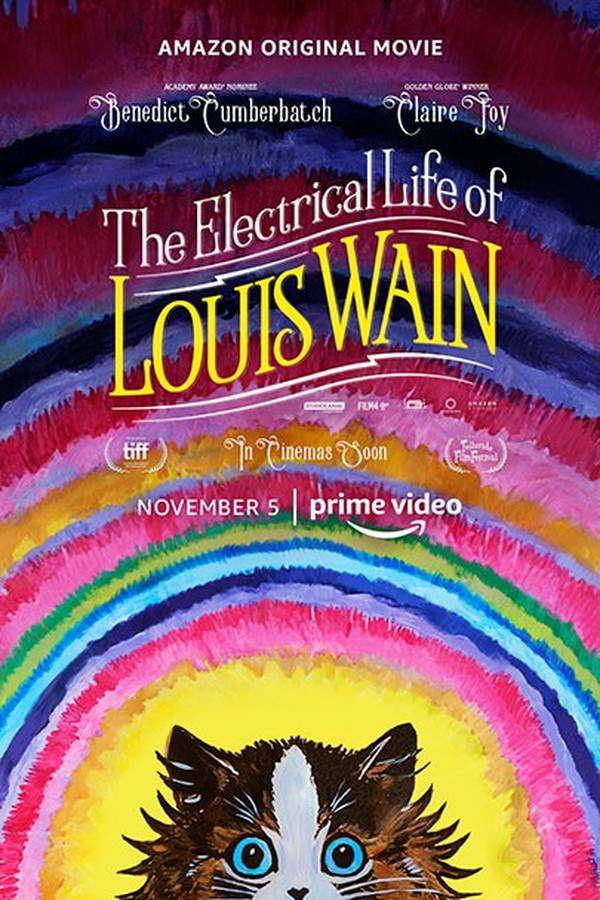
During the late 1800s in Britain, eccentric artist Louis Wain gains recognition for his unique and playful depictions of cats. The film follows his life through the Victorian era and into the 1930s, exploring his artistic evolution and his relationship with his wife, Emily Richardson. It reveals the story of an unconventional man whose work profoundly changed how cats were perceived and celebrated.

Where to Watch The Electrical Life of Louis Wain?

Find where to stream, rent, or buy The Electrical Life of Louis Wain (2021) in the US with current JustWatch availability, up-to-date pricing, and platform listings for subscription, rental, and digital purchase options.

Warning: spoilers below!

Haven’t seen The Electrical Life of Louis Wain yet? This summary contains major spoilers. Bookmark the page, watch the movie, and come back for the full breakdown. If you're ready, scroll on and relive the story!

The Electrical Life of Louis Wain (2021) – Full Plot Summary & Ending Explained

Read the complete plot breakdown of The Electrical Life of Louis Wain (2021), including all key story events, major twists, and the ending explained in detail. Discover what really happened, and what it all means.

In the year 1881, just 18 months following the death of his father, Louis Wain, portrayed by the talented Benedict Cumberbatch, becomes the primary provider for his family, which includes his five sisters and their mother. Taking on the role of the family's sole male figure, he secures a position as an illustrator for The Illustrated London News under the guidance of Sir William Ingram. Initially, Ingram offers him a full-time position, but Louis, with hopes of finding success in both music and playwriting, decides to turn it down, seeking avenues that, unfortunately, yield no fruitful results.

To support his sisters, Louis hires Emily Richardson, played by the charming Claire Foy. The moment they meet, their chemistry ignites a spark of attraction, much to the displeasure of the eldest sister, Caroline (played by Andrea Riseborough). In a bid to keep Emily close, Louis eventually accepts the full-time role, hoping to retain her as the governess. An educational theater outing to see The Tempest takes an unexpected turn when Louis's panic over a recurring nightmare causes Emily to comfort him in a men’s restroom, igniting gossip from the ever-curious neighbor, Mrs. DuFrane. Embarrassed by her dismissal following the incident, Caroline soon fires Emily. In a twist of fate, before she departs, Louis declares his feelings for her, leading to a budding romance.

Fast forward to 1884, and the couple happily marries, yet their union triggers yet another scandal within the Wain family due to the significant age difference—Emily being ten years his senior—and her status as a governess. Settling into their new home in Hampstead, Louis begins to freelance as an illustrator to help support his family. However, tragedy befalls them when Emily receives a grim diagnosis of breast cancer. To alleviate their sorrows, they adopt a stray kitten named Peter—a notable pet choice during the rigid era of Victorian society. Louis starts painting Peter, transforming his artwork into whimsical representations, as he infuses more anthropomorphic qualities into the cats, reflecting the emotional turmoil stemming from Emily's declining health.

As England faces a financial crisis, the newspaper cuts down on staff, leading Sir William Ingram to advise Louis to cherish more time with his wife. Following his encouragement, Louis presents his imaginative illustrations to Sir William, and miraculously, they make their way into the Christmas edition, drawing in significant attention. Unfortunately, the joy is short-lived as Emily passes away a few months later. Grieving, Louis immerses himself in creating a variety of cat illustrations, ultimately forming fanciful societies of feline characters, though his work increasingly reveals his detachment from reality.

By 1891, the popularity of Louis's delightful cat depictions skyrockets, gracing postcards and greeting cards, thereby altering public perception about keeping cats as pets. Louis gains notoriety and even becomes chairman of The National Cat Society. However, the family's financial struggles compound. With Louis's failure to copyright his art, they remain in a constant state of debt, leading to their eviction from the Sussex home. The youngest sister, Marie, begins to show signs of mental illness, adding further strain to their familial bonds.

In a twist of fortune, Sir William offers a temporary refuge for the family at one of his properties, but darkness looms as Marie is institutionalized, and following the death of Peter, Louis spirals into his own mental decline. In 1907, he embarks on a trip to New York, courtesy of newspaper magnate William Randolph Hearst, with aspirations to foster a thriving career in America that could alleviate his debts. Upon meeting Max Kase, played by Taika Waititi, Louis learns of the widespread admiration for his artwork. However, tragedy strikes again as he receives news of his mother's death from influenza shortly after arriving in the city. Though he finds temporary success in New York, he returns to England in 1914 at Caroline's urging.

Upon his return, the grim news unfolds; Marie has also succumbed to influenza, and Sir William passes away due to gout complications. Following the family's eviction, they relocate to a modest flat in London. Louis continues to illustrate amidst the backdrop of World War I, and in an unfortunate accident, he falls and hits his head while attempting to jump off a double-decker bus, descending into a coma that gifts him a vision of the year 1999. Awakening from the coma, he draws inspiration to design avant-garde cat toys, which are produced, seemingly heralding a change in fortunes, only for hope to be sunk when a German U-boat destroys the ship carrying these toys.

The year 1917 sees more loss with Caroline's death. The cumulative grief of losing Emily, his mother, Marie, Peter, and Sir William plunges Louis into profound mental breakdowns. In 1924, his sisters feel compelled to admit him to the Springfield Mental Hospital in Tooting. During an inspection, Dan Rider (played by Adeel Akhtar), recognizes Louis from a moment in their shared past and launches a campaign to secure funding for Louis to move to a more humane facility that welcomes cats and offers patients access to nature.

The response to this campaign is overwhelming, with contributions pouring in from thousands of Louis's admirers, including contributions from renowned author H.G. Wells and other prominent British figures. The funds successfully lead to Louis’s transfer to Bethlem Royal Hospital in Southwark, where he is granted the companionship of a cat. By 1930, he finds himself in Napsbury Hospital in St. Albans, and as he navigates this new chapter, he finds solace in the spirit of Emily. With his journal and a remnant of Emily’s old scarf, he sets out into the painted countryside, the very place where Emily prophesied he would eventually find her, echoing the profound blend of love, loss, and the enduring connection they once shared.
Last updated: December 03, 2024 at 14:27

Was this helpful?

The Electrical Life of Louis Wain (2021) Plot Questions Answered – Summary FAQ

Explore frequently asked questions about The Electrical Life of Louis Wain (2021) with spoiler-rich answers covering the full plot summary, major story beats, character motivations, hidden details, and ending meaning. This movie summary FAQ helps explain confusing scenes, plot twists, and narrative decisions in clear, searchable detail.

Q1

Why did Louis Wain start painting cats?

A.

Louis began painting cats as a coping mechanism after his wife Emily was diagnosed with breast cancer. To ease their grief, they adopted a stray kitten named Peter. As Emily's health declined, Louis started creating whimsical, anthropomorphic depictions of Peter, which evolved into his signature style of playful cat illustrations.

The film hints at his artistic shift when Louis first adopts Peter, showing how personal tragedy fueled his creativity.

louis waincatspaintingemilycopinggrief
Q2

Why did Louis Wain marry Emily Richardson despite family opposition?

A.

Louis married Emily in 1884 because they had fallen deeply in love when she was hired as a governess for his sisters. Despite the scandal caused by their ten-year age difference and her status as a governess, Louis chose to pursue the relationship, leading to another rift within his family.

Their attraction is immediate from the moment Emily is hired, building toward the controversial marriage.

louis wainemily richardsonmarriagelovescandal
Q3

Why was Louis Wain committed to a mental hospital?

A.

Louis was admitted to Springfield Mental Hospital in 1924 after suffering a complete mental breakdown. The cumulative grief of losing his wife Emily, mother, youngest sister Marie, his patron Sir William, and his beloved cat Peter had become overwhelming. His sisters made the difficult decision to have him institutionalized.

The film shows Louis's declining mental state escalating through multiple tragedies throughout the years.

louis wainmental hospitalinstitutionbreakdowngrief
Q4

Why did Louis Wain's cat illustrations become so popular?

A.

Louis's cat illustrations gained immense popularity by 1891 because they were whimsical and playful, featuring anthropomorphic cats in imaginative scenarios. His work appeared on postcards and greeting cards, fundamentally changing public perception of cats as household pets. The unique artistic style stood out during a time when cats were not commonly kept as companions in Victorian England.

The Christmas edition success hints at the commercial potential that would eventually explode.

louis waincatsartpopularfamousillustrations
Q5

What caused Louis Wain's coma?

A.

Louis fell into a coma after falling off a double-decker bus and hitting his head while attempting to jump off it. During his unconscious state, he experienced a vivid vision of the year 1999, which inspired him to design avant-garde cat toys upon waking.

The accident occurs during World War I, as Louis struggles with the cumulative weight of his losses.

louis waincomaaccidentbusvision1999
Q6

Why did Louis Wain stay poor despite becoming famous?

A.

Louis remained financially struggling because he failed to copyright his artwork. Without legal protection, others reproduced his cat illustrations without payment, and the Wain family constantly faced debt. This led to their eviction from their Sussex home, forcing them to rely on the charity of Sir William Ingram.

Sir William warns Louis about the importance of copyright early in his career.

louis wainmoneypovertycopyrightfamedebt
Q7

What happened to Louis Wain's sister Marie?

A.

Louis's youngest sister Marie began showing signs of mental illness during the family's financial struggles. She was eventually institutionalized in an asylum. Both Marie and their mother later died from influenza, adding to Louis's profound grief.

Marie first exhibits disturbing behavior when the family faces eviction and mounting pressures.

louis wainmariesisterasylummental illness
Q8

Why did Louis Wain go to New York in 1907?

A.

Louis traveled to New York in 1907 hoping to establish a successful career in America and relieve his family's chronic debts. Newspaper magnate William Randolph Hearst sponsored the trip, and Louis discovered his work was widely admired in America. However, tragedy struck when he learned of his mother's death from influenza shortly after arriving.

Sir William encourages Louis to seek opportunities abroad as financial pressures mount.

louis wainnew yorkhearstcareeramerica
Q9

Why did Louis Wain's sisters have him admitted to a mental hospital?

A.

Louis's sisters committed him to Springfield Mental Hospital in 1924 because he was experiencing severe mental breakdowns from accumulated grief and was no longer functional. They felt it was necessary for his safety and care, though it was a painful decision for the family.

The film shows his mental state deteriorating progressively through multiple losses.

louis wainsisterscommitmental hospitalcare
Q10

Why did Louis Wain refuse the full-time illustrator job at first?

A.

When Sir William Ingram first offered Louis a full-time position at The Illustrated London News in 1881, Louis initially turned it down because he hoped to succeed in music and playwriting instead. He wanted to find more creative and potentially lucrative avenues to support his family, but those efforts proved unsuccessful.

Louis shows interest in creative pursuits beyond illustration from the beginning.

louis wainjobillustratorrefusemusicplaywriting
Q11

What was the meaning of Louis Wain's vision of 1999?

A.

During his coma following the bus accident, Louis experienced a vivid vision of the year 1999, which inspired him to create futuristic cat toys upon waking. This vision represented his enduring connection to his cats and his creative spirit, though the hope was dashed when a German U-boat destroyed the ship carrying the toys.

The coma occurs at a low point in Louis's life, and the vision symbolizes a brief glimpse of hope.

louis wainvision1999comacat toysfuture
Q12

Why was Louis Wain moved to Bethlem Royal Hospital?

A.

Louis was moved from Springfield to Bethlem Royal Hospital in Southwark after Dan Rider, who recognized Louis from their past, launched a fundraising campaign to secure better care. Thousands of admirers contributed, including author H.G. Wells. Bethlem was more humane and allowed patients to keep cats, eventually giving Louis companionship of his own.

Dan Rider remembers Louis from an earlier encounter and takes action during a hospital inspection.

louis wainbethlemhospitaldan riderfundraisingh.g. wells
Q13

How did Emily Richardson influence Louis Wain's art?

A.

Emily Richardson was the catalyst for Louis's iconic cat paintings. After her breast cancer diagnosis, they adopted Peter to cope with their grief. As her health worsened, Louis began painting Peter with increasingly anthropomorphic and whimsical qualities, creating the distinctive style that would make him famous. Her decline directly fueled his artistic transformation.

The film establishes early that Louis finds emotional comfort in Emily, which extends to their shared life with Peter.

louis wainemilyinfluenceartcatspeter

Ending Explained – What Happens at the End of The Electrical Life of Louis Wain?

Still wondering what the ending of The Electrical Life of Louis Wain (2021) really means? Here’s a spoiler-heavy breakdown of the final scene, major twists, and the deeper themes that shape the film’s conclusion.

In the end, Louis Wain is shown as an old man lying in a mental hospital, seemingly lost in his own world of memories and visions. His life, marked by brilliance and tragedy, appears to have culminated in this quiet, isolated state. The person who visits him is an old acquaintance, Dan Rider, who was once a fan and supporter. Seeing Louis in such a fragile condition, Dan is struck by the contrast from the lively artist he once knew. Louis’s belief in “electricity” as a force connecting everything—cats, humans, and memories—remains central to his understanding of life. However, Dan offers a different perspective, suggesting that what Louis called “electricity” was really love—the love he shared with Emily, who encouraged him to keep painting and find solace in his art. This reinterpretation adds emotional depth to the story, implying that love, rather than some mysterious energy, was the true driving force behind Louis Wain’s life. As he sits quietly, lost in his thoughts, it becomes clear that Louis’s pursuit of this electric life was ultimately a quest for connection, meaning, and the enduring power of love. His journey ends in introspection, with a reminder that sometimes the most profound forces are found not in the external world but within our hearts. Through his art and his struggles, Louis Wain’s story emphasizes resilience, the importance of love, and the lingering impact of creativity even in the face of mental and emotional pain.

Last updated: June 25, 2025 at 08:44

Was this helpful?
Mobile App Preview

Coming soon on iOS and Android

The Plot Explained Mobile App

From blockbusters to hidden gems - dive into movie stories anytime, anywhere. Save your favorites, discover plots faster, and never miss a twist again.

Sign up to be the first to know when we launch. Your email stays private, always.

Explore Movie Threads

Discover curated groups of movies connected by mood, themes, and story style. Browse collections built around emotion, atmosphere, and narrative focus to easily find films that match what you feel like watching right now.

Movies about brilliant but tragic artists like The Electrical Life of Louis Wain

Biopics of visionary creators whose brilliant minds are shadowed by personal tragedy.Discover films that, like The Electrical Life of Louis Wain, chronicle the lives of creative geniuses whose artistic triumphs are intertwined with profound personal suffering. If you were moved by this story of beauty born from pain, you'll find similar biographical dramas here.

melancholictragiceccentricnostalgicdespairingcreative

Narrative Summary

These stories typically follow a linear biographical path, charting the rise to acclaim of a unique individual. The central conflict often lies within the protagonist's own mind or circumstances, as external success is juxtaposed with internal turmoil, loss, or mental health struggles, leading to a bittersweet or deeply saddening conclusion.

Why These Movies?

This thread groups movies that share a focus on the creative process, the burden of genius, and the emotional toll of a life lived outside conventional norms. They are connected by their melancholic tone, heavy emotional weight, and the recurring theme of legacy forged through suffering.

Melancholic Victorian-era stories like The Electrical Life of Louis Wain

Intimate period dramas where love and loss intertwine amidst societal constraints.If you enjoyed the historical setting and bittersweet romance of The Electrical Life of Louis Wain, explore this collection of period dramas. These movies capture a similar feel of tragic love and personal struggle within the beautiful but constrained world of the past.

tragic romancenostalgicgrief-strickensolemndreamlikehistorical

Narrative Summary

Narratives often center on an unconventional individual or couple navigating the rigid structures of their society. A tender romance or passionate pursuit is challenged by illness, loss, or social disapproval, leading to a poignant, emotionally heavy journey that acknowledges the pain of the past while honoring the beauty that existed within it.

Why These Movies?

Movies in this thread are united by their specific historical atmosphere, a core theme of tragic romance, and a consistent melancholic mood. They share a steady, character-driven pace and use their period setting to amplify the emotional weight of personal dramas.

Unlock the Full Story of The Electrical Life of Louis Wain

Don't stop at just watching - explore The Electrical Life of Louis Wain in full detail. From the complete plot summary and scene-by-scene timeline to character breakdowns, thematic analysis, and a deep dive into the ending - every page helps you truly understand what The Electrical Life of Louis Wain is all about. Plus, discover what's next after the movie.

The Electrical Life of Louis Wain Timeline

Track the full timeline of The Electrical Life of Louis Wain with every major event arranged chronologically. Perfect for decoding non-linear storytelling, flashbacks, or parallel narratives with a clear scene-by-scene breakdown.

The Electrical Life of Louis Wain Timeline

Characters, Settings & Themes in The Electrical Life of Louis Wain

Discover the characters, locations, and core themes that shape The Electrical Life of Louis Wain. Get insights into symbolic elements, setting significance, and deeper narrative meaning - ideal for thematic analysis and movie breakdowns.

Characters, Settings & Themes in The Electrical Life of Louis Wain

The Electrical Life of Louis Wain Ending Explained

What really happened at the end of The Electrical Life of Louis Wain? This detailed ending explained page breaks down final scenes, hidden clues, and alternate interpretations with expert analysis and viewer theories.

The Electrical Life of Louis Wain Ending Explained

The Electrical Life of Louis Wain Spoiler-Free Summary

Get a quick, spoiler-free overview of The Electrical Life of Louis Wain that covers the main plot points and key details without revealing any major twists or spoilers. Perfect for those who want to know what to expect before diving in.

The Electrical Life of Louis Wain Spoiler-Free Summary

More About The Electrical Life of Louis Wain

Visit What's After the Movie to explore more about The Electrical Life of Louis Wain: box office results, cast and crew info, production details, post-credit scenes, and external links - all in one place for movie fans and researchers.

More About The Electrical Life of Louis Wain

Similar Movies to The Electrical Life of Louis Wain

Discover movies like The Electrical Life of Louis Wain that share similar genres, themes, and storytelling elements. Whether you’re drawn to the atmosphere, character arcs, or plot structure, these curated recommendations will help you explore more films you’ll love.