



Plot Explained Spoilers guaranteed!
Plot Explained

Browse by genre

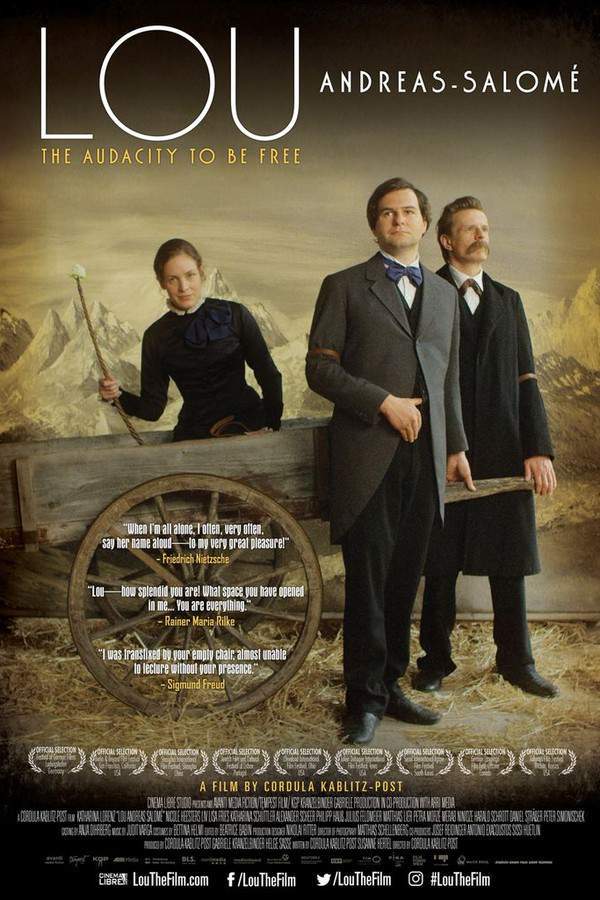
Lou Andreas-Salomé, The Audacity to be Free (2018) movie poster

Characters & Themes

Lou Andreas-Salomé, The Audacity to be Free (2018) Characters, Setting & Themes Explained

Release, runtime and language
2018 · 113 min · German
Echo score 74
Directed by
Cordula Kablitz-Post
Starring
Liv Lisa Fries, Alexander Scheer, Merab Ninidze, Helena Pieske, Julius Feldmeier, Katharina Lorenz

A celebrated psychoanalyst, Lou Andreas-Salomé, teams up with a young writer, Ernst Pfeiffer, to document her remarkable life story. Through their collaboration, they explore the complexities of her past, uncovering personal struggles and the unconventional choices that shaped her. As they work together, the lines between professional partnership and something deeper become increasingly blurred, revealing the courage and determination of a woman who challenged societal norms.

On this page (8)
  1. 1 Where to watch
  2. 2 Characters explained (3)
  3. 3 Where & when it takes place
  4. 4 Themes & meaning (3)
  5. 5 Character & meaning questions
  6. 6 Movie threads
  7. 7 Movies like Lou Andreas-Salomé, The Audacity to be Free
  8. 8 Every angle

Where to watch

Where to Watch Lou Andreas-Salomé, The Audacity to be Free (2018)

Where can you watch Lou Andreas-Salomé, The Audacity to be Free? Stream, rent or buy it in the US, including on Fawesome, Tubi TV and Amazon Video: current JustWatch availability with up-to-date prices.

Streaming availability powered by JustWatch

3 main characters · contains spoilers

Lou Andreas-Salomé, The Audacity to be Free Characters Explained: Who Is Who

The main characters of Lou Andreas-Salomé, The Audacity to be Free (2018), heroes and villains: what drives them, how they change over the course of the story and what each of them reveals about the film's bigger ideas.

  • Lou Andreas-Salomé (16 Jahre)

    played by Liv Lisa Fries

    Lou, at a young age, exhibits an early spirit of independence and intellectual curiosity. She feels pressured by her upbringing yet yearns to break free from societal constraints and seeks love and knowledge. Her complexity arises from her desire for relationships that ultimately lead to heartache and rebellion.

    • 👩‍🎓 Intellectual
    • 💪 Independence
    • 📖 Writer
  • Rainer Maria Rilke

    played by Julius Feldmeier

    Rainer is a passionate yet struggling poet who captures Lou's heart. His deep psychological struggles and unfulfilled ambitions contrast with her burgeoning literary success. Their relationship becomes a significant turning point for Lou, highlighting themes of love and creativity.

    • 📝 Poet
    • ❤️ Heartbreak
    • 👤 Enigmatic
  • Ernst Pfeiffer

    played by Matthias Lier

    Ernst is a 40-year-old publisher who enters Lou's life at a time of emotional vulnerability. He admires Lou deeply and provides a supportive presence, encouraging her to confront her past while navigating his own marital troubles. His complexity lies in his genuine care for Lou and desire for a deeper connection.

    • 📚 Publisher
    • ❤️ Admiration
    • 🧑‍🤝‍🧑 Supportive

Last updated: October 22, 2024 at 19:35

Was this helpful?

Setting

Where and When Does Lou Andreas-Salomé, The Audacity to be Free Take Place?

The setting of Lou Andreas-Salomé, The Audacity to be Free (2018): the year and time period, the places and locations, and how they shape the characters, the mood and the tension of the story.

Time period

1861, 1933, 1911

The film spans a significant timeline, beginning with Lou's birth in 1861 up to 1933, a year marked by the intensification of the Nazi threat in Germany. The narrative highlights critical historical periods, including feminist movements of the early 20th century and the psychological advancements in Vienna, reflective of the changing societal norms and personal aspirations of women.

Location

Göttingen, St. Petersburg, Zürich, Rome, Berlin, Vienna

The story unfolds primarily in Göttingen, Germany, where Lou Andreas-Salomé grapples with her personal struggles in the shadow of the rising Nazi regime. St. Petersburg, her birthplace, is where her journey of rebellion and intellectual aspiration begins. Other significant locations include Zürich, the site of her solace and resilience, and Rome, where she encounters pivotal figures in her life.

  • 🏙️ City
  • 🌍 Historical
  • 📚 Literary

Last updated: October 22, 2024 at 19:35

Was this helpful?

3 major themes

Lou Andreas-Salomé, The Audacity to be Free Meaning: Themes & Message Explained

What is Lou Andreas-Salomé, The Audacity to be Free (2018) really about? The emotional, social and philosophical themes the film keeps returning to, its symbolism and the message beneath the surface.

  • Love and Loss

    The theme of love and loss permeates Lou's life as she navigates complex relationships with Rainer Maria Rilke and Friedrich Nietzsche. Despite her quest for intellectual independence, her emotional bonds often lead to sorrow and conflict. This duality of seeking love while striving for autonomy captures the essence of her struggle.

  • Psychological Exploration

    Lou's journey into psychoanalysis with Sigmund Freud represents a broader theme of exploration into the complexities of the human psyche. It reveals her efforts to confront and unravel the traumas of her youth while highlighting the transformative power of understanding one's own mind.

  • Literary Legacy

    As a celebrated novelist and psychoanalyst, Lou's life intertwines with her literary achievements. The theme of striving for a legacy through writing weaves throughout her experiences, illustrating how her memoirs serve as a testament to her extraordinary life and thoughts in a tumultuous time.

Last updated: October 22, 2024 at 19:35

Was this helpful?

Character & theme questions

Lou Andreas-Salomé, The Audacity to be Free Characters & Meaning: Your Questions Answered

The questions people ask about Lou Andreas-Salomé, The Audacity to be Free (2018): who the characters really are, their relationships, what the symbols mean, where it takes place and what the movie is really about. Each answer contains spoilers.

Q1

Where does the story take place?

The film is set primarily in Göttingen, Germany, where Lou Andreas-Salomé works during the rise of the Nazi regime. Her journey begins in St. Petersburg (her birthplace), with other significant locations including Zürich, Rome, Berlin, and Vienna. These settings reflect her intellectual migration across Europe and the historical turbulence she navigated.

  • göttingen
  • st petersburg
  • Zürich
  • rome
  • settings
  • locations
Q2

What time period does the film cover?

The narrative spans from Lou's birth in 1861 through to 1933, when the Nazi threat intensified in Germany. Key periods include the early 20th-century feminist movements and the psychological advancements in Vienna, capturing a transformative era in European intellectual and social history.

  • 1861
  • 1933
  • historical period
  • 20th century
  • era
Q3

Who is Lou Andreas-Salomé in the film?

Lou Andreas-Salomé is a celebrated psychoanalyst and novelist portrayed as a woman who challenged societal norms throughout her life. The film depicts her as a figure of intellectual independence who navigated complex relationships while pursuing psychological exploration, ultimately leaving a lasting legacy through her memoirs and work with Sigmund Freud.

  • lou andreas salomé
  • psychoanalyst
  • biography
  • character
Q4

Who is Rainer Maria Rilke in the story?

Rainer Maria Rilke is a passionate yet struggling poet who becomes romantically involved with Lou. His deep psychological struggles and unfulfilled ambitions contrast sharply with her growing literary success. Their relationship represents a significant turning point in Lou's life, exploring themes of love, creativity, and emotional complexity.

  • rainer maria rilke
  • poet
  • relationship
  • love
Q5

Who is Ernst Pfeiffer in the film?

Ernst Pfeiffer is a 40-year-old publisher who enters Lou's life during a period of emotional vulnerability. He encourages her to confront her past and document her life story, while himself navigating marital troubles. His genuine care for Lou drives the collaborative memoir project that forms the film's narrative framework.

  • ernst pfeiffer
  • publisher
  • collaboration
  • memoir
Q6

What is the Love and Loss theme about?

The Love and Loss theme explores Lou's complex relationships with figures like Rainer Maria Rilke and Friedrich Nietzsche. Despite her quest for intellectual independence, her emotional bonds frequently lead to sorrow and conflict. This duality of seeking love while striving for autonomy captures the central struggle of her character throughout the film.

  • love
  • loss
  • relationships
  • rilke
  • nietzsche
  • emotional
Q7

What does the Psychological Exploration theme represent?

Lou's journey into psychoanalysis with Sigmund Freud represents her efforts to confront and unravel the traumas of her youth. The theme highlights the transformative power of understanding one's own mind, showing how her collaboration with Freud shaped both her personal healing and her contribution to psychological science.

  • psychoanalysis
  • sigmund freud
  • psychology
  • mental health
  • exploration
Q8

What is the Literary Legacy theme about?

The Literary Legacy theme examines how Lou's life intertwines with her writing achievements. Her memoirs serve as a testament to her extraordinary life and thoughts during a tumultuous historical period. The film portrays her writing as a means of preserving her identity and intellect against the backdrop of personal decline and political destruction.

  • writing
  • memoirs
  • legacy
  • literary
  • novels
Q9

How does the Nazi regime factor into the story?

The rising Nazi regime in Germany creates an ominous backdrop during Lou's later years in Göttingen. By 1933, the situation intensifies significantly, leading to the Gestapo destroying her private diaries, a devastating loss that underscores the film's themes of preservation and legacy amid historical destruction.

  • nazi
  • gestapo
  • 1933
  • historical backdrop
  • oppression
Q10

Why is Lou Andreas-Salomé historically significant?

Lou Andreas-Salomé was a pioneering intellectual woman who moved in circles with some of Europe's greatest minds, including Nietzsche and Freud. Her refusal to conform to 19th-century gender expectations, her contributions to psychoanalysis, and her literary works make her a notable figure in the history of feminist thought and psychological science.

  • historical significance
  • pioneering
  • nietzsche
  • freud
  • intellectual
Q11

What is the central message of the film?

The film conveys a message about the courage and determination required for a woman to challenge societal norms and pursue intellectual freedom. Lou's persistent quest for autonomy against external obstacles and internal conflicts, combined with her resilience in the face of historical tragedy, forms the emotional core of her story.

  • themes
  • message
  • autonomy
  • freedom
  • resilience
  • feminist
Q12

What is the tone and emotional weight of the film?

The film carries a predominantly melancholic tone due to its structure as a memoir reflecting on loss, illness, and societal constraints. However, it remains balanced by themes of resilience and intellectual freedom. The emotional weight is heavy, dealing with grief, rebellion, failed relationships, and the rise of Nazism, resulting in a bittersweet conclusion where legacy preservation meets personal decline.

  • tone
  • emotional
  • melancholy
  • bittersweet
  • narrative style

Movie threads

More Movies Like Lou Andreas-Salomé, The Audacity to be Free, by Mood & Story

Curated lists built around what makes Lou Andreas-Salomé, The Audacity to be Free tick: the same mood, the same kind of story or the same emotional payoff. Each list explains why these movies belong together.

Bittersweet Biographies of Defiant Women like Lou Andreas-Salomé, The Audacity to be Free

Intimate stories of women who challenged convention and paid the price. Looking for more movies like Lou Andreas-Salomé, The Audacity to be Free? This collection features similar biographical dramas about brilliant women who defied societal norms. These stories share a bittersweet tone, heavy emotional weight, and a focus on the complex price of intellectual and personal freedom.

  • biographical
  • defiant
  • melancholic
  • resilient
  • lonely
  • intellectual
  • Tone: melancholic, bittersweet, reflective
  • Pacing: steady, methodical
Why these movies?

The story pattern: Stories in this thread typically follow a chronological or reflective look at a historical woman's life, emphasizing the conflict between her ambitions and the constraints of her society. The narrative arc often involves significant relationships and professional achievements, but is grounded in the personal losses and solitude that came with her defiance, leading to a poignant, bittersweet conclusion.

Why they belong together: Movies are grouped here for their shared focus on female historical figures, a melancholic and reflective tone, and a narrative that weighs intellectual victory against personal cost. They feature steady pacing, moderate complexity, and leave the viewer with a heavy, bittersweet feeling of admiration and sorrow.

Movies about Complicated Collaborations like Lou Andreas-Salomé, The Audacity to be Free

Stories where a shared project leads to deeply complicated emotional entanglements. If you liked the dynamic between Lou and Ernst in Lou Andreas-Salomé, The Audacity to be Free, explore these films about complex professional partnerships. These stories feature intimate, character-driven narratives where collaboration leads to blurred personal boundaries, psychological depth, and a steady, reflective pace.

  • intimate
  • psychological
  • collaborative
  • complicated
  • reflective
  • revelatory
  • Tone: intimate, psychologically complex, bittersweet
  • Pacing: steady, reflective
Why these movies?

The story pattern: The narrative pattern involves two characters brought together by a shared intellectual or creative goal. As they work closely, the film uses their collaboration as a frame to explore past trauma, present desires, and psychological complexities. The central tension revolves around whether their relationship will remain professional or transform into something more profound and risky, often concluding with ambiguous or bittersweet resolutions.

Why they belong together: These films are connected by their core premise of a transformative collaboration that serves as a catalyst for emotional and psychological unpacking. They share an intimate mood, steady pacing, moderate complexity, and a focus on the tension that arises when professional boundaries are tested by personal connection.

If you liked this

Movies Like Lou Andreas-Salomé, The Audacity to be Free

Similar movies to Lou Andreas-Salomé, The Audacity to be Free: the same genre, themes or kind of story. Each one comes with its own plot summary, timeline and ending explained.

Browse all movie summaries

Every angle

Lou Andreas-Salomé, The Audacity to be Free (2018) Explained: Plot, Timeline & Characters

Everything about Lou Andreas-Salomé, The Audacity to be Free in one place: what happens in the plot summary, the timeline in chronological order, the characters and meaning and a spoiler-free summary. What's After the Movie adds the cast, box office and post-credit scenes.

Coming soon on iOS and Android

The Plot Explained Movie Summary App

Plot summaries, endings explained and timelines on your phone. Catch up on any movie in minutes, save your favorites and never miss a twist again.

Be the first to know when we launch. Your email stays private, always.

Learn more about the app